





Beneath the emerald canopies of ancient banyan trees where sunlight dances through leaves like scattered coins, the soul of colonial cantonments still breathes. These were never mere clusters of barracks and parade grounds, but rather living tapestries where the threads of empire, culture, and modernity intertwined to create something entirely new—something that would forever alter the subcontinent’s destiny.
Imagine strolling through Lahore Cantonment in the golden hour of the 1850s when the newly laid Mall Road stretched like a ribbon of ambition towards the horizon. Here, the British imposed their geometric dreams upon the land, creating orderly patterns that would later inspire Karachi’s grand avenues and Rawalpindi’s modern sectors. The cantonments stood as islands of calculated precision amidst the delightful chaos of indigenous bazaars, their very layout a silent manifesto of imperial ambition (King, 1976). Even before the British arrived, local rulers had flirted with the notion of segregated military enclaves—Maharaja Ranjit Singh in the 1820s raised a European-drilled Fauj-i-Khas brigade and established a campu franśez near Lahore for his modernized army—but it was the British cantonment that truly institutionalized the concept across South Asia.
Today, their legacy lingers in the dappled shade of modern Pakistani housing societies, where colonial-era architecture blushes at the flirtations of modern luxury. Our beloved hill stations—Murree with its whispering pines, Nathia Gali’s emerald embrace, Abbottabad’s crisp mountain air—began as health resorts for homesick British soldiers before becoming the cherished summer retreats of Pakistani families across generations.
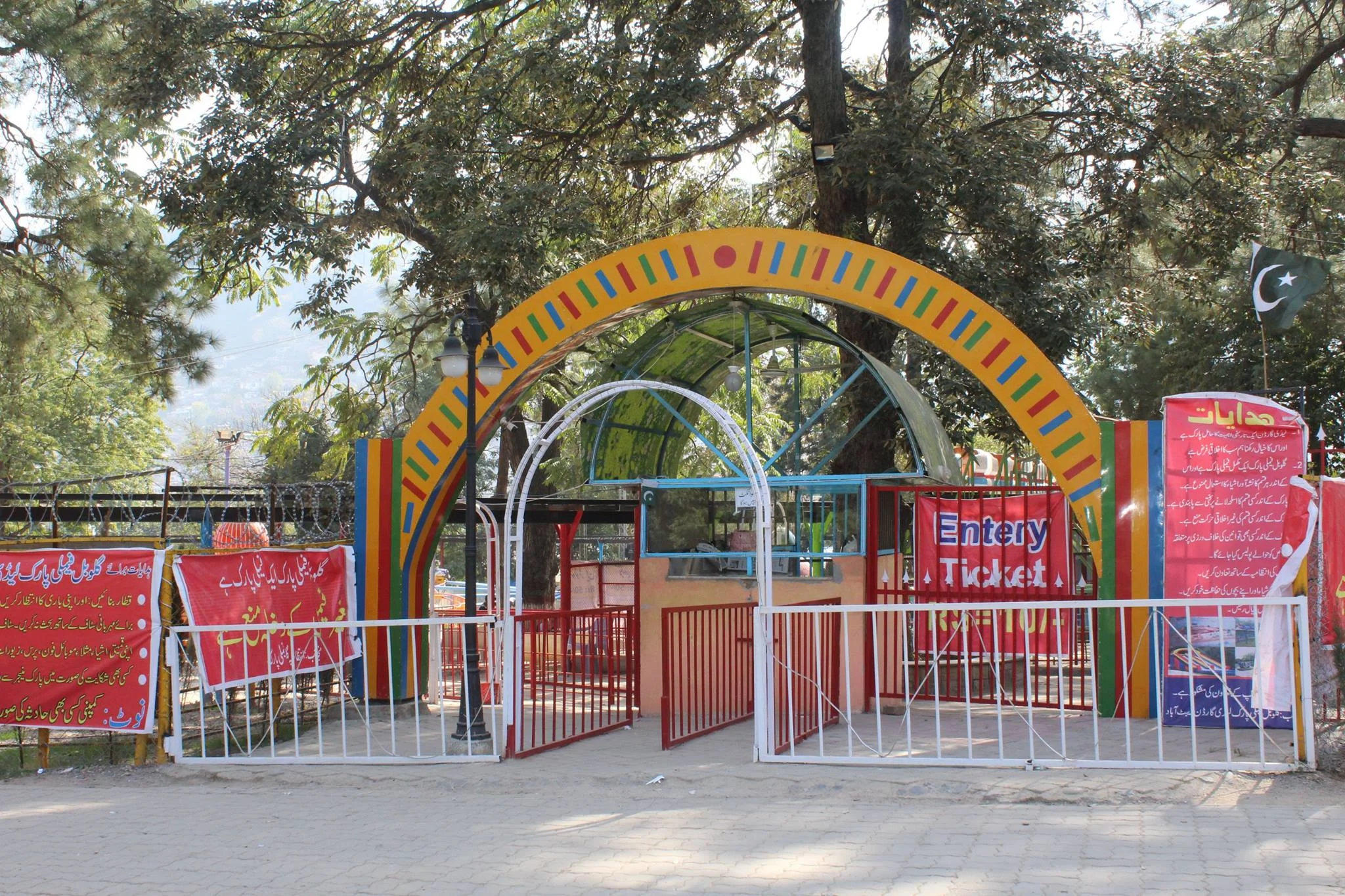
Holy Trinity Church on Mall Road, Murree (est. 1857) stands as a stone hymn to the Raj’s enduring presence. Murree’s pine-clad slopes, where the British built churches, clubs and schools, today host throngs of vacationers strolling the same Mall Road once reserved for colonial elites (dawn.com). In Abbottabad, founded in 1853 by Major James Abbott, the British planted elms, camphors and Kashmiri chinars along winding boulevards, turning the town into an “enchanting hamlet” acclaimed in 1883 as the most beautiful hill town of the Subcontinent (thenews.com.pk). So taken was Major Abbott by the alpine valley that he penned a wistful poem upon leaving, bidding his creation farewell “with a heavy heart”—a plaque in the Lady Garden Park still bears his verses . Such hill cantonments, born as sanatoria for weary soldiers, became cradles of new towns. They imported gardenias and geraniums that mingled with wild Himalayan flora (thenews.com.pk), and their cool climates offered a little England in the East, where British families could sip tea under cedar and oak trees while local coolies waited nearby with tongas. In time, these idyllic enclaves evolved into the very definition of a Pakistani summer holiday—equal parts nostalgia and joy, echoing with the laughter of generations.
In the smoky kitchens of cantonment bazaars, culinary alchemy transformed humble ingredients into something magical. British army cooks, guided by the skilled hands of local khansamas, created dishes that married continents—where porridge learned the language of halwa puri, where club sandwiches adopted the bold flavors of chapli kebabs, where railway curry became the taste of a nation in motion (Collingham, 2006). These sadar bazaars were the original food streets, where Pathan sepoys might dunk English biscuits in fragrant kahwa one moment, then watch as tandoor flames licked at freshly rolled naans the next. In the process, the very notion of “fusion cuisine” was born. Mulligatawny soup, chutney sandwiches, and Peshawari tea all hark back to those modest market stalls where east met west over a fire and a frying pan (Sen, 2014). Behind the high walls of institutions like the Pindi Club and Lahore Gymkhana, culture performed its most enchanting metamorphosis. Evening soirées witnessed the improbable marriage of Scottish bagpipes and ghazals, while regimental balls introduced the waltz to local aristocracy (Bhabha, 1994). The nautch performances of courtesans, once confined to royal durbars, evolved into sophisticated musical evenings that would seed Pakistan’s classical renaissance (Qureshi, 2006). Even fashion found new expression here, as desi tailors—their needles moving like painters’ brushes—transformed stiff military uniforms into the elegant sherwanis we revere today (Tarlo, 1996). For instance, the very color khaki—from the Urdu word for dust—made its military debut in a Punjabi cantonment, when officers of the Guides Cavalry dyed their red coats a drab brown in 1848 (nationalgeographic.com). What began as a makeshift camouflage soon became the standard of armies worldwide, a sartorial revolution whispered from the subcontinent’s frontiers. The adoption of khaki stands as a tangible reminder of cross-cultural exchange: European uniforms reshaped by Indian climate and ingenuity.
These military towns, conceived as instruments of control, became something far more profound—crucibles where modern South Asian society was forged. They trained the officers who would defend our borders, nurtured the commerce that would build our economy, and provided stages where diverse communities discovered shared dreams (Yong, 2005). Our civil service traditions, our educational ethos, even our urban aesthetics all bear the indelible imprint of cantonment life (Glover, 2008). Across the subcontinent, each cantonment left its own unique imprint on the local landscape and society.
Take Peshawar, the fabled city of flowers and storytellers. The British laid out a vast new cantonment to the west of the walled city in 1868, planting broad tree-lined avenues where mud paths had been. A railroad soon connected Peshawar to the heart of British India, steel tracks slicing through orchards and fields towards the Khyber Pass. In the cantonment’s center rose the Cunningham Clock Tower in 1900, its bell tolling the hours of empire (youlinmagazine.com). Nearby, in 1906, the British built the stately Victoria Hall (now the Peshawar Museum) to commemorate Queen Victoria’s reign. They even restored the 17th-century Mahabat Khan Mosque— scrubbed its soot-stained walls and reopened its sunlit courtyard—healing the scars left by earlier invaders. Western-style education followed: Edwardes College (established 1900) in the lush cantonment gardens and Islamia College (1913) on the city’s outskirts began churning out graduates fluent in both Persian couplets and English prose. The frontier garrison thus blossomed into a cosmopolitan town. Here, a khansaama’s son from the old city might study Newton’s laws by day and Pashto tappay poetry by night, bridging worlds beneath the lofty poplars of the cantonment.
Far to the south-west, Quetta offered a different canvas—a barren highland fort transformed into a throbbing colonial outpost. The British recognized its strategic importance and occupied Quetta in 1876, carving a garrison town from the rocky Baluch terrain (digitalhubbalochistan.com). They laid out a tidy grid of roads at the foot of the Chiltan mountains, each wide enough to turn a gun carriage. In 1896 Quetta was granted a municipality (digitalhubbalochistan.com), decades before many native towns had basic civic councils. An Army Command and Staff College opened in 1907 (digitalhubbalochistan.com), its halls preparing officers—British and Indian alike—for the art of modern warfare on the NW frontier. Yet Quetta’s cantonment also quietly cultivated life: the British introduced new irrigation techniques and seedlings, and soon the surrounding hills were chequered with orchards of apricot, peach, and apple. So prolific was this horticulture that Quetta earned the nickname “Fruit Garden of Pakistan” (digitalhubbalochistan. com)—a legacy that endures in every pomegranate and almond sold in its bazaars. A traveler arriving by train (the line blasting through the Bolan Pass was another British gift) could wander the Quetta saddar and find trimmed lawns, cricket pitches, even a little zoo, all in a once-desolate valley. In June 1935, when a ferocious earthquake reduced much of the city to rubble, the cantonment’s rigorous building codes and clever town planning saved countless lives. And when rebuilding began, it was done to higher standards of engineering, training local masons in techniques that would echo in civilian construction for decades (Harrison, 1994). Beneath Quetta’s blue sky, one can still stroll past colonial-era produce markets and the old Sandeman Library, feeling the pulse of a town the British molded out of dust and stone. Before the cantonments spread their emerald embrace across the land, the concept of public parks and playgrounds existed only in the sheltered courtyards of emperors and the private gardens of nobility.The subcontinent’s cities, for all their vibrant chaos, knew not the democratic pleasure of open greens where children might chase kites and gentlemen could stroll at twilight (Hosagrahar, 2005). This changed when the cantonments arrived, bringing with them not just military order, but a revolutionary idea—that green spaces belonged to all (Oldenburg, 1984). The British planners, homesick for their village greens and London squares, carved out vast parade grounds that quietly evolved into something extraordinary. Lahore Cantonment’s Race Course Park (now Jilani Park), established in 1860, became hallowed ground where hooves thundered on race days and families picnicked on Sundays (Manto, 1950). In Peshawar, the Saddar Bazaar’s central maidan transformed from a military drill ground to a carnival of community life—where Pashtun wrestlers trained at dawn, British officers played cricket at noon, and merchants gathered to share the evening breeze (Caroe, 1958).
These were not mere empty spaces, but stages for social alchemy. The cricket pitch became the great equalizer—where a desi clerk could bowl to a British colonel, where the son of a subedar might outplay the nephew of a nawab (Guha, 2002). Tennis clubs sprouted beside artillery grounds, their carefully maintained lawns hosting tournaments that dissolved, if only temporarily, the rigid hierarchies of empire (Majumdar, 2006). The Calcutta Cricket and Football Club, founded in 1792 within the cantonment precincts, stands testament to how sport began weaving its magic across class lines (Cashman, 1980). Polo, once the pastime of princely elites, found enthusiastic new patrons in British officers who first learned the game in Manipur and promptly established the world’s oldest Polo club in Calcutta in 1862 en. wikipedia.org. And the Army’s penchant for field hockey turned a local pastime into a subcontinental obsession: introduced to regiments in the 1880s, the game spread like wildfire, leading to the first clubs in Calcutta by 1885 and eventually to Olympic glory for both India and Pakistan nam. ac.uknam.ac.uk. In these cantonment sports fields, whether cricket oval or polo ground, the playing 11 could be as mixed as the empire itself – soldiers, clerks, princes and commoners – all temporarily united by the love of the game.
The architectural impact was equally profound. Where Mughal gardens had been inward-looking paradises of symmetry and seclusion, the cantonment parks threw open their gates to the sky. Their sweeping vistas and uncluttered lawns represented a new aesthetic of openness—one that would later influence public projects like Karachi’s Polo Ground (1861) and Delhi’s Coronation Park (1911) (Metcalf, 1989). Even the humble park bench, that most democratic of inventions, made its subcontinental debut in these military-green oases (Hosagrahar, 2005).
Historical records shimmer with glimpses of this transformation. Lady Falkland, wife of the Bombay Governor in the 1850s, wrote of the “astonishing sight” of Indian and European children playing together in Pune’s cantonment gardens (Falkland, 1857). The Bengal Hurkaru newspaper of 1842 marveled at how Calcutta’s Eden Gardens had become “a promenade where the clerk and the commissioner might nod to one another with perfect propriety” (Bengal Hurkaru, 1842).
What began as military necessity—the need for drill grounds and training areas—blossomed into something far more precious: the idea that a city’s lungs should be open to all its citizens. Today, when families gather in Lahore’s Lawrence Garden or Karachi’s Hill Park, when cricket matches erupt in every vacant lot, we witness the enduring legacy of those cantonment planners who—perhaps without realizing it—sowed the seeds of our modern public life (Glover, 2008).
The playgrounds they built became crucibles where a nation learned to play together before it learned to stand together. The shade trees they planted still whisper stories of how the subcontinent discovered the simple, revolutionary joy of open space (Oldenburg, 1984). And in this green inheritance, we find one of cantonment culture’s most enduring gifts—the democratization of delight under an open sky.
Beneath the vast, unblinking sky of the subcontinent, the British cantonments quietly introduced an architectural revolution—one that would forever alter how people lived under the Indian sun. The bungalow, with its low-slung silhouette and generous verandas, arrived like a quiet guest but stayed to become the patriarch of modern housing (King, 1984). Before its advent, the subcontinent’s domestic architecture followed an entirely different rhythm—the havelis of the north rose in proud, multi-storied grandeur around sheltered courtyards; the wadas of the Deccan spread inward like secrets folded within secrets; the traditional Bengal huts clustered close to the earth but without the cult of the lawn (Hosagrahar, 2005). Then came the bungalow, turning this architectural grammar on its head by marrying English pastoral dreams with tropical pragmatism (Metcalf, 1989).
The word itself whispers of its hybrid origins—from the Bengali “bangla,” meaning “of Bengal,” where the East India Company first encountered single-story thatched roof dwellings (King, 1984). But what the British created in cantonments from Lahore to Madras was something entirely new—a house that sprawled rather than climbed, that courted breezes rather than defied them, that turned its face outward to embrace rather than inward to protect (Glover, 2008). Perhaps the most radical innovation was the cult of the lawn—that emerald moat separating the bungalow from the world. In a land where every inch of urban space was traditionally contested, where houses jostled shoulder-to-shoulder like crowded theatergoers, the cantonment bungalow sat regally in its own green corona (King, 1976). Historical records show how this baffled local builders—the 1847 PWD (Public Works Department) manual for cantonment construction devotes three full pages to explaining “the necessity of maintaining at least fifty yards of clear grass around each officer’s dwelling” (PWD Manual, 1847). The effect was transformative. Soon, the wealthy natives who serviced the cantonments—suppliers, lawyers, interpreters—began building their own versions. The Alipore suburb of Calcutta (now Kolkata) became a gallery of hybrid designs by the 1860s, where Bengali merchants added Mughal jharokhas to bungalow frames (Hosagrahar, 2005). In Karachi’s Saddar area, Parsi businessmen built bungalows with European facades but traditional internal courtyards—a perfect architectural metaphor for the era (Daechsel, 2006).
The bungalow didn’t just represent imperial aesthetics—it was a masterclass in climate-responsive design generations ahead of its time. The high ceilings, the verandas that filtered harsh sunlight into dappled shade, the strategic placement of windows to catch monsoon breezes—all responded to the subcontinent’s weather with poetic precision (Metcalf, 1989). Colonel James Skinner’s 1827 memoir contains a delightful passage about his Delhi bungalow: “The verandah proves itself worth a hundred punkah-wallahs… the heat breaks upon it like waves upon a shore, leaving the inner rooms in comparative coolness” (Skinner, 1827). This thermal wisdom wasn’t lost on local builders— soon, elements of bungalow design began appearing in traditional homes across the subcontinent (Hosagrahar, 2005). As the 19th century waned, the bungalow trickled down the social ladder. The 1888 edition of The Times of India carried advertisements for “ready-made bungalow plans suitable for middle-class dwellings” (The Times of India, 1888). In Lahore’s Mozang suburb, compact versions sprang up for the new professional class—doctors, engineers, and civil servants (Glover, 2008).
What began as military housing became the subconscious blueprint for how the subcontinent dreams of home—a single-story idyll where family and garden grow together under the watchful shade of a neem or gulmohar tree. The cantonments’ magnificent lawned bungalows may have faded into history, but every time a child chases a butterfly across a front lawn, the bungalow’s revolution quietly continues (King, 1984).
Amidst all this cultural ferment, a quieter revolution was unfolding—one that would save countless lives. When cholera’s cruel hand swept through the 19th-century subcontinent, cantonments became laboratories for Europe’s latest health theories (Arnold, 1993). Lahore bloomed with piped water and underground sewage decades before the Walled City knew such luxuries. Rawalpindi’s planners designed boulevards not just for military pomp, but to invite health-giving breezes (Glover, 2008). Quetta implemented garbage collection systems so meticulous they put civilian towns to shame (Harrison, 1994).
The contrast was striking: cantonment lanes, swept cleaner than parade grounds, with filtered water and covered drains, stood in silent reproach to the open sewers and crowded dwellings beyond their borders (Arnold, 1993). Though framed in the language of colonial superiority, the results spoke plainly—here, people lived longer, healthier lives. Today, this legacy continues in the manicured lanes of our Defence Housing Authorities and the exacting standards of Cantonment Boards (Daechsel, 2006). Walk through any old cantt area and you’ll notice it: the trees are older, the roads wider, the air just a bit fresher—echoes of a public health revolution planted a century ago.
If today you happen to sip tea at Flashman’s Hotel in Rawalpindi, where porcelain cups still clink with echoes of empire, or stroll through Karachi’s Saddar where history haggles in every bargain, or walk Lahore’s Mall Road where ancient trees remember a century of footsteps, pause awhile. Listen carefully. The whispers of cantonment life still murmur all around us, blending past and present as effortlessly as a master chef blends spices (Metcalf, 1989).
These spaces are more than relics—they are living chronicles of how we became who we are. So when you next pass an old colonial bungalow, its walls steeped in memory, let your imagination wander. For within those weathered bricks lie stories waiting to be told, lessons waiting to be learned, and perhaps, if we listen closely enough, whispers of where our journey leads next (Bhabha, 1994).
References
Arnold, D. (1993). Colonizing the Body: State Medicine and Epidemic Disease in Nineteenth-Century India. University of California Press.
Bhabha, H. K. (1994). The Location of Culture. Routledge.
Bengal Hurkaru. (1842). “Eden Gardens: A Promenade for All.” Calcutta.
Caroe, O. (1958). The Pathans. Macmillan.
Cashman, R. (1980). Patrons, Players, and the Crowd: The Phenomenon of Indian Cricket. Orient Longman.
Collingham, L. (2006). Curry: A Tale of Cooks and Conquerors. Oxford University Press.
Daechsel, M. (2006). The Politics of Self-Expression: The Urdu Middle-Class Milieu in Mid-Twentieth Century India and Pakistan. Routledge.
Falkland, Lady. (1857). Chow-Chow: Being Selections from a Journal Kept in India, Egypt, and Syria. Hurst and Blackett.
Glover, W. J. (2008). Making Lahore Modern: Constructing and Imagining a Colonial City. University of Minnesota Press.
Guha, R. (2002). A Corner of a Foreign Field: The Indian History of a British Sport. Picador.
Harrison, M. (1994). Public Health in British India: Anglo-Indian Preventive Medicine, 1859–1914. Cambridge University Press.
Hosagrahar, J. (2005). Indigenous Modernities: Negotiating Architecture and Urbanism. Routledge.
Kennedy, D. (1996). The Magic Mountains: Hill Stations and the British Raj. University of California Press.
King, A. D. (1976). Colonial Urban Development: Culture, Social Power, and Environment. Routledge.
King, A. D. (1984). The Bungalow: The Production of a Global Culture. Oxford University Press.
Majumdar, B. (2006). Lost Histories of Indian Cricket: Battles Off the Pitch. Routledge.
Manto, S. H. (1950). Lahore: A Memoir. (Translated by Khalid Hasan, 1987). Vanguard.
Metcalf, T. R. (1989). An Imperial Vision: Indian Architecture and Britain’s Raj. Faber & Faber.
Oldenburg, V. T. (1984). The Making of Colonial Lucknow, 1856–1877. Princeton University Press.
PWD Manual. (1847). Public Works Department Construction Guidelines for Cantonments. British India Press.
Qureshi, R. B. (2006). Music and Marx: Ideas, Practice, Politics. Routledge. \
Sen, C. (2014). Food Culture in Colonial Asia: A Taste of Empire. Routledge.
Skinner, J. (1827). Memoirs of Colonel James Skinner. Smith, Elder & Co.
Tarlo, E. (1996). Clothing Matters: Dress and Identity in India. University of Chicago Press.
The Times of India. (1888). “Ready-Made Bungalow Plans for Middle-Class Dwellings.”
Yong, T. T. (2005). The Garrison State: The Military, Government, and Society in Colonial Punjab, 1849– 1947. SAGE Publications.
Abbasi, A. F. (2020). “Murree’s British-era historical buildings still intact.” Dawn (Feb 11, 2020)dawn. comdawn.com.
Aziz, M. A. (2024). “Our present past.” The News International (Oct 30, 2024)thenews.com.pkthenews.com.pk.
Beyer, A. L. (2024). “Your khaki pants have a history that may surprise you.” National Geographic (June 3, 2024)nationalgeographic.comnationalgeographic.com.
Digital Hub Balochistan. (2025). “Quetta: The Fruit Garden of Pakistan.” DigitalHubBalochistan.comdigitalhubbalochistan.comdigitalhubbalochistan. com.
Khan, H. (2021). “Gantha Ghar: The Historic Clock Tower of Peshawar.” Youlin Magazine (Aug 9, 2021) youlinmagazine.comyoulinmagazine.com.
National Army Museum (UK). (n.d.). “The Army’s Impact on Sport.” (Online)nam.ac.uknam.ac.uk.