
Part 1
Terrorism in South Asia stems from historical resistance, faith, and politics; understanding its roots is vital to securing Pakistan’s future peace
Over 35 years in public service, including the senior most roles Within Pakistan’s top law enforcement institutions, I have closely studied the evolving nature of terrorism in our region. The challenges we confront today, spanning security, politics, and society, are not recent phenomena.
They are the culmination of long-standing historical currents, unresolved traumas, and deeply rooted socio-political transitions dating back to the mid-19th century.
This op-ed series, comprising of 7 parts, blends historical context with personal reflections and aims to trace how political resistance, ideological struggle, and imperial suppression evolved into what we now call terrorism. Understanding the origins of this phenomenon is not only essential for those of us who are tasked with securing Pakistan’s future, but also the need of the hour for our younger generation to grasp, since they have the maximum stake in a prosperous, peaceful Pakistan.
Contrary to public perception, Terrorism lacks a universally accepted definition. The United Nations has struggled to reach consensus because political violence is seen through contrasting lenses: a terrorist to one may be a freedom fighter to another. That said, the UN General Assembly defines terrorism as “Criminal acts intended to cause death or serious injury to civilians, or the taking of hostages, with the purpose of provoking terror, intimidating populations, or compelling governments.” It is a functional but contested definition.
The word “Terrorisme” originated during the French Revolution’s Reign of Terror (1793–94), where violence was used by the government to crush dissent.
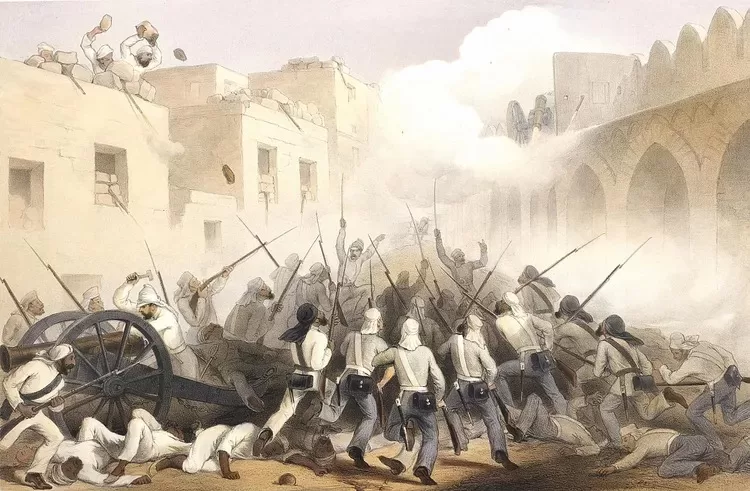
Ironically, the colonised world, would later witness this very tactic employed by European powers and the Indian sub-continent faced the brunt of it. The story begins in 1857, when the Indian subcontinent experienced its first large-scale uprising against British rule.
What started in Meerut over rumored animal fat in rifle cartridges snowballed into a vast and brutal rebellion. Though the British called it a “Sepoy Mutiny,” Indian nationalists revered it as the “First War of Independence.” It exposed a fragile fault line: that resistance and repression were now on a collision course, increasingly colored by religion.
It is to be remembered that after the Battle of Plassey in 1757, this was the first serious challenge to the British raj which was so cataclysmic that the Crown took over the reins of India from the East India Company. Religious divisions, Islam, Hinduism, and Christianity, began to intersect with politics in dangerous ways.
Although Muslims had ruled India for nearly a millennium, the British conquest realigned power structures. The 1857 revolt, despite being brutally crushed, lit the torch of resistance that would smolder and flare over the next 90 years.
One cannot examine this era without acknowledging the Wahhabi Movement led by Sayyid Ahmad Barelvi. Inspired by the puritanical teachings of Muhammad ibn Abd al-Wahhab in Arabia, Barelvi envisioned a pan-Islamic uprising. His battles in present-day Khyber Pakhtunkhwa, particularly in Balakot, where he was martyred in 1831, seeded the idea of an organised Islamic resistance. The term “Mujahideen” was first adopted during this period to signify the more than 100000 Muslims of present Khyber Pakhtunkhwa who fought under his command, well before its modern reincarnation. The Wahhabi ethos and its legacy continue to influence regional militancy today, albeit in transformed ideological packages.
The period between the failed uprising and independence saw numerous armed struggles, like “The Birsa Munda uprising” (1899-1900) in Jharkhand, “the Rampa rebellion” (1922-24) in Andhra Pradesh and similar other guerilla campaigns across India which were dismissed as terrorism by colonial authorities. Yet these efforts are commemorated in subcontinental history as symbols of valor and liberation. The Molla Rebellion in Kerala (1921–22) is a stark example. Initially, a peasant uprising against exploitative landlords and colonial policies, it evolved into a religiously charged revolt.
British retaliation was swift and severe: over 10,000 Moplas were killed, and the “Wagon Tragedy,” where 61 prisoners suffocated in a locked railway car, became a symbol of imperial cruelty. The British labeled them extremists; local memory preserved them as martyrs.
Then came Bhagat Singh, a symbol of youthful defiance. At just 23, Singh had already become a towering figure of resistance. Provoked by events such as the Jallianwala Bagh massacre and the brutal assault on Lala Lajpat Rai which led to his death, Singh turned to revolutionary violence. Though his bombings were symbolic rather than lethal, the British hanged him in 1931. Singh’s story is vital to understanding how resistance can blur into acts now labeled as terrorism, depending on perspective.
These movements reveal a crucial pattern: when political and peaceful channels were denied, violence became a language of desperation.
Religion, ideology, and national identity became catalysts, and the responses from colonial powers hardened these divides further.
When Pakistan emerged in 1947, it did so with a blood-soaked inheritance. Partition brought mass displacement, communal violence, and immediate conflict with India. Pakistani leaders were forced to build a nation while simultaneously defending it. From the outset, Pakistan was painted by Indian leaders as a “moth-eaten” state, an unnatural creation doomed to fail. These narratives fueled hostilities that persist to this day.
The seeds of ideological extremism were present from the beginning, not of our choosing, but inherited through historical events and regional geopolitics. External interventions, internal power struggles, and unresolved identity questions made Pakistan a fertile ground for radicalisation
The transformation of religious resistance into sectarian violence and political marginalisation into insurgency must be traced with historical precision to avoid superficial judgments.
This column is not a nostalgic recollection of the past. It is a framework to understand our present. From the Wahhabi insurrections to the War of Independence to the Khilafat Movement and anti-British guerrilla campaigns, the use of faith, ideology, and violence to contest state power is not new.
What changed post-1947 is the fragmentation of that contest. No longer aimed at colonialism, violence turned inward, weaponised by non-state actors, foreign interests, and poor governance. In subsequent parts of this series, I will examine how the ideological and militant landscape evolved in Pakistan, from the Afghan jihad to sectarian terrorism, from regional insurgencies to the post-9/11 paradigm. The goal is to understand the evolution of Terrorism in Pakistan, contextualise it, and identify the factors responsible for its metamorphosis so we can devise smarter strategies for peace and resilience. Pakistan’s story is not one of failure; it is one of endurance. But to chart a better future, we must confront the past with clarity. Only by examining the origins of our security dilemmas can we arrive at a practical solution.
Part 2
From Partition to Zia’s martial law, Pakistan’s turbulent history reflects how religion, politics, and power struggles shaped its journey toward extremism
Religion, deprivation, socio-economic malaise and other factors had played their role in the armed struggle by Muslims, Hindus and Sikhs in India to fight the British. From 1857 till 1947, independence was the ultimate goal of these freedom fighters, branded as mutineers, terrorists and arsonists by the British.
1947 witnessed the birth of Pakistan, the first country to be made in the name of religion. But the horrors of partition and mass migration of people across imaginary lines drawn by the British with the blood of the people of India, meant the continuation of a serious existential threat to Pakistan.
Subsequent events, both external and internal, made religion the glue that held Pakistan together. This was further reinforced by the adoption of the “Objectives Resolution”, enacted by the Constituent Assembly in 1949. It became the foundational document in Pakistani constitutional history, outlining the guiding principles and objectives for the future Constitution of Pakistan, emphasising an Islamic ideological framework while ensuring democratic principles.
Poor governance, parochial and immature leadership, and West Pakistan’s intransigence to keep the power levers firmly in their hands led to a simmering discontent in East Pakistan. However, before 1953, the situation was peaceful with occasional public order situations. The Frankenstein monster of terrorism was asleep.
The “Four Waves of Modern Terrorism” is a theory proposed by David C. Rapoport, which suggests that terrorism has evolved through four distinct waves, each lasting approximately a generation and driven by different ideologies.
These waves are: Anarchist (1878–1919)
Anti-Colonial (1920s–1960s)
New Left (1960s–1990s)
Religious (1979–present)
Although it can be argued against vehemently, for academic purposes as per this classification, India had experienced Anarchist and Anti-Colonial terrorism till 1947.
However, anti-state terrorism declined after partition. The prevalent pattern of strife was religious and generally related to the Shia–Sunni divide, but it was nothing in comparison to what was to come. 1953 changed Pakistan. After the slogan “Pakistan ka matlab kya, La Ilaha Illal Allah” was coined in 1943 by the Urdu poet Asghar Sodai, it became a powerful battle cry for the Muslim League, which was fighting for an independent Muslim state in South Asia. The slogan was used during the Pakistan movement to express the religious identity of the proposed new nation.
Then came the Objectives Resolution. The religious parties led by Jamaat-e-Islami became ascendant and partially filled the vacuum caused by the assassination of Liaqat Ali Khan, as the Muslim League, robbed of its two senior leaders, began to disintegrate.
In February 1953, Majlis-i-Ahrar gave an ultimatum to the government to remove Ahmadis from key official positions, especially
Sir Zafarullah Khan (who was the Foreign Minister), and declare them non-Muslims. Prime Minister Khawaja Nazim-ud-Din rejected it. This resulted in the 1953 Lahore riots, an anti-Ahmadiyya movement in Pakistan, which saw unparalleled violence in Lahore and the Punjab region. The demonstrations involved widespread looting, arson, and murder, with varying estimates of deaths ranging from 200 to 2,000. The situation was eventually brought under control by the Pakistan Army, which declared three months of martial law.
As was to be the pattern in later years, the government gave in and removed Muhammad Zafarullah Khan from the Foreign Ministry, and many other prominent Ahmadis were sacked from all high-level government positions.
These riots also led to significant political consequences, including the removal of Mumtaz Daultana as Punjab Chief Minister on 24th March 1953 by Governor General Ghulam Muhammad, allegedly for manipulating the religious element in anti-Ahmadi violence for political benefits. Secondly, the army tasted absolute power for the first time.
In Balochistan, an insurgency marked by a series of resistance movements against Pakistan’s rule, fuelled by grievances over perceived marginalisation and forced integration, had started since the 1948 accession of the Kalat State. Baloch nationalists engaged in various insurgencies, with major uprisings occurring in the 1950s, 1960s, and 1970s. However, this still could not be termed as terrorism in the classical sense. However, the spiral of violence continued to increase and reached its climax in East Pakistan.
In the subcontinent, it is a matter of record that India laid the foundation of cross-border terrorism. RAW and its predecessor, the Intelligence Bureau (IB), had already begun sowing cross-border seeds to what would later become the Mukti Bahini.
The Mukti Bahini guerillas, along with RAW operatives and regulars from the Indian Army—operated training camps in the Indian states of West Bengal, Arunachal Pradesh, Bihar, Assam, Nagaland, Mizoram, and Tripura, much before 1971. By late 1970, the Mukti Bahini, armed and trained by India, had begun undertaking subversive activities targeting power plants, railways, industries, bridges, fuel depots, looting banks, raiding warehouses, mining ships and killing non-Bengalis. This was the first spectacle of terrorism tasted by Pakistan and initiated by India.
From 1971 to 1978, West Pakistan was primarily in shock after Bangladesh became a reality. However, Pakistan’s political landscape was more characterised by internal power struggles and political instability than by large-scale terrorist attacks. Although Prime Minister Bhutto was successful in signing the Simla Accord, bringing back the POWs and most notably promulgating the 1973 Constitution, still the entire edifice of the partition of 1947 had undergone a somersault. Religious parties gained power, leading to the government’s appeasement by declaration of Ahmadis as non-Muslims, banning of liquor, declaring Friday as a holiday and many other such steps. However, terrorism remained very low except for the violence in Balochistan and occasionally in the Frontier. The Tehreek Nizam-e-Mustafa was launched against the government, resulting in deaths and violence, leading to the imposition of martial law by General Zia-ul-Haq on 5th July, 1977. And Pakistan changed forever.
Part 3
The year 1979 reshaped Pakistan’s security landscape, fueling sectarianism, militancy, and jihad as internal unrest merged with global geopolitical upheaval
There are years in Pakistan’s history that draw a clear line between “before” and “after.” Years such as 1940, 1947, 1971, 1998, and 2007 are widely viewed as turning points.
Curiously, however, the year 1979 has received little such recognition—although it is arguably the year that had the most defining impact on the landscape of terrorism in Pakistan. A confluence of global events, internal rifts, and ideological awakenings made the year a breeding ground for extremism, with its aftershocks still reverberating through the foundations of the country.
In February 1979, Ayatollah Khomeini overthrew Shah Reza Pahlavi and established the Islamic Republic of Iran, transforming Iran from a secular monarchy into a strict Shia theocracy. As Iran changed, Sunni-majority nations responded with alarm. In Pakistan, this translated into an increasingly hostile sectarian atmosphere. Fearing Shia ascendancy, the Deobandis, led by Maulana Haq Nawaz Jhangvi formed the Sipah-e-Sahaba Pakistan in 1985, the first sectarian organisation to openly challenge Shia communities.
Its emergence gave rise to the Shia militant organisation Sipah-e-Muhammad in 1993. As a reaction to this development, a militant offshoot of SSP, Lashkar-e-Jhangvi was formed in 1996, institutionalizing a new era of sectarian killings. The seeds of these groups were watered in the shadow of the Iranian Revolution.
The hanging of former Prime Minister Zulfikar Ali Bhutto on 4 April 1979 fractured the political landscape. The legal justifications for his execution have remained contentious, but its socio-political consequences are undeniable. Sindh erupted in anger, giving rise to the MRD movement in the early 1980s.
But perhaps more notably, Bhutto’s supporters turned to terror as a form of retaliation. The hijacking of PIA Flight 326 by Al-Zulfiqar militants in 1981, allegedly with backing from Afghan intelligence, marked the beginning of transnational political terrorism from Pakistani soil. It was a jarring shift from conventional political protest to armed sabotage.
For the first time in Pakistan’s history, the language of militancy entered the mainstream political lexicon, setting a precedent that would be echoed by other violent actors in the years to come. What had begun as a movement for political justice evolved into a template for ideologically motivated violence.
Meanwhile, distant political developments in the West would also find their way into Pakistan’s story. When Margaret Thatcher assumed office as the UK’s first female Prime Minister in May 1979, few could have predicted her influence on the fate of South Asia.
Her alliance with President Ronald Reagan became central to Western efforts to bleed the Soviet Union in Afghanistan. Thatcher’s support for the Mujahideen, along with U.S. and Saudi coordination, turned Pakistan into a launchpad for militant operations. As arms, funds, and fighters poured into the region, the infrastructure of jihad began to form long before it became a threat to its original architects.
This transnational agenda redefined Pakistan’s strategic calculus and further embedded the logic of militarised faith within its national security thinking. Later that year, the Grand Mosque in Mecca was besieged on 20 November, sending shockwaves across the Muslim world. Challenging the legitimacy of the Saudi monarchy, Juhayman al-Utaybi and his followers seized the holy mosque. After the rebellion was quelled, Saudi Arabia began a programme of conservative renewal. Already leaning toward Islamisation under General Zia-ul-Haq, Pakistan immediately positioned itself along this path.
The wave of religious conservatism provided room for religious parties, strengthened the clergy, and gently softened the ground for more extreme ideas to blossom. It also confirmed a long-standing political relationship between Pakistan and Saudi Arabia, based not just on oil and remittances but increasingly on common religious orthodoxy.
But it was in December 1979 that the mother of all bad omens struck Pakistan and would have the most far-reaching impact. The Soviet invasion of Afghanistan turned Pakistan from a regional actor into a geopolitical frontline state. Refugees crossed in by the millions. Weapons and ideology followed. Countless young men, under the banner of jihad, were trained and sent to Afghanistan to fight. This influx transformed Pakistan’s demography, economy, and internal cohesion. Ethnic fault lines sharpened. Urban crime grew. Militancy acquired a moral language and operational sanctity.
“Survival of Pakistan” became the mantra, drowning out the long-term harmful effects on the body politic of the country. Schools, seminaries, and tribal networks morphed into logistical pipelines. What began as a Cold War necessity quickly took on a life of its own, growing in scale, complexity, and impunity.
Though only a child at the time, I still recall glimpses of the Pakistan of the 1970s, a country grappling with its challenges, yes, but largely at peace. Tourists roamed freely, mingling with a hospitable population, and the spectre of terrorism had yet to darken the national mood.
After 1979, that image began to fade. The nonstate actors once cultivated for foreign agendas evolved their ideologies, funding sources, and enemies. Emboldened, they eventually began challenging the state itself. A Frankenstein’s monster had been unleashed, and it proved impossible to contain. Since then, Pakistan has struggled to re-bottle the genie of terrorism, one that keeps mutating, finding new forms, justifications, and targets.
Looking back, 1979 was more a melting pot than merely a year of unrest, the only year in which the dividing line between strategy and survival, faith and fanaticism, politics and insurgency began to vanish.
Internal conflict, foreign objectives, and increasing ideological passion combined to generate a storm whose effects still shape the story of Pakistan. It would be futile to wander through history, aimlessly seeking the roots of Pakistan’s terrorism, without taking into account the events of 1979. For lawmakers, professionals, and the general public alike, revisiting this significant year is not only a scholarly endeavour but also a critical lens through which to view the issues of today.
1979 changed the mosaic of terrorism in Pakistan forever.
Part 4
Between 1980–88, Pakistan saw the rise of sectarian and ethnic violence, fuelled by the Afghan jihad, state policy, and deepening societal divides
There are two major problems with history. Firstly, the historian has to rely on sources in developing a narrative, since history recounts the past and he or she is not witness to that time frame. Secondly, objectivity is the first casualty, however truthful the historian may be, because the biases nurtured over the years inevitably affect the outcome. Nevertheless, I grew up in this era and will try to shed light on it as objectively as possible.
The Zia regime has been criticised for many valid reasons, and the more one studies this period and the demons it created, the more depressing it becomes. From a relatively peaceful and secular country, Pakistan transformed into a land of extremism.
Yet one needs to appreciate the threat we faced back then in order to make a fruitful analytical exercise for today’s generation.
It was in March 1980, during a class break at St Anthony’s, when two of my classmates — both sons of army officers — told us that Pakistan faced a serious threat if the Soviet Union invaded. We were only twelve or thirteen year old children, and the fear of the Russian bear was palpable. When I came home and asked my father, a retired army officer, he tried to comfort me as fathers do, but I overheard him telling my mother, “Let us pray the Soviets stop at Afghanistan.” That was the atmosphere.
If General Zia and his government, backed by the international community, had not helped defeat the Soviet Union, the history of Pakistan would have been very different. So let us acknowledge this positive aspect of the Zia regime in safeguarding Pakistan from an Armageddon.
The Afghan jihad began like a sputtering carburettor and gained traction after Ronald Reagan became President of the United States. It led to the mushrooming of madrasas—especially of the Deobandi fiqh — the proliferation of weapons, particularly the Kalashnikov, the birth of non state actors revered for their passion to protect Islam and Pakistan against ‘infidels’, the introduction of Islamic laws, the enforcement of religious edicts under pain of punishment, and many other measures taken in the name of religion.
One incident, however, stands apart. The imposition of the Zakat and Ushr Ordinance on 20 June 1980 sparked a major protest by the Shia community. On 5 July 1980, thousands of Shias rallied in Islamabad under the banner of the TNFJ, compelling the government to backtrack and grant them exemption. This was the first large scale sectarian mobilisation in Pakistan’s history and, coming a year after the Iranian Revolution, had added impetus.
This episode alarmed the Deobandis and Wahhabis. Fearing Shia ascendancy, the Deobandis, led by Maulana Haq Nawaz Jhangvi, formed Sipah e Sahaba Pakistan in 1985, the first sectarian organisation to challenge Shia communities openly. Thus began Shia–Sunni sectarian militancy. It spread across Pakistan, turning the previously peaceful month of Muharram into a flashpoint requiring massive deployments of law enforcement personnel, a practice that, regrettably, continues today. It was also the first time police officers were routinely stationed at mosques and Imambargahs.
The country’s first major Shia– Sunni riots erupted in Karachi during Muharram in 1983, leaving at least sixty people dead Further disturbances followed over the next three years, spreading nationwide. By 1986, Jhang and Bhakkar had become hotbeds of violence, marked by targeted assassinations of Shia and Sunni clerics.
Many believed Pakistan had become a proxy battleground for Saudi Arabia and Iran, the former supporting Deobandis and Wahhabis, the latter the Shias. The worst incident occurred in Gilgit in May 1988, triggered by a dispute over the moon sighting, and resulted in hundreds of deaths. This religious divide has haunted us ever since. One must remember that the Afghan jihad attracted fighters from across the Muslim world and was supported by the West, led by the United States. Pakistan served as their home base, an often forgotten fact today. Crucially, al Qaeda was founded by Osama bin Laden in Peshawar in 1988 as a broad logistical network for these fighters. Pakistan thus became the breeding ground of sectarian militancy as a direct offshoot of the Afghan jihad.
The second violent contour that developed in this period was ethnic. The Muhajir Qaumi Movement (MQM) evolved from the All Pakistan Muhajir Students Organisation (APMSO), founded in 1978 by Altaf Hussain to represent Urdu speaking Muhajirs. The party later became the Muttahida Qaumi Movement in 1997, dropping the term “Muhajir”. Its strongholds were the urban areas of Sindh, especially Karachi and Hyderabad. On 15 April 1985 the death of a twenty year old student, Bushra Zaidi, who was hit by a bus driven by a Pathan, sparked a new chapter of ethnic violence. Rioting spread throughout Karachi, reflecting a deep rooted socio economic malaise. Officially fifty people were reported dead and more than three hundred injured, although unofficial estimates put fatalities at two hundred.
Reportedly over 2,600 ethnic riots occurred between 1985 and 1988. Terrorism reared its ugly head as Muhajirs, Pathans, Sindhis and, in some cases, Punjabis all engaged in violence. A hapless state looked on. Weak political leadership and the see saw between president and prime minister meant that a situation requiring mature, swift action was badly mishandled.
Violence escalated, and ordinary people of every ethnicity suffered, paying the price in blood.
The years 1980–88 can be termed the worst era in our history’s mosaic of terrorism because both sectarian and ethnic violence took root for different reasons during this time.
The small saplings we allowed to be planted quickly grew into terrifying behemoths that have haunted us since—and may continue to do so for the foreseeable future.