

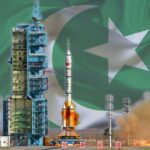

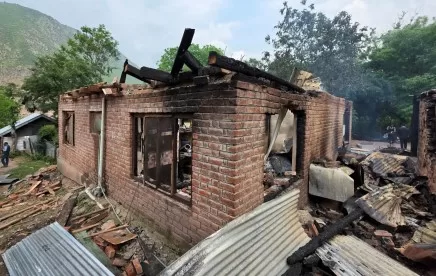
The recent duel between India and Pakistan fought from May 6-10, 2025, have damaged beyond repair their interstate relations, and torpedoed prospects of peace. The victims are the peace-loving citizens on both sides of the divide who wanted to see congenial ties take roots, a good neighbourhood ambience set in and the potential of trade and tourism mushroom between two billion people as is the new-normal between nation-states in an era of connectivity and geo-economics.
India and Pakistan, perhaps, have a different paradigm to handle with and that is one of perpetual crisis, deep-rooted mistrust and the utter lack of political will, and capacity, to sort out the irritants. Pakistan being a security-conscious state is wary of India’s moves and, likewise, India of late submerged in a passionate discourse of radicalism at home is out for point-scoring business at the cost of peace and security in the region and beyond.
New Delhi’s misadventure to test the patience of an economically-weak and politically polarised nation backfired. They stood like a rock and there was no iota of fear as Israeli-made Harap drones and projectiles flew in.
The pretext was flimsy for India to attack its neighbour and the Pahalgam killings episode turned out to be of little substance as there was no shred of evidence to blame Pakistan.
The balance-sheet of a military swap for Delhi was devastating. It not only lost its political currency but also its image as a major prowess in the region.
Pakistan by exercising its right to retaliate after extreme restraint, struck at 12 strategic destinations deep inside the ex-Ashoka Empire. It downed more than 77 drones, cyber-neutralized many national grids and websites, and its PAF JF17 Thunder’s hypersonic missiles reportedly destroyed the S-400 system in Adampur.
While India media was in a euphoria of having ‘put down’ Pakistan by ‘destroying Karachi Port and other installations’, Pakistan’s military thrust was impregnable.
PAF hit storage sites of the Brahmos missiles in Beas region, Uri field depot, Akhnoor aviation base, Dehrangyari, apart from Pathankot, Suratgarh, Udhampur, Sirsa and Bhatinda airfields. Not to go too deep into warfare catalogue, the most important point is to ponder over their future of survival and coexistence. For the first time under the United States mediation, India has agreed to talk to Pakistan on a composite dialogue that includes Kashmir and terrorism.
A breakthrough of sorts, indeed. But there are twists and turns in Delhi’s position as, it seems it has opted for it as a time-buying tactic and its intention is to go back to a full-fledged conflict to appease its grandeur designs.
As Aristotle, the ancient Greek philosopher (384–322 BC), said, “It is not enough to win a war; it is more important to organize the peace.” This must attain priority and people should come out as ‘devil’s advocate’ to talk of peace and normalizing ties. It is difficult and very bizarre to be seen talking of congenial relations at a time when militarization is the order of the day, and chauvinism rules the roost.
This is where the vibrant civil societies in India and Pakistan must rise to the occasion and demand of their respective governments to usher in normalcy and start talking.
France and Germany fought for decades but had to settle down on the table, and now they are two promising economies of Europe. England and Falkland are now at peace, and likewise Ireland, Sri Lanka-Tamil Tigers, Rwanda and Sudan made peace as they shunned jingoism and took the political course.
Unfortunately India and Pakistan are a victim of realpolitik and peace constituents have not been able to make their presence felt. Making peace with neighbours has never been an electoral agenda, and rather annihilating Pakistan was Indian radical political parties’ stance, and even the Indian National Congress failed to make peace with Pakistan. In Pakistan, talking of peace with India is anti-nationalism, and one’s patriotism is up for question. In this environment, hardliners and those who had an axe to grind prevailed, and the entire state-centric edifice went towards militarizing the societies. As rightly stated by Arundhati Roy, Indian scholar and writer,
“Pakistan and India are not at war, but their governments are. Their business communities, film industries, and people are not fighting each other. This war is actually a drama created by the ruling elite on both sides, which benefits from fear and hatred. The Indian and Pakistani elite keep nationalism and the Kashmir issue alive to divert their people’s attention from poverty, inequality, and government failures and atrocities.”
That sounds logical because the two sub continental states had gone to war four times since their independence: 1948, 1965, 1971, and the 1999 Kargil War, apart from innumerable border skirmishes, standoffs, and a Siachin conflict.
The 2025 limited-scale clash was almost catastrophic as the nuclear option was on their fingers, endangering the Planet for all times to come.
It is also important to look at the peace module of the two states, and to why they have not been able to strike a consensus.
The Simla Agreement is the only pride that both the countries have to boast in the political context, signed on 2nd July 1972 in the capital of Himachal Pradesh. That lives on to this day and enables disputes to be discussed solely in the bilateral perspective.
There are, at least, four composite dialogues that made headway, but fell short of legitimacy to make a breakthrough.
One – President Zia-ul-Haq’s visit to India in December 1985, wherein he and Indian Prime Minister Rajeev Gandhi agreed upon four-pronged dialogue process to discuss
1. Siachen;
2. Sir Creek;
3. Commercial relations;
4. Issues related to terrorism/ immigration and people to people contact. As an outcome, the Siachen and Sir Creek were settled and only their implementation was left; and commercial relations improved and trade expanded.
Two – in 1997, at Male SAARC Summit, Indian Prime Minister I.K. Gujral and his counterpart Nawaz Sharif kick-started talks on
1. Peace and Security including confidence building measures;
2. Jammu and Kashmir;
3. Siachen;
4. Wullar Barrage/Tulbul Navigation Project;
5. Sir Creek;
6. Economic and Commercial Cooperation;
7. Terrorism and Drug Trafficking; and,
8. Promotion of Friendly Exchanges in various fields. But the 1998 nuclear tests and the Kargil conflict came as a spanner in the works and the entire momentum hit snags. Subsequently, the Lahore declaration and Agra Summit could not achieve the desired results.
Three – in 2003, President General Pervez Musharraf’s golden handshake with Prime Minister Atal Behari Vajpayee in Nepal’s SAARC summit was a statesmanship duel.
This led to a bilateral meeting at Islamabad in 2004, and it was resolved that “Pakistan territory would not be used by any terrorist in the light of India’s concern of cross border terrorism emanating from Pakistan”.
Subsequently, Islamabad and Delhi initiated direct talks on the Kashmir issue at the foreign secretary level, resulting in the starting of bus services from Sri Nagar-Muzaffarabad and facilitation in cross border permits, etc.
A worthy outcome of talks and CBMs was the Musharraf proposed fourpoint agenda that included;
1. softening of LoC;
2. self-governance/autonomy but not total independence of Kashmir;
3. demilitarization of borders; and
4. joint management and supervision by both the states. This was one of the best to go ahead for both the states in an era of acrimony and mistrust but got derailed owing to the Samjhota Express Bombings of 2007 and the Mumbai attacks of 2008.
Since then on, Pakistan and India have been at odds and animosity has increased at the state level.
Gone are the days when there used to be culture exchanges, film fares and concerts. India now does not want to play Pakistan, and the game of cricket has become an Armageddon. In such a scenario,
Dr Jasim Uddin, Research Director Bangladesh Institute of International and Strategic Studies (BIISS), says that “the recent war between Pakistan and India, political in nature, though not to be even termed as proxy war, has already created global concerns and been a matter of challenge towards perpetual peace and tranquility for South Asian regionalism.”
He rightly elucidates the way forward by saying that “…not to be fueled by extra regional forces, but to think of peoples’ and economic betterment, beginning of diplomatic engagement, and direct meeting on soft issues could be thought of. Extreme opinions both in print and electronic media should be avoided and common aspirations are to be at forefront incrementally.” The least that is in need of being done by both the states as they ultimately sit down for a tête-a-tête is to agree on a monolithic point that they will keep talking. India as a CBM towards Pakistan, and as a goodwill gesture for the international community, must rescind its suspension of the Indus Water Treaty (IWT), and let geological crosscurrents take the natural course. Revisiting the Musharraf proposal on Kashmir can scale down tension and address the imbroglio for all times to come.
If peace has to take roots then it necessitates a political course correction. The day civil societies, intelligentsia, political parties and academics and artists on both sides of the divide join hands for playing their role, the semblance of otherness will come to a naught, and serenity will be the order of the day. Alas, we live to see that day!