
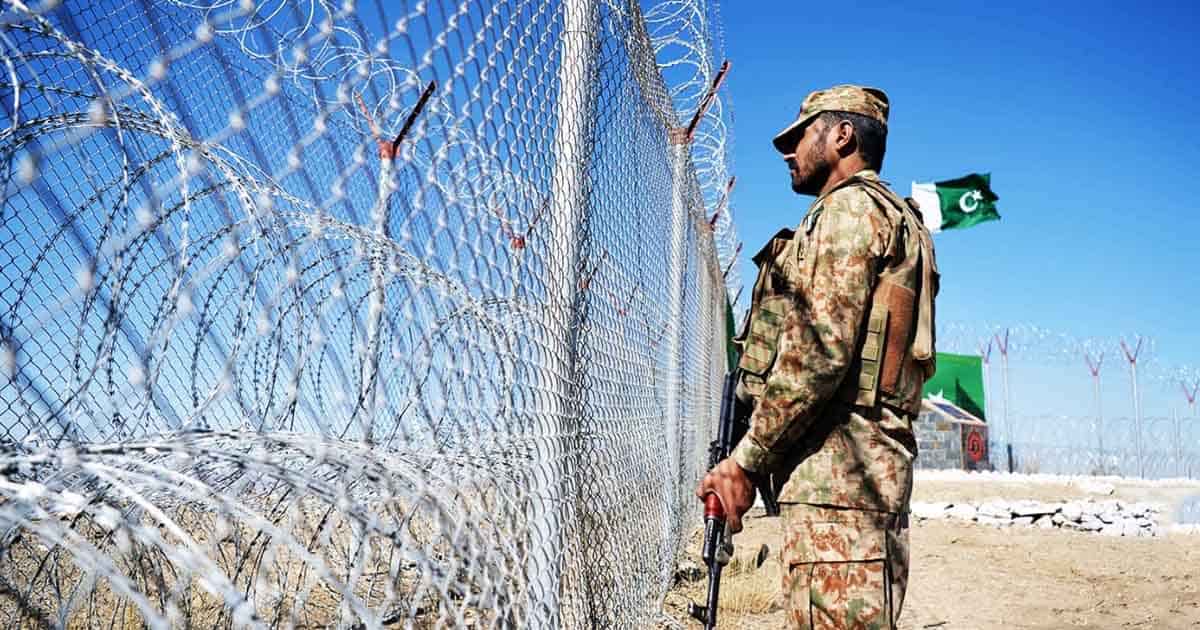
Pakistan’s western border has not been serene for almost four decades now. It has been a theatre of revulsion and an immediate threat to Pakistan’s security and sovereignty. This is so despite a friendly perception being nursed with the landlocked state, and a swirl of unending tales reminding the nation that Afghanistan comes with strategic depth in times of war and eventualities. This faulty belief cooked and sold by the Establishment and all governments in power has unraveled. The insurgency and cross-border terrorism emancipating from Afghanistan is eating away into the vitals of our nationhood and something serious and out of-the-box is in need of being done. Both Pakistan and Afghanistan are at the edges. They have multiple problems to face on all facets of security, economic decline and parochial nationalism. Yet, they have not been able to look through the same prism of commonality and walk the path of congeniality and cooperation. It goes without saying that Islamabad had its own vested interests to nurse at the altar of foreign aggressions in the neighbourhood, and Kabul too played fiddle by becoming a tool for generating proxies in the region.
This is not generalization of geo-strategic events that both countries had witnessed since the former Soviet Union marched into Afghanistan, but a disturbing factsheet as to how geography and petrodollars kept them at bay and centrifugal forces were able to nurse their grandiose designs. History was in the making as the Soviets and the Americans stood defeated in a barren, technology-starved and poverty-ridden nation. A leaf into ages suggest that the British too were on tenterhooks as they were unable to marshal the plains of Afghanistan, and all they could do was to balkanize it, and usher in the gangrene of Durand Line on its south connecting the then Indian Subcontinent. The enigma and bitter psyche lives on to this day. From Pakistan’s perspective, we were glued to the larger picture of geopolitics. We staked our claims to browbeat the major powers and were in it as a pawn. A glance at the balance-sheet from a decade-long Soviet occupation of Afghanistan suggests that we overplayed the fear of the Red Army marching towards the south in pursuit of warm waters.
Did the Kremlin say so when it invaded the terrain of Afghans? No, they never did. This was an articulation from the State Department and the Pentagon, and the gurus at work such as Henry Kissinger and the Neo-Realists through their scholarly works bifurcated the world into pro-Communist and capitalist camps. The rest is history as Islamabad under the generals’ rule toed the White House line of action, and profusely bled the finger-crossed nation. The subsequent kalashnikov and drug culture intruding into Pakistan came with, at least, five million refugees that not only dented our social harmony but many of them made it their own. It was a perfect failure of our internal security paradigm, and eventually became a theatre of terrorism. We were not safe when the Americans were staying put in Afghanistan, nor now when they have been shunted out in exigency. So much so for our laying of all the eggs in Washington’s basket. We fought an alien war for the sake of geopolitical expediency, and the beneficiaries were only men who were at the helm of affairs. As rightly analyzed by Chairman Standing Committee on Defence, Senator Mushahid Hussain Syed, on the floor of the house that the “Afghan policy has failed, and there is need to recast a new perception by taking into account ground realities.”

Pakistan’s decision to jump on the bandwagon of the Americans in an attempt to check the Soviet march towards ‘warm waters’ was lauded with billions of dollars by the West. Those were used to buckle up the defence gear and train the unscrupulous men sent in from the Middle East, Africa and elsewhere, who later came to be known as the Mujahideen. These mercenaries, however, were true to their DNA and came back to bleed us, as and when they were asked by their godfathers! The backlash that Pakistan is witnessing these days is a testimony to such a happening, and we are not sure how to eradicate this menace. The unrest being witnessed these days in former tribal areas of Pakistan bordering Afghanistan, as well as the settled areas, along with mass exodus of undesired men once again seen roaming with guns, is a faux pas of our Afghan policy. These disgruntled elements are indulging in sabotage activities, and it is a grim reminder that one of the bravest fought ‘war against terrorism’ by the armed forces and the people of Pakistan is coming to a naught.
This is so because we blinked. We only focused on the kinetic aspect of the National Action Plan and did bother to implement the non-kinetic regulations of the plan merely for the sake of appeasing the abettors, wheeler-dealers and black sheep, who are rampantly engrossed in the body politick of the nation. As we are accustomed to nepotism, corruption, easy-money, defiance and the rule of the ruler, rather than rule of law and constitution, we continue to be mired in elite capture. This phenomenon has brought destruction more than an enemy state could by virtue of war or proxy bloodshed. We are not sure whether a political auto-correct will set in or not, and will we be able to put up an armour to say enough is enough, though. But a new beginning has to be made by primarily putting the house in order, letting rule of law be applicable to all, and mending fences with all of our immediate neighbours.
A recent report from the US State Department, ‘2021 Country Reports on Terrorism’ has spelt out some obvious realities. It is a source of immediate concern to our statehood. It specifically names the Tehrik-e-Taliban Pakistan (TTP) for overtly and covertly plotting against the government of Pakistan. The report points out the settled areas of Khyber-Pakhtunkhwa as the new theatre of activity. This is done because the impugned elements are making use of their yesteryear connections with other disgruntled characters to stir unrest. In it one can conveniently count the Al Qaeda, Islamic State-Khorasan, and Baloch insurgents. These findings deserve some serious introspection, as the evolving realities paint a dismal picture of law and order. The reason is simple: in the disguise of regime change in Pakistan (April 2022), thousands of Afghan families had returned to Pakistan, and in their midst nefarious elements too made their way.
Had we upheld the policy of no human infiltration from the landlocked state after the return of Taliban 2.0, this enigma would not be on our heads. The US report has spelt out that the TTP’s resolve is to establish their own brand of Shariah and goes on to elucidate that the government of Pakistan had not so seriously went on to implement the 20-point National Action Plan as devised in the backdrop of one of the most lethal attacks by the militants in 2014 on the Army Public School in Peshawar. The government’s going slow in its efforts to net the abettors and terror-financiers, as was evident from the pressure it was under the FATF grey-list regime for years, had emboldened the non-state actors, and led to diverse fissures.

It’s time to rewrite a new terror policy in the spirit of NAP 2014 and the National Security Policy (2022-26). This is how we can browbeat terrorism, and re-assure our neighbours that we are responsible and alert on the homeland front, too. Unquestionably it will usher in geo-economics in our foreign relations, making economic vibrancy the policy of state as the first step of defence and subsequently empowering the people in a true sense. A great beginning has been made by having a tête à tête with Kabul. The high-powered delegation that visited Afghanistan has rightly told the Afghan Taliban that they need to check their steps as they have failed to keep up the promise of preventing non-state actors from using their soil for attacks in the neighbourhood.
It’s time for Islamabad to prevail over Kabul, and to stop appeasing Afghans for the so-called sake of brotherhood that had brought only flak on our faces. My late professor and a scholar of repute at Karachi’s I.R department, Dr. Mujtaba Hussain Rizvi, often quoted his apt narration, “Afghanistan may be dear to us, but Pakistan should be dearest”! Time to log in a narrative of Pakistan and rewrite a new Afghan policy.