
The China-Pakistan Economic Corridor (CPEC) has already changed dynamics of power politics in the South East Asia, Central Asian, East Asian and Middle East regions. It is a fate changer for the whole region but its socio-economic diversity and strategic importance have produced conflicts among the regional countries.
CPEC and India
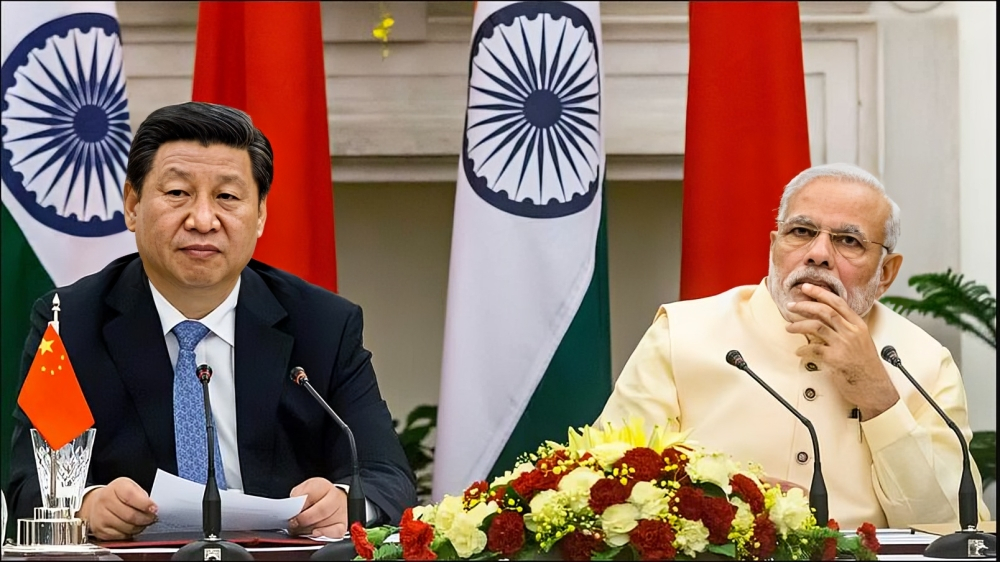
India is now worried about its strategic orientation and that its completion may harm its east-ward policy especially with Central Asian Countries. Reportedly, formation of special desk/unit in RAW to sabotage the CPEC confirms India’s hostility towards this concept of greater commercial diplomacy. Indian Prime Minister Narendra Modi’s non-traditional foreign posturing and statements during so many international tours is to damage Pakistan’s credibility and reliability on the war against terrorism; all this seems to be well planned and calculated to harm the CPEC.
India’s ongoing brutal state terrorism in occupied Kashmir and covert activities in Balochistan would encircle Pakistan into danger zone of direct or indirect conflict in near future because of the ongoing successful of the CPEC. Its sleeper cells would not be asleep anymore and would be engaged in destructive activities throughout Pakistan, especially in FATA, KPK, Balochistan and Gilgit-Baltistan and AJK.
CPEC and GCC & Iran
Some Middle East countries have serious concerns especially about the sea-routes. Every country has the right to defend its own vested interests because foreign policy must not be formed on the so called good wishes on any GCC member. Iran, one the most important country of the Persian Gulf is also not so happy with new concept of shared prosperity in the shape of CPEC. Its geopolitical and geo-strategic importance would be undermined in the days to come. Its bargaining chip with Pakistan and other regional countries would face a great set back. Iran and India have already initiated many mega projects to mitigate the spillover repercussions of the CPEC, especially its sea routes.
CPEC and USA
The US has already shown concerns about CPEC which may produce serious dents in its South East & East Asia policies. Most recently concluded “strategic military agreement” between US and India seems to be a long term solution to counter the unlimited socio-economic benefits of the CPEC and China onward march to enter Central Asia, Middle East, Africa and Europe.
Hot pursuit of energy security, sustainable transport systems, greater regional socio-economic connectivity and achieving of sustained peace and harmony in the region has polluted the true essence of CPEC. This project will bring about a paradigm shift for the region which would also be a fate-changer due to its unlimited socio-economic benefits.
It is feared that Pakistan may face fierce opposition from the regional power brokers because of the CPEC. Balochistan, FATA and even KPK would be in the line of fire due to rapidly changing geopolitics of CPEC.
CPEC and Domestic Politics
CPEC has a domestic dimension also in Pakistan. In the past, smaller provinces have already registered their protest on misappropriation of the CPEC. The provincial governments of KPK, Balochistan and even Sindh tried to raise their voices for implementing a just CPCE for all the provinces. Now, even Gilgit-Baltistan and AJK have requested to be included in the main operations of the CPEC. Gilgit-Baltistan is the “door” of CPEC which must not be shut because of the philosophy of it having a lion share. Selection, allocation of the central and provincial governments would not be easily achieved in the country. CPEC is a game changer for the entire region and the central government has called upon all political parties and provinces for forging unity among their rank and file for success of CPEC and transform the country into a strong, vibrant and economically self-reliant state.
CPEC and Armed Forces of Pakistan
The government of China has requested many times to include the Armed Forces of Pakistan in the security operations of the CPEC due to which there is an increasing element of uneasiness within different power corridors in the country. On its part, Pakistan’s Army formed a complete mechanism/apparatus to protect the interests of the CPEC. COAS, General Raheel Sharif has again reiterated his commitment to protect CPEC in his address on Defence Day i.e. September 6, 2016.
Politics of agitations and hot pursuit of power has raised serious concerns among different decision makers in China. Speculations about disrupting raping of system or toppling the government are creating doubts among potential investors and businessmen in the country. CPEC is a national project which must not be treated as Nawaz Sharif’s miracle or spoiled by hoping against hope for “change” as Imran is convinced and badly pursues in the country.
CPEC’s Challenges & Issues

Despite its challenges and issues the CPEC would also help connectivity in the region and bring shared prosperity to the people of Pakistan and the entire region. Moreover, CPEC will set Pakistan on the road to economic development and growth and the fruits of this development will be shared amongst all the regions of Pakistan. Around US $35 worth of energy projects are envisaged under CPEC. The electricity generated from these projects would be included in the national grid for the benefit of the people of the entire country. Road infrastructure being set up will benefit all parts of Pakistan.
CPEC would not only bring prosperity to people of Pakistan but also benefit the people of entire region through connectivity. CPEC is enjoying full support of the all the provinces and Pak-China business would be taken to new heights.
CPEC is not only a game changer, but a fate changer as well. CPEC will guarantee development and prosperity of the residents of this region that constitute half of the world’s population.
Spending on Projects
| Sector | Est. Cost in Billions |
| Energy | 33.79 |
| Road | 5.90 |
| Rail | 3.69 |
| Mass transit in Lahore | 1.60 |
| Gwadar Port | 0.66 |
| China-Pakistan fiber optics | 0.04 |
| Total | 45.69* |
| Projects (2018 & after) | Amount |
| Engro Surface Mine in Block-II | $1.5 billion |
| Sino-Sindh Coal mine Thar | $1.3 billion |
| Hubco Coal-based power | $1.94 billion |
| Engro Thar coal-fired | $2.00 billion |
| Projects (2020) | Amount |
| Suki Kinari power | $1.8 billion |
| Karot hydropower | $1.42 billion |
| Matiari-Lahore Power Transmission line | $3.00 billion |
CPEC & One-Belt, One-Road Strategic Initiative
It is an ‘irreplaceable’ part of the multination One-Belt, One-Road strategic initiative. It is hoped CPEC would harness Pakistan’s geo political position into geo economic position. CPEC is one road one belt with Pakistan vision of 2025, which seeks to harness Pakistan geo political position into geo economic position by connecting three engines of growth in South Asia, China and Central Asia with Pakistan. CPEC offers an opportunity to integrate the region into joint economic market of almost three and half billion people, half of the world population.
CPEC & 21th Century
CPEC is the most important economic initiative for South Asia in the 21st century and the completion of ongoing projects would bring about a new era of development and reduction of poverty in the country. CPEC is not merely a strategic agreement between two countries but a culmination of decades old friendship and cooperation between the two countries.
Chinese President Visit to Pakistan: A New Chapter
The Chinese president visit to Pakistan in 2014 opened a new chapter of cooperation. With the initial investment of $46 billion, CPEC will become unique model of economic development as well as unique method of international economic cooperation. Impact of CPEC would be much deeper and far-reaching as it will not only create a strong overland link between Pakistan and China but also give an opportunity to strengthen Pakistan’s own inland transportation and logistics infrastructure. More than $10 billion projects of Railway/Rail infrastructure would be undertaken.
CPEC and Pakistan
CPEC will be addressing Pakistan’s energy crisis as projects worth 35 billion dollars are envisaged in Pakistan in the energy sector. Pakistan will generate 10,400MW of energy through early harvesting of projects, most of which are to be completed by 2018 and others by 2020, he added.
All the priority projects listed under CPEC would become operational in the next four years with most of the early harvest projects set to be completed by 2018. Some of these projects would be commissioned in 2020.
| Provinces | Details |
| KPK | KPK is a significant part of the CPEC, it had paved the way for caravans heading to Central Asia, Russia and beyond for several years. It will soon be transformed into a major hub for transportation, logistics, warehousing, financial services and trade servicing stretching from the port of Gwadar to neighbouring countries. It has apex CPEC task force and advisory committee comprising eminent professionals, civil servants and businessmen that is responsible for coordinating with the federal government on all CPEC issues. |
| Preparations | It rolls out new airports, helping transfer labour-intensive surplus industrial capacity from China and developing new industrial zones across the province. |
| Potential | It has potential to establish industrial zones along the CPEC route and produce thousands of megawatts of hydroelectric power. |
| Benefits | Rampant socio-economic development, reduction in poverty, acceleration of industrialization and the last but not the least, widespread business and trade activities. |
| Concerns | Allegedly change of CPEC route to minimize its utility. |
| Balochistan | Gwadar is the jewel of CPEC. Many mega projects are being carried out in different parts of this province under CPEC. It would have its own power generation, road, and rail and air links while serving as a model smart port city. |
| Preparations | Provincial government has already initiated many meaningful programs to accelerate different projects under CPEC. China would construct a highway, at a cost of $162 million, to connect the Gwadar airport a separate project to be built at a cost of $230 million by December 2017. |
| Potential | It would be a game changer for the province and its people at large. It signifies the challenges of water, electricity and infrastructure. |
| Benefits | It will contribute to the uplift of poor population of Balochistan and would help them directly reap benefits from this mega project of prosperity. |
| Concerns | Many opposition parties strongly demanded more and more jobs for the local people. Shortage of water and law & order situation in some parts would be great concern for CPEC. |
| Sindh | It is one of main part of the CPEC. With the help of central government, Sindh government is taking all possible measures to actively participate in the implementation of the CPEC projects. Thar coal project is the prime example of ongoing CPEC project in this province. |
| Preparations | It is decided to increase the capacity of Sindh Bank with the help of Chinese financial institutions to meet private-sector investment needs. Establishment of economic zones along the CPEC route would generate opportunities for people in the province to improve their socio-economic conditions. |
| Concerns | Acquisition of land for establishing economic zones under the CPEC and inclusion of 4,500MW Diamer-Bhasha dam and power project and 7,000MW Bunji hydroelectric power project in the CPEC. |
CPEC & Pakistan Planning Commission
According to Pakistan Planning Commission latest figures (August, 2016), China has become the largest foreign investor in Pakistan, up from 15th in just three years owing to CPEC. $18 billion, or 39 percent worth CPEC portfolio has become operational while another $17 billion worth of projects were at an advanced stage of planning. China, meanwhile, expressed satisfaction on CPEC’s progress “CPEC is making smooth progress in general. CPEC is an unprecedented undertaking by China, and Beijing is looking forward to a safe and secure environment for the mega project.
China launched the One-Belt, One-Road (OBOR) strategic initiative to integrate China with Asia, Europe and Africa, connecting about 64 nations. CPEC, thus, is one of half a dozen such corridors which will be built under the OBOR. Beijing was willing to share dividends of its economic development with OBOR participant countries such as Pakistan.
“CPEC occupies an irreplaceable position in the construction of OBOR,” achieving CPEC goals is critical for the success of OBOR”
The above diagram clearly indicates the important aspects of its successful implementation during which a total of five economic zones would be established under the mega project.
Actors of CPEC Success Implementation

Geostrategic Significance

CPEC: A New Concept of Shared Prosperity
CPEC is a new concept of diplomacy based on shared goals of prosperity. The project would help eliminate poverty, unemployment and underdevelopment not only from Pakistan but from whole region. It would usher in prosperity in the region comprising 3 billion of the world’s population, almost half of the world.
CPEC: A Significant Bilateral Agreement
The China-Pakistan economic corridor is a significant bilateral agreement which has the potential to reconfigure the geopolitics of the South Asian region. China is set to invest $46 billion in this economic corridor which runs from Gwadar, a deep sea port in the province of Baluchistan in Pakistan to Kashgar in China’s northwest province of Xinjiang with roads, railways and pipelines. The Gwadar port lies on the conduit of the three most commercially important regions namely West Asia, Central Asia and South Asia.
CPEC: A Significant Bilateral Agreement
The China-Pakistan economic corridor is a significant bilateral agreement which has the potential to reconfigure the geopolitics of the South Asian region. China is set to invest $46 billion in this economic corridor which runs from Gwadar, a deep sea port in the province of Baluchistan in Pakistan to Kashgar in China’s northwest province of Xinjiang with roads, railways and pipelines. The Gwadar port lies on the conduit of the three most commercially important regions namely West Asia, Central Asia and South Asia.
CPEC’s Strategic Utility
CPEC is to develop Pakistan into an economic and energy hub entails coal, hydro, solar and wind plants. It is a link between the prospective Northern and Southern Silk Roads that China is heavily focusing on in order to establish a transit for its manufactured goods all the way to Europe, the Middle East and Africa respectively.
It will allow China to monitor the vulnerable sea lines of communication as 60 per cent of its crude supply comes from West Asia. Moreover, most of its supply will be moved through this port which will save China millions of dollars, time and effort. It will help reduce its dependence on the Strait of Malacca.
| Countries | Socio-Economic Dividends/Dints in Vested Interests |
| Russia | Russia wants to take advantage from Pakistan’s special geopolitical potential and already cemented its bilateral relations with Pakistan. It assists Pakistan’s peaceful integration into the multipolar Eurasian framework being constructed by the Russian-Chinese Strategic Partnership. |
| India | It takes it as potential threat to its expansionist policy in the region. It would diminish its regional maneuvering in Central Asian Region. Moreover, it would reduce lessen the intensity of the Russian-Indian Strategic Partnership. |
| Afghanistan | Completion of the CPE would enable China to safe guard its vested interest in Afghanistan and rebalancing of power pendulum in the region. |
| Iran | It has great concern with the development of Gwadar port. It has counter alliance with India to counter CPEC and has already initiated many sea port projects. |
CPEC and Regional Power Politics
CPEC has changed the concept of power politics in the region. CPEC has introduced new concept of power politics through rigorous commercial/economic diplomacy in the region. It is meant for achieving greater regional economic integration, social development, security and peace in the region. It is highlighted the noble cause of shared prosperity in the region.
Concluding Remarks
The China Pakistan Economic Corridor (CPEC) is part of China’s strategic ‘One-Belt, One Road’ initiative (OBOR), which connects about 64 countries in three continents. The long-term plan talks about establishing a bilateral payment and settlement mechanism to reduce the need for third-party money and ease the pressure on foreign exchange reserves. Central banks will put in place a relatively stable exchange rate mechanism and continue to implement and expand the scope of bilateral currency swap agreements to Rs520 billion. Most of the pillars of the CPEC will deal with the provincial projects and the contribution of provinces will be critical for their success.
The implementation of the CPEC identifies key areas and major projects including the development of an integrated transport system, IT connectivity, energy cooperation, industrial parks, agricultural development and poverty alleviation. The other areas of cooperation cover livelihood, water resources, livestock, people-to-people communications and financial matters.
For its successful implementation China will have to get involved if any Indian plot tries to disrupt the CPEC in the restive Balochistan. Indian premier Narendra Modi’s most recent reference to Balochistan in his Independence Day speech is the “latest concern” for China and Pakistan.
India’s growing military ties with the US and its changed attitude on the disputed South China Sea are marginalized its options in the region. It fears India may use anti-government elements in Balochistan where it is building the $46 billion CPEC a key to the success of its ambitious One Road One Belt project. India may also be involved in backing separatists in Balochistan, Gilgit-Baltistan and AJK.

Growing defence cooperation between India and the US is also a worrying factor for China and Pakistan as it will disturb regional power politics in the region. Both countries agreed in principle to sign the Logistics Exchange Memorandum of Agreement (LEMOA). There is renewal of defence and technological cooperation between India and the US for another 10 years, enhancing the cooperation under the framework of DTTI (Defence Technology and Trade Initiative). Moreover, the US and India signed an agreement to allow the use of each other’s land, air and naval bases for repair and resupply. The agreement will allow the Indian and US navies to have an easier time supporting each other in joint operations and exercises and when providing humanitarian assistance.
Keeping in view, rapidly changing geo-political and geo-strategic scenarios the risks to the CPEC include security environment, changes in international politics, changes in national development policies and cultural and ethnic differences may be worsen.
Political stability encourages economic consistency in Pakistan which must be restored at any cost and utmost efforts must be taken to avoid any political misadventure. Pakistan’s institutions are capable and political protests would create only negative sentiments in the eyes of potential investors and businessmen who are always in search of safe havens to invest in. So please do not spoil safe heavens in shape of the CPEC. It is a national project which will produce unlimited socio-economic dividends for all the people in the future. So please rise above all prejudices and work jointly for the successful implementation of the CPEC. It is fate and game changer mega project and prosperity of more than 3 billion people is attached to its successful implementation.
Close liaison among the central government and all the provinces including Gilgit-Baltistan and AJK is must for its timely completion. Permanent body of dispute resolution is the need of the hour and discourages all those efforts which may try to make it provincialized project. It is the mega project of lights, hopes and prosperities which may not be targeted due to any political imperfection.
It is hoped that the CPEC would serve as a primary gateway for trade between China and the Middle East and Africa. In particular oil from the Middle East could be offloaded at Gwadar and transported to China through Balochistan. Such a link would vastly cut the 12,000-kilometre route that Mideast oil supplies now take to reach Chinese ports.
The Asian Development Bank (ADB) has stated that the CPEC will connect economic agents along a defined geography, and will provide connection between economic hubs, centered on urban landscapes, in which large amount of economic resources and actors are concentrated. Moreover the CPEC will serve as a driver for connectivity between South Asia and East Asia. It is considered economically important to Pakistan in helping it drive economic growth.
Pakistan should now focus on capacity building measures and must develop Gwadar sea port because it is really significant to China. The reason behind this vitally important port is that 60 percent of oil is being imported by China from Gulf countries and reaches it after covering a distance of 16,000 KMs. After completion of Gwadar port, the distance will reduce to 2500 KMs only which is, from all aspects, more safe and feasible.
The CPEC is a significant part of the ‘Belt and Road initiative’. It is in fact, a trunk passageway connecting the Silk Road Economic Belt in the north with the 21st-Century Maritime Silk Road in the south. Pakistan must avail this golden opportunity and further enhance its regional and international connectivity.
Pak-China energy cooperation is a fate changer which comes under CPEC. Pakistan must convince its counterpart Chinese government and private companies to initiate joint ventures in the diversified fields of solar, wind, hydro and nuclear energy production with the promise to technology transfer in the country.

Establishment of special security zones and forces should be formed as soon as possible for the Chinese companies, investments, projects and personnel. In this regard, the security of Pak-China economic projects and Chinese citizens in Pakistan has been handed over to the Pakistan Army. According to Director General Inter-Services Public Relations (ISPR) Major General, the special security division is comprised nine battalions and will be headed by a major general. A force of 10,000 personnel has been formed for the purpose. The security battalion will be headed by a major general who will report to the General Headquarters in Rawalpindi. The government of Punjab has also decided to form a Special Force for the security of Chinese personnel working on different projects. In order to successfully mitigate the negative effects of hybrid war launched by Indian RAW all secret agencies of Pakistan must work jointly to cope with this menace.
Sincere efforts should also be made to marginalize the language barrier which is one of the main hurdles in the strategic communication fields. Learning another country’s language would mean that you are serious in extending personal, people-to-people, commercial and diplomatic relations.
Both countries must realize that mushroom growth of so-called Pak-China Economic Corridor Forums would achieve nothing because most of these forums do not have expertise and professionalism. The government of Punjab has already started so many Chinese languages establishments in the province. Moreover, establishment of pure research centers would be assets for further deepening of socio-economic relations.
Swapping of currency between Pakistan and China has not achieved substantial results which need to be revised and revisited as soon as possible. Banking and finance cooperation is at its lowest ebb and still today most of the trade transactions are being made through non-banking channels which must be rationalized.
The negative role of the Pakistani bureaucracy in the promotion of Pak-China bilateral trade and commerce relations must be sorted out as soon as possible. Delays in most of the energy projects or infrastructures development have already resulted in serious dents. Establishment of a Pak-China Implementation Cell in the Prime Minister Secretariat, Islamabad should be activated.
Right from the beginning, balance of trade has been in favour of China which will have to be revised for moving forward. The best available solution would be joint ventures in many fields making Pakistani commodities more diversified and competitive. Diversification of trade commodities is the need of the hour. In this regard, Chinese government as well as its private companies must cooperate with Pakistan.
There must be legal cover and constitutional protection to all the Chinese investments and projects despite the change of political formation in the country. Continuation of policy towards Chinese cooperation, FDIs, joint ventures and projects is urgently needed. Chinese FDIs is must for the speedy revival of macro-economy. Establishment of economic free zone would also be game changer in the days to come.
Joint political dialogue forum on the issue of terrorism, stability in Afghanistan and privacy would bring the desired goals of greater understanding on regional and international forums. Hegemonic designs of other movers & shakers in the region must be jointly dealt through greater economic integration and rigorous commercial diplomacy.
To ensure elements of transparency and accountability both the countries must develop a fast-track system of execution and disbursement of funds. Close cooperation in the fields of space science, satellite, cyber technology must be fastened. Also close cooperation in the fields of agro-economy and production is the need of the hour. Genetic engineering and hybrid agriculture cooperation would be win-win situation for both the sides.
Systematic cooperation in the fields of cyber war-fare, drones, submarines, laser technology and the last but not the least stealth production is must for further enhancing of defense cooperation and military production.
Lack of developed infrastructure, energy deficiency, low labour productivity, poor innovation and technology to create value-addition in manufactured goods, high cost of production and doing business, insufficient foreign direct investment in manufacturing sector, lack of diversification in exports, poor law and order situation and poor governance have been responsible for weak/average Pak-China economic cooperation/output in the past. All these shortcoming need to be fixed.