




A New Era — Will History Repeat Itself?
Human history has been shaped by moments when the global balance of power, wealth, and intellectual leadership is fundamentally rewritten. These turning points are rarely driven by political ambition or military numbers alone; they are propelled by sudden leaps in human technological capability.
Today, the world stands at the threshold of another such shift: the dawn of the Artificial Intelligence (AI) era. AI is not merely an incremental upgrade. It is not a simple collection of digital applications, software tools, or automated chatbots. It represents a total transformation in how knowledge is organized, how health and economies generate value, how defenses are maintained, and how statecraft is exercised.
For the Muslims, this moment carries big weight. It forces an urgent historical question: Will the Islamic world recognize the magnitude of this revolution and claim its place as an active architect of the future, or will it succumb to institutional inertia and repeat the fatal missteps of past centuries? Here are two examples from recent history.
The Bitter Lessons of History: Industrial Revolution vs. Meiji Restoration
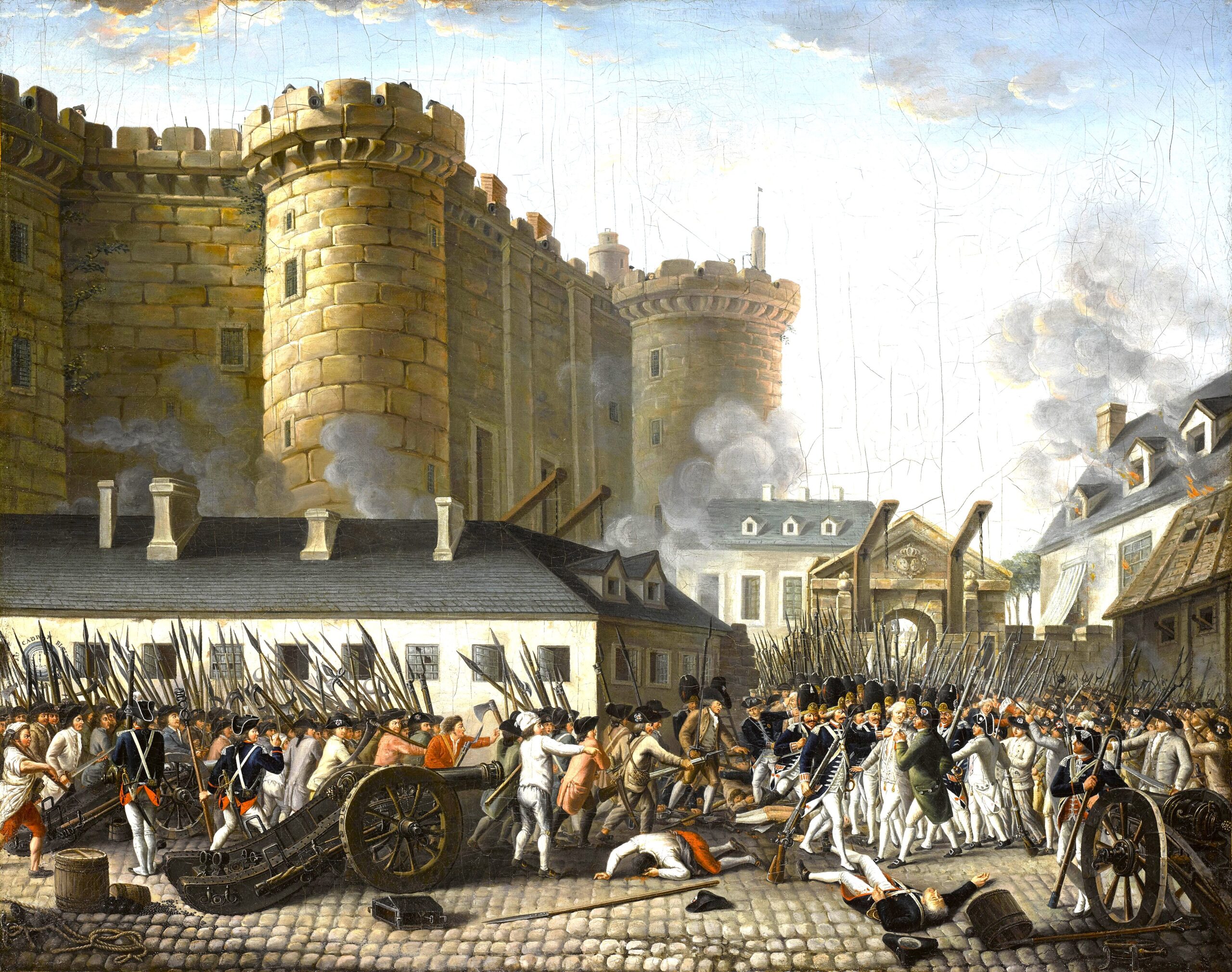
The lessons of history are deeply bitter yet profoundly instructive. To understand the stakes of the present, one must examine the divergence of national trajectories during the first Industrial Revolution in the eighteenth and nineteenth centuries.[1]
Two centuries ago, as mechanization, steam power, and industrial manufacturing swept across Western Europe, the Ottoman Empire[2] sat on Europe’s very doorstep. Positioned at the crossroads of three continents and possessing vast human and material resources, the Empire held every geographic and economic advantage. Yet, it remained severely entangled in internal decay, institutional stagnation, and endless political and religious conflicts.
While European powers built factories, established technical academies, and restructured their financial and military apparatuses around scientific principles, the Ottoman establishment hesitated. Novel machinery, industrial production, and printing technology were viewed with suspicion or delayed by protracted debates over tradition and administrative preservation. By the time the necessity of modernization was fully acknowledged, the technological gap had widened into an unbridgeable chasm. Crippled economically by cheap European manufactured imports and outmatched militarily by modern industrial weaponry, that great empire was progressively dismantled, ultimately collapsing into pieces in the aftermath of the First World War.
Conversely, on the opposite edge of Asia, Japan offered a starkly different response to the challenge of Western technological dominance. Following the 1868 Meiji Restoration[3], the Japanese state took a decisive stance. Recognizing that political sovereignty without scientific and industrial parity was an illusion, Japan’s leadership set aside internal feudal divisions and regional rivalries.
Under the banner of national preservation, Japan adopted scientific learning, industrial education, and modern engineering on an emergency footing. State resources were systematically directed toward sending scholars abroad, building domestic universities, establishing steel foundries, and developing native manufacturing capabilities. In a span of just a few decades, Japan transformed itself from an isolated agrarian society into a global industrial and military powerhouse that astonished the world.
The contrast between the Ottoman decline and the Meiji rise demonstrates a fundamental law of history: nations that fail to master the dominant technological paradigms of their era are inevitably mastered by those that do.
Historical Mastery in Islamic Tradition:
Sultan Mehmed and the Siege of Constantinople – 1453 AD
The idea that technological supremacy is essential for national defense and sovereignty is not an idea foreign to Islamic history. On the contrary, the golden chapters of Islamic civilization were written by leaders who understood that conviction and scientific mastery are inseparable.
A brilliant example is found in the campaign of 1453, when twenty-one-year-old Sultan Mehmed II, known as Sultan Mehmed the Conqueror, captured Constantinople[4], the prophesy of Prophet ﷺ was fulfilled :
“Verily, Constantinople shall be conquered. What a wonderful leader will that leader be, and what a wonderful army will that army be!” [5]
For over a thousand years, Constantinople had stood as an impenetrable fortress protected by the formidable, multi-layered Theodosian Walls that had repelled dozens of armies across centuries. Victory was not achieved through zeal or numerical superiority alone. It was the direct result of understanding, developing, and deploying the most advanced technology, military science, and engineering of that era. Sultan Mehmed demonstrated no hesitation in adopting and pioneering cutting-edge tools.
The Dardanelles Basilic Gun:
Recognizing that conventional siege engines could never breach the ancient masonry of the city, the Sultan enlisted Urban[6], a skilled Hungarian metallurgist and master founder. The Sultan provided Urban with unlimited resources, access to raw materials, and specialized workforces. Together, they designed and cast the Basilic Gun—a giant bronze cannon of unprecedented proportions capable of hurling massive stone balls over half a mile. This engineering marvel shattered the supposedly impregnable Theodosian Walls, proving that historical fortification doctrine was rendered obsolete by technological evolution.
Overland Fleet Engineering:
When the Byzantine forces blocked access to the Golden Horn using a massive, reinforced iron chain stretching across the harbor entrance, the Sultan’s naval forces were effectively cut off. Rather than accepting stalemate or pursuing high-casualty frontal assaults, the Sultan bypassed conventional doctrine entirely. In a single night, through an extraordinary display of logistical engineering, he organized the transport of roughly seventy warships overland over steep, rugged hills using greased wooden tracks, lowering them safely into the Golden Horn behind enemy lines. This unexpected maneuver completely disrupted the defensive posture of the city.
Strategic Vision and Multi-Disciplinary Mastery:
Sultan Mehmed was far more than a military commander; he was a true polymath. He possessed deep fluency in mathematics, geography, military logistics, ballistics, and at least six languages. He studied historical battle strategies rigorously and actively engaged with the leading scientific minds of his time, regardless of their origin. He proved that to achieve lasting dignity, regional stability, and sovereignty, faith and conviction must be paired with clear leadership in contemporary science and technology as an absolute prerequisite.
Sultan Mehmed’s triumph conveys a timeless truth: victory and sovereignty lie in technological leadership. Had the Sultan neglected the advanced artillery, ballistics, and structural engineering of his day, Constantinople would have remained an unassailable bastion.
The Mughals in India
The foundation and consolidation of the Mughal Empire in India were undoubtedly the result of the most advanced military technology and battle strategy of that era. Historical facts prove that the Mughals conquered India and established their rule not merely on the basis of numerical superiority, but through the deployment of the most advanced scientific and military sciences of their time.
Gunpowder and Artillery Technology:
In 1526, during the First Battle of Panipat, the primary reason behind Zahir-ud-Din Babur’s success was his modern artillery and musketeers (gunners). Babur had learned from the Ottomans advanced techniques of gunpowder use, cannon casting, and battlefield deployment. Rana Sanga and Ibrahim Lodi not only lacked artillery, they also relied heavily on traditional war elephants and cavalry, which could not hold their ground against modern artillery.[7]
Tulughma and Tactical Strategy:
Along with military technology, Babur utilized the Ottoman battle formation known as “Tulughma” (a maneuver where carts were chained together with cannons and musketeers stationed behind them). This innovative strategy paralyzed the traditional and cumbersome systems of the opposing forces.
Patronage of Science and Astronomy:
Humayun had a deep passion for astronomy, mathematics, and geography. During Akbar’s reign, modern workshops were established in Fatehpur Sikri[8] for manufacturing cannons and firearms. Akbar’s polymath and scientist, Fathullah Shirazi, was a genius draftsman who invented an advanced cannon capable of firing through multiple barrels simultaneously (which can be regarded as an early precursor to the machine gun), as well as scientific devices for cleaning grain.
Mughal Decline and Neglect of Technology:
As happens in every era, as long as the Mughals[9] maintained technological and military superiority, they remained dominant. However, in later periods, as the foundations of the Industrial and Scientific Revolutions were being laid in Europe, the Mughals completely neglected modern navigation, naval technology, and scientific research. Internal discord, combined with falling behind in cutting-edge naval and military technology, resulted in the British East India Company—equipped with modern naval and military tech and superior firearms—defeating the Mughals and capturing India.
Much like Sultan Mehmed the Conqueror, the rise of the Mughals yields the exact same lesson: leadership in the most advanced technology and science of one’s era is the sole guarantor of power, survival, and sovereignty.
Short Indo-Pak War -May 2005
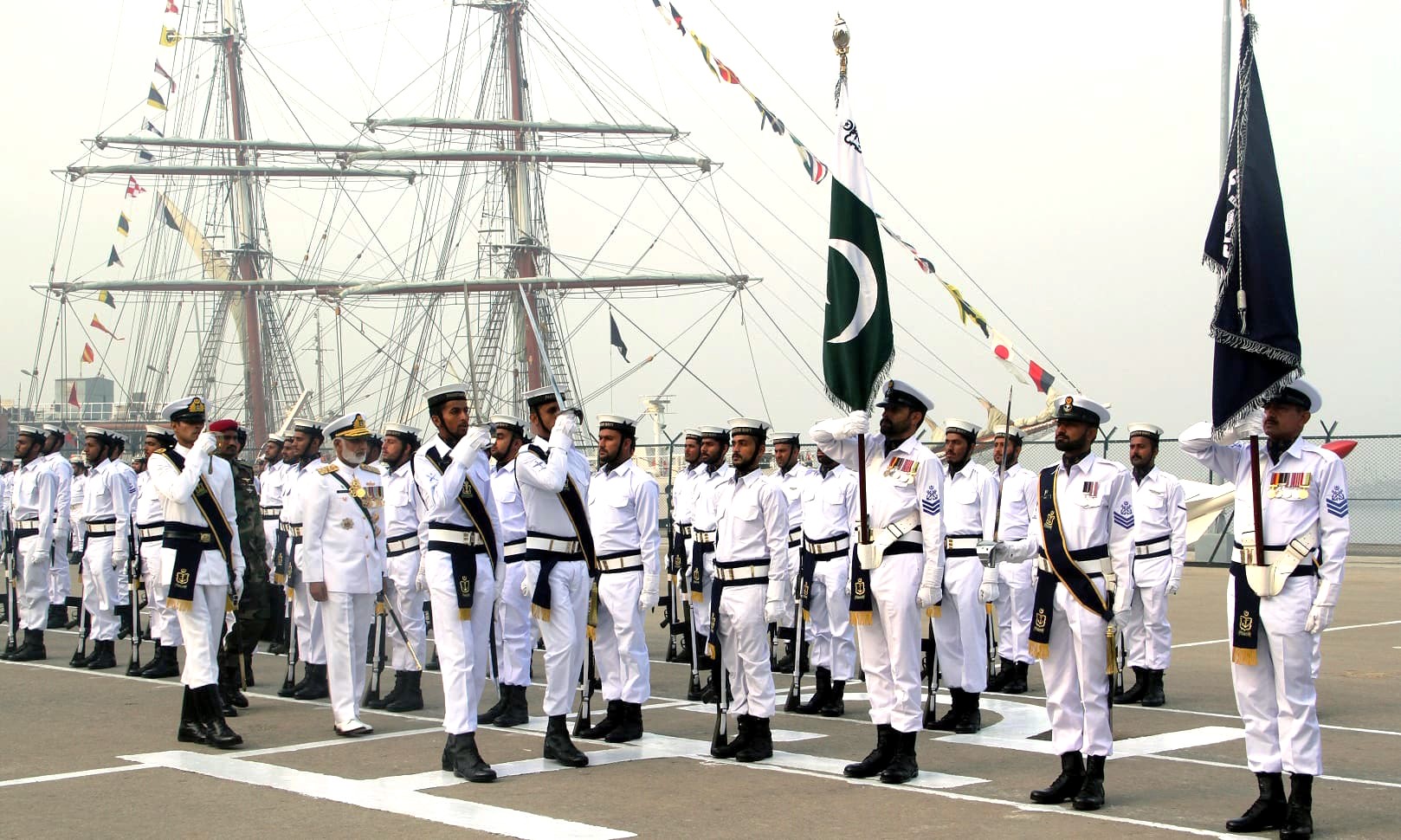
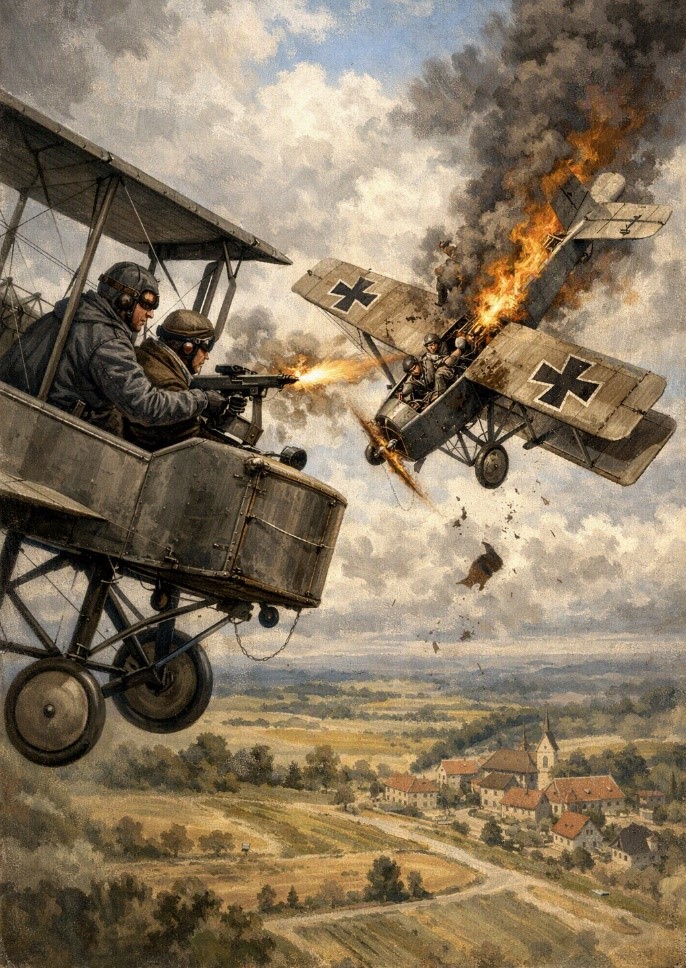
The short, intense four-day aerial and border clash between India and Pakistan highlighted a major shift in South Asian regional defense, where technological innovation, electronic warfare, and early-stage AI integration played a decisive role in shaping the operational outcome.[10]
Beyond Visual Range (BVR) Missiles & Advanced Avionics
The primary aerial engagements demonstrated the superiority of modern radar systems, data-linking, and long-range Beyond Visual Range (BVR) missile technology over traditional dogfighting tactics:
Network-Centric Warfare: The engagement emphasized real-time data sharing between Airborne Early Warning and Control (AEW&C) platforms, ground-based radar grids, and fighter jets.
Advanced Air-to-Air Engagement: The PAF’s utilization of J-10C fighters equipped with PL-15 BVR missiles—guided by active electronically scanned array (AESA) radars—allowed targets to be tracked and engaged at extreme standoff ranges before visual contact was made.
Drone Swarms and Unmanned Systems
Drones and autonomous uncrewed aerial vehicles (UAVs) served as primary assets for reconnaissance, electronic decoy operations, and precision targeting:
Decoy & Saturation Tactics: Unmanned platforms were deployed to test, saturate, and identify gaps in air defense networks.
Loitering Munitions: Precision kamikaze drones and loitering munitions were deployed for targeted strikes on radar sites and tactical installations, minimizing risk to human pilots.
Electronic Warfare (EW) and Radar Jamming
The conflict relied heavily on silent electronic combat before kinetic strikes occurred:
Signal Intelligence & Suppression: Advanced jamming pods were used to disrupt enemy communications, blind ground tracking radars, and spoof GPS/navigation inputs.
Integrated Air Defense Systems (IADS): Automated air defense management systems processed incoming threats, allowing command units to prioritize and intercept incoming missiles and drones dynamically.
Artificial Intelligence & Automated Target Recognition
While fully autonomous “killer robots” were not deployed, AI and machine learning played a pivotal behind-the-scenes role:
Algorithmic Targeting: Automated Target Recognition (ATR) software assisted commanders in rapidly sifting through massive streams of satellite imagery and drone feeds to identify tactical targets in minutes rather than hours.
Information Warfare & Disinformation: AI-generated digital content and automated bot networks flooded social media platforms, creating a secondary “cognitive battlefield” designed to shape international perception and localized narratives during the conflict. Israel has reportedly used AI assistance against Palestinians and Iran.
The confrontation reinforced a key historical lesson:
In 21st-century warfare, victory and deterrence are no longer defined solely by troop size or basic platform numbers. Instead, success depends on sensor-to-shooter speed, algorithmic efficiency, electronic warfare capability, and technological integration.
AI as the Modern “Basilic Gun”
In the twenty-first century, Artificial Intelligence, deep learning algorithms, supercomputing clusters, and advanced semiconductor architectures constitute the modern equivalent of the Basilic Gun. Just as gunpowder and heavy bronze artillery redefined international power structures and invalidated ancient fortification strategies in the fifteenth century, AI is now redefining global economic, cognitive, and military dominance. AI is not a distant future prospect; it is actively transforming every operational domain:
Economic Productivity: Algorithmic optimization, automated decision-making, and predictive logistics are redefining manufacturing, trade, and financial markets. Economies powered by native AI systems are achieving productivity leaps that traditional labor models cannot match.
Defense and National Security: Autonomous platforms, real-time intelligence analysis, cyber-defense systems, and algorithmic situational awareness have become the baseline of modern defense capabilities. Air defenses, maritime tracking, and strategic planning now depend directly on advanced computing power.
Scientific Discovery and Healthcare: AI models are accelerating drug discovery, materials science, weather modeling, and agricultural management, compressing decades of research into months.
Religious Aspects: AI has instant access to thousands of books written over fifteen hundred years of Islam, not possible for any human being to read. These interpretations can be verified and where necessary discarded, maintaining the purity of original faith[11].
If the Muslim Ummah fails to cultivate its own modern-day Urbans[12] —its data scientists, machine learning engineers, computer architects, and hardware designers—will remain trapped on the wrong side of history. It will observe the unfolded future as passive consumers, reliant on external powers for the very tools and infrastructures that run modern society. Rulers like Sultan Mehmed’s legacy demonstrate that the true spirit of Islamic civilization lies not in static repetition, but in achieving self-reliance through the active mastery of cutting-edge knowledge.
Overcoming Intellectual Stagnation and Institutional Inertia
The Artificial Intelligence revolution marks precisely the same historical crossroad as the Industrial Revolution. Confronting this reality requires a candid look at the internal obstacles that hinder scientific progress across much of the Islamic world today.
For Muslim nations to dissipate their intellectual energy, financial resources, and youthful talent in endless internal conflicts, regional rivalries, and outdated debates over traditional narratives represents a grave strategic error. Cultural and administrative systems that prioritize uncritical adherence to routine over empirical enquiry create an environment where innovation suffocates. Until the Ummah breaks free from intellectual paralysis and institutional inertia, it cannot defend its economic sovereignty, let alone contribute meaningfully to global scientific progress.
This push toward scientific mastery is deeply rooted in Islamic tradition and text. The Holy Quran explicitly rejects blind imitation, mental passivity, and unexamined routine. Instead, it continually calls humanity toward empirical observation, logical reasoning, and the systematic investigation of natural laws. Allah Almighty states:
“And He has subjected to you whatever is in the heavens and whatever is on the earth—all from Him. Indeed in that are signs for a people who give thought.” (Surah Al-Jathiyah 45:13)[13]
The Quranic mandate to reflect upon the universe and harness its resources is an explicit call to scientific investigation and technological development. Acquiring modern sciences, building independent computing infrastructure, and mastering artificial intelligence are the practical, contemporary expressions of this directive. They are necessary measures to ensure that nations remain free from systemic exploitation, coercion, and technological subjugation.
The Reality of Digital Colonialism and Cognitive Sovereignty
When the foundations of the first Industrial Revolution[14] were laid in the eighteenth century, much of the Islamic world remained unaware of the shift in production and power. Choosing traditional routine over innovation resulted in severe economic weakness, leaving states vulnerable to foreign domination and colonial exploitation.
Today, the Industrial Revolution is reshaping human society at an unprecedented velocity. However, the foundational layers of Artificial Intelligence—advanced foundational models, specialized semiconductor manufacturing, massive data center infrastructure, and proprietary algorithmic architectures—are heavily concentrated within a small handful of global technological powers.
This concentration introduces a new, subtle risk: digital colonialism. If developing and Muslim nations settle for being mere consumers, users, and low-cost digital labor for foreign technological platforms, the resulting dependence will extend far beyond economic trade. It will penetrate the cognitive realm.
AI models are trained on vast datasets that reflect specific cultural values, historical interpretations, political perspectives, and linguistic nuances. When a society relies entirely on foreign AI models for its educational systems, administrative platforms, research tools, and public communication, its information channels, cultural narratives, and historical memory are gradually shaped by external algorithms. Cognitive sovereignty—the ability of a society to think, educate, and govern according to its own values and strategic priorities—demands self-reliance in artificial intelligence.
A Strategic Roadmap for the Future:
Navigating this reality does not require starting from zero, nor does it require matching the multi-billion-dollar R&D budgets of global superpowers overnight. What it requires is strategic clarity, focused investment, and intelligent adaptation.
For nations like Pakistan, this moment presents both an urgent challenge and a substantial strategic opportunity. Pakistan possesses a large, young demographic, a rapidly expanding software services export sector, and a deep pool of technical talent. The immediate imperative is to transition from low-value IT outsourcing to high-value AI integration, domain-specific model development, and specialized technological architecture.
A practical framework for building national AI capability rests on several core pillars:
Leveraging Open-Weights Models and Accessible Architectures:
Building base frontier models from absolute scratch requires immense capital and energy infrastructure. However, the rise of powerful open-source and open-weights models allows nations to bypass these initial cost barriers. By taking established, high-performing open models and fine-tuning them on specialized local datasets, developing nations can deploy highly effective, sovereign AI tools for public administration, agriculture, healthcare, and education at a fraction of the cost.
Language and Cultural Localization as Strategic Assets:
Languages such as Urdu, regional dialects, and local historical texts remain underrepresented in global training datasets. Developing localized models fine-tuned on native languages, legal codes, educational curricula, and administrative records represents an immediate opportunity. Localized models ensure that digital public services, translation systems, and educational tools function accurately within their own cultural and linguistic context.
Investment in Compute Infrastructure and Data Governance:
Sovereignty in the AI era requires secure physical infrastructure. Governments and private sectors must collaborate to build sovereign data centers, cloud compute clusters, and clear data governance frameworks. Protecting national data assets and ensuring that sensitive domestic data remains stored and processed within national borders is fundamental to national security.
Educational Reform and Talent Retention:
Technical education systems must be restructured to prioritize data science, mathematics, computer engineering, and machine learning from the university level down to technical institutes. Equally vital is creating an economic environment that retains top technical talent, providing young engineers and researchers with the incentives, capital, and infrastructure required to innovate domestically.
Conclusion:
History is progressive but it is not forgiving. It moves forward in continuous cycles, offering opportunities to those who prepare and leaving behind those who delay or lag. The rise and fall of civilizations have always been tied to their willingness to observe, accept, and lead in the mastery of their era’s leading technologies
The Industrial Revolution was an opportunity lost to inertia, leaving generations to live under the shadow of technological dependence. The Artificial Intelligence revolution presents the exact same historical crossroad. The choice facing the Muslim world today is clear and unavoidable: either remain passive consumers of systems designed by others, or become active developers, engineers, and architects of this technological era.
By drawing inspiration from the empirical spirit of Islamic history, abandoning internal division, and making deliberate investments in scientific education, supercomputing infrastructure, and national AI capabilities, the Muslim world can secure a respectable, sovereign, and self-reliant place in the modern world. The future of the Muslim world in general and Pakistan in particular depends on the decisions and actions taken today.
Reference: https://tinyurl.com/Next2AI
[1] https://en.wikipedia.org/wiki/Industrial_Revolution
[2] https://www.britannica.com/place/Ottoman-Empire/Resistance-to-change
[3] https://en.wikipedia.org/wiki/Meiji_Restoration
[4] https://en.wikipedia.org/wiki/Fall_of_Constantinople
[5] Musnad Ahmad: 18957: https://hadithunlocked.com/ahmad:18957 , Mustadrak al-Hakim 8300, Al-Tabarani, Al-Mu’jam al-Kabir 1216.
[6] https://en.wikipedia.org/wiki/Orb%C3%A1n_(ironmaster)
[7] https://www.vaia.com/en-us/explanations/history/the-mughal-empire/mughal-armory/
[8] https://en.wikipedia.org/wiki/Fathullah_Shirazi
[9] https://selfstudyhistory.com/2015/01/27/mughal-science-and-technology/
[10] https://en.wikipedia.org/wiki/2025_India%E2%80%93Pakistan_conflict
[11] AI to purify religion: https://quran1book.blogspot.com/2026/10/TadweenHadith.html
https://tinyurl.com/Next2AI , https://tinyurl.com/SirateMustaqem
[12] https://en.wikipedia.org/wiki/Orb%C3%A1n_(ironmaster)