






Where Pakistan Stands
“Every serious economy has settled on the same three skills.
Pakistan has picked the right fight. It has not yet won it.”
A quiet war is underway. It has no soldiers. It has no borders in the usual sense. It is fought with training budgets, visa categories, and university curricula. The prize is talent. Every serious economy on earth is now competing for the same small pool of people. These are people who can build artificial intelligence systems. People who can defend networks. People who can design the chips that power both.
This is not an abstract concern. It touches national security directly. A country that cannot produce enough AI engineers cannot build its own defense systems. It will always depend on outside vendors for tools it should be building itself. A country short on cybersecurity professionals cannot protect its infrastructure. Banks, power grids, and government databases all become softer targets. A country absent from the semiconductor race will always depend on others for the hardware its economy and its military run on. Talent has become a strategic resource. It is as real as oil or water, and just as fought over. Over the past several months, a detailed study looked at eleven countries.
Pakistan, Germany, India, Japan, the United States, France, the UAE, South Korea, the UK, Singapore, and China were all examined closely. The pattern that emerged is striking. Every single one of these countries names the same three skills as top priorities. AI and machine learning is one. Cybersecurity is another. Cloud and data engineering is the third. Which one ranks highest varies by country. France and the United States both put cybersecurity first. Most others put AI first. This article lays out what the data shows. It then explains what this means for Pakistan specifically.
The Universal Shortlist
Start with the numbers. Japan’s Ministry of Economy, Trade and Industry projects a shortfall of up to 790,000 IT professionals by 2030. That is a striking figure for one country alone. Germany’s Bitkom association counted 109,000 unfilled IT positions in August 2025. That number is actually down from a record 149,000 two years earlier, so progress is happening, just slowly.
The United Kingdom’s cybersecurity workforce gap sits at 3,800 people. This figure comes from the country’s own Department for Science, Innovation and Technology. In the United States, the picture looks different but no less urgent. The Bureau of Labor Statistics projects information security analyst roles will grow more than 33 percent through the early 2030s. That growth rate sits far above the average for all occupations combined.
South Korea offers the most alarming trend line in this entire study. Its cybersecurity workforce gap nearly doubled in a single year. It moved from about 16,000 unfilled roles to roughly 31,000 unfilled roles. That is the steepest year over year deterioration recorded anywhere in this research.
India tells its own version of this story. The country’s technology association, NASSCOM, reports a 51 percent gap. This gap sits between the demand for AI and machine learning talent and the supply available to fill it. Demand for AI and big data roles is expected to exceed one million positions by 2026. China has responded differently. Its Ministry of Human Resources and Social Security launched a Digital Talent Cultivation Action Plan for 2024 through 2026. Nine ministries coordinated on this single plan. China has also begun creating entirely new official job titles. One of these new titles is for testers of generative AI systems, a role that barely existed three years ago.
Singapore presents an interesting twist on the usual pattern. For the first time, AI model development and AI literacy have overtaken general IT skills. These are now the hardest things for Singaporean employers to find. Almost every employer surveyed, 95 percent of them, reports difficulty hiring the tech talent they need. Put together, these numbers tell a single story. No country has enough people with the right skills. This includes wealthy countries. It includes technologically advanced countries. This is not a poor country problem. It is not a rich country problem either. It is universal, and it is getting worse before it gets better.
Why Cybersecurity Deserves Special Attention
Among the three priority skills, cybersecurity stands out for one specific reason. It is the skill governments most consistently measure. It is also the skill they most consistently publish numbers for. AI demand mostly shows up in posting growth percentages. It also shows up in vague policy language that is hard to pin down. Cybersecurity gaps get counted differently. They get tracked and reported year over year. This likely happens because breaches carry immediate, visible consequences. Those consequences hit financial systems. They hit defense networks. They hit ordinary citizens directly and publicly. France offers the clearest example of this urgency. Cybersecurity is now the single most sought after skill among French recruiters heading into 2026. Forty seven percent of them plan to strengthen their security teams this year. That number outranks every other technical skill category tracked. It beats cloud computing. It beats AI engineering too.
Japan has set an explicit national target on this front. The goal is to double the number of registered security specialists by 2030. Germany names cybersecurity as one of its two hardest categories to fill. This sits within the country’s overall IT shortage figures. The pattern across every country studied stays consistent. Cybersecurity is not just in demand. It is in accelerating demand. Nothing in the data suggests this acceleration will slow down soon. For a country like Pakistan, this matters beyond simple economics. Cybersecurity capacity underpins the ability to protect banking systems. It protects government databases too. It protects critical infrastructure from external threats of every kind. A shortage in this specific skill is not just a missed export opportunity. It is a genuine vulnerability that grows larger every year it goes unaddressed.
AI as the Volume Play
If cybersecurity is the most urgent gap, AI and machine learning is the broadest one by far. Six of the eleven countries studied rank AI as their single highest priority skill. China does. So do India, the United States, the United Kingdom, South Korea, and Singapore. No other category comes close to this level of near universal agreement among such different economies.
The reasons behind this vary by country. In the United States, AI related postings have grown far faster than the job market overall. Prompt engineering emerged as an entirely new job category within just a few years. Nobody was hiring for this role in 2020. Now it is common. In the United Kingdom, AI now drives close to 20 percent of all venture capital funding. Hiring has followed that money closely. China has taken the most direct approach of any country studied. It has folded AI talent development into its fifteenth Five-Year Plan. Workforce policy and industrial policy are treated as one effort, not two separate tracks.
South Korea has gone furthest in codifying this priority into law. Its newly expanded Top Tier Visa took effect in 2026. It explicitly names four sectors it wants to attract global talent into. Those sectors are AI, semiconductors, quantum computing, and biotechnology. The message from Seoul is unambiguous. These four fields will define the next decade of economic competition. Korea intends to recruit the best people in the world into them, regardless of where those people were born. What makes AI different from cybersecurity is its sheer breadth. It touches nearly every industry now, not just technology firms. Manufacturing needs it. Agriculture needs it. Logistics, healthcare, and finance all now require some baseline AI capability too. This is why the demand signal is so widespread across every sector studied. AI is no longer a niche specialist skill. It has become closer to what basic computer literacy was twenty years ago, a baseline expectation rather than a rare advantage.
The Quiet Frontier: Quantum and Semiconductors
Beyond the current shortages sits a smaller, stranger category of skill. Quantum computing and semiconductor talent do not show up as urgent shortages today. The global quantum workforce numbers only about 16,500 people worldwide as of 2025. That figure is smaller than South Korea’s cybersecurity gap by itself, yet the trajectory tells a very different story than the current headcount suggests.
Governments and investors are placing enormous bets on a field that barely exists yet in commercial terms. Public funding for quantum research and workforce development reached 56.7 billion dollars globally. That figure rose by 12.7 billion dollars in a single year alone. Confirmed national quantum strategies now exist in nine countries. The United States, China, Germany, France, Poland, Canada, the United Kingdom, Australia, and South Korea all have one. The projected need for quantum professionals by 2030 sits above 250,000 people. That is more than fifteen times today’s entire global workforce in the field.
Semiconductors follow a similar but more mature pattern of growth. The Semiconductor Industry Association projects nearly four million new technical jobs in the United States alone by 2030. As many as 1.4 million of those roles could go unfilled without serious intervention. China faces its own version of this problem, a 300,000 person deficit in this exact field. That gap is growing at 25 percent annually, with no sign of slowing.
What ties these two fields together is timing, not size. Neither is a hire now problem. Both are a build now, hire later problem. The Massachusetts Institute of Technology’s Quantum Index Report makes a point worth repeating here in full. Near term quantum hiring will not come from freshly minted physics doctorates walking straight out of graduate school. It will come from upskilling engineers who already work in AI. It will come from people already working in high performance computing and semiconductor design. In other words, a strong AI and cloud workforce already builds most of the foundation for a quantum workforce too. Most countries do not realize this yet.
Where Pakistan Fits
Pakistan’s position in this global picture is more encouraging than most headlines usually suggest. Real gaps remain, but the foundation looks solid.
The Pakistan Software Export Board works under the Ministry of Information Technology and Telecommunication. It reported ICT exports of 3.8 billion dollars for the fiscal year 2024-25. October 2025 alone brought in 386 million dollars. That was the highest single month on record for the country. Freelance IT export remittances rose 90 percent year over year. They reached 793.5 million dollars, a genuinely large number for this specific category.
On the skills side, PSEB has launched SkillTech Pakistan, an ambitious umbrella program. It targets 430,000 advanced digital skills trainings over three years. Its flagship bootcamp initiative is called SkillLift 1.0. This program has already trained 12,600 people. Another 18,000 are planned in the near future. The focus sits on exactly the four domains that dominate global demand. Those domains are AI, cloud computing, cybersecurity, and blockchain. This is not a coincidence. It reflects an accurate reading of where the world’s hiring is actually headed, not where it used to be five years ago.
Pakistan has also entered the semiconductor race. The approach is modest, but the structure behind it is sound. The INSPIRE program aims to train 7,200 semiconductor professionals over five years. It is backed by 4.5 billion rupees in government funding. Six new integrated circuit labs are being built at public universities as part of this effort. This is the same category of bet that China, the United States, and South Korea are making at far larger scale. Pakistan’s version is smaller in absolute terms. The underlying logic is identical though. Build the pipeline before the demand fully arrives, not after.
The National AI Policy 2025 was approved by the federal cabinet earlier this year. It sets out a six pillar framework. The goal is positioning Pakistan as a leading AI hub within South Asia by 2035. The Digital Nation Pakistan Act 2025 goes a step further on the institutional side. It creates a new National Digital Commission chaired directly by the Prime Minister. This body is meant to coordinate the entire push at the highest level of government. Too many ministries have worked in isolation from each other for too long. A first ever National IT Census is now underway. It runs jointly with the Pakistan Bureau of Statistics and for the first time, this census will properly count the country’s freelance and informal IT workforce. This population has long been undercounted in official statistics. That undercounting happened despite these workers generating real, substantial export revenue for the country every single year.
Taken together, these initiatives show a government reading the global data correctly. Pakistan is not chasing yesterday’s skills; it is building toward the same three priorities that every serious economy on earth has identified as most urgent. Those priorities are AI, cybersecurity, and cloud computing, whichever order a given country ranks them in.
The Gaps That Remain
None of this should be read as complacency. Real gaps remain, and they deserve honest, direct attention rather than quiet dismissal. Pakistan does not yet publish a dedicated, centralized IT vacancy index. Germany’s Bitkom association does exactly this for its own market, updated regularly.
Without that kind of granular, frequently updated data, precise measurement becomes difficult. It becomes hard to know which specific sub skills are falling behind fastest. India and China share this exact same gap, which is worth noting. This suggests the challenge is broader than any single country’s institutional weakness. It may simply be a harder problem for large, fast growing digital economies to solve quickly. Pakistan also remains outside the current quantum computing conversation entirely, for now. This is defensible given the field’s small size today. The high specialization requirements also make immediate entry difficult and possibly wasteful of scarce resources. But the country should begin tracking quantum developments closely starting now. This tracking should happen particularly through the existing AI and semiconductor initiatives already underway. That positioning would let Pakistan move quickly once quantum hiring demand becomes real, rather than staying purely theoretical for another decade. Coordination across the many bodies involved will determine long term success more than any single program will. PSEB, the Higher Education Commission, and the Ministry of IT and Telecommunication are all involved. So are the National Center for Emerging AI and Cybersecurity and various public universities. The National Committee on ICT Skills and Capacity Development has already held seven meetings on this exact topic. That structure looks promising on paper. Its output now needs to translate into faster, more visible results on the ground, not just meeting minutes.
A Framework for Measuring Progress
For policymakers and analysts tracking this space, two signals matter more than any single published report ever could.
The first signal is job postings. Live vacancy data gets tracked continuously across platforms like Indeed. Regional job boards add further coverage on top of that. This data shows what employers actually need right now, in real time. It is the fastest moving, most honest signal available anywhere. It updates in days, not years like a formal government report would. The second signal is policy and capital movement. Government budgets matter here. New visa categories matter too. Venture capital flows into specific technology sectors matter most of all, in many cases. All three of these move six to eighteen months ahead of actual hiring on the ground. When a government creates a new visa category naming quantum computing by name, that is not marketing. South Korea has done exactly this. It is a direct signal about where that country expects future demand to concentrate its energy. When investors pour tens of billions into quantum research globally within a single year, that capital is placing a real bet. It is a bet on a hiring wave still years away from arriving.
Together, these two signals offer a more honest picture than any single annual report could provide alone. Reports remain useful as a form of validation. They let analysts check whether independent, high trust institutions see the same trends developing. But reports should never be the only source consulted. The underlying reality simply moves too quickly for annual publications to keep pace with it reliably.
What Comes Next
The countries winning this race share one common trait above all others. They do not wait for shortages to become full blown crises before acting decisively. Japan is doubling its cybersecurity specialist count as a stated national target. This is not merely a hope expressed in a speech. South Korea is building an entire visa system explicitly around four named priority sectors. China is inventing new official job titles before its universities have even finished designing courses to train people for them.
Pakistan’s own initiatives place the country on a similar path forward. SkillLift, INSPIRE, the National AI Policy, and the coming National IT Census all point in the same direction. This holds true even though Pakistan’s scale still trails the largest economies by a wide margin. What matters most now is consistency over time. Training targets need to be met in full, not just announced with fanfare and then quietly missed. Programs need multiyear funding commitments. Those commitments must survive changes in government, not evaporate with the next election cycle. The private sector, which ultimately does the actual hiring, needs a real seat at the table too. It should help shape what these training programs teach, not just receive graduates after the fact.
The countries that treat talent as a strategic asset will win this decade. This means planning years in advance, not reacting after shortages bite. These countries will have functioning digital economies by 2035. They will also have credible defense capabilities to match.
The countries that treat talent as an afterthought will spend that same decade importing both instead, at a much higher long term cost.
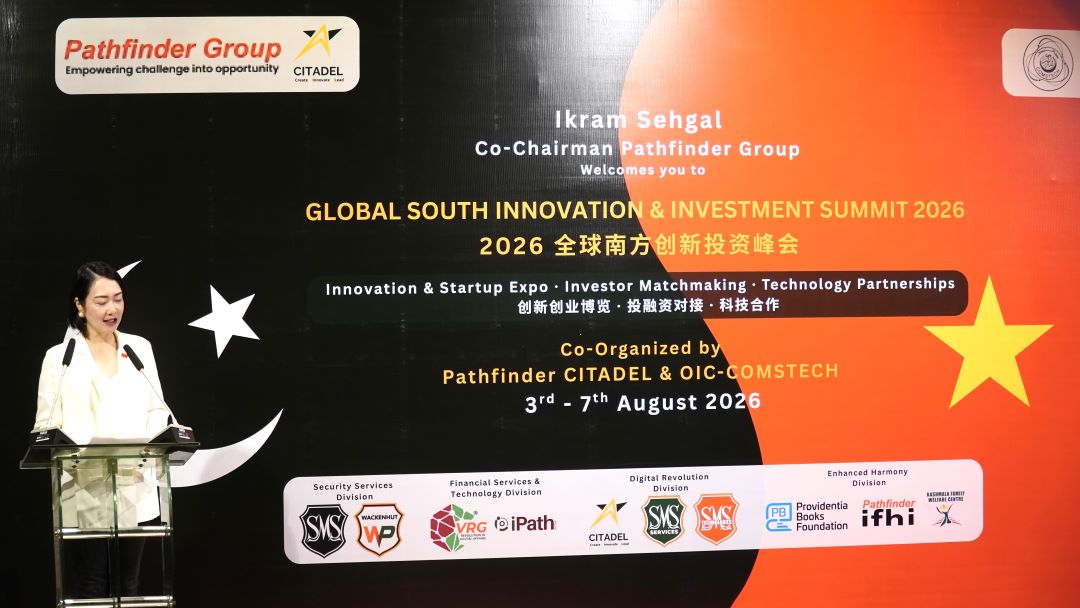
Pakistan has, for once, chosen to plan ahead of the curve rather than behind it. The Government is not carrying this effort alone either. Pathfinder CITADEL, a nation building initiative, runs its own fellowship. It trains people in the same four domains PSEB has prioritized nationally: AI, cloud, cybersecurity, and blockchain. That kind of overlap between state policy and civil society execution is rare. It is also exactly what closing a skills gap this large actually requires. The task now is execution at every level, not just the Ministry. Everything else has already been written down on paper.