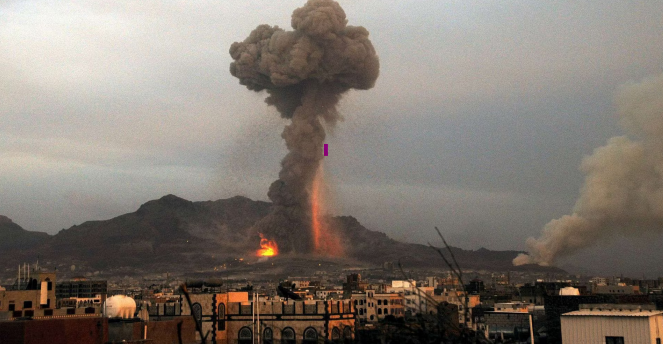





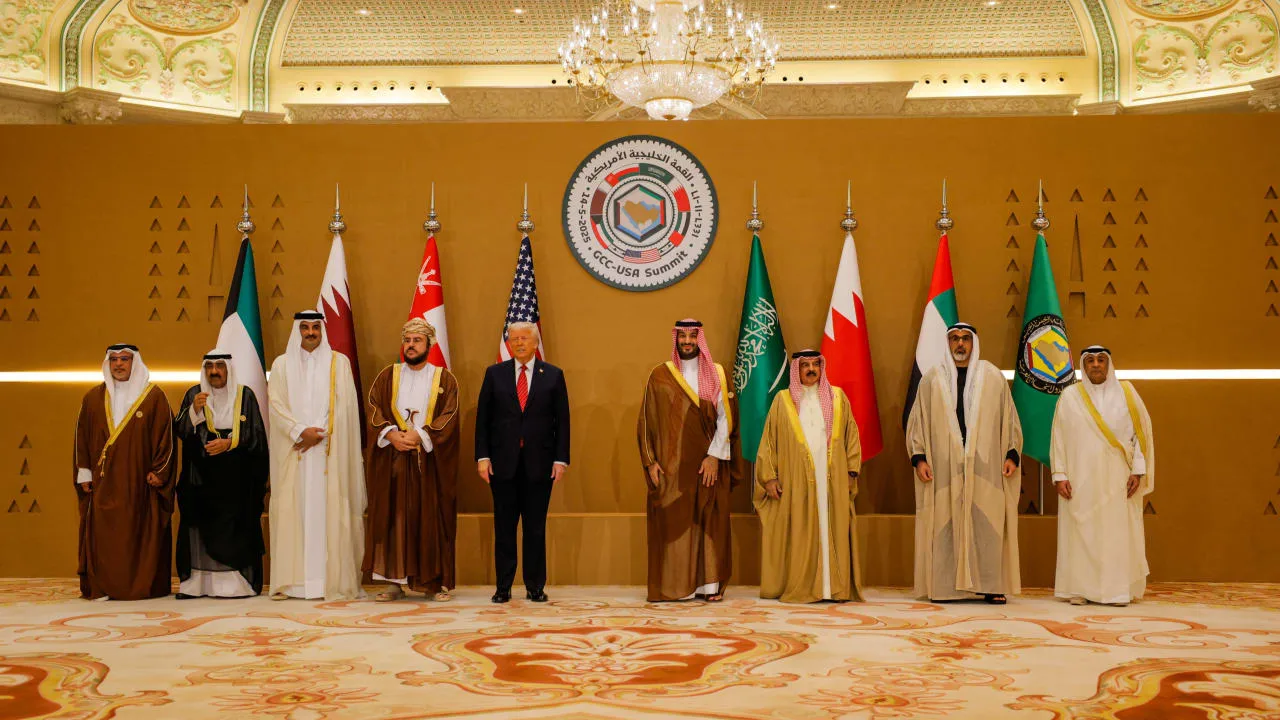
For four months in early 2026, the Gulf Cooperation Council faced something rare in its history: a common external shock. Iranian missiles and drones struck ports, airports, and military facilities across all six member states during the US-Israel war on Iran. Statements from Riyadh, Abu Dhabi, and Doha condemned the attacks in strikingly similar language, and many observers drew a natural conclusion: shared exposure to Iranian retaliation would finally push the GCC toward the kind of collective security architecture it has discussed, on and off, for four decades.
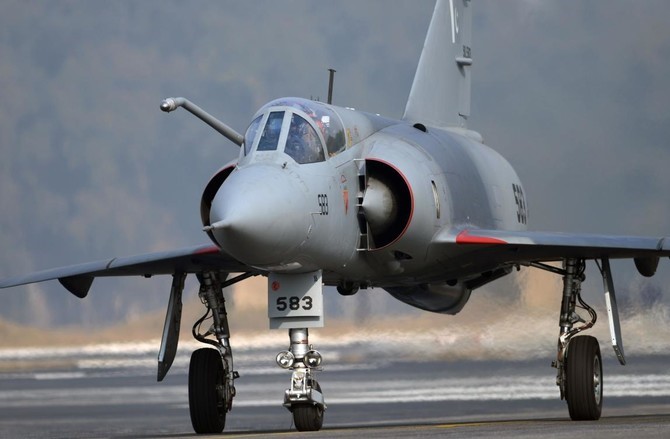
The evidence since the ceasefire suggests a more modest and, in some ways, more interesting outcome. The war does not appear to have produced closer security integration among the six states so much as it has clarified how differently each of them weighs the same set of risks. That divergence deserves more attention than it has received, because it will likely shape the GCC’s institutional trajectory for longer than the current period of calm. Consider how unevenly the war’s lessons have been absorbed. The UAE, which by most accounts absorbed more Iranian strikes than any other Gulf state, has since deepened its security cooperation with Israel rather than stepping back from it. Abu Dhabi reportedly hosted an Israeli-operated Iron Dome battery, the first deployment of that system outside Israel or the United States, and is said to have coordinated retaliatory action against Iranian targets with Washington’s knowledge. Bahrain has moved in a broadly similar direction, shaped as always by its close ties to Riyadh but also sympathetic to the view that Israeli technology and intelligence-sharing offer a useful complement to existing defenses. Saudi Arabia, Qatar, and Oman appear to have drawn a different lesson. Riyadh pushed consistently for de-escalation during the conflict and has since signed a defense agreement with Pakistan while exploring a loose “quad” framework with Turkiye, Egypt, and Pakistan, a hedge against instability that does not involve Israel at all. Qatar, despite being struck by Iranian missiles while hosting a major US airbase, has continued to invest in its long-standing role as a mediator between Washington and Tehran. Oman, for its part, declined to join a GCC statement seen as too critical of Iran and has continued to voice concern about the risks of Israeli military assertiveness in the region.
None of this amounts to a bloc converging on a shared threat assessment. It looks more like six governments reaching several different conclusions from the same events, and each acting accordingly.
This is worth pausing on, because much of the scholarly and policy literature on GCC security cooperation, dating back to the bloc’s founding in 1981, itself a response to the Iranian revolution, has tended to treat these differences as temporary friction on the way to eventual integration, loosely modeled on something like NATO.
The experience of this war invites a gentler but still important revision to that assumption: the differences among Gulf states may be less a stage the bloc is passing through, and more a durable feature of how it operates. There is also a useful theoretical point here. Classical accounts of alliance behavior often expect that a shared external threat produces internal cohesion.
What this war suggests, more modestly, is that threat perception itself is not uniform, because each Gulf state is weighing Iran against a different set of domestic and strategic priorities: Saudi Arabia’s economic diversification agenda under Vision 2030, which places a premium on regional calm; the UAE’s judgment that closer alignment with Israel and the United States offers the most reliable protection; Qatar’s continued investment in mediation as a source of diplomatic leverage; and Oman’s long-standing role as one of the few states that maintains working relations with Tehran. These are not simply differences in tactics. They reflect different underlying theories of how security is best achieved, coexisting within the same regional institution.
It is also worth noting that the war did not fully resolve the problem it set out to address. Iran’s missile and drone capabilities were degraded but not eliminated, and the Strait of Hormuz was not reopened on clearly favorable terms. Gulf states whose territory absorbed Iranian retaliation were not consulted in advance by Washington or Israel, and this appears to have reinforced an existing trend: even close US partners are diversifying their security relationships rather than replacing them, adding European arms suppliers, deeper ties with China and Russia, and in some cases new defense arrangements with Pakistan or Israel.
The overall effect is less a Gulf bloc becoming more autonomous together, and more a set of states each building its own individual hedge. One practical consequence follows from this: a genuinely integrated GCC air-defense network, occasionally discussed as a plausible next step after the shared experience of Iranian strikes, may in fact be further away rather than closer. Interoperable defense requires a shared threat picture and a willingness to pool decision-making over sensitive systems, and that is harder to achieve when member states hold different views on Israel’s role as a security partner, or on how much priority to give Iran’s nuclear program relative to its ongoing use of drones and proxy forces.
For Saudi Arabia and Qatar, officials have suggested that the nuclear question is a longer-term concern, while the more immediate challenge remains the pattern of drone strikes, proxy activity, and maritime disruption that has persisted for years. For the UAE and Bahrain, the two issues are treated as closely linked and worth addressing through firmer deterrence backed by outside partners. Neither view is unreasonable; they simply do not point toward the same policy.
None of this suggests the GCC is at risk of collapse as an institution. It will likely continue to function well as a forum for economic coordination and as a platform for managing disagreements diplomatically, which is itself a valuable role. But as a vehicle for binding security cooperation, this war has reinforced a pattern already visible over the past decade: the GCC tends to manage differences among its members rather than resolve them into a single collective posture. Analysts who continue to treat Gulf security primarily as a bloc-level phenomenon, assuming that developments in one member state reliably predict the posture of its neighbors, may find themselves revisiting that assumption more often in the years ahead.
The more useful conclusion, if a less dramatic one, is this: Iranian missiles struck six countries, but they did not produce one Gulf response. They produced six related but distinct responses, and understanding the space between them is likely to matter more for the region’s security architecture than any single narrative of unity or rupture.