



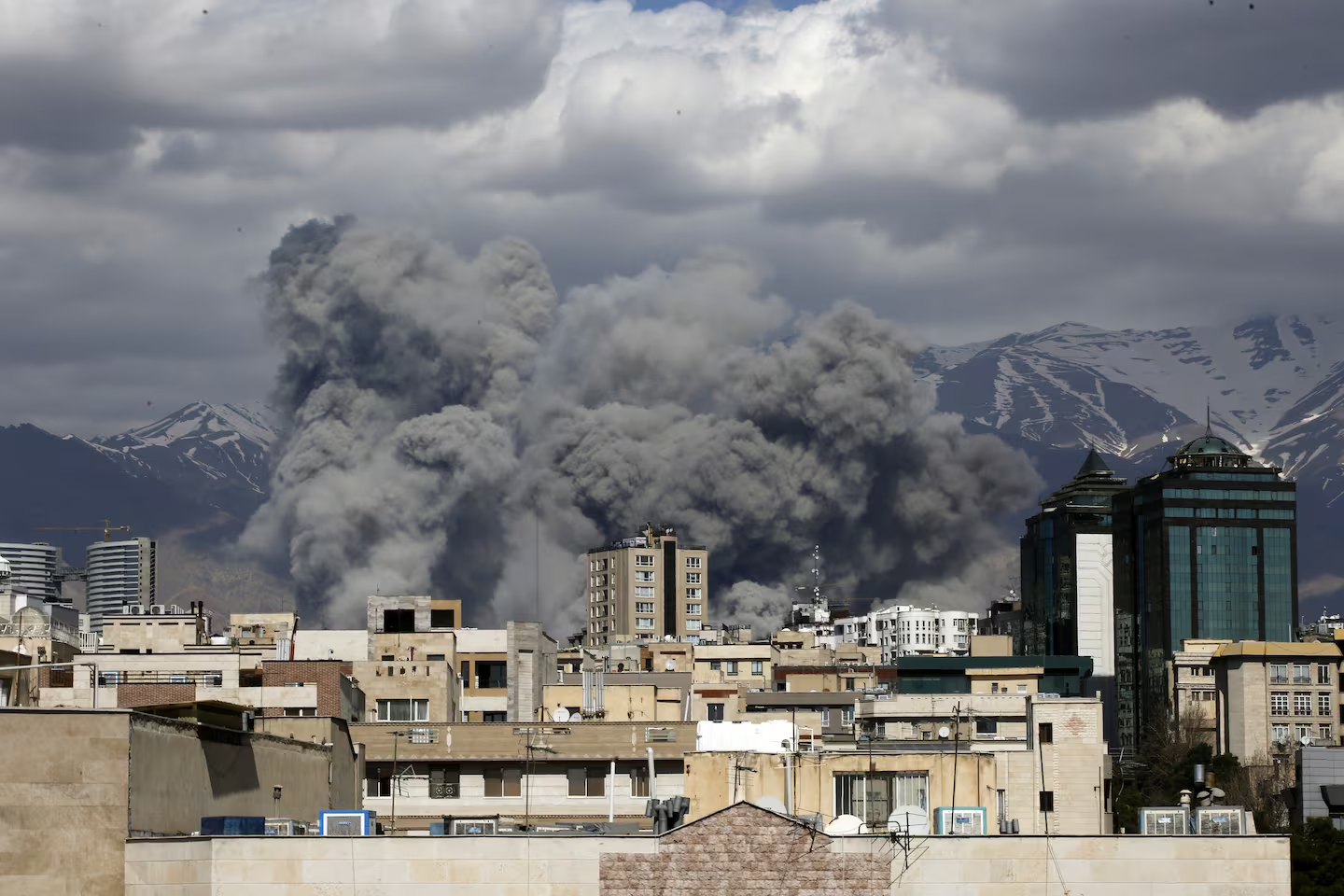
The US-Israel-Iran war is more than just a geopolitical crisis; it hinders climate resilience and increases fragility in the energy, water, and food nexus across the region. Due to the war disruptions in the Strait of Hormuz through which oil and gas pass have increased energy prices and put strain on oil-importing countries, affecting agriculture, food supply chains, and water security. Scientists have repeatedly warned that global warming will exceed 1.5˚C by 2030; if emissions from the Iran war continue, it will further threaten climate and human security not only regionally but globally. In South Asia, primarily Pakistan, these interconnected dynamics shape and expose the regional security amid the war. Pakistan is already stressed by insufficient economic resources and climate vulnerability; the conflict in Iran poses significant challenges for Pakistan’s energy, water, and food security, environmental stability, and long-term sustainable development.
Climatically, the ongoing conflict is significant because Pakistan and Iran share a border of approximately 909 kilometers (565 miles) in the barren and climate-vulnerable Balochistan province, connected to Iran’s Sistan region. Due to its geographical proximity, the distant geopolitical armed conflict between Iran and the US-Israel has a direct impact on climate change in Pakistan. Pakistan is already among the top climate-vulnerable nations, despite contributing less than one percent to global emissions, and yet it pays an enormous price.
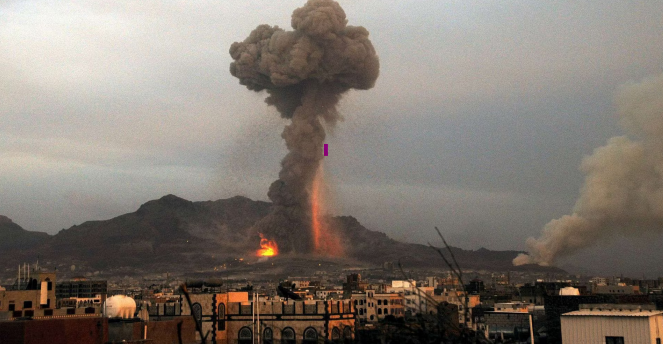
A Sustainable Development Policy Institute(SDPI0 analysis reported that the conflict releases greenhouse gas emissions from damaged oil refineries, producing black carbon, sulphur dioxide, and other toxic pollutants. These pollutants travel as aerosols, enter the atmosphere, and circulate beyond the war zone. Moreover, SDPI stated that Pakistan’s already stressed western regions, such as Khyber Pakhtunkhwa and Balochistan are more likely to face additional air-quality pressure due to transboundary effects. Climate change in Pakistan gradually operates as a “threat multiplier,” adding domestic vulnerabilities, which also heighten existing interlinked instabilities of the country, reflecting a gap in the state’s governance. Inclusively, the war in Iran has emerged as a systematic catalyst, increasing cross-border challenges in the energy, water, and food sectors, and straining regional and global supply systems amid military operations on Iranian soil.
Military activity remains one of the under-regulated sources of greenhouse gas emissions. According to the Estimating Global Military Greenhouse Gas Emissions Report by CEOBS and Scientists for Global Responsibility, scholars cited that the military accounts for around 5.5% of global greenhouse gas emissions. Also, according to the Guardian’s war reports, the first two weeks of the Iranian war have produced more than 5 million tons of CO2 emissions from burning oil depots, emission-prone operations, and structural damage to multiple sectors. The existing conflict carries a high environmental cost comparable to that of entire low-emission countries such as Pakistan, underscoring the carbon-intensive nature of modern warfare.
Apart from emissions, modern combats degrade the environment while healthy ecosystems play a natural role in absorbing carbon. The destructive wars using advanced warfare tactics are shrinking the Earth’s ability to absorb carbon dioxide, making the planet less livable. Besides, the damaged oil and industrial facilities in Tehran released toxic chemicals and pollutants into the air, water, and soil systems, affecting people’s health. Scholars emphasize that the long-term reconstruction phase after the conflict poses a dual effect crisis, demonstrating that war emissions due to the military operations are a direct threat to environmental degradation and a major contributor to climate change, regionally and also at the global level.
Within the broader global framework, Pakistan’s climate change is highly vulnerable in South Asia, driven by extreme weather patterns and environmental degradation. Pakistan’s environmental security is extremely exposed to the ecological decline, primarily the state’s forestation. According to the experts, an 18% decline in forest cover over 33 years leaves Pakistan vulnerable to nature’s wrath. As per the economic survey, Pakistan’s forest loss is a persistent issue, driven by urban expansion and a lack of sustainable development, reducing its natural capacity to absorb carbon. In 2026, Human Rights Watch highlighted that Pakistan is under environmental stress, which intensifies flood risks, extreme heatwaves, soil erosion, and erratic rainfall patterns, reflecting an alarming situation for the country’s climate and human security.
Pakistan has experienced over 224 extreme climate events from 1980 to 2024. In recent times, the flood in 2022 affected millions of people and caused financial loss, estimated at $30-60 billion, making it one of the most devastating climate disasters in Pakistan. According to the report of the Asian Development Bank, Pakistan loses $2 Billion a year on average due to climate hazards. The National Disaster Management Authority (NDMA) reported Pakistan’s rising temperature, air pollution, glacial lake outburst floods (GLOFs), and unpredictable monsoon, which continues to drain water availability, agricultural gains, droughts, and rural livelihoods, mainly in Sindh and Balochistan.
Additionally, the World Bank report has given data on Pakistan’s per capita water accessibility, which has dropped below 1,000 cubic meters, categorizing the country in the list of water-scarce states. In April-May 2026, extreme heatwaves reached beyond 45˚C, mainly in coastal areas of Pakistan, especially Karachi. These climatic shifts are leading to an increasing glacier melt and are responsible for the Indus River’s flow.
The Indus River supports approximately 90% of agriculture and is significant for hydroelectric power. Ultimately, Pakistan’s climate is on the verge due to domestic and regional vulnerabilities such as the ongoing Iran war, threatening the state’s survival, particularly the energy, food, and water nexus.
The closure of the Strait of Hormuz, through which nearly 20% of global oil and LNG trade passes, has begun as a major global concern amid the Iran war. Simultaneously, due to the closure of the Strait of Hormuz, Brent crude prices crossed $120 per barrel in April 2026, while Pakistan’s oil import bill surged from almost $300 million to $800 million, as per the statement of Prime Minister Shehbaz Sharif.
The rising fuel prices in the global markets forced Pakistan to significantly increase petrol and diesel prices, increasing inflation, electricity costs, and rising energy insecurity across the country.
Pakistan’s power sector is also under stress because of LNG spot prices rising to $20-$30 per MMBtu due to supply disruption.
The Iran war further increased food insecurity by disrupting global supply chains, causing fertilizer shortages, since much of the global fertilizer trade passes through the Strait of Hormuz. The ongoing war restrains ammonia and urea exports from the Gulf, driving up agricultural input costs across Asia. Reuters reported that rice supplies were endangered globally by the combined impact of the Iran war and El Niño conditions, while numerous Asian countries faced major declines in crop production. According to the World Bank, rising fuel costs are expected to be higher in 2026, directly impacting Pakistan’s agriculture, irrigation, and fertilizer rates, and food security. The ongoing confrontation in Iran demonstrates how climate, energy, water, and food systems are closely integrated.
Pakistan has introduced the National Climate Change Policy framework, but weak implementation and governance gaps continue to impede progress. Although the country has expanded its solar capacity, the circular debt, favoring wealthier households, and an inconsistent system have strained its effectiveness. Meanwhile, the state’s dependency on imported fuels keeps Pakistan vulnerable to external disputes and energy shocks.
To address climate change globally, the Kyoto Protocol was introduced in 1992, with a key objective of setting binding emission targets, while the Paris Agreement in 2015 promoted the reduction of greenhouse gas emissions to combat climate change and promote climate cooperation. However, limited climate finance, lower participation by developed countries, and weak implementation remain key challenges for developing countries like Pakistan.
For Pakistan, effective policy recommendations, along with rapid implementation are imperative to address climate, energy, water, and food-related challenges. Institutional coordination should be strengthened under a unified policy framework, implemented through a centralized climate authority that integrates energy, water, food, and environmental governance. The energy sector should be modernized through investment in smart transmission systems, storage facilities, and enhanced grid connectivity for renewable energy integration. Renewable energy expansion should be promoted through subsidies for solar financing, tax incentives, and public-private partnerships for clean energy initiatives. A water-efficient agricultural system should also be developed by improving drip irrigation, promoting climate-resilient crops, expanding water storage capacity, and implementing effective water management systems to reduce agricultural losses.
Overall, Pakistan’s climate challenge is an existential threat and primarily a governance issue aggravated by both domestic vulnerabilities and external shocks such as the Iran war. Without shifting from policy formulation to active implementation, even well-formulated strategies may fail to provide resilience across the climate, energy, water, and food nexus.
According to the Greenpeace analysis, “Like all wars, the current war in the Middle East will leave a toxic legacy”, illustrating that conflict is not only a social, political, and economic loss but also a persistent challenge to climate change and entails decades to overcome the destruction even if the conflict ends.