




Path for Pakistan’s Delta Legacy
Author’s Note:
This article is a speculative, exploratory piece intended to stimulate professional debate on the future of the Pakistan Air Force’s Mirage III/5 fleet. It does not constitute a definitive engineering analysis or an official policy proposal. The technical assessments, cost estimates, and capability projections presented herein are based on publicly available data, historical precedents, and reasoned extrapolation. They are offered as a possible pathway—not a predetermined outcome—should the PAF decide to retain and modernize its delta wing legacy fleet into the 2030s and beyond. Readers are advised to treat this as a thought exercise in force structure optimization, rather than a verified engineering analysis.
Introduction: The Wolf in Sheep’s Clothing
The Pakistan Air Force’s oldest combat airframe is about to become its longest
legged strike asset.
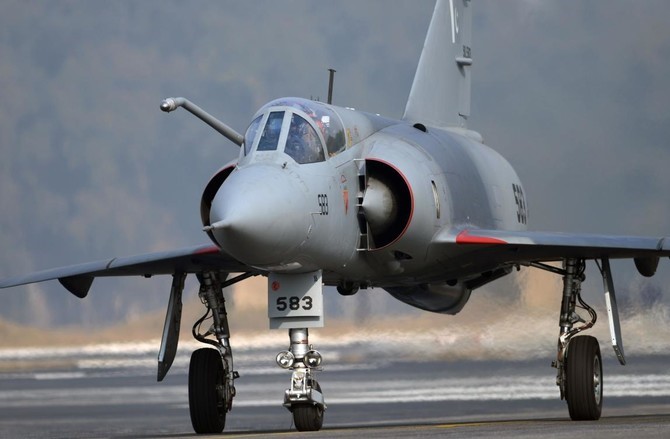
The Dassault Mirage III/5 has been the backbone of the PAF for over five decades, serving with distinction in air defence, deep strike, and maritime interdiction roles. Yet the fleet faces a critical existential challenge: the legendary Snecma ATAR 09C turbojet is long out of production. Sustaining it has become a logistical nightmare of cannibalization and diminishing spares.
While the ROSE‑III avionics upgrades have kept the Mirage tactically viable into the 2020s, propulsion remains its Achilles’ heel. Without a modern powerplant, the airframe—however robust—faces a diminishing future.
But what if the Mirage’s greatest weakness could become its greatest strength? What if a 1960s delta, re‑engined with a modern turbofan and equipped with 2020s avionics, could out‑range the JF‑17 and F‑16, striking deep into the Arabian Sea or the Indian hinterland without tanker support? This is not a mere “retrofit.” This is a strategic conversion.
This article lays out a comprehensive yet pragmatic roadmap for re‑engining the Mirage III/5 with the Chinese WS‑13E turbofan, complemented by a hybrid intake modernization, a three‑tier center‑of‑gravity recovery strategy, and a contemporary avionics suite built around the Grifo‑E AESA radar. Recent upgrades to the Mirage F1 by U.S. adversary air companies have already demonstrated that Mirage‑family airframes can be fully regenerated and modernized. The question is no longer whether it is possible—but whether Pakistan will seize the opportunity.
The goal is not merely to keep the Mirage flying, but to transform it into a near‑Gen 4.0 deep‑strike asset—a long‑legged, networked shooter capable of delivering stand‑off weapons deep into contested airspace, while complementing the JF‑17 and J‑10CE in PAF’s integrated combat architecture.
The Logistics Victory: One Engine Ecosystem to Rule Them All
The ATAR 09C is a dead end. Maintaining it requires a diminishing pool of spare parts, extensive cannibalization, and increasing reliance on expensive, time‑consuming overhauls. Every flight hour is a logistical battle.
Contrast this with the WS‑13E. The same engine—or a close variant—powers the JF‑17 Block III export variants. By retrofitting the Mirage with the WS‑13E, Pakistan achieves something far more significant than a simple upgrade: it consolidates its entire fighter fleet onto a single engine ecosystem.
| Aspect | ATAR 09C Era | WS‑13E Era |
| Supply Chain | Fragile, diminishing | Shared with JF‑17 |
| Spares Availability | Limited, expensive | Common pool |
| Maintenance Training | Dedicated ATAR specialists | Single training pipeline |
| Overhaul Facilities | Legacy, ageing | PAC Kamra MRO (shared) |
| Strategic Risk | High (obsolescence) | Low (indigenous sustainment) |
This is a logistical warfare victory. It transforms the Mirage from a maintenance burden into a sustainable, cost‑effective asset that shares the same supply chain, training, and maintenance infrastructure as PAF’s frontline fighter.
The Mirage F1 Precedent: Upgrades Are Happening Now
Recent upgrades to the Mirage F1 demonstrate that comprehensive Mirage‑family modernization is not only possible—it is being done today.
Airborne Tactical Advantage Company (ATAC) , a subsidiary of Textron, acquired 63 retired ex-French Air Force Mirage F1 fighters in July 2017. The deal included several million spare parts, ground support equipment, and over 100 spare ATAR 9K50 engines. ATAC plans to upgrade roughly 45 of these aircraft with modern avionics, radars, and electronic warfare systems, including digital radio-frequency memory (DRFM) jamming capabilities.
Draken International acquired 22 upgraded former Spanish Air Force Mirage F1M and F1B jets in 2017. These aircraft feature modernized cockpits with color LCD multi-function displays, a Smart HUD from Sextant Avionique, a Sextant inertial navigation system with GPS interface, NATO-compatible Have Quick 2 secure communications, Mode 4 digital IFF, a defensive aids suite, and upgraded Cyrano IVM radars with sea search and air-to-ground ranging modes. The Spanish Air Force had completed this full radar and avionics suite modernization in the late 1990s.
Working with Paramount Aerospace Systems (South Africa), ATAC and Draken have:
- Fully disassembled and structurally inspected each airframe
- Performed complete engine overhauls
- Upgraded avionics and mission systems
- Returned the aircraft to supersonic, radar-equipped operational status
The first test flights of these retrofitted aircraft took place in August 2019 (ATAC) and November 2019 (Draken). These Contracted Adversary Air (ADAIR) companies fly these supersonic jets under multi-billion-dollar Pentagon contracts to supplement official military training. They regularly deploy to key USAF bases—such as Nellis, Luke, and Holloman—to challenge fourth- and fifth-generation fighter pilots with realistic combat scenarios.
The lesson is clear: Mirage‑family aircraft are not relics. With the right engineering expertise—which Paramount and, by extension, PAC Kamra already possess—these airframes can be regenerated, modernized, and returned to frontline capability. The F1 proves it can be done.
Therefore, imagining that the same can be done with legacy Mirage III/5 even more extensively, given its larger production run and deeper structural reserves, is not only possible but probable.
Operational Vignette: The Strike Cell
A flight of four Mirage‑WS‑13Es, refueled once over the Arabian Sea, loiters for three hours off the Gujarati coast. Their Grifo‑E AESA radars remain in passive mode, fed targeting data via Link‑17 datalink from an AWACS. The moment a hostile surface contact is classified, they ripple‑fire long‑range anti‑ship missiles like Taimoor without ever lighting their afterburners—remaining invisible to infrared search‑and‑track systems.
The enemy never sees the launch, never hears the warning. The Mirages egress at Mach 1.2, dry thrust only, with a substantial part of their extended combat radius still in reserve. The old deltas have become silent, long‑legged snipers of the sea.
This is not fantasy. This is the capability that the WS‑13E retrofit unlocks.
The Propulsion Revolution: Why WS‑13E?
The physical differences between the ATAR 09C and the WS‑13E dictate the entire retrofit philosophy.
| Metric | ATAR 09C (Turbojet) | WS‑13E (Turbofan) | Net Differential |
| Engine Type | Single‑shaft turbojet | Twin‑spool low‑bypass turbofan | Generation leap |
| Installed Length | 5.90 m | 4.14 m | ‑1.76 m (shorter) |
| Diameter | 1.00 m | 1.02 m | +0.02 m (negligible) |
| Dry Weight | 1,456 kg | 1,135 kg | ‑321 kg (lighter) |
| Dry Thrust | 42.0 kN | ~57.0 kN | +15 kN (+36%) |
| Wet Thrust | 60.8 kN | 86–93 kN | +25–32 kN (+41‑53%) |
The WS‑13E’s dry thrust (57 kN) nearly matches the ATAR’s afterburning thrust (60.8 kN). This means the Mirage could fly most mission profiles—including supersonic dashes—without engaging the afterburner, dramatically reducing fuel consumption and thermal signature.
The 1.76‑meter length reduction and 340 kg weight reduction are equally transformative. The shorter engine frees valuable fuselage volume for avionics or cooling systems. The lighter weight, combined with substantially higher thrust, delivers a quantum leap in thrust‑to‑weight ratio—from approximately 0.65 to over 0.85.
Performance Envelope Shift:
The WS‑13E’s 47% improvement in fuel efficiency transforms the Mirage’s operational reach. Where the legacy ATAR 09C limited the Mirage to a 600–700 km combat radius with heavy payloads, the modernized aircraft achieves over 1,000 km—on internal fuel alone. This eliminates the need for external drop tanks on deep‑strike missions, freeing hardpoints for weapons.
Even more significantly, the WS‑13E’s dry thrust eliminates the afterburner penalty. In the legacy aircraft, pushing through the high induced drag of a 4,000 kg payload often required afterburner engagement—doubling fuel consumption and crippling range. The WS‑13E removes this penalty entirely. The modernized Mirage can climb, cruise, and maneuver through high‑drag configurations entirely on dry power.
| Mission Profile | Legacy Mirage (ATAR 09C) | Retrofitted Mirage (WS‑13E) | Gain |
| Hi‑Lo‑Hi Combat Radius | 600–700 km | ~1,000 km | +300 km |
| Pure Low‑Level Radius | 400–500 km | ~700 km | +200 km |
| Afterburner Dependence | High | Extremely Low | Massive fuel savings |
The Mirage‑WS‑13E becomes a long‑legged strike fighter, capable of deep interdiction and extended maritime patrols with modern stand‑off weapons. Instead of functioning primarily as a point‑defence interceptor, the re‑engined Mirage evolves into a long‑endurance strike aircraft—where endurance, payload, and persistence matter more than extreme maneuverability.
Intake System Integration: A Hybrid Approach
The 1.76‑meter length gap left by the shorter WS‑13E is not a penalty—it is an opportunity. Rather than filling it with a dead‑weight straight pipe, a redesigned intake duct is proposed that manages airflow while shielding the engine from radar detection.
Rather than implementing a full Diverterless Supersonic Inlet (DSI) redesign—which would require extensive structural modifications and aerodynamic re‑validation—the proposed intake modernization employs a combination of proven airflow management techniques:
- Removal of Variable Geometry: The half‑cone “mice” and splitter plates are removed. These components currently occupy significant cross‑sectional area within the intake duct. Their removal increases the unobstructed flow area, meeting the WS‑13E’s higher mass flow demand without altering the aircraft’s external profile.
- Shock Control Bump: A fixed compression surface—essentially a carefully shaped ramp—is introduced ahead of the intake lip. This bump generates the required oblique shock, decelerating supersonic airflow to low supersonic speeds before it enters the duct, improving pressure recovery.
- Vortex Generators: Small aerodynamic surfaces added inside the intake duct energize the boundary layer, making it more resistant to separation when encountering the shock system.
- Boundary Layer Bleed: Carefully positioned bleed slots remove low‑energy boundary layer air that would otherwise cause flow separation and compressor‑face distortion. The WS‑13E’s substantial thrust surplus provides the margin to absorb the mass flow loss associated with bleed.
Result:
A simpler, lighter, and more aerodynamically efficient intake system that reduces maintenance overhead and preserves the Mirage’s external profile—minimizing aerodynamic behaviour changes and simplifying certification.
Centre of Gravity Management: The Three‑Tier Approach
The WS‑13E is 340 kg lighter and mounted such that its internal mass center is positioned further aft. This creates an unbalanced aft pitching moment that shifts the aircraft’s center of gravity aft, reducing its static margin. Rather than adding dedicated external structures—such as conformal fuel tanks—for CG compensation, a more elegant solution leverages mandatory upgrades as functional ballast. This approach restores the aircraft’s center of gravity to its exact factory coordinates while delivering multiple operational benefits.
Tier 1: Functional Avionic Mass
The legacy Grifo‑M3 mechanical radar is replaced with the modern Grifo‑E Active Electronically Scanned Array (AESA) radar. The new system’s hardware mass is approximately 130 kg, compared to the legacy system’s 55 kg—a net increase of 75 kg of functional forward mass positioned at the extreme nose.
Tier 2: Titanium Nose Bulkhead Collar
The heavier AESA array requires structural reinforcement to handle 9G maneuvering loads. A titanium bulkhead collar, fitted behind the radar’s antenna attachment face, adds 40 kg of structural forward mass while serving as a necessary strengthening brace.
Tier 3: High‑Fatigue Front Wing Spar Reinforcement
As part of a comprehensive Structural Life‑Extension Programme (SLEP), the high‑stress wing‑to‑fuselage attachment joints along the front spar are overhauled. The original aluminum spar caps are replaced with thickened titanium components, adding 55 kg of structural weight forward of the center of gravity.
Net Weight & Balance Summary:
| Component | Mass Change |
| Engine Weight Saved | −340 kg |
| Legacy Radar Removed | −55 kg |
| Grifo‑E AESA Added | +130 kg |
| Titanium Nose Collar Added | +40 kg |
| Titanium Front Spar Reinforcement Added | +55 kg |
| Net Aircraft Weight Change | −95 kg |
Crucially, this approach restores the aircraft’s center of gravity to its near the exact factory coordinates without adding dead weight. The Mirage‑WS‑13E leaves the overhaul facility 95 kg lighter overall, with extended structural life, advanced AESA radar capability, and its original aerodynamic profile and handling qualities fully preserved.
Avionics Overhaul: The Grifo‑E AESA Package
To transform the Mirage into a genuine near‑Gen 4.0 combatant, the avionics suite must be brought into the 2020s. Rather than developing bespoke systems, the optimal approach is to adopt systems already proven and available—with the Grifo‑E AESA radar offering a distinct advantage: it fits the existing Mirage III/5 nose cone without structural modification.
| System | Specification | Integration Benefit |
| AESA Radar | Grifo‑E (Leonardo) | Multi‑mode AESA with air‑to‑air (including BVR), air‑to‑ground, and maritime capabilities. Air‑cooled design simplifies integration. Fits existing Mirage III/5 nose cone. |
| Digital EW Suite | Integrated DRFM jamming | Survivability against modern IADS (S‑400). |
| Cockpit Displays | 3× MFD + Wide HUD + HMD/S | Common pilot interface with JF‑17; enables PL‑10E HOBS employment. |
| Tactical Datalink | Link‑17 + SATCOM | Networked sensor‑shooter capability. |
| Mission Computers | JF‑17 Block III spec | Common weapon integration software across fleets. |
| Flight Controls | Retained Mechanical/Hydraulic | No FBW. Saves millions, avoids extensive flight testing. |
PAC Kamra’s Role
PAC Kamra already co‑produces or integrates a significant portion of JF‑17 Block III avionics, including mission computers, flight control components, and cockpit displays. The Avionics Production Factory (APF) has radar production and integration experience. APF and the Dual‑Seat Integration Facility are already configured to integrate “avionics and weapon systems of choice.”
Priorities for PAC Kamra co‑production / integration:
- Grifo‑E AESA Radar – leverages APF’s radar integration experience.
- Mission Computers – ensures software sovereignty.
- EW/Self‑Protection Suite – critical for survivability.
- Cockpit Displays & HMD/S – directly available from existing production lines.
By adopting this common avionics ecosystem, PAF consolidates its entire fighter fleet onto a single supply chain, software update cycle, and pilot training syllabus. The Mirage‑WS‑13E becomes a full member of the 4th‑generation fighter family.
Weapons Integration:
The Mirage’s robust airframe, particularly the seven‑hardpoint configuration of the Mirage 5 variants, makes it an ideal heavy‑lift platform for the PAF’s most potent munitions.
Already Integrated / Certified:
| Weapon | Type | Range |
| Taimoor | Stealth ALCM | 290–600 km |
| Ra’ad‑II | ALCM | 600 km |
| H‑4 SOW | Stand‑Off Glide Bomb | 120 km |
| H‑2 SOW | Stand‑Off Glide Bomb | 60 km |
| MBDA AM-39 Exocet | Anti‑Ship Missile | ~70 km |
| Various AAM | Air-to-Air Missile | 20-60 km |
Structural Life: The PAC Kamra Advantage
Any discussion of a decade‑plus extension must address the airframe’s structural health. The Mirage’s original fatigue life was estimated at 1,500–2,000 hours—yet decades of rigorous maintenance have proven otherwise.
Proven Data:
- Fuselage: Up to 8,000 fatigue hours with regular inspection (verified through fatigue analysis conducted by Aerostructures Australia Pty Ltd. and Swiss authorities).
- Wings: Approximately 2,250 hours (the critical bottleneck)—but PAC Kamra’s Wing Refurbishment Facility (WRF) has been overhauling and repairing Mirage wings since 1980.
PAC Kamra’s Mirage Rebuild Factory (MRF)
- Worked on 350 Mirages and 2,280 ATAR engines.
- Recovered 19 structurally damaged aircraft.
- Has a dedicated Fuselage Structural Repair Facility.
- Upgraded 36 ex‑RAAF Mirages to ROSE standards.
The structural reinforcement required for the WS‑13E retrofit is modest and well within PAC Kamra’s demonstrated capabilities. The front spar reinforcement described in the CG management section is a critical element of this structural life extension program, extending the wing’s fatigue life by an estimated 2,000 flight hours.
The airframe has substantial untapped life remaining. The question is not whether it can survive—the structural data says it can. The question is whether PAF chooses to invest.
Cost Analysis
| Parameter | Estimate |
| Per‑Airframe Retrofit (Engine + Intake + Avionics + Structural) | $5–7 million |
| Fleet Retrofit (100+ Mirage 5 airframes) | $500–700 million |
Comparative Context:
- A new JF‑17 Block III costs approximately $25–30 million.
- A new J‑10CE costs approximately $50–60 million.
For the cost of 20‑25 new JF‑17s, PAF could instead retrofit 100 Mirages into long‑legged, network‑centric strike platforms. This is not a replacement for the JF‑17—it is a force multiplier that dramatically increases the total number of operational shooters without expanding pilot training overhead.
Strategic Impact
The Mirage‑WS‑13E hybrid fills a critical niche in PAF’s evolving force structure:
| Platform | Primary Role | Key Strength |
| JF‑17 Block III | Air Superiority / Medium Strike | Agile, cost‑effective, BVR‑optimized |
| J‑10CE | High‑End Air Defence | AESA, PL‑15, advanced EW |
| Mirage‑WS‑13E | Deep Strike / Maritime Interdiction | Endurance, payload, stand‑off reach |
The Mirage‑WS‑13E is not a dogfighter—it does not need to be. In the BVR era, maneuverability is secondary to sensor fusion, network integration, and missile reach. The Mirage’s modest agility is irrelevant when it can launch a BVR from 60-80 km. The objective is not to make the Mirage the most agile fighter in the Pakistan Air Force. The objective is to make it one of the most effective long‑range precision strike platforms available within the force structure. This fleet offers PAF a transitional capability—sustaining combat power and deep‑strike credibility well into the 2030s while 5th‑generation platforms (PFX, KAAN, or J‑35) mature.
Legacy vs. Modernity: A National Engineering Renaissance
The Mirage‑WS‑13E retrofit is not merely an airframe upgrade—it is a statement of Pakistan’s aerospace ambition.
PAC Kamra has spent decades mastering the Mirage airframe. The Mirage Rebuild Factory, the Wing Refurbishment Facility, the Fuselage Structural Repair Facility, and the Avionics Production Factory—these are not theoretical capabilities. They are operational, proven, and staffed by engineers who know the delta wing inside and out.
The WS‑13E retrofit takes PAC Kamra beyond simple bolt‑on avionics upgrades. It demands full airframe re‑engineering—structural modifications, intake redesign, CG management, and aerodynamic tuning. This is the kind of complex, system‑level integration that builds the intellectual capital and industrial capability necessary for Project Azm, Pakistan’s 5th‑generation fighter program.
By re‑engineering the Mirage, Pakistan re‑engineers its own aerospace future. The skills acquired—composite structural fabrication, intake duct design, advanced avionics integration, and structural life-extension techniques—are directly transferable to the development of an indigenous fighter. The Mirage becomes a flying testbed, a training ground, and a proof‑of‑concept for Pakistan’s ambition to join the ranks of nations that design, build, and sustain their own combat aircraft.
This is not just an upgrade. This is a renaissance.
Conclusion
The Mirage III/5 airframe, though born in the 1960s, still has untapped potential. The WS‑13E engine delivers a generation leap in thrust, efficiency, and endurance. The hybrid intake modernization delivers the required airflow while preserving the aircraft’s external profile.
The three‑tier CG recovery approach restores stability using mandatory upgrades as functional ballast. And by adopting the Grifo‑E AESA and JF‑17 Block III avionics suite wholesale, PAF can consolidate its entire fighter fleet onto a common digital backbone—simplifying logistics, training, and software upgrades.
Crucially, this transformation is achieved without expensive and unnecessary Fly‑By‑Wire modifications or external structural additions. The Mirage remains inherently stable, controllable, and safe—preserving the handling characteristics that have made it a legend, while unleashing capabilities its original designers never imagined.
The modernized Mirage emerges 95 kg lighter overall, with advanced AESA radar, extended structural life, and a combat radius exceeding 1,000 km—all while preserving the external profile and handling qualities that have made it a legend.
The Mirage‑WS‑13E is not a relic—it is a reimagined spearhead. It bridges the past and the future, ensuring that Pakistan’s delta legacy continues to fly with relevance, lethality, and strategic impact well into the 2030s and beyond.
Pakistan’s oldest combat airframe is about to become its longest‑legged strike asset.
References
- Aerostructures Australia Pty Ltd. Fatigue Analysis and Structural Life Extension Studies for Mirage III/5 Airframes.
- AGARD/NATO. Reports on S-Duct Inlet Design and Compressor-Face Distortion Management.
- Airborne Tactical Advantage Company (ATAC). Public releases on Mirage F1 acquisition and regeneration program
- AIAA / NASA. Research papers on vortex generators and boundary layer bleed in supersonic intakes.
- Anderson, John D. Fundamentals of Aerodynamics. McGraw-Hill.
- Dassault Aviation. Mirage III/5 Technical Description and Maintenance Documentation.
- Guizhou Aviation Engine Corporation. WS-13E Technical Specifications (publicly available data).
- Jane’s All the World’s Aircraft. Various editions.
- Leonardo S.p.A. Grifo-E AESA Radar Technical Data Sheets.
- Pakistan Aeronautical Complex (PAC) Kamra. Publicly released information on ROSE, Mirage Rebuild Factory (MRF), Wing Refurbishment Facility (WRF), and Avionics Production Factory (APF).
- Raymer, Daniel P. Aircraft Design: A Conceptual Approach. AIAA Education Series.
- Roskam, Jan. Airplane Design (Volumes on configuration layout and propulsion integration). DARcorporation.
- Snecma (Safran). ATAR 09C Technical Data.
- Mann, J.Y. et al. Improving the Fatigue Life of the Mirage IIIO Wing Main Spar ARL-STRUC-R-398, January 1984 (DTIC ADA149054).
Disclaimer:
This article is a conceptual engineering study, not a finalized design or official policy proposal. It explores one possible modernization pathway based on publicly available information, historical precedents, and established aerospace engineering principles. Performance figures—including combat radius, endurance, and aerodynamic projections—are analytical estimates, not verified outcomes. Actual performance would depend upon detailed engineering validation, flight testing, and operational evaluation. References to future weapons or propulsion commonality are conditional scenarios, not assumptions regarding current PAF inventory or procurement decisions. The purpose is not to predict an outcome, but to examine whether a carefully planned modernization program could extend the Mirage’s operational utility while contributing to Pakistan’s indigenous aerospace capabilities.