


Brief Historical Overview
Traditional invaders on Indian sub-continent civilization always arrived from either Central Asia or from Arabian Gulf side. The nature of invasions in terms of objectives were varying from ruler’s rivalry to expansionism mindset of conquerors like Muslim Abbasid conquest, Mahmoud Ghaznavi, Genghis Khan, Delhi Turkic Sultanate, Mughal Empire and finally the British Raj. In all the above-mentioned invasions and consequent ruling period by the invaders, the end result was that United India or the sub-continent was always under foreign occupation more than one thousand years. The local Hindu dynasties were never strong enough to stop the invaders. Some marginal dynasties tried to offer minimal resistance like Rana Sanga who initially invited Babar to invade Delhi in order to eliminate the Lodhi dynasty. Rana Sanga lost the war miserably against the Mughal forces after Babar successfully overcame the Lodhi dynasty.
In the political and military set ups established by the Muslim rulers, local Hindus were not either given opportunity to exert or advance their influence or they were not interested in such affairs until Mughal emperor Akbar went an extra mile and established personal relations with Rajput dynasty and married with Rani Jodha Bai. This was the initialization of a new era when locals were given access to state craft and military affairs.
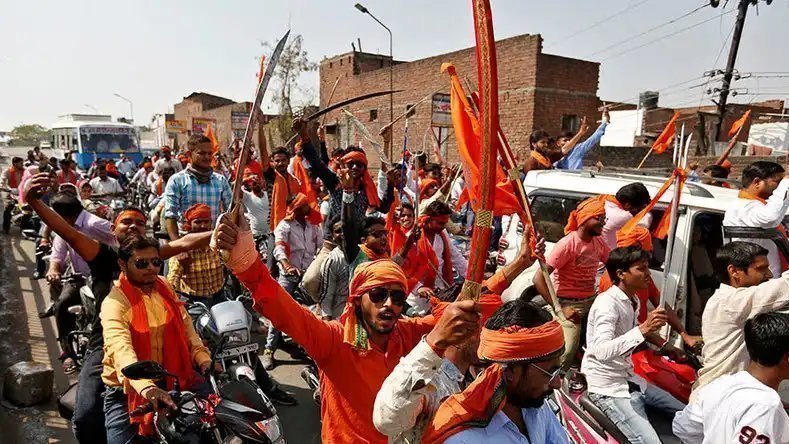
Although Muslims never tried to convert locals to Islam by force, yet this is the slogan often used by RSS mainstream leadership that Muslims living in India were once Hindus and were forcefully converted to Islam during the thousand-year Muslim rule. Moreover, their fear is that the Muslim population is growing rapidly in India and might change the political scenario again in the future therefore something needs to be done about it. The ethnic cleansing incidence, religious riots and recent nationality bill along with Muslim lynching is a clear and visible pattern how RSS Hindutva mindset works and how it will be dangerous for the minorities.
The new pattern of Modi’s Hindutva ideology that emerged this time is the aggressive pursuance of BJP/RSS agenda that was written in its manifesto for many decades. Previous BJP governments were not able to accomplish this agenda due to many internal factors including secular and powerful moderate voices within India and of course its secular Constitution. It required a fanatic leader like Modi to be in power to fulfill the BJP and RSS agenda. Moreover, the step by step and systematic induction of RSS goons at the government administrative levels including bureaucracy, police, military and judiciary has provided a boost and confidence amongst the RSS Rankin-files that the time has come to pursue the long-awaited agenda. So, the first step taken in this regard was to revoke the special status of Indian Occupied Kashmir. This unilateral move has serious consequences for the people of Kashmir, Pakistan as a sovereign state and to the Muslims living in India and Bangladesh (so called Akhand Bharat context).
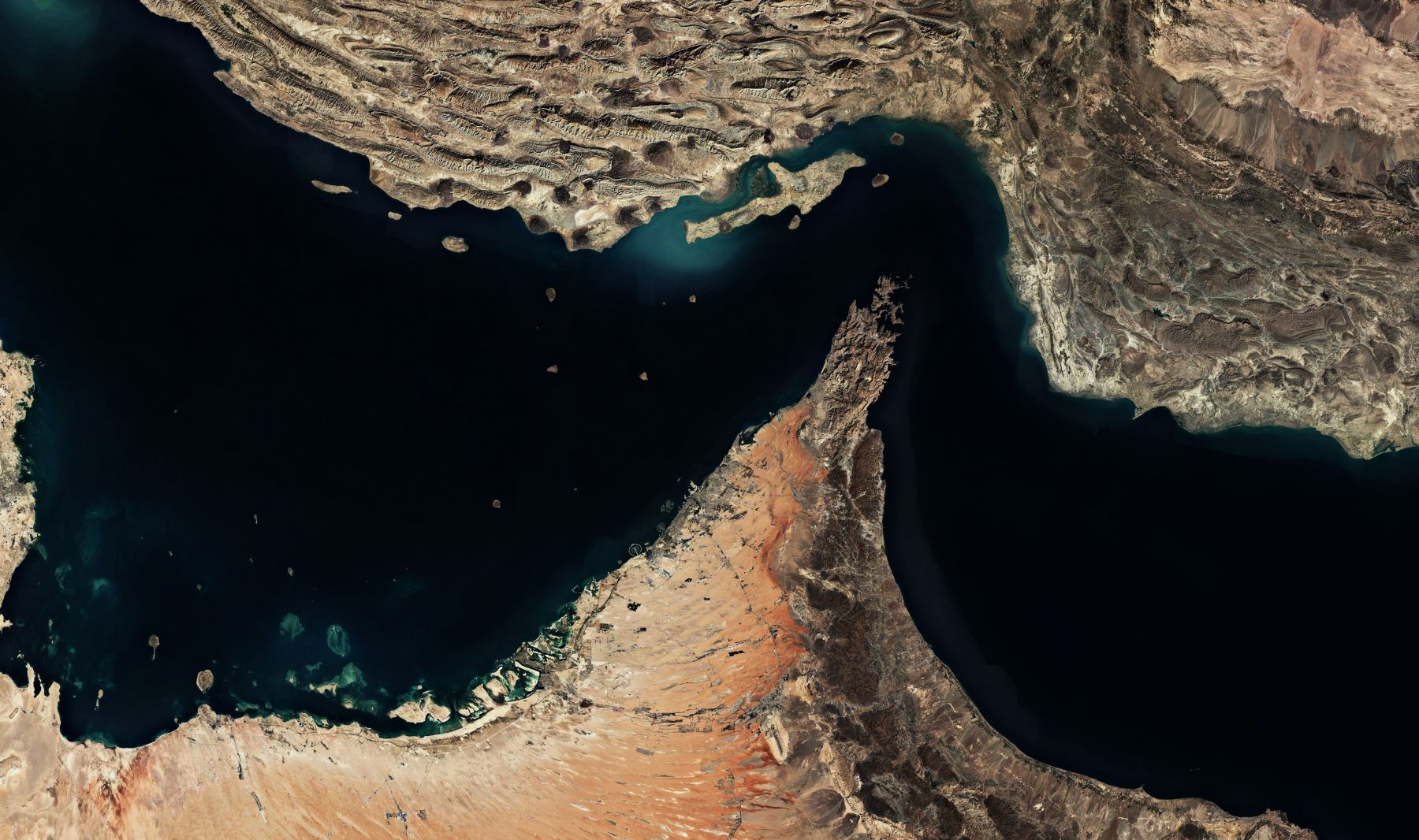
One worrisome fact that needs to be elaborated is that the emergence of the RSS and Hindutva ideology has expansionist plans west ward. We all well know that India is surrounded by oceans from three sides. The north part is the Himalayas and China where Indians always fears the threat from, on the Eastern side is Myanmar and ASEAN nations and these are not really of interest to India for many reasons. The only way where they would like to expand is the West towards Central Asia and West Asia and here, Pakistan sits like a strong stumbling block in their way. Just consider for a moment if Pakistan would not be located here, the Indian RSS ideology would have spread like wild fire, or more correctly like another Mongol invasion and would capture Central Asia and even Iran and Gulf would be under existential threat.
RSS extremist leaders have an inherent hatred of Muslim invaders coming from Central Asia, Arabian Gulf and Iran so they desire revenge for the same. We have often heard some Indian retired general or the other in Indian talk shows on TV telling their audience to never forget what these Mughals and other rulers did to Indian’s ancestors hundreds of years ago, to always keep this in mind and never forget it. When former Indian Prime Minister Atal Bihari Bajpai visited Afghanistan during the first decade, he wanted to visit Ghazni. He mentioned in interview later that he wanted to see the city of Ghazni where Mahmud Ghaznavi was from and how he had reached Somnath.
RSS Akhand Bharat ideology is visible to everyone where it says openly that the division of the sub-continent was not right and one day this division will be eliminated. It means that Pakistan and Bangladesh are still in their minds to be part of greater Sub-continent under RSS rule. The problem here is that Pakistan is the main hurdle in their way. RSS leaders believe that once Pakistan is dealt with, Bangladesh has no power to stand against India and it will be captured within no time. That is why all their negative efforts and evil energies are focused towards Pakistan.
RSS, BJP and even Congress leadership have used anti-Pakistan sentiments in Afghanistan and started heavy investment to establish a strong footprint in Afghanistan. Similar efforts were done in Iran, UAE and Oman and If we see the regional strategic landscape, India is trying at various levels to set up a foothold around Pakistan’s area of common interest. As said before Pakistan is just like a strong strategic balancer that is preventing Indian expansion westward because there is no other way India can expand except west.
The recent speech at UNGA by Prime Minster Imran Khan is a clear message to the world community that India is moving dangerously towards conflict that might turn catastrophic. The move on Kashmir by Modi and his fascist BJP/RSS regime has totally changed the security landscape of the region. As per Indian defence minister Raj Nath Singh, now the issue to they would talk about is Pakistan administered Kashmir. This clearly shows the mindset of RSS ideology and its end goal.
Foreign Policy and Effective Lobbying
Pakistan must polish up its foreign policy keeping in mind human rights violations all over the world, including Kashmir and undertake effective lobbying to raise voices for all human rights abuses regardless of country’s location. In this way many countries will stand by us when we need them. It is important to review and modify our foreign policy as per need of the time. Pakistan’s foreign policy has always been influenced by western oriented thinking with strong interaction with NATO, many historical examples can be given such as the Soviet intervention in Afghanistan. But 9/11 and consequent events compelled Pakistan to rethink its global engagement as far as dealing with the big powers is concerned. The opportunity came through the Gwadar Port and CPEC that opened the doors for another power axis, China and Russia. Moreover, Pakistan became a full member of the SCO recently which gives a clear indication to the western bloc that Islamabad is responding to the strategic paradigm shift due to consequence of war on terror and unilateral expansionism. This club has been the potential center for regional geo politics as well as economic wellbeing under OBOR. Pakistan now has a key status due to the flagship CPEC project. This bloc has huge potential to extend the scope of CPEC to Central Asian states, Caucasus and deep into Russia. If Iran is added, it could involve the Caspian potential. The challenge is to benefit from such a power bloc that is beneficial to our economic wellbeing and geo strategic gains, for example like the Kashmir issue. The challenge here is how to maintain fair relations with NATO countries, especially the United States. This enormous challenge requires an aggressive foreign policy and a very well-motivated foreign office staff. The successful strategy in foreign policy is to keep relations with both blocs but have a predominant tilt towards the region. NATO and western countries have less economic stake in Pakistan rather than expansionism. On the other hand, China is there with full economic agenda. The best practice will be to gauge the pros and cons of both rival blocs and use them in the national interest of Pakistan. Also keep in mind that fair practices and stand on principles will be the ultimate strength in the world of diplomacy. Pakistan has a powerful tool in terms of SCO bloc for effective lobbying and it must be utilized at all levels.
Formation of New Strategic Regional Bloc
As mentioned in my last article Pakistan must also leverage Turkey and its influence keeping in mind its historic leverage and perspective. Turkey is one of the friendly countries that will come to support Pakistan in the time of needs. Pakistan has many tools and maneuvers and alignment with Turkey should be another strategic maneuver that will be beneficial not only for both countries but also for regional stability. Turkey has influence on many countries and Pakistan can leverage such influence with close strategic and diplomatic alignment. The joint Pakistan-Turkish partnership will serve as a strong strategic power balancer for the Middle East and IOR. Elaborating further, Turkey has expansion plans to promote its influence keeping in mind the historical facts so Pakistan must help Turkey in this aspect. The strategic goals of Turkey will always merge with Pakistan’s interest one way or another. The joint development of military hardware, research n development and economic investment on each other’s side will help boost relations and partnership between these two brotherly countries will prosper. The diplomatic stance of Turkey on Kashmir is always in favor of Pakistan along with China which is already in a strategic partnership with Pakistan with CPEC.