



From Port Competition to Strategic Maritime Depth
Building a Three-Port National Maritime System for Economic Security, Trade Resilience and Strategic Autonomy
Author’s Note
Developed from the KPT Staff College seminar of 3 September 2026, this paper combines its central policy arguments with official Pakistani port information and international maritime-security literature. The World Bank supports the estimate that about 95% of Pakistan’s
international trade passes through Karachi Port and Port Qasim; Karachi’s often-cited 60% share is an approximate analytical/historical figure, not a fixed current percentage. Pakistan’s Port Community System/Maritime Single Window has already been extended to KPT, PQA and GPA; the priority is full interoperability, resilience and cybersecurity.
Abstract
Pakistan’s maritime economy depends heavily on Karachi Port and Port Qasim, creating a concentration risk even as these gateways provide scale and established logistics. Regional instability, disruption at Hormuz and the Red Sea, cyberattacks, climate hazards and fragile inland connections can turn a port-level incident into a national economic shock. This paper proposes a complementary three-port system: Karachi as the commercial and container hub, Port Qasim as the energy-industrial backbone, and Gwadar as the western strategic-depth and transit gateway. A National Maritime Resilience Council, integrated security and digital systems, multimodal corridors, strategic cargo prioritisation, stress-testing and carefully assessed specialised coastal nodes would improve redundancy without dismantling existing port authorities. The objective is not simply more berths or tonnage, but economic security, trade continuity, energy resilience and strategic autonomy.
1. Introduction: The Port Is No Longer Just a Port
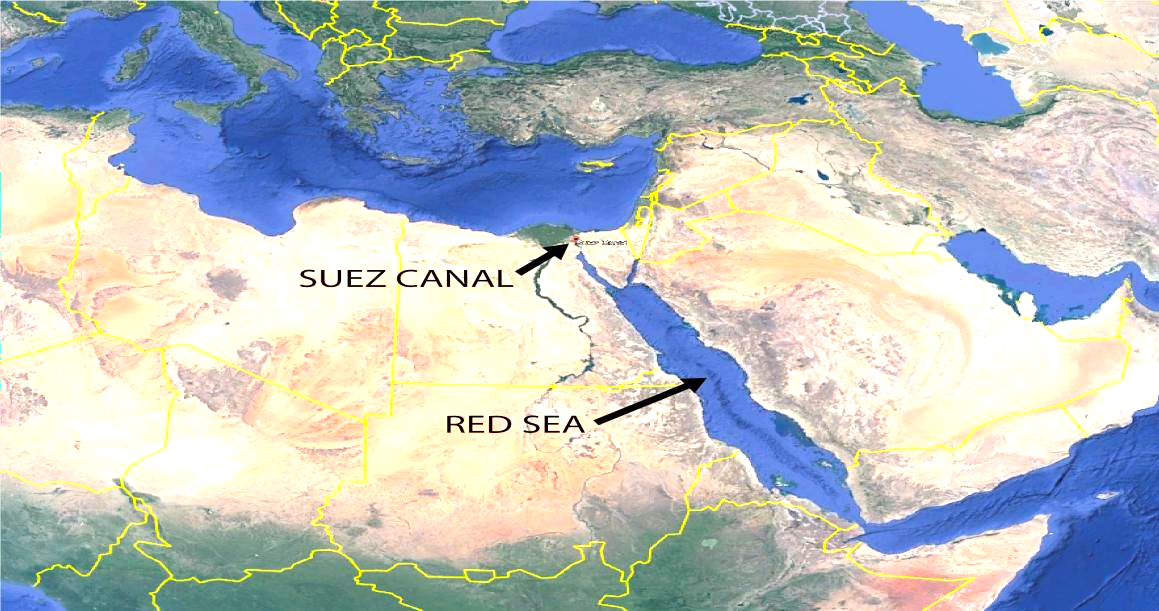
A modern port is part of a network of shipping lines, roads, railways, pipelines, warehouses, customs, finance, energy, telecommunications, cyber systems, security agencies and industrial supply chains. Disruption in one component can propagate nationally. UNCTAD’s Review of Maritime Transport 2025 describes a sector reshaped by geopolitical tension, route diversions, elevated freight costs, port disruption and digitalisation. Red Sea rerouting around
the Cape of Good Hope has increased voyage time, fuel use and logistics costs. Pakistan must therefore ask not only how much cargo its ports can handle, but how much trade can continue if a port, corridor or chokepoint is disrupted.
2. Maritime Geography: A Strategic Asset
Pakistan’s roughly 1,000-km coastline spans Karachi’s urban coast and the Indus Delta to Balochistan’s Makran coast. Its position links the Arabian Sea and Gulf of Oman with the Persian Gulf, Strait of Hormuz, wider Indian Ocean and Red Sea–Bab el-Mandeb–Suez corridor. Continental connections reach Afghanistan, Iran, China and India, with wider potential toward Central Asia. This combination of ocean access, continental connectivity and strategic location supports the Ministry of Maritime Affairs’ vision of a leading maritime nation and regional transshipment hub. The task is to translate that ambition into an integrated national operating model.
3. Concentration of Maritime Trade
World Bank analysis estimates that about 95% of Pakistan’s international trade passes through Karachi Port and Port Qasim, with indicative shares of roughly 60% and 35% of marine shipments respectively. Concentration creates scale and mature shipping services, but also a potential single point of failure. Physical attack, cyberattack, accident, extreme weather, navigational obstruction, security crisis or labour disruption can delay cargo, increase demurrage, fill warehouses, interrupt industrial inputs and energy supplies, cause exporters to miss shipping windows and intensify foreign-exchange pressure. The immediate objective is not to eliminate concentration, but to build sufficient redundancy to prevent disruption becoming paralysis.
4. Karachi Port: Commercial Heart
Karachi remains indispensable because of its scale, shipping services, terminals, mature commercial ecosystem and proximity to Pakistan’s largest industrial and consumer market. KPT’s stated potential exceeds 125 million tonnes and 4.65 million TEUs. Throughput was 53.951 million tonnes and 2.651 million TEUs in FY2024–25; KPT subsequently reported 55.483 million tonnes, 2.749 million TEUs and 2,115 vessels in FY2025–26. Karachi’s role should remain the principal container gateway, commercial cargo hub, trade-services centre and ship-repair/maritime-services cluster. Congestion, urban land pressure and transport-system constraints require modernisation, not deliberate weakening. Diversification should make Karachi stronger while reducing national dependence on it alone.
5. Port Qasim: Energy and Industrial Backbone
Port Qasim is a diversified industrial maritime complex. PQA reports 18 berths, 15 in the private sector, annual handling capacity of about 89 million tonnes, round-the-clock operations and multimodal links, including a 14-km rail connection. It is Pakistan’s energy hub
and only LNG port. FY2024–25 imports and exports totalled about 32.571 million tonnes—
28.117 million tonnes of imports and 4.454 million tonnes of exports—and 1,544 vessels called, including LNG, POL, LPG, chemical, edible-oil, grain, cement and container vessels. Its resilience directly affects petroleum, gas, coal, steel, chemicals, fertiliser, food, power generation and manufacturing. It should be treated as an energy-industrial ecosystem, not merely another container gateway.
6. Gwadar: Strategic Depth, Not Replacement
Gwadar’s strongest role is geographic and strategic redundancy, not replacement of Karachi or Port Qasim. Located near the Gulf approaches and outside the Strait of Hormuz, it has a 602-metre main quay, three multipurpose berths, 14.5-metre depth alongside and a 4.7-km approach channel; published specifications state vessel capacity up to 50,000 DWT under stated conditions. Yet the Ministry’s 2024–25 Year Book records only about 38,000 tonnes of cargo, mainly government cargo with limited commercial and transit activity. Infrastructure alone does not create a port economy. Gwadar needs cargo generation, shipping-line services, warehousing, industry, logistics, reliable utilities, security confidence, efficient customs and predictable regulation. Its Free Zone can support logistics, fisheries processing, manufacturing, edible oils and related activity; success should be measured by viable economic activity and cargo, not construction alone.
7. Complementary Roles and a National System
The ports should not be forced into identical functions. Karachi should be the commercial/container hub; Port Qasim the energy-industrial hub; Gwadar the strategic-depth and transit hub. Competition can improve costs, services, innovation and investment, but interoperability is essential for national resilience. The proposal is “Three Ports and One National Maritime System” not a single mega-authority abolishing KPT, PQA and GPA. Each authority should retain operational and commercial responsibility within a strategic coordination layer for planning, security, data, emergency response, cargo diversion, investment, resilience testing and multimodal connectivity. A National Maritime Resilience Council or National Maritime Coordination Authority should be assessed legally and institutionally, avoiding bureaucratic duplication.
8. Four Pillars of Maritime Resilience
Infrastructure resilience requires dredging and channel maintenance, navigational depth, backup power and water, redundant cranes and cargo systems, fire and hazardous-material readiness, cold chains, warehouses, flood/storm/cyclone protection and rapid repair. Reserve capacity is strategic insurance, not waste. Operational resilience requires shared standards, data protocols, emergency procedures, 24/7 coordination, cargo-diversion plans, common risk registers and mutual assistance. Economic resilience means diversified cargo and shipping, efficient tariffs, PPPs, special economic zones, logistics parks, transshipment, coastal shipping and value-added services. Pakistan should capture more value per tonne through warehousing, ship services, logistics, finance, insurance, repair, marine engineering, fisheries processing and offshore support. Strategic resilience connects naval protection, maritime-domain awareness, coastal and port security, intelligence, cyber resilience, emergency logistics and strategic reserves across the chain from sea to inland corridor and digital network.
9. Maritime-Domain Awareness and Cybersecurity
An integrated maritime-domain-awareness architecture should combine AIS, coastal radar, satellite and electro-optical data, vessel tracking, port-security systems, intelligence and meteorological information. The Navy, Pakistan Maritime Security Agency, Coast Guard, port authorities, Customs, law enforcement and intelligence bodies need appropriate information-sharing mechanisms and a common operational picture. Threats include ransomware, GPS disruption, malware, manipulated cargo data, compromised terminal systems, Customs failure, payment attacks, denial-of-service and compromised operational technology.
Pakistan’s Port Community System/Maritime Single Window was extended in 2025 to the Mercantile Marine Department, Customs, KPT, PQA and GPA. The objective is now full interoperability and cyber-secure, resilient operation across ports and inland agencies. Near-real-time information should cover vessel arrivals, berths, containers, clearance, road congestion, rail availability, terminal capacity, weather, security alerts and emergency restrictions.
10. Hormuz and the National Energy-Security Plan
The Strait of Hormuz is a critical external risk because Pakistan’s energy security depends on Gulf flows. UNCTAD identifies it as a major chokepoint handling about 11% of global maritime trade by volume and a substantial share of seaborne oil and LPG. The World Bank reported that average vessel traffic fell to around five ships daily from 2–22 March 2026, compared with 96 in the same period a year earlier. Security incidents were still being reported in September 2026. A serious disruption could affect energy, shipping, insurance, foreign exchange, electricity, transport, industry, fertiliser, inflation and food logistics.
Pakistan cannot control the Strait, but can reduce exposure through strategic energy stocks; diversified suppliers; coastal storage; pre-negotiated emergency charters and rerouting; technically and economically justified pipeline resilience; alternative LNG arrangements and storage; demand prioritisation; protected handling of strategic energy cargo; and financial plans for freight and insurance shocks.
11. Red Sea and Route Volatility
The Red Sea disruption has diverted major carriers around Africa, increasing distance, transit times and costs; instability continued into September 2026. Pakistan should plan for route volatility rather than assume established routes will always be available. Measures include diversified shipping services and sources, strategic inventories of critical imports, flexible freight arrangements and stronger regional logistics links. Disruption can create opportunities for ports that offer secure waters, efficient handling, good inland links, transshipment, predictable Customs and digital processing. But a deep-water port alone will not attract shipping: port, roads, rail, Customs, warehouses, shipping services, security and cost must work as one competitive proposition.
12. Strategic Autonomy, CPEC and Regional Trade
Pakistan should aspire to become a maritime service provider, not only a user of ports, serving Afghanistan, Central Asia, western China, Gulf markets, East Africa and the wider Indian Ocean. This requires commercial competitiveness, political reliability and high-quality logistics. CPEC should be developed as an economic network—port, road, rail, industrial zone and market. Gwadar’s Free Zone and surrounding area need export industries, mineral and fisheries processing, cold chains, warehousing, logistics, transshipment, ship repair, offshore support and regional distribution. Registered activities already include banking, insurance, warehousing, fisheries processing, manufacturing, trade and logistics; the challenge is to convert registration into production, scale and cargo.
13. Pasni and Keti Bandar: Specialised Nodes
Pasni should be assessed as a specialised resilience node—not a second Gwadar—with possible roles in fisheries and processing, cold chain, coastal shipping, offshore support, ship repair, emergency logistics, energy support and marine services. Any development must consider coastal ecology, climate exposure, communities and commercial feasibility. Keti Bandar could provide eastern maritime diversification through fisheries, coastal logistics, bulk cargo, specialised storage, local maritime industries, feeder services or emergency cargo support. Historical World Bank analysis highlights inadequate hinterland connectivity as a constraint on large-scale port development there. The proper sequence is feasibility, defined economic function, connectivity and investment—not construction followed by a search for cargo.
15. Pakistan Maritime Resilience Model
The proposed six-layer Pakistan Maritime Resilience Model (PMRM) comprises:
a. Physical resilience—berths, channels, cranes, storage, utilities and climate-resistant assets;
b. Network resilience—roads, rail, pipelines, warehouses, inland terminals and alternative routes;
c. Security resilience—naval protection, domain awareness, coastal security, intelligence and port protection;
d. Digital resilience—Maritime Single Window, Port Community System, cybersecurity, data redundancy and operational-technology protection;
e. Economic resilience—cargo and supplier diversification, reserves, PPPs and alternative shipping; and
f. Strategic resilience—three-port redundancy, specialised coastal nodes, regional links and crisis-routing mechanisms.
16. National Stress Tests, Strategic Cargo and Resilience Index
Introduce an annual National Maritime Stress Test covering: seven-day Karachi closure; 14-day Port Qasim energy/industrial disruption; 30-day loss of Gwadar capacity; 72-hour major cyberattack; 30–60-day Hormuz crisis; and six months of Red Sea route instability. Tests should identify essential cargo, alternative capacity, road and rail bottlenecks, storage gaps, Customs delays, cyber/security weaknesses and financial exposure. Establish three cargo tiers: Tier I national-survival cargo (petroleum, LNG, staple foods, medicines, critical chemicals and strategic defence-related supplies); Tier II economic-continuity cargo (industrial raw materials, fertiliser, machinery, steel and critical components); and Tier III ordinary commercial cargo (consumer goods, non-critical machinery and discretionary imports). During a crisis, Tier I should receive pre-agreed priority for berths, storage, Customs, transport, insurance and finance. A National Port Resilience Index should identify vulnerabilities, guide investment and measure improvement—not simply rank ports commercially. A proposed weighting is: physical infrastructure 15%; alternative cargo capacity 15%; security 15%; cyber resilience 15%; hinterland connectivity 15%; energy/utilities 10%; climate resilience 5%; digital integration 5%; emergency recovery 5% (total 100%).
17. Economic Security and the Blue Economy
An integrated system should ensure that one port’s failure does not halt trade, while reducing demurrage, storage, vessel waiting, inland congestion and administrative delays. Domestic transshipment and logistics can retain foreign exchange otherwise spent through foreign hubs. The Ministry has estimated that the maritime sector supports over two million direct and indirect jobs; this should be treated as a government-reported estimate pending independently validated methodology. Potential employment extends to logistics, warehousing, shipping, ship repair, marine engineering, fisheries, offshore services, tourism, insurance, finance and digital technology. Maritime policy should also support fisheries, aquaculture, marine biotechnology, offshore energy, shipbuilding, repair, marine tourism, coastal communities and ocean research. The Ministry’s 2024–25 Year Book reported seafood exports of US$489.2 million, up 20.5% year-on-year.
18. Climate Resilience and Coastal Ecosystems
Port planning must address sea-level rise, storm surges, cyclones, flooding, erosion, saltwater intrusion, extreme heat, earthquakes and tsunamis. Mangroves, environmental monitoring, coastal zoning and climate-adapted engineering should be integral to national planning. A port that damages the ecosystem on which its long-term security depends is not truly resilient.
19. Governance and Regulatory Harmonisation
The proposed model combines federal strategic coordination through a National Maritime Resilience Council; policy leadership by the Ministry of Maritime Affairs; operations by KPT, PQA and GPA; security by the Navy, PMSA and relevant agencies; trade facilitation by Customs and Pakistan Single Window; inland logistics by Railways, NHA, provincial authorities and private operators; and energy institutions. Regulatory review should address tariffs, documentation, Customs processes, port charges, digital procedures, clearance times, terminal practices, dangerous-goods rules and vessel services. Harmonisation does not require identical tariffs; it means predictable rules, transparent processes and interoperability.
20. Multimodal Connectivity and the Maritime Resilience Corridor
Ports cannot be resilient if inland corridors fail. Historical World Bank analysis highlights dependence on the Karachi–Peshawar trade corridor and road freight, with most dry cargo historically moved by road rather than rail. Priorities include port-rail integration, freight-rail capacity, logistics parks, inland container depots, truck staging, warehousing, pipeline integration and removal of road bottlenecks. The proposed Pakistan Maritime Resilience Corridor is not a single road: it is an architecture linking Karachi, Port Qasim, Gwadar and potentially Pasni and Keti Bandar through road, rail, pipeline, warehouse, digital, energy and security systems. It should allow cargo redirection when a node is constrained. The wider doctrine is “Three Ports, Five or Six Nodes—One System,” with specialised roles in containers, LNG/energy, transshipment, fisheries, coastal logistics and offshore support
21. Maritime Stability and National Security
Naval preparedness remains essential, but modern maritime security also depends on uncongested ports, functioning digital systems, diversified energy, inland cargo movement, critical goods storage and affordable shipping insurance. A cyberattack or chokepoint disruption must not paralyse Customs and trade. Maritime security protects the sea; maritime resilience protects the national economy that depends on it. Pakistan needs both.
22. Implementation Roadmap
- Phase I (0–2 years):
Establish the Council; complete a national port-risk assessment and Resilience Index; stress-test Karachi, Port Qasim and Gwadar; complete Port Community System/Maritime Single Window interoperability; adopt cyber-risk protocols, strategic-cargo contingencies and a Hormuz plan; assess Pasni and Keti Bandar; and begin climate stress-testing.
b. Phase II (2–5 years):
Expand port-rail links, logistics parks and inland facilities; strengthen Port Qasim’s energy-industrial capacity; generate Gwadar commercial cargo and direct shipping services where viable; improve maritime-domain awareness and inter-port interoperability; agree emergency cargo-routing arrangements; expand coastal storage and specialised clusters.
c. Phase III (5–10 years):
Mature the three-port system; develop regional transshipment and logistics; expand Gwadar’s transit role and viable specialised nodes; grow blue-economy clusters; integrate advanced digital and cyber-resilience systems; institutionalise stress-testing; build strategic energy/logistics reserves; and position Pakistan as a resilient Indian Ocean maritime service provider.
23. Measuring Success and Strategic Doctrine
Success means that Karachi disruption can be managed through agreed diversion of selected essential cargo; Port Qasim disruption does not leave energy and industry without options; Gwadar disruption does not threaten national continuity; Hormuz or Red Sea disruption can be absorbed through reserves, alternative sourcing and logistics; cyberattacks do not stop cargo movement; and climate disasters permit rapid recovery. Pakistan should adopt the doctrine: “Three Ports—Multiple Nodes—One Maritime Strategy.” Karachi remains the commercial heart, Port Qasim the energy-industrial backbone, Gwadar the western strategic-depth and regional-connectivity gateway, while Pasni and Keti Bandar are considered only where evidence supports specialised functions. Road, rail, pipeline, digital, energy and security systems must bind them together.
24. Conclusion
Pakistan’s coastline, Gulf proximity and Arabian Sea access offer a strategic opportunity, but opportunity without resilience becomes vulnerability. The concentration of about 95% of international trade at Karachi Port and Port Qasim provides scale while exposing the national economy to disruption. Red Sea rerouting and the 2026 Hormuz crisis demonstrate how maritime insecurity translates into energy and economic shocks. The answer is neither isolated port construction nor making the three ports identical. Karachi and Port Qasim must remain strong; Gwadar must become commercially viable and strategically significant; and other coastal nodes should proceed only where their economic and strategic value is demonstrated. The core objective is redundancy: one port’s failure must not become the failure of the national maritime economy, and one route’s closure must not collapse trade.
Pakistan needs one national maritime system supported by specialised nodes, resilient inland corridors, secure digital systems, protected coastal ecosystems, strategic energy reserves and integrated maritime-domain awareness. Its purpose is economic security, trade resilience, energy security, strategic autonomy and maritime stability.
25. Proposed Policy Architecture
Regional trade and Central Asia connect through Gwadar as the western transit/transshipment gateway; Pasni may be assessed as a specialised Makran node. Karachi and Port Qasim anchor the Arabian Sea system, linked to Pakistan through national road, rail, pipeline and ICT networks. Keti Bandar may be assessed as a potential eastern node. All are coordinated through the Pakistan Maritime Resilience System. Comparative Strategic Role of the Three Ports
| Dimension | Karachi Port | Port Qasim | Gwadar |
| Strategic role | Commercial gateway | Energy-industrial gateway | Strategic-depth and western gateway |
| Principal strength | Containers and established trade ecosystem | Energy, bulk and industrial cargo | Deep-water location and regional connectivity |
| Commercial maturity | Very high | High | Developing |
| Container role | Principal national gateway | Major secondary gateway | Developing |
| Energy role | Significant | Critical | Potential |
| Industrial integration | High | Very high | Developing |
| Strategic diversification | Moderate | Moderate | High |
| Regional connectivity | Indirect | Via national network | Strong potential toward Afghanistan/Central Asia |
| Main vulnerability | Urban constraints and concentration | Energy/industrial dependency | Low cargo volumes and immature logistics ecosystem |
| Resilience contribution | Existing scale | Energy and cargo redundancy | Geographic and strategic redundancy |
Comparative Stress-Scenario Matrix
| Shock | Karachi | Port Qasim | Gwadar | System response |
| Karachi closure | Severe | Absorb selected cargo | Absorb selected cargo | Activate diversion plan |
| Port Qasim closure | Moderate | Severe | Limited/medium | Prioritise strategic energy cargo |
| Gwadar closure | Low national impact today | Low/medium | Emerging strategic impact | Redirect regional/transit cargo |
| Hormuz disruption | Energy/freight shock | Very high energy impact | Strategic diversification potential | Reserves and alternative sourcing |
| Red Sea disruption | Higher route costs | Higher route costs | Potential transshipment opportunity | Inventory and route diversification |
| Major cyberattack | High | High | Growing | National cyber response |
| Cyclone/flood | High | High | High | Climate contingency plan |
| Regional conflict | High | High | High | National maritime continuity plan |
Selected Footnotes and Source Notes
- Pakistan’s coastline is widely reported at approximately 1,046 km. (IARPA)
- World Bank analysis estimates about 95% of international trade passes through Karachi Port and Port Qasim, with indicative marine-shipment shares of around 60% and 35%.
- KPT reports FY2024–25 throughput of 53.951 million tonnes and 2.651 million TEUs, potential capacity above 125 million tonnes and 4.65 million TEUs; FY2025–26 throughput was 55.483 million tonnes, 2.749 million TEUs and 2,115 vessels.
- PQA reports 18 berths, approximately 89 million tonnes annual capacity, 24/7 operations and a major energy/industrial role; FY2024–25 cargo totalled 32.571 million tonnes.
- Gwadar’s published specifications include a 602-metre quay, three multipurpose berths, 14.5-metre depth and 4.7-km approach channel. The Ministry’s 2024–25 Year Book records approximately 38,000 tonnes of cargo in FY2024–25.
- UNCTAD’s Review of Maritime Transport 2025 addresses geopolitical instability, Red Sea rerouting, freight rates, port disruption, digitalisation and cyber risk; it estimates Hormuz carries approximately 11% of global maritime trade by volume.
- The World Bank reported a sharp fall in Hormuz vessel traffic during 2–22 March 2026; IMO and Pakistan’s National Hydrographic Office continued to report regional maritime-security incidents in 2026.
- Pakistan’s 2025 notification extended the Port Community System/Maritime Single Window to relevant federal agencies, Customs, KPT, PQA and GPA.
- The Ministry of Maritime Affairs reported more than two million direct and indirect maritime-sector jobs; treat this as a government estimate pending independent validation.
- The Ministry’s 2024–25 Year Book records seafood exports of US$489.2 million, a 20.5% year-on-year increase.
Bibliography
- Ministry of Maritime Affairs, Government of Pakistan. Year Book 2024–2025. Islamabad, January 2026.
- Ministry of Maritime Affairs, Government of Pakistan. Official Vision and Mission for Pakistan’s maritime sector.
- Karachi Port Trust. Official Port Statistics; FY2025–26 performance briefing, August 2026.
- Port Qasim Authority. Introduction, Port Operations and Port Performance statistics.
- Gwadar Port Authority. Official Port Facilities and nautical specifications.
- Pakistan Single Window / Government of Pakistan. S.R.O. 1885(I)/2025 concerning the Port Community System and Maritime Single Window.
- World Bank. Assessments of Sectors with High Growth Potential; Pakistan—Karachi Ports Supply and Demand Assessment; and transport/trade-logistics analysis of Pakistan’s National Trade Corridor
- .UN Trade and Development (UNCTAD). Review of Maritime Transport 2025: Staying the Course in Turbulent Waters. Geneva, 2025.
- International Maritime Organization (IMO). Maritime digitalisation, cybersecurity, Strait of Hormuz and Red Sea maritime-security updates, 2026.