





The world is transforming with Artificial intelligence (AI), automation and the Fourth Industrial Revolution (4IR). This is changing the fundamental nature of work, the structure of economies and the balance of power between nations. Countries are competing on a fasttrack basis not merely to adopt new technologies, but to develop them, own their intellectual property and convert innovation into economic strength. Generative AI is already automating routine administrative functions, basic coding and repetitive digital tasks. Pakistan is still relying on low-cost labour and outsourced services, which cannot remain a durable competitive advantage when machines will perform most of the tasks in industries. This shift at the global level is an opportunity for developing countries like Pakistan to equip their youth with digital skills and export them to the world. Pakistan must recognize the strategic implications of this shift. With more than 60% of the population, our challenge is not only to create jobs for them today, but to create the opportunities for tomorrow. We must invest in the youth to make them becoming creators of technology not merely being users.
Students equipped with the latest digital and AI skills can develop solutions, build products and compete in higher-value segments of the global economy. Without this transition, our demographic dividend could become a demographic liability. However, if access to these skills remains largely confined to private-sector institutions, students in the public education system risk being disadvantaged in an already competitive job market, creating another form of inequality. Digital literacy and AI education must therefore be integrated into both public and private educational institutions to ensure equal access to opportunities and develop a skilled, competitive workforce.
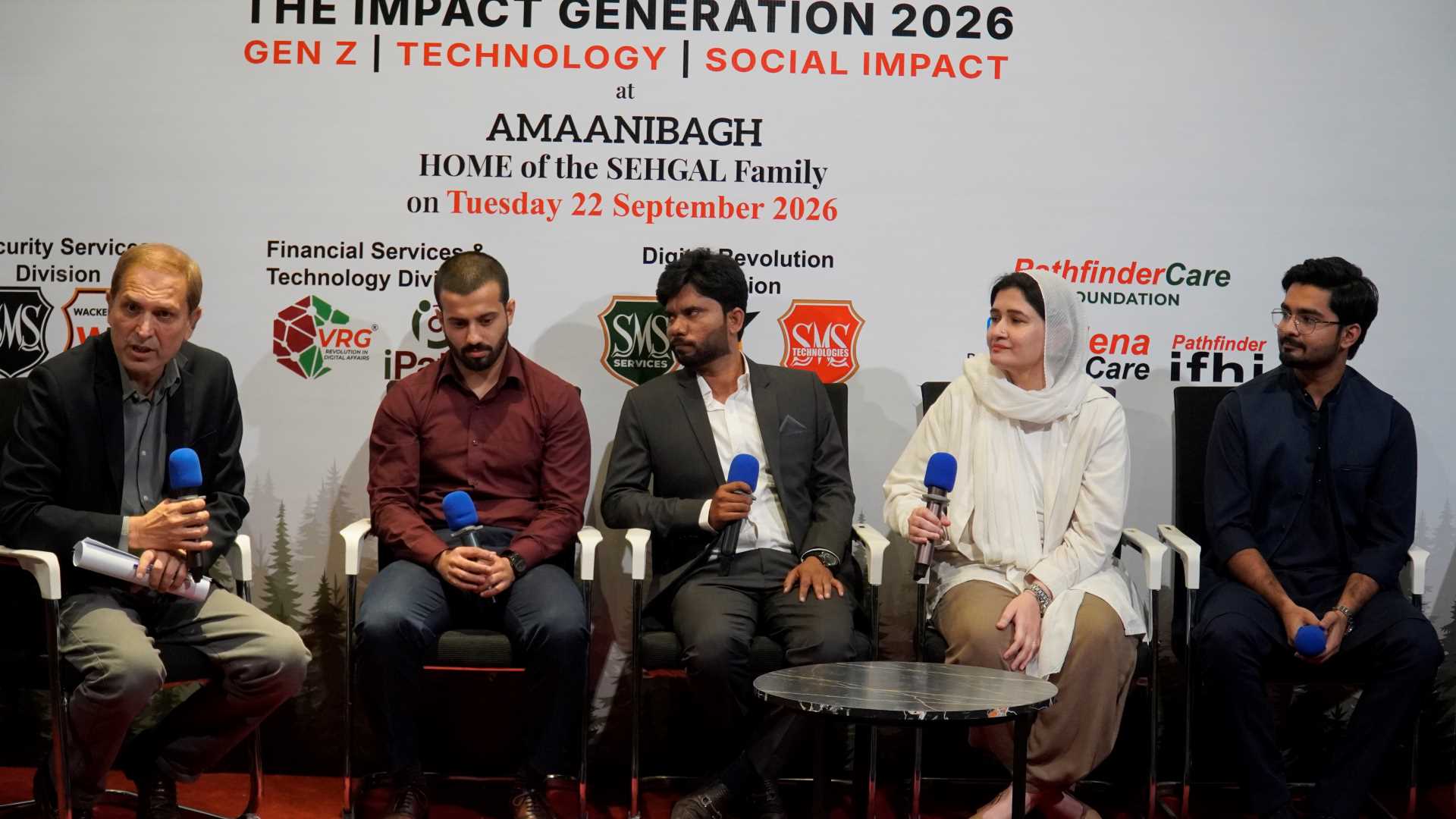
Pathfinder Group’s Impact Generation 2026 event was held at AmaaniBagh, Islamabad, on 22 September. The immense potential of our youth to contribute meaningfully to national development. It can be seen in our collaboration with Global Shapers; their young members brought fresh perspectives, energy and a shared commitment to innovation and social progress. AVM (Retd) Asad Ikram, President and CEO of Pathfinder CITADEL, stressed the importance of developing Pakistan’s own technological capabilities, particularly in artificial intelligence, rather than remaining dependent on systems, algorithms and data developed elsewhere.
The interactive session led by Ms Mahrukh Faraz, a policy professional and Global Shaper, explored young people’s attitudes towards artificial intelligence, employment and entrepreneurship, while encouraging them to consider how their skills could address Pakistan’s real-world problems. The subsequent panel discussion, “From Scroll to Impact: How Gen Z Can Use Technology to Change What Matters,” discussed the changing nature of employment, the need for practical digital skills, responsible AI governance and the importance of entrepreneurship.
The discussion extended beyond digital technology when Dinar Wali, founder and CEO of RegenX.eco, demonstrated how geospatial research, satellite imagery and data modelling could support climate-smart agriculture, glacier monitoring, disaster preparedness and the development of Pakistan’s natural resources. Brig (Retd) Mujahid Alam, CEO of PathfinderCare Foundation, brought the focus back to the human dimension of progress, outlining the Group’s commitment to education, social welfare, women’s empowerment and community development.
Technological progress cannot be separated from social responsibility. Innovation has limited value if its benefits remain confined to a privileged segment of society while millions of young people continue to lack access to quality education, mentorship, and economic opportunities. Sustainable progress requires inclusivity, creating opportunities for those who have the ability and determination to succeed but lack the resources to do so.
The launch of the Pathfinder CITADEL Karachi Chapter on 30 September 2026, in collaboration with the Global Shapers Community Karachi Hub, seeks to bridge the gap between education and industry by providing young people with practical skills, professional guidance, and opportunities to transform ideas into viable enterprises. Through the Career Jumpstart Institute, the Escape Velocity Accelerator and Strategic Innovation Consulting, Pathfinder CITADEL aims to strengthen professional capabilities, support start-ups in accessing investment and markets, and help organisations develop effective innovation strategies. Building on our experience of connecting Pakistani start-ups with international platforms, including the World Economic Forum (WEF) in Davos, we must ensure that emerging entrepreneurs have access to mentors, investors, universities and established businesses.
I am grateful to Pathfinder CITADEL team, especially Air Cdre (Retd) Khalid Banuri, Air Cdre (Retd) Farhan Ahmed, and Salman Ali (CEO, VRG) for organizing the event. My special thanks to Murtaza Lashari, Curator, Global Shapers Karachi Hub, and Jehan Ara, Founder and CEO, Katalyst Labs, for their contributions.
The future of our economy depends on our ability to convert youthful ambition into sustainable enterprises, employment opportunities and digital exports. Technology alone, however, will not deliver economic progress. True digital inclusion cannot be achieved by tech companies or the IT ministry alone. To connect women, youth, and marginalized rural communities to the global freelance market, Pakistan needs a converged ecosystem. Universities, industry and government must work together to bridge the gap between academic qualifications and practical capabilities. AI, robotics, advanced manufacturing and digital services should be treated as strategic sectors, with particular emphasis on developing local talent and retaining the value generated by Pakistani innovation.
Investing in people is not merely a development priority; it is the foundation upon which lasting national prosperity is built. Meaningful transformation cannot be achieved overnight; it calls for patience, consistency and a commitment to nurturing talent. The task before us is clear: transform our youth into innovators, our businesses into productive enterprises and our institutions into effective instruments of national development. This demands continuation of policy, investment in human capital and the political resolve to confront structural weaknesses rather than postpone difficult decisions. We must remember that nations plan for the long term; there are no shortcuts. As a famous Chinese proverb reminds us, “It takes ten years to grow a tree, but a hundred years to cultivate people.”