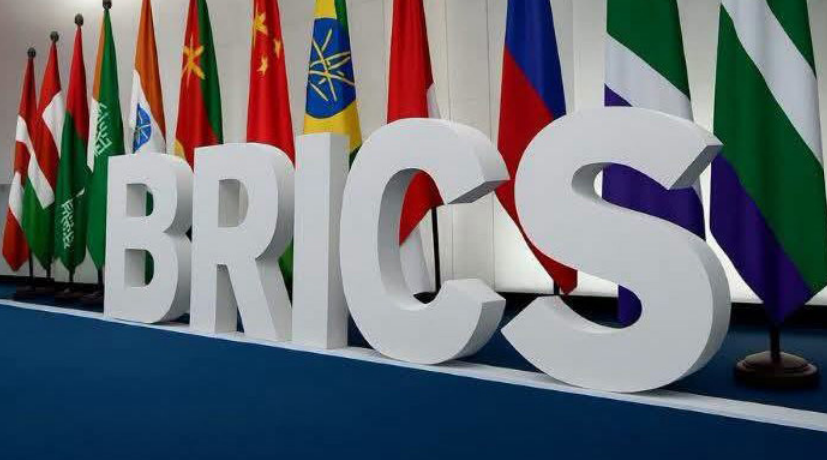
Helen Keller, an exhilarating American author with special needs, was spontaneous as she wrote, “…alone we can do so little; together we can do so much.” Though the Capitalist West seems to have paid no heed to her wisdom, the Global South these days is apparently marshalling to take a cue from her notes. The 18th BRICS summit in New Delhi was a manifestation of how compromises are made, narratives are controlled and deft diplomacy is given a chance to rebound as national interests continue to remain in conflict zones. Heads of states and government did the same as they agreed not to disagree, and then went on to disagree after making a strong point in terms of institutional multilateralism.
Prime Minister Narendra Modi spun the dialogue by introducing a recrafted and expanded 10-member world’s largest multilateral body from being “rule takers” to becoming “rule makers”. He and his comrades on the podium were, in fact, setting an agenda for engaging the ‘voiceless world’, as people are turning sick of America’s gun-boat diplomacy, which has even alienated the Western bloc too. Africa, Asia and the Middle East are now gearing up for embracing a world order that if not consensual is, at least, rules-based.
The fact is that Western allies maneuvered for decades to turn Russia, China and Iran into pariah states, and failed. They are now at the vanguard of BRICS having weathered the hot and cold of liberalism.
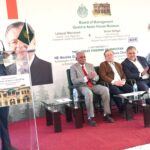
With the foreign ministers’ having ended up on a rupture note in May this year, as they disagreed on the content of a joint declaration, the BRICS Summit in September was a leap forward. It has come as a precursor for change in realpolitik. It seems a lot of convincing and campaigning was undertaken behind the curtains to cajole a moment of consensus. It is no small treat that Chinese President Xi Jinping was rolled out a red-carpet by India after having bickered with the Communist giant for decades. Likewise, Iranian President Masoud Pezeshkian made his debut visit to India, and was seen rubbing shoulders with the UAE’s Crown Prince, Sheikh Khaled bin Mohamed bin Zayed Al Nahyan, and the low-key gestures graduated to the level of Emirates condemning attack on nuclear facilities under the IAEA supervision.
Iran on its part reflected astute maturity at the summit as it recognized the need for climbing down the ladder for de-escalation, a demand that China and Russia had been calling for in the Middle East. BRICS seized the moment to assure the world that it stands for geo-economics and has nothing to do with militarization or arm-twisting in the realms of power politics. That is why the joint statement demanded protection of civilians, respect of sovereignty, keeping global trade routes open and ceasefires in other flashpoints in the Mideast, including Gaza, Lebanon, Sudan, and Syria. That is no less than a sigh of relief and tantamount to strengthening international law and global institutions.
The New Delhi summit, however, fell short on making inroads in articulating its own identity, and restricted itself to political repositioning. No word was evident in terms of BRICS currency, and a parallel mechanism for trade and tariffs in the non-dollar format. Perhaps, deferring that to another day was a tactical move as the world is in a state of flux with the sole superpower unable to dictate its terms in both war and peace, alike. This time around they boasted the need for “inclusive global growth”, as the conglomerate of nations representing 50% of the world’s population, 40% of global GDP and more than 25% of global trade hinted at a consensus to fend off global economic shocks. Posting a gold-backed BRICS currency to replace the Fed’s fatally wounded dollar is indispensable in the long run.
Delhi’s gathering was a muted affair as far as bilateralism was concerned. Member states preferred not to air their individual views on regional affairs and that created a conducive environment for neutrality. Saudi Arabia and the UAE were seen distancing themselves from the warfare narrative on this forum, and a conscious attempt was made to understand Iran’s position. Pezeshkian too tamed his venom as far as the United States is concerned, and called for respecting the sovereignty of Gulf States. India, likewise, did not utter a word on its being strategically pro-Israel, and rather called for Palestinians’ right to self-determination. It was ice-breaking from all realms of bilateralism, and surely gave multilateralism a shot in the arm.
The summit with Iran, nonetheless, on board could not make any strides in assuring that the water channels shall remain open. Neither any mention was made of Straits of Hormuz or the Bab El-Mandeb, nor any resolve depicted as a mark of generosity from Tehran to declare that the siege is being lifted. That marked a high-end of diplomacy where all eggs are not placed in a single basket, apparently sending shivers down the spine for Washington as Beijing and Moscow closely call the shots along with Tehran. They signed off with a singular consensus that there isn’t a military solution.
There was some boasting material for all states as they made BRICS refrain from interference in their “domestic” affairs. China secured a strong condemnation of unilateral sanctions; Russia was able to blackout the word Ukraine; India resolved against cross-border terrorism and terrorist financing; and Iran stressed for protection of civilian infrastructure and territorial integrity by stopping short of condemning the US and Israel. There was a leeway too, and India let it happen right under its nose in its capital: Iranian Foreign Minister Abbas Araghchi had a rare audience with a Kashmiri delegation comprising Mirwaiz Umar Farooq, Aga Syed Hassan Mosavi, and Imran Raza Ansari. It was, indeed, a politically sensitive engagement rarely seen during such summits. Perhaps, there was a reason behind it in pragmatism.
The Delhi consensus made it clear that BRICS is not anti-American, or directed against any particular country. Rather, it called for addressing common challenges and pursuing mutually shared interests. It was, however, critical of US trade and sanctions practices, and strongly denounced unilateral economic and secondary sanctions imposed outside the authority of the UNSC. The forum primarily is a departure institution bizarre of post-World War II nemesis. It speaks for the South and its nomenclature is evolving in essence. Be it Brazil, Russia, South Africa or the petro-dollar rich Saudi Arabia, they all have a common denominator, i.e., to stand tall and uphold their sovereignty and national interests, and not to be seen cowed down at the hands of Pax Americana.
Russia is putting up a fight in Europe’s heartland for that purpose, and South Africa is busy challenging the law fare normative at ICJ fora. China and Saudi Arabia despite having parallels of indispensable trade with the US are grounded in consensus that enough is enough, and there is a limit to subservience. BRICS having launched 139 projects worth $43 billion is still no match to the capitalist club of US and G7.
BRICS has no choice but to further an ecosystem that is participatory in institutional essence as the South Club goes on to accommodate more full members from the developing community
Financing infrastructure and ensuring growth-driven sustainable development in emerging markets should be BRICS modus operandi. The 11 core members and a growing network of 10 official partners have a dye to cast in progressivism. Keller, sans her optic disability, had the prudence to see that collectivism is the way to go.