
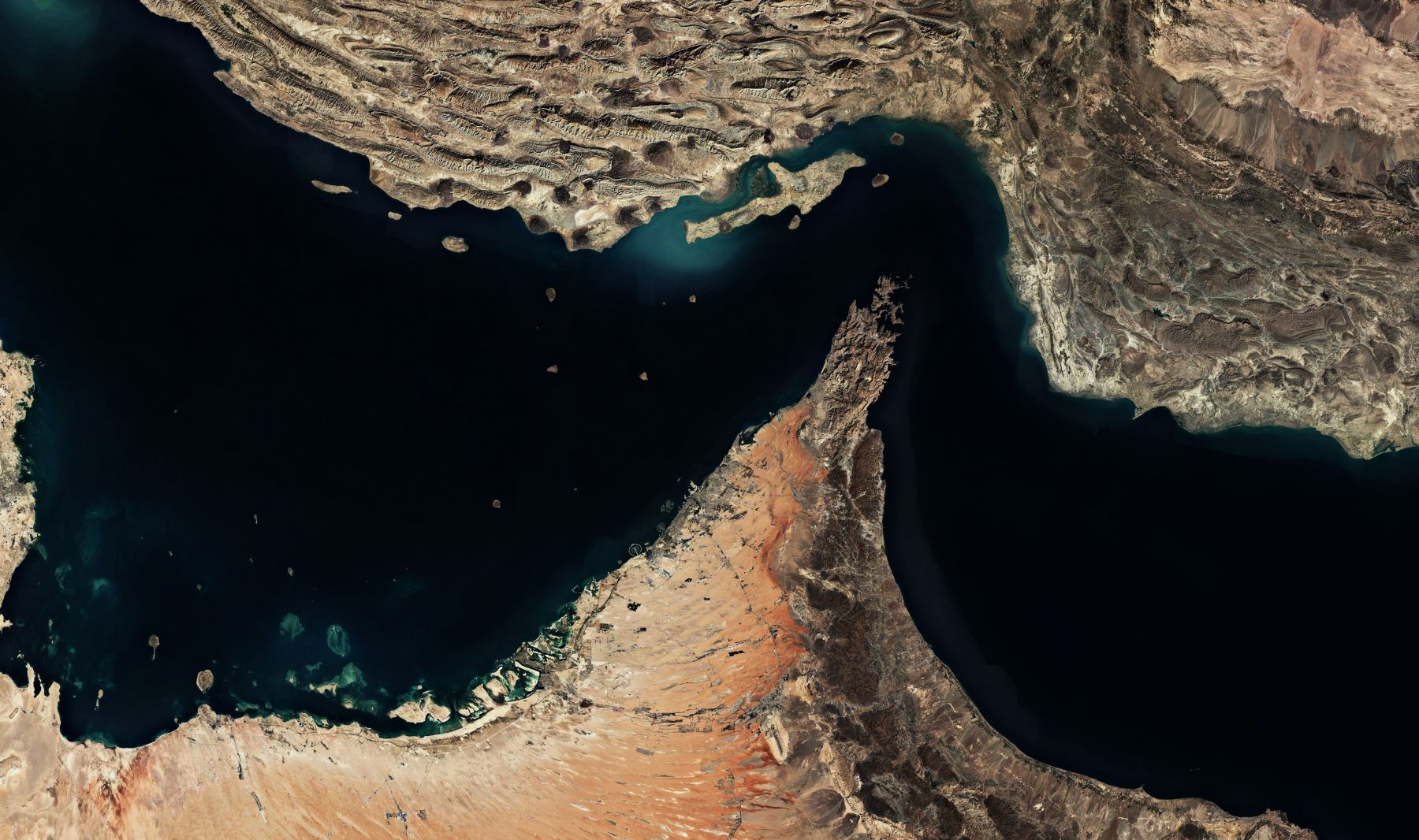
Iran’s most durable gain in this war may not be military. It may be administrative.
The sixty-day window opened by the June memorandum of understanding is closed without a broader agreement. Oil is near $90. Traffic through the Hormuz Strait remains thin. The public argument has settled into a familiar shape: how many interceptors Washington has left, how much punishment Tehran can absorb, what survives of the nuclear programme. That framing leaves out the part of this war most likely to outlast it.
A chokepoint with a shelf life
Tehran is holding an asset that is slowly losing value. The UAE is accelerating a parallel line to Fujairah that would roughly double bypass capacity to about 3.6 million barrels a day by mid-2027. Saudi Aramco is expanding the East-West pipeline, a system originally built in the 1980s for precisely this reason during the Iran-Iraq war. Iraq is also reviving plans for Mediterranean export corridors through Turkiye and Syria. The US Treasury Secretary has suggested Hormuz will lose strategic relevance within two years. That is probably optimistic. Port expansion at Fujairah, financing, and the security of the pipelines themselves are all unresolved, and both Petroline and ADCOP were struck earlier in the war. But even on a five-year timeline the direction is not in dispute, and Tehran can read the same construction schedules.
This changes what Iran should rationally want from a settlement. Leverage that lasts can be rented again and again. Leverage with a shelf life has to be converted once into something that outlives it. Money does not outlive it. Standing does.
What the conversion looks like
Iran created the Persian Gulf Strait Authority in May. Under terms the PGSA circulated to shipping in June, vessels require a passage permit, usually answered within forty-eight hours; they must carry insurance approved by the Authority; and they must follow a prescribed route along the Iranian coast, with alternatives ruled out. The insurance was free during the MOU period, with the Authority reserving the right to charge later.
The sequencing matters more than the fee. International law does not permit charges simply for passage, although it allows charges for specific services rendered. A fee invites refusal, arbitration and delay. A free permit invites compliance, and compliance repeated across hundreds of hulls and dozens of flag registries is how a new administrative practice can begin to take hold.
Under the Montreux Convention, ships give notice to Ankara before transiting the Turkish Straits. Russia requires permits and pilotage arrangements along the Northern Sea Route. In each case the administrative layer came first and became difficult to dislodge once shipping had organised itself around it.
Read against that, the Iranian speaker’s statement in June that management of the strait will not return to its pre-war form looks less like rhetoric and more like a description of the war aim.
Why the American response is aimed elsewhere
Washington has organised its effort around demonstrating that Iran cannot physically stop traffic: escorts, a blockade of Iranian ports, redirected vessels, quiet transits along the Omani side. On its own terms that has broadly worked. It does not address the claim. Iran does not need to halt shipping. It needs shipping to file.
The instruments behind that posture are also finite. CSIS estimates that around two-thirds of the Patriot interceptor inventory has been expended and THAAD stocks are down by roughly a third; other reporting puts both considerably higher, and the Pentagon has rejected the more alarming figures. The dispute is unresolved and the exact numbers are not publicly knowable. What no version of the estimate describes is a magazine that can support an open-ended policing mission for several years, given lead times measured in years rather than months.
The lever that is underused
Insurance closed the strait before the IRGC formally did. War risk premiums rose roughly fivefold within two days of the February strikes, the Lloyd’s Joint War Committee relisted the Gulf as a conflict area, and traffic fell by more than eighty per cent before any closure was announced. The $40 billion reinsurance facility Washington assembled in response is arguably the most consequential thing it has deployed in this theatre, and it has been handled largely as market stabilisation.
The underwriting stack sits in allied hands: the Joint War Committee’s listed areas, the protection and indemnity clubs, the classification societies, the open registries in Panama, Liberia and the Marshall Islands, and now the federal backstop beneath them. A state-approved insurance requirement is designed to sit above that stack rather than compete with it. Practical options follow. Routing conditions can be attached to the backstop. Permit compliance can be treated as a question of legal status rather than of payment, since it is the filing rather than the fee that carries the concession. And the IMO can be pressed to support an internationally recognised navigation corridor before Iranian practice becomes the default by absence of an alternative. None of this consumes ordnance, which is the point.
Oman, and a role for Islamabad
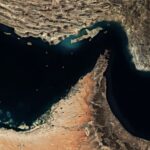
The Strait runs through Omani as well as Iranian territorial waters, which is the fact that prevents any exclusive claim. Muscat has floated a Gulf-backed proposal for joint management. It has real problems: voluntary charges tend to harden into expected ones, and the Gulf states are not neutral parties. It is also the only mechanism currently on the table that produces shared administration rather than a single national one. Public pressure on Oman, whatever its intended effect on Tehran, narrows the space Muscat has to hold that line.
Pakistan has some standing here. It mediated the April ceasefire, and the June understanding carries Islamabad’s name. Mediation so far has concentrated on stopping fire and restoring traffic, which is reasonable sequencing. The question that will still be open afterwards is who administers the corridor, and a mediator with no territorial claim in the Gulf is better placed than most to raise it.
Why the precedent travels
If a coastal state can administer an international strait through permits and service charges, and the arrangement holds, the model becomes available elsewhere. Bab al-Mandab is the obvious candidate. The approaches to Malacca are another. Arguments of the same shape are already made about Arctic routes. For states with long coastlines along busy water, the precedent is worth considerably more than the transit revenue, which is a reason for governments with no stake in the US-Iran quarrel to pay attention to how this ends.
The reopening is the moment to watch
The strait will reopen. Iran has an interest in it reopening, since a closed strait issues no permits and generates no practice. When it happens it will be reported as a breakthrough and oil will fall.
The operative language will be in the annexes: a notification requirement, a coordination mechanism, a safety authority. Whether that language names one administrator or several is the real result of this war. The question was never only whether Hormuz stays shut. It is whether it reopens as a waterway or as an administration.