



In the changing landscape of an emerging multipolar world, no nation can secure sustainable progress in isolation; success increasingly lies in combined efforts, knowledge-sharing and enduring partnerships. China’s approach to international engagement, rooted in the Confucian principles of mutual respect, harmony and shared development, offers a compelling perspective on how economic cooperation can contribute to greater resilience and economic sovereignty. For the Global South, the challenge is to move beyond dependency and build partnerships that strengthen indigenous capabilities, develop human capital and create opportunities for shared prosperity.
At the centre of this transformation. Artificial Intelligence is no longer the domain of a single ministry or institution—it is “the technology of everything,” reshaping economies, governance, security, society and the future of nations. For the Global South, the AI challenge is therefore not merely technological; it is increasingly a question of identity, sovereignty and agency. The critical issue is whether developing nations will help shape the systems, standards and ethical frameworks of the AI era or remain consumers of technologies designed elsewhere. Bridging this divide requires a whole-of-nation approach, bringing together governments, industry, academia, investors, researchers and entrepreneurs to build talent, share knowledge, mobilise investment and develop responsible AI ecosystems. The Global South must not simply adapt to the AI revolution; it must have a voice in defining it. Developing nations must have a role in shaping the systems, standards and ethical principles that define this new era rather than becoming passive consumers of technologies and frameworks developed elsewhere. Issues of privacy, bias, misinformation, employment disruption, surveillance, accountability and human oversight are already becoming central questions of governance.
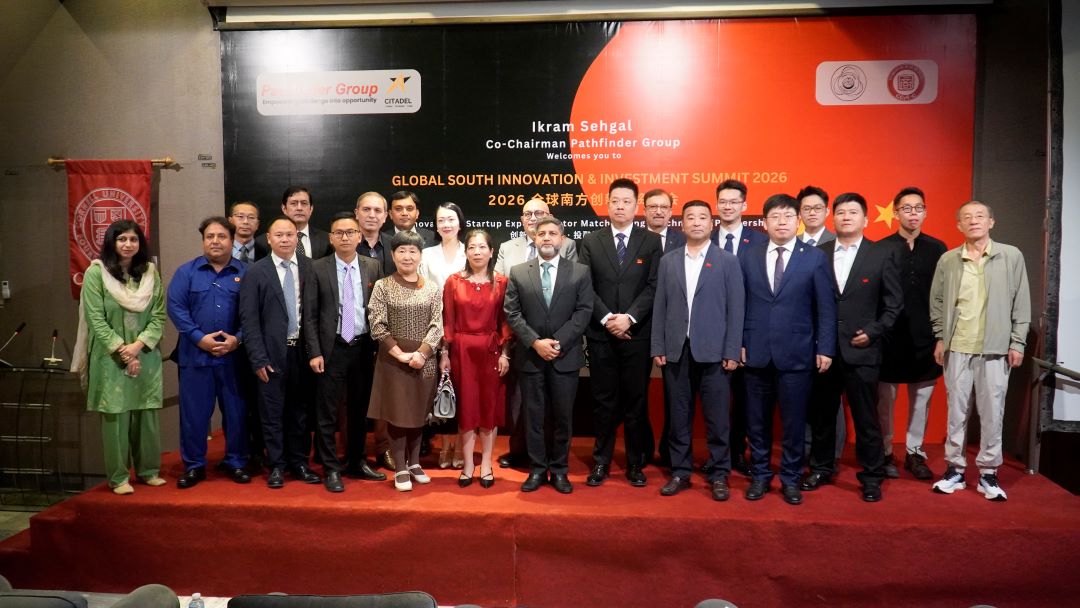
Pathfinder Group took an important and pertinent step by organizing the Global South Innovation & Investment Summit 2026 (3-7 August), in collaboration with the Commercial Cultural Association of China (CCAC) and OIC COMSTECH in Islamabad. The inauguration summit at AmaaniBagh at Angoori near Islamabad on 3–4 August brought together policymakers, technologists and business leaders, including a distinguished 15-member delegation from the CCAC. Going beyond conventional talks and panel discussions, it provided a platform for one-on-one engagement, business discussions and potential investment and technology partnerships, built around the principle of collaboration over competition. The summit focused on turning discussion into action by linking AI, ethical technology, and the Global South’s future with real investment and partnership opportunities. It connected Pakistani and OIC startups with Chinese investors and policymakers, with success measured by lasting partnerships, secured investment, and new collaborations.
Our guests from China who addressed the audience included Mr Li Ang, Deputy Secretary General of the China Business Culture Research Society (also called CCAC) and Deputy Secretary General of the China Association for the Promotion of Western Development; Ms Rachel Wu (Chenxi), Deputy Secretary-General of the CCAC, CEO of BSFL Culture Education and Technology Group, and Executive Principal of the Beijing Experimental Foreign Language School; Mr Ashoki Li, Managing Director for Saudi Arabia, Türkiye and the Caucasus region at Envision Energy Group; and Mr Shuyan (Michael) Huang, PhD researcher specializing in political science and international political economy at the University of Illinois Urbana-Champaign. The discussion then moved to practical engagement through the Pakistani Startup Expo Pavilion, showcasing startups working in agriculture, deep technology, AI/ML, education and cybersecurity. Following a competitive process involving around 350 startups, 13 of the best were selected to pitch their ideas to the Chinese delegation and investors. Investor Group Huddles further connected Pakistani founders directly with Chinese investors and enterprises, creating opportunities to convert entrepreneurial potential into investment, employment and sustainable economic activity.
My heartfelt gratitude goes out to the CCAC delegation for their invaluable participation in this significant dialogue for cross-border collaboration. My gratitude goes out to our Chief Guest, HE Prof Dr Iqbal Choudhary, Coordinator General of OIC-COMSTECH, for his valued presence and contribution. Engr. Dr Shahid Mahmud, Advisor to COMSTECH, must be commended for his dedication and distinguished contribution in coordinating the event, truly exemplary.
A whole-of-nation approach to technological transformation is no longer optional. Technology is rapidly reshaping how we communicate, conduct business, govern institutions and pursue national interests, while the convergence of digitalisation, AI, investment and innovation is creating new opportunities and challenges. With a young population, Pakistan must invest in skills and human capital while ensuring that its institutions can adapt to a rapidly changing economy and technological landscape.
This transformation was highlighted at the “Quaid to Camera: The Media’s Role in Nation Building” programme held on 11 July at the Quaid-e-Azam House Museum in Karachi, hosted by the Karachi Council on Foreign Relations. The Chief Guest Ms Sultana Siddiqui, Chairperson of HUM Network Limited, reflected on the media’s evolving role through her own journey—from traditional broadcasting to a digital and AI-driven environment. Her experience of overcoming institutional barriers, building opportunities for Pakistani talent and advocating responsible journalism reinforced a fundamental principle: technology may transform the tools through which society communicates, but it must not diminish the responsibility to serve society. Her emphasis on preparing writers, artists, technicians and the next generation of media professionals for AI and digital technologies is a timely reminder that Pakistan’s technological future will ultimately depend not only on the technologies we adopt, but on people we equip to shape and use them responsibly, women’s empowerment begins with economic and financial independence. With nearly 15 million Asaan Mobile Accounts (AMA) and 35% held by women, Pathfinder Group has already achieved a significant milestone in advancing financial inclusion, banking the unbanked and contributing to the SDGs. When women can independently save, transact, receive payments and participate in commerce, digital finance becomes a powerful instrument of empowerment.
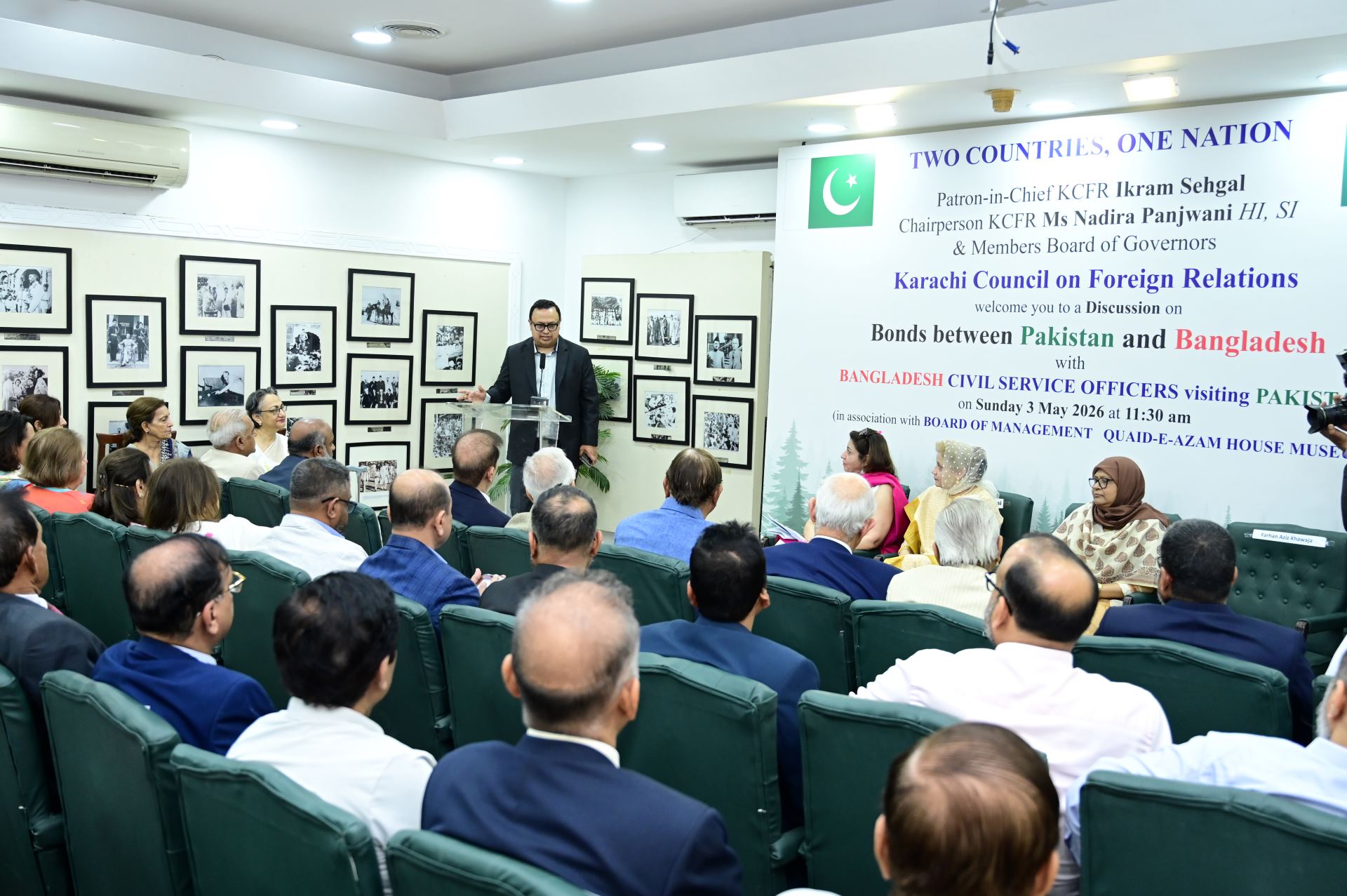
On 7 August, I had the opportunity to address probationary officers at the Civil Services Academy (CSA), Walton, Lahore. My central message was that education and professional qualifications alone do not make an effective civil servant. Those entering public service must also be “STREET SMART” and understand the realities faced by ordinary Pakistanis. I shared how Pathfinder’s social initiatives evolved, including the Providentia Books Foundation, ElenaCare, the Pathfinder Interfaith Harmony Initiative and the Kashmala Family Welfare Centre. I also discussed CITADEL’s work in taking Pakistani startups to the World Economic Forum (WEF) in Davos and its plans to expand collaboration with OIC COMSTECH. The discussion also turned to Pakistan’s relationship with Bangladesh. Despite the difficult history between the two countries, their shared cultural ties, historical links and complementary economies offer a strong basis for deeper engagement. I have long believed that visa-free travel and tariff-free trade between Pakistan and Bangladesh could create meaningful opportunities for both sides and help move the relationship beyond the limitations of history. Pakistan does not lack ideas; it lacks a sufficiently connected ecosystem through which ideas can become successful enterprises. Entrepreneurs require access to capital, mentorship, markets, appropriate regulation and links with universities and industry. Government has a responsibility to create this environment rather than becoming an unnecessary obstacle. Pakistan has the ingredients required for a stronger future: a young population, entrepreneurial talent, technological potential and institutions increasingly willing to collaborate. What we need now is greater coordination, policy continuity and the courage to adapt. The future will not wait for Pakistan to become ready. Our responsibility is to ensure that when it arrives, we have the people, institutions and technological capabilities necessary not merely to respond to change, but to shape it in accordance with our national interests.