


Ever since the globalization of the world, diplomacy has gained more prominence. It is an art of dealing with other nations in such a way that while strictly maintaining one’s own national interests, a nation does not impinge on the national interests of other nations. Every act of diplomacy has a quid pro quo. Nations mindful of their sovereignty do not barter their national interests for short-term petty gains. The quid pro quo so sought must be in consonance with long term gains. This requires vision and foresight. What may appear to be a gain may be a great loss in the longer run and vice versa. The examples of complete tilt towards United States during the Cold War era, and subsequent alliance with her during the so-called Afghan Jehad and later in the War against Terror are glaring examples of myopic vision and lack of foresight. Our leaders in succession failed to realize the concomitant blunders of restricting our alliance to only one camp thereby ignoring the age old maxim of not putting all eggs in one basket. By constantly treading on a single track, we defied the basic principle of keeping our relations diversified. We thus closed on us all options of maintaining cordial relations with USSR and the West. While we did retain the option of keeping good relations with China, we faltered by not cementing them due to our total leaning towards America. Our example can be likened to a person who tries to blow hot and cold in one breath. Resultantly, we lost diplomatic balance. USSR, the erstwhile super power and now once again a re-emerging power tried to appease Pakistan on numerous occasions in the past, but blind as we were by the propaganda of a communist threat, we continued to show hostility towards her only to appease United States. India, on the other hand while maintaining a pro-USSR stance remained in the forefront of a Non-Alligned Movement and never showed open hostility towards America and thus kept its options open. The result is India gaining a far superior image and status of a country with an independent foreign policy. It is through shrewd diplomacy that India has thus been able to camouflage its heinous acts of anti-Muslim crimes in India and untold atrocities on innocent Kashmiris. Pakistan on the other hand has rightly taken care of its minorities, yet due to poor diplomacy our image with regard to the rights of non-Muslims has remained dented. The success of India’s foreign policy can be measured from the fact that it has been able to forge a long enduring strategic frontiership with America besides striking a nuclear deal, while Pakistan continues to receive lollipops from America.
In international relations, there are no permanent friends or foes; only national interests gain permanence. While nations all over the world try to maintain cordial relations with each other, particularly their neighbours, we have been obsessed with emotional alliances and oppositions. Taking advantage of our psyche, we have been persistently used and abused by America in following her diktat. If history was any guide, we should have learnt lessons from the needlessly non-productive pacts of SEATO and CENTO and the American failure to help us during the 1965 and 1971 wars against the backdrop of outright Russian support to India. We did not learn any lesson from the old saying ‘once bitten, twice shy’ and continued to fight the American war in Afghanistan against the might of USSR. We were left in the lurch after the pullout/demise of USSR. The result was chaos in Afghanistan with its horrendous domino effects on Pakistan in terms of over 4 million Afghan refugees, and militants infested FATA. Although late, we still had time to revisit our Afghan policy to make it absolutely neutral and non-interfering. Indeed, we should have played a non-partisan role by helping the Afghans to install a broad-based government representing all segments of Afghan society. On the contrary, we kept supporting the Pakhtoon dominated alliances and later went the whole hog to support the Taliban Government. By doing so, we not only alienated the non-Pukhtoon factions but also dragged ourselves into a tacit struggle at tangent with Iran. The support to the Taliban also raised concerns in China and Central Asian States who feared the import of radicalism in their countries as well. We were thus looked upon as an adventurous country lacking a coherent foreign policy.
The formulation of foreign policy requires deep thinking, consultations, and planning. While the onus of policy formulation lies on the government, the opposition is always taken on board. This, however, can be ensured in a democratic set up where all the stakeholders are taken into confidence. Unfortunately, the dictatorial regimes in Pakistan did not allow the consultative process to take place, and only one man called the shots. The effects of autocratic regimes were so menacing that the democratic governments in between looked more like stop gap arrangements which could neither nourish nor frame long term independent policies. Even the democratic governments mostly suffered from fear of the unknown and had to rely on foreign support instead of the peoples’ mandate. The result was a growing perception amongst people of our governments acting as lackeys of foreign powers. It may be understood that perceptions are always stronger than realities and are extremely hard to remove unless the governments demonstrate visibly independent foreign policies. The existing perception, hard as it may be to swallow, is that our governments have turned our country into a client state of America, and the US ambassador is viewed as the Viceroy of Pakistan. The more than frequent visits by US officials and the undue protocol accorded to them against all diplomatic norms give strength to the widespread perceptions. A bewildered layman may not be privy to the national constraints and compulsions of blindly following US dictates; the only reason on his mind perhaps could be the rag tag economy requiring frequent resuscitation. Agreed that America has bailed us out in the past and continues to do so but only temporarily, and may I add, insignificantly against heavy costs of unbearable proportions. While America spends over 70 billion dollars annually to sustain its forces in Afghanistan for their inaction (except for their display of bravado in killing innocent civilians through aerial strikes), our security forces have been engaged in intense close quarter battles in the entire FATA and some settled districts of NWFP at heavy costs in terms of men and material. Yet our leaders put up an apologetic face when asked to do more and more. A common man fails to understand why we cannot plead our case well and more vigorously. The ever increasing drone attacks, clearly violating our sovereignty, are met with meek response giving strength to the perception that these drone attacks are being carried out with the tacit approval of our government. Needless to mention that this perception has created widespread feelings of resentment and animosity amongst the people. And this has helped the cause of Taliban and Al-Qaeda militants in the form of more and more relatives of the innocent victims joining these militant groups. They are thus growing in size. The American government either knows this and is doing it on purpose to destabilize Pakistan, or our government has failed to convince America of the dire consequences of their unilateral acts. Whatever the reason, the fact of the matter is that our government has not been able to persuade America to stop the drone attacks or be ready to fight the war on its own. We can be rest assured that America would never run the risk of fighting this war without Pakistan; it only needs sending a clear message to her that for once we seriously mean business. We must, however, be prepared to forego the petty aid packages which in any case are much too trivial compared to the enormous costs we are paying as a nation. We can diversify our relations through adroit manipulation of shrewd diplomacy to expand our base of funding. Simultaneously, we must institute austerity and shun avoidable expenditures such as the allocation of developmental grants to the Parliamentarians and frequent foreign visits. The Benazir Income Support Programme, which is being looked at as a Party projection measure, does not ameliorate the plight of the poverty-ridden population. Instead of getting the people used to charity donations, this colossal amount could have been spent on developmental works creating job opportunities. Likewise, the government could reduce its dependence on foreign funding through measures such as broadening the tax base and cutting down the bloated size of ministries, etc.
The embassies can play a significant role in projecting foreign policy and doing damage control against negative propaganda. They can also play a pivotal role in exploring foreign markets for export trade to reduce deficit. Unfortunately, they have been found much too wanting in their endeavours. The Foreign Office must redefine their role and be more assertive in ensuring their vastly enhanced contribution. Their tasks must also include persuading overseas Pakistanis to invest in Pakistan. This, however, would require creating favourable, as well as foolproof environments in Pakistan for the safety of their investments and remittances. No measure could be more reassuring than our top leadership bringing their foreign accounts back to Pakistan. Needless to mention that majority of overseas Pakistanis would follow suit with slight persuasion. Should this happen, and there is no reason why it should not, our dependence on America, IMF and World Bank would reduce drastically, consequently liberating our foreign policy.
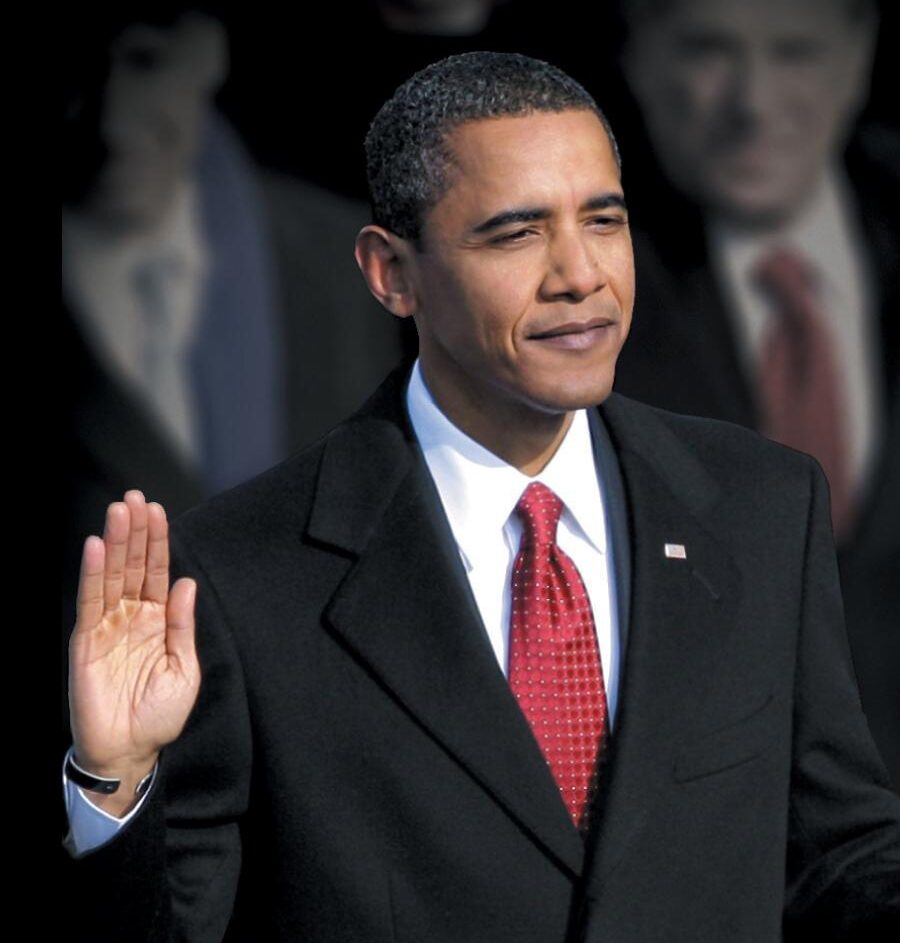
A country with poor governance, bad economic policies, and social unrest can have no favourable options. It has to remain content with following a course set by foreign powers regardless of the final destiny, which could end in a deep precipice or a quagmire. We are a rudderless nation beset with numerous maladies and are following a suicidal course set for us by nations that are hell bent on undermining our nuclear power potential, and indeed our existence as a sovereign state. According to Webster Tarpley, a famous US historian Barack Obama is treading a more dangerous course as per the designs of Breznitsky who strongly feels that China and Russia, being the future power centres must be sufficiently weakened so that US – UK alliance could control the world for another 100 years. And for this he thinks that all those nations such as Pakistan, Sudan, etc which either support these powers or supply oil to them must be disintegrated, and instead of taking on Iran directly, set her on a collision course with Russia, and later bring China and Russia into a serious confrontation to decimate each others power potential and resources. The historian had predicted before the election of Obama to the Presidency that he would be more militaristic and aggressive than the Bush administration in terms of airspace and ground violations of Pakistani territory. The increasing drone attacks have proved him right to that extent.
Our government must deliberate at length on all possible conspiracy theories to come up with a viable response to thwart the US designs based on Breznitsky’s doctrine.