





Historians must give credit to India that over the past 62 years, it has always been the first South Asian state to introduce new lethal weapon systems into the region. The Pokhran nuclear test in May 1974, ironically called ‘The Smiling Buddha’, or 24 years later, the unprovoked ‘Pokhran-II’ May 1998 nuclear tests testify to the fact that threat or no threat, provocation or no provocation, New Delhi clearly aims to dominate the South Asian theatre and its dominion of influence and power and the launching of INS Arihant is another step towards the same direction.
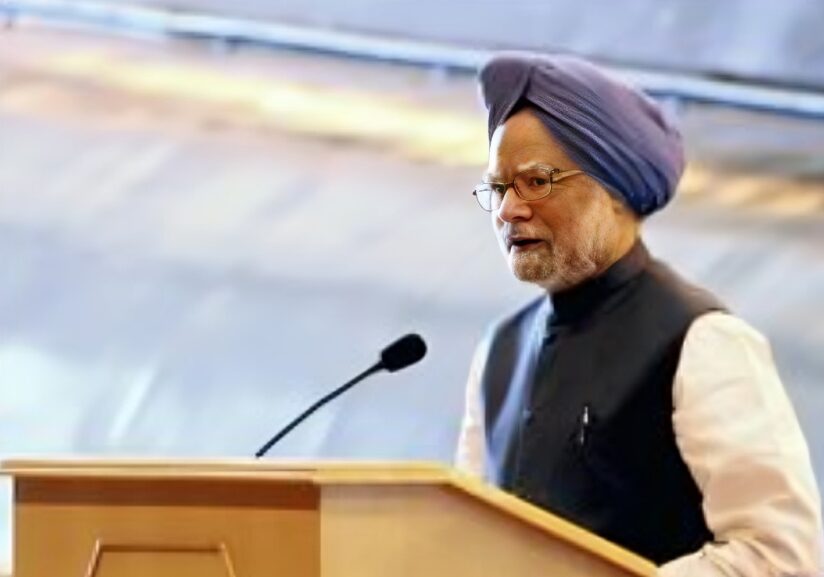
Whilst Indian Prime Minister Manmohan Singh’s statement at the launching ceremony of the 6000-ton nuclear-powered naval vessel was that India had no aggressive designs towards anyone, it seemed rather out of context because the fact remains that Attack submarines from the 2nd World War German U-boats era have always been designed as a lethal and stealthy long-range weapon of attack, not for defence.
The submarine is an extremely potent weapon system but it is lethal only until it remains undetected and is particularly vulnerable to the airborne Anti-Submarine weapons. This weakness applies to all submarines including the huge 16,000 ton US Ohio SSBNs or the mammoth 28,000 ton Russian Typhoon Class submarines and this is where Islamabad is likely to focus to counter the sea-based nuclear deterrence that New Delhi aims to introduce in the form of Ballistic missile submarine in the conflict-prone South Asian region.
INS Arihant’s launching is in line with the traditional Indian philosophy of building big vessels that highlights New Delhi’s aspiration to be seen in possession of big-ticket items that can help identify it with the big powers’ club which it aims to join. In 1957 that was the motivation when upon persuasion by Lord Mountbatten, Prime Minister Nehru set the trend by deciding to buy the British aircraft carrier HMS Hercules which was later inducted in 1961 as INS Vikrant or in 1986 the purchase of INS Viraat (Ex HMS Hermes) or in 2004 when India bought the aircraft carrier Admiral Gorshkov from Russia for US$1.5 billion dollars.
Maintaining a Submarine-based nuclear deterrence is an extremely expensive exercise. Although the sea-based nuclear capability offers the advantages of stealth, mobility and survivability compared with a land-based or air-based nuclear capability, building and maintaining a sea-based capability is a much more arduous and expensive task. According to reports, India has approved the construction of two more nuclear submarines costing Rs. 30 billion. New Delhi has received Russian reactor and submarine design assistance, which was duly acknowledged by the Indian Prime Minister in his speech. Indian defence sources claim that the next submarine’s hull construction was already underway at a facility in the Hazira port near Surat in the Gujarat state. Once completed, two of the three submarines would be ready for deep-sea deployment, while the third would remain on base as a back-up. The Indian government is also reported to have given clearance for the building of Vanguard-class nuclear ballistic submarines, or Ballistic Missile Nuclear Submarines (SSBN), each worth around Rs 100 billion. This programme would be initiated once the three Arihant-class boats become operational.
The SSBNs are quiet, deep-sea diving, long-range, high-endurance, huge nuclear-powered submarines capable of launching ballistic missiles and carrying nuclear weapons to provide a second strike capability to a country’s nuclear forces in the event of its land and air nuclear capability being neutralized in a pre-emptive strike by the adversary. There are reports that the Indian navy had also proposed the building of fast nuclear attack submarines to escort the SSBNs.
These are obviously ominous developments and considering the set of long-range capabilities it offers the Indian navy, it should make many states even beyond the South Asian theatre uneasy about the designs of Indian military planners particularly when the range and scope of many of the new strategic weapon systems such as the Ballistic missile nuclear submarines and Agni-III Ballistic missiles that New Delhi is developing is way beyond the scope of South Asian security canvas.
However, another significant dimension of this scenario is the fact that the INS Arihant has been launched after the US-India nuclear deal and could have encouraged Moscow to expand and pace-up its own nuclear co-operation with India which did not have sufficient in-house technical expertise to successfully design a miniaturized nuclear reactor like the 85-megawatt reactor that powers INS Arihant. Like Russia this deal could also motivate many other nations to expand their own nuclear trade and technical assistance to New Delhi, thereby help accelerate not just Indian civil, but also its nuclear weapons programme. This trend in the long run has the potential of eventually eclipsing the US-India nuclear deal due to the relatively higher cost of the US products in the international nuclear technology market and availability of cheaper alternatives to New Delhi.
Now what are Pakistan’s options? Follow suit? Yes and No. In fact, Pakistan should evaluate a set of diplomatic and cost-effective security initiatives aimed at countering the sustained Indian strategic build up encouraged and supported by Washington, Moscow and Tel Aviv alike. On a political level the government should take the Parliament and nation into confidence regarding the worrying Indian military build up and re-evaluate its domestic and international options and posture and also see whether its defence budget is sufficient to counter the growing external and internal threats and achieves optimal utilization of all available resources. If not, then what are the capability gaps that are critical to Pakistan’s long-term and short-term security and how could they be effectively filled.
On a diplomatic level, parallel to sustaining its bilateral efforts to resolving disputes with New Delhi and reducing the mutual deficit of trust, the government should share its concerns regarding Indian arms build-up despite Islamabad’s repeated attempts at improving bilateral ties, with the most important capitals, all regional partners and most vital allies and probably consider launching ‘a fresh arms-control initiative’ in line with President Obama’s current efforts to rid the world of nuclear weapons and Washington’s recent successful talks with Moscow over nuclear disarmament. The launching of INS Arihant has raised eyebrows as far as Australia and Indonesia and their concerns provide Islamabad an opportunity to discourage Indian military expansion on various international forums like ASEAN and NAM through multi-lateral diplomatic efforts. In addition, Islamabad should minutely reconsider the long-term implications of FMCT on the future credibility of its nuclear deterrent particularly because what is ‘credible’ today may not be credible tomorrow considering the massive technological boost the US-India nuclear deal will provide by freeing up New Delhi’s limited domestic reserves for weaponization purposes. According to official reports, by the year 2025 India is aiming to have 3 to 4 carrier battle groups alongwith a nuclear submarine fleet (both SSBNs and SSNs) and a 35 squadron high-tech air force. Even if by the end of this decade we see a five SSBN Indian sea-based nuclear deterrent, then this alone indicates a massive 100+ sea-based nuclear warhead programme for the Indian Navy. FMCT is looming large at a very ominous time for Pakistan which is hard-pressed to maintain a ‘minimum credible deterrence’.
Obviously, in view of such an ambitious Indian nuclear weapons programme, the definition of ‘what is minimum and what is credible’ in the long-term needs to be continuously revisited by the Strategic Plans Division (SPD) and political leadership alike.
However, there are some new emerging opportunities. With the recent improvement of relations between the US and Russia, it is no longer a zero-sum game to be seen unfavourably by Washington if Islamabad itself warms-up its ties with Moscow. In fact, it would be welcomed by Washington if the canvas of Asian security could be expanded beyond the current counter-terrorism debate to include enhancing strategic stability in South Asia as a means to preserving peace and security by reducing asymmetries in military capabilities of New Delhi and Islamabad. Put simply, if Secretary Clinton could offer New Delhi 12 billion dollars worth of military deal involving F-16 block 60s and F-18 E/F Super Hornets alongwith a transfer of technology, then Islamabad should also not have any qualms about exploring close cooperation in military technology with President Medvedev’s resurgent high-tech military industrial complex which itself is looking for international arms deals to finance its own modernization programme.
Now as regards the immediate Indian ballistic missile submarine threat, one tends to disagree with some of the Pakistani experts’ recent concerns that its immediate threat is directed against the Pakistan Navy. In fact, a Ballistic missile submarine, which is probably the most expensive of all weapon systems in service today, except a nuclear-powered aircraft carrier, is a ‘silver bullet’ whose primary aim is to provide a second-strike nuclear capability and not engage in conventional naval conflict particularly when the Indian Navy already enjoys a huge numerical superiority in terms of its existing diesel-electric submarine fleet over all the navies of this region except China. Therefore, it is extremely unlikely that the Indian Navy would use one of its most expensive assets in a conventional role against the Pakistan Navy considering its diesel-electric submarines already out-number Pakistan Navy submarines by 3:1.
In fact, the very purpose of a nuclear-tipped ballistic missile carrying submarine is to preserve and provide stealth to the country’s nuclear deterrence and not to expose it to the threats of conventional or tactical naval warfare. In actual crisis, even US and Russian SSBNs are pre-tasked to go and hide under the Polar Ice-cap or other distant places far away from the potential conflict zones in order to maintain and protect their second strike capability and wait for launching orders. The real danger that Indian nuclear sea-based nuclear deterrence poses for Pakistan is far greater because once it becomes operational in 2011, it would heighten the risks of any conflict between India and Pakistan turning nuclear due to an Indian temptation to escalate any crisis into a conventional war due to New Delhi’s reliance on the credibility of its own second strike capability. Simply put, based on its sea-based second-strike capability, amidst heightened tensions, India would be more than willing to initiate a war with Pakistan under the impression that even if Pakistan uses nuclear weapons against India, New Delhi could absorb the nuclear attack and still strike back. The building of a complete nuclear triad and particularly a sea-based nuclear deterrent seems to have an embedded objective of strategically reinforcing the Indian ‘Cold Start’ doctrine. The reported ranges of missile expected to arm INS Arihant (700km) also make it a Pakistan-specific weapon like the Indian land-based Prithvi missiles because it falls far sort of being able to threaten China significantly. This destabilizing tendency seriously jeopardises the concept of nuclear deterrence in South Asia and poses a new and serious threat to peace and security of this region particularly since during the Indo-Pak composite dialogue, both New Delhi and Islamabad had formally recognized nuclear deterrence as ‘a factor of stability in this region’. The 2nd strike capability represents a departure from the stated diplomatic position by India and indicates a clear provocation to Islamabad yet again of the scale of the 1998 ‘Pokhran II’ nuclear tests by New Delhi, to follow suit. This threat to the credibility of Pakistan’s nuclear deterrence could compel Islamabad to attempt to rectify the growing asymmetry not just in the conventional naval arena but also to secure and preserve its vital nuclear deterrence by expanding and diversifying it.
A short term interim measure in this regard could be to explore the possibility of leasing a Chinese Nuclear submarine with either cruise or ballistic missile launching capability. The Chinese Type 93 Nuclear Attack submarine could be a likely candidate as its later models are reported to have the capability to be equipped with Land-Attack-Cruise missiles. So it could be considered to be integrated with Pakistani cruise missile ‘Babur’ with a range of 500-700km. Type 93 is thought to be approaching the early variants of the US Navy Los Angeles class SSN in terms of capability and noise level, but still considered inferior to the more advanced Seawolf and Virginia class. However, lease of such a boat could offer a cost-effective and interim solution in terms of a sea-based second strike capability to Pakistan. It would most likely also raise relatively less alarm in western capitals considering it is not a dedicated Ballistic missile nuclear submarine like the Type 94 whose lease to Islamabad by Beijing could create a lot more diplomatic or even economic pressure on Pakistan by Western allies and donors. Another near-term alternative could be the upgradation of existing Pakistan Navy Agosta 90-Bs to carry Nuclear-tipped Land-attack Cruise missiles such as Babur and use some submarines for conventional missions and dedicate others to a strategic role.
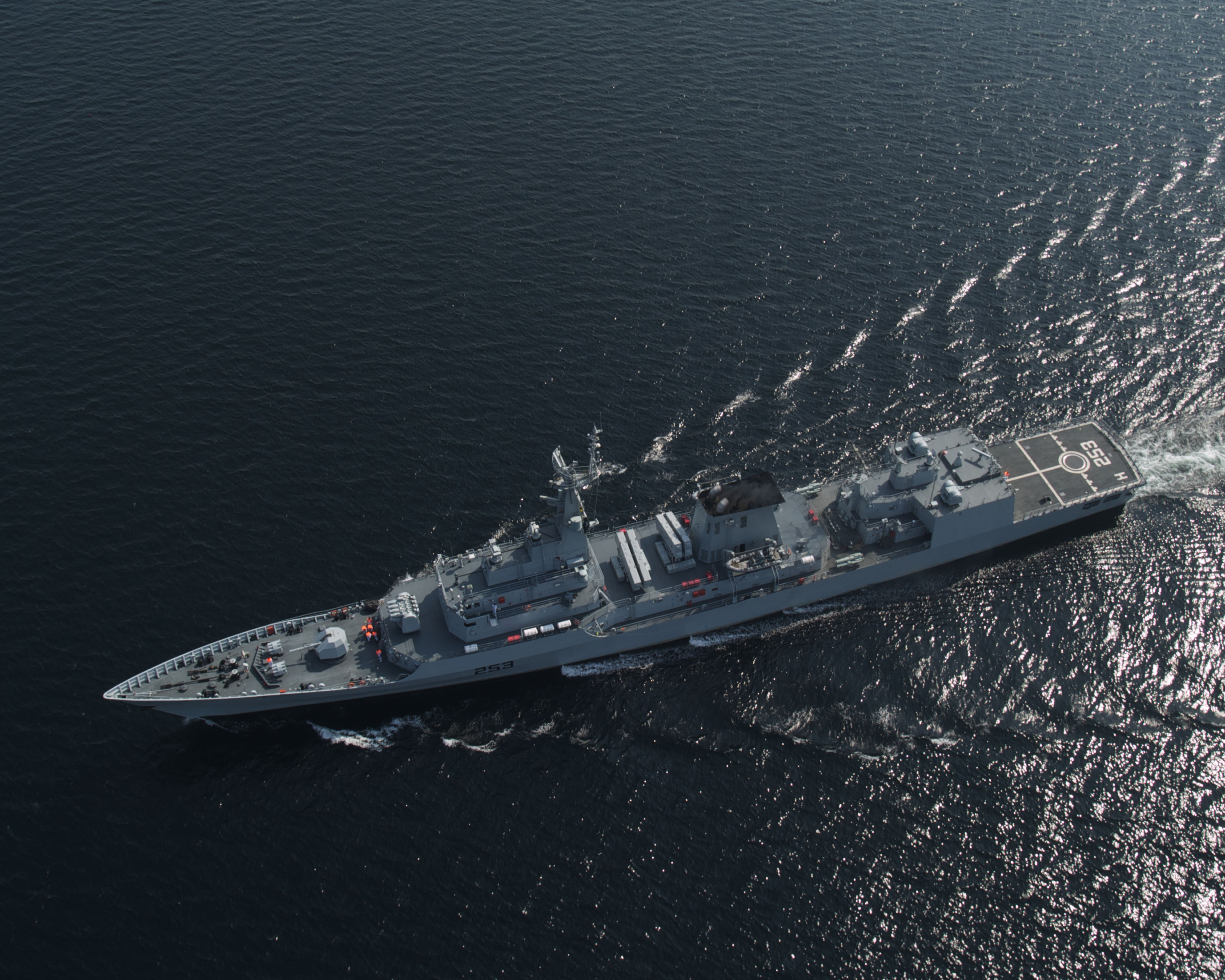
Tactically, the options available to Pakistan Navy to counter the Indian SSN (Nuclear Attack Submarine) or SSBN (Nuclear Ballistic missile submarine) threats are various. Pakistan Navy has air, sea and sub-surface (under-sea) capability to hunt down and kill submarines. In terms of air assets, it has very capable and long-range Lockheed Martin P3C Orions whose long endurance, effective MAD sensors and sonars, alongwith Mk-46 torpedoes make them very capable platforms against submarines across deep seas. In addition, Pakistan also has upgraded its Atlantique ASW (anti-submarine warfare) aircraft, not to mention Seaking helicopters for short-range operations against submarines. Pakistan Navy should explore the possibility of inducting additional LRMR (Long-Range maritime Reconnaissance aircraft) such as P-3C, P-8 or Atlantique-II capable of ASW. As far as the surface based platforms are concerned, although Pakistan’s entire frigate fleet is equipped with anti-submarine warfare suite but the recent induction of F-22P frigate such as PNS Zulfikar would surely boost Pakistan’s anti-submarine capability. Three additional boats of this class are in the pipeline and their ASW capabilities could be enhanced in view of the changing geo-strategic compulsions in South Asia. In the sub-surface arena, Pakistan is the oldest and most experienced user of submarines in South Asia and all 5 of Pakistan’s Agosta submarines are very capable in hunter-killer operations and even from the days of 1965 war, Pakistan has a history of using its submarines employing very aggressive tactics. In fact the military debacle of 1971 overshadowed a historical event when PNS Hangor sank Indian Navy frigate INS Khukri and damaged another Indian frigate which was the first sinking of any warship by a submarine after the 2nd World War. In view of the above capabilities and new inductions, the Pakistani nation is confident that in the unlikely event of hostilities with New Delhi, Indian Navy would be hard pressed to preserve its ‘silver bullet’ INS Arihant which would most certainly be the most hunted target for a small but capable and hard-hitting Pakistan Navy even in a conventional conflict.
Lastly, the unchecked Indian drive to weaponize itself is at an ironic tangent to the reality of half of world’s poorest people who live in South Asia and do not know whether they will be able to earn even a single meal in a day. One wishes if India in its big power quest could emulate respected and peaceful nations like Japan and South Korea rather than try to browbeat its neighbours and indulge in a futile and costly arms race.