


Brief background of the Historic Hejaz Railway
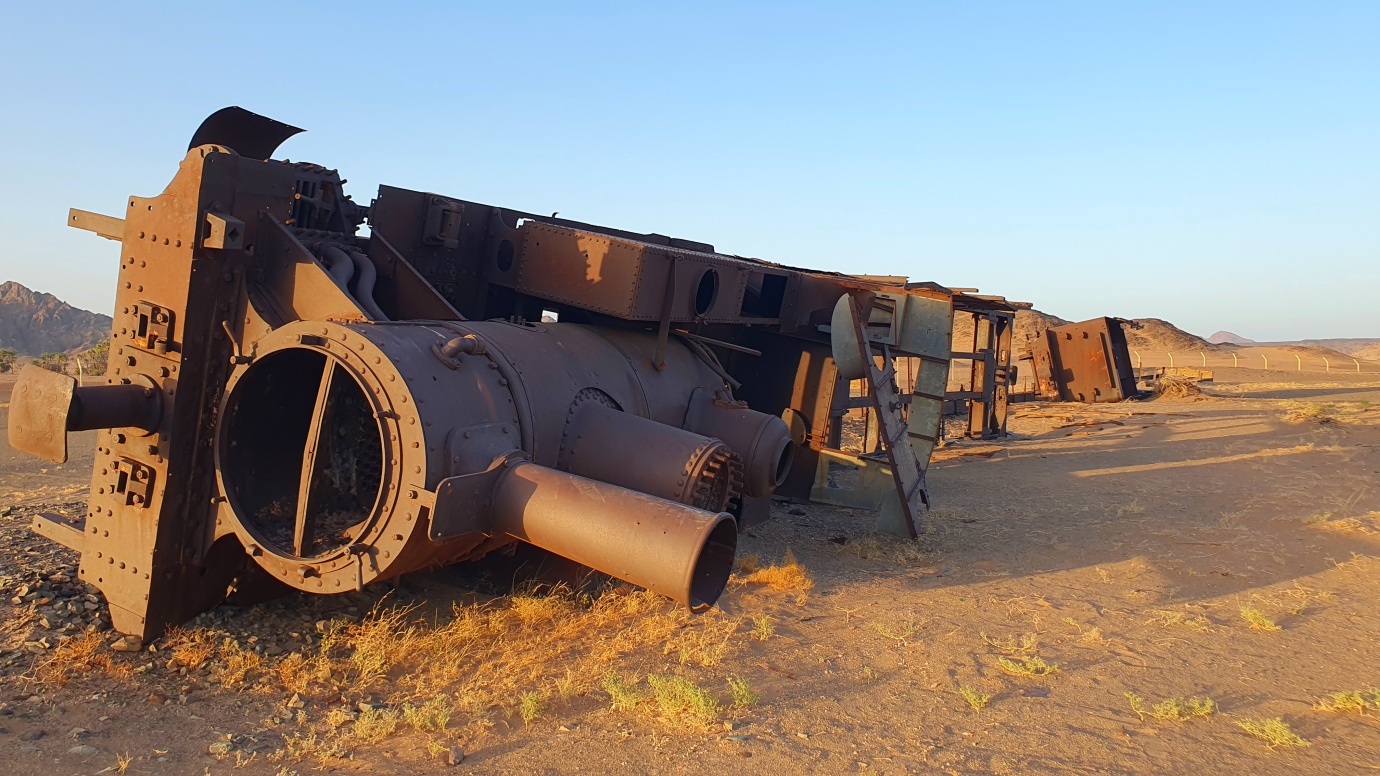
The historic Hejaz Railway was one of the Ottoman Empire’s grand infrastructure projects that was the brainchild of late Ottoman Sultan Abdulhamid II. The construction of this great project began in the year 1900 under the Sultan’s decree, and by 1908 the railway had connected Istanbul to Medina, before its completion in 1913. Stretching around 800 miles through Damascus, present-day Jordan, Lebanon, and Palestine, the line carried pilgrims from Istanbul to the Prophet’s Mosque in Medina. During World War I, large sections of the Hejaz railway was destroyed. The restoration discussion took many challenges during the Arab Israel wars in 1967 & 1973 and again the civil war in Syria in 2011. The current government under President Recep Tayyip Erdogan took this historic step and initiated a forward-looking approach to revive this historic railway project to build a resilient land trade corridor linking the Gulf of Oman to Europe.
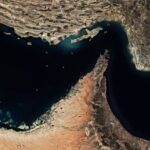
Signed in June 2026, the bilateral agreements establish an alternative route that bypasses maritime chokepoints like the Strait of Hormuz. The corridor will connect Turkey and Saudi Arabia by traversing Syria and Jordan, with long-term plans to extend the line to Oman and the Indian Ocean. On Saturday 18 July 2026 Ministers estimate the core cross-border rail link will be operational in the next three to four years. Joint technical and feasibility studies for the route are slated to be completed by the end of 2026. This initiative aims to restore the historic Hejaz Railway, establishing a strategic north-south transportation corridor connecting Istanbul, Adana, Aleppo, Damascus, Amman, Medina, Mecca, and Jeddah, offering an alternative to maritime transit through the Strait of Hormuz, Bab el-Mandeb, and Suez Canal. Longer-term plans envision extending the network to Oman, creating a land corridor between Europe and the Gulf of Oman.
The urgency to restore the railway is coming from governments and businesses seeking to quickly develop alternative transport corridors amid escalating instability since the start of the Iran US war. With the Strait of Hormuz having been effectively blocked for months, and risks heightened in the Red Sea and Suez Canal, there is a growing imperative to build more resilient logistics networks. Even with talks progressing between the United States and Iran aimed at opening the Strait and ending the war, the vulnerability of these critical waterways to major disruptions has provided impetus towards the appeal of overland routes linking Turkey to the Gulf region that bypass maritime chokepoints.
The economic viability of this plan remains to be seen, with significant challenges lingering about how such massive logistical networks can be funded and secured across multiple borders. While historical and tourism elements provide attractive narratives, the strategic logistics goals driving recent agreements between Türkiye and Saudi Arabia are meant to address the vulnerability of traditional maritime transport. A revived Hejaz Railway would primarily serve as a vital commercial conduit between the Gulf and the Levant, unlocking lucrative, time-sensitive freight opportunities while boosting regional tourism and trade. A restored line would drastically alter regional logistics by providing a fast, reliable, and secure overland route. Key cargo would include:
Cold Chain & Perishables: Temperature-controlled railcars would transport pharmaceuticals, chemicals, and agricultural goods (like Jordan’s fresh fruit and vegetables) to premium Gulf markets.
Consumer & Industrial Goods: The railway would efficiently shuttle containerized everyday items, construction materials (like cement and steel), and heavy industrial equipment across borders.
Economic Impact for Jordan: Improved rail connectivity would lower transportation costs for imported raw materials while providing local farmers broader, more lucrative export routes.
Regional Mobility: It would provide a convenient and affordable commuting alternative for domestic travellers moving between major hubs in Jordan, Syria, and Saudi Arabia.
Heritage & Religious Tourism: The historic nature of the line holds massive appeal for tourists and pilgrims. Revived services could cater heavily to those seeking scenic heritage routes or religious travel.
A few major challenges on the way are,
Financing: The immense capital required to rebuild and modernize tracks spanning from Türkiye through Syria and Jordan into Saudi Arabia.
Security: Navigating the geopolitical realities and ensuring safe, continuous transit across historically volatile regions is a significant logistical barrier to consider.
IMEC as a Competitor:
On 10th Sep 2023, during a joint G20 nations session at New Delhi, a Memorandum of Understanding (MoU) was signed by the governments of India, United States, Saudi Arabia, France, Germany, Italy, European Union and the United Arab Emirates. The MOU related to the idea of an economic corridor that could fulfill the desperate needs of India and western nations connecting to the oil rich Middle East, bolster economic development by fostering connectivity and economic integration between Asia, the Persian Gulf and Europe. The G20 group suggested it as “The India-Middle East-Europe Economic Corridor (IMEC)” going from India to Europe through the United Arab Emirates, Saudi Arabia, Jordan, Israel and Greece for supply chain establishment through a mix of land and sea routes.
Although this IMEC was marketed at G20 level summit along with important stake holders’ presence, the feasibility (mix of land & sea) and geography (War in Gaza and ongoing US-Iran war) do not allow this corridor to emerge as a rival Project to CPEC (China Pakistan Economic corridor). The critics commented negatively right after the G20 summit that IMEC as showcased for two reasons. First, to propose counter corridor for undermining many present and upcoming regional connectivity initiatives like IRDC, Hejaz Railway, CPEC, Middle Corridor and second, bypass and avoid Türkiye’s involvement. In the same month of September 2023, Turkish president Recep Tayyip Erdogan highly criticized the IMEC project for bypassing Türkiye. President Erdogan suggested an alternative route, the “Iraq Development Road Project” (IDRP), which is aimed to connect the Persian Gulf with Europe through a railway and highway via ports in the United Arab Emirates, Qatar, and Iraq (Grand Faw Port). The regional countries, including, Iraq, Türkiye and Gulf Arab states potentially could soon be finalizing the project, which eventually, would carry goods through al-Faw port in Iraq’s Basra governorate to international markets via Türkiye.
The region through which Türkiye intends to develop the Iraq road Project, historically was heavily infiltrated by the PKK terrorist group. The presence of the PKK in Metina and Gara had the potential to seriously threaten the Iraq Development Road Project. Gara, in particular, has long functioned as a critical connective node linking the PKK’s main operating zones in Qandil, the Turkish border regions, Sinjar, and Syria.
It has housed vital infrastructure like command posts, training camps, and weapon caches. Both regions have been central targets for Turkey’s cross-border military and intelligence operations (such as Operation Claw-Lock), which utilized airstrikes to target senior militants and destroy tunnels. As part of an ongoing peace process and disarmament effort, reports indicate that PKK fighters have withdrawn from dozens of positions across Metina and Gara while Turkish forces have moved to secure and establish de facto secure zones in many of the vacated territories to block infiltration.
It is worth mentioning Türkiye to form an alliance with brotherly countries who have greater experience fighting terrorism since the past few decades. This joint venture will eliminate this PKK menace to a certain extent. If we factually analyse both IMEC, Iraq Development Road project & Hejaz Railway project, the IMEC has more draw backs as compared to IDRP and Hejaz Rilaway. IMEC seems to give benefit to India being an ally of previous QUAD ignoring or underestimating the fact that it has to pass through the Arabian Sea where rivalry exists between India, Pakistan and China. The additional sea miles from India to the Middle East adds complexity and cost to the IMEC while IDRP & Hejaz Railway has no such additional Sea mileage complications in the mainland of the Middle East.
The IMEC is introduced to counter initially Chinese BRI, however, the alternatives presented by President Recep Tayyip Erdogan like Hejaz railway and IRDP, have more feasibility on ground. We also need to realize that BRI intends to connect almost all Turkestan that is basically Central Asian Republics. Thus, the extension of CPEC via RCD highway can be further connected to Azerbaijan. This can become the Eurasian corridor that will have linkages with other Central Asian BRI projects. Connection with the Caspian Sea via Azerbaijan and Iran can further open up doors for blue economy related trade and land/sea routes towards CAR states (Turkestan). Huge potential for economic activities awaits if such a plan comes into reality. The only couple of tricky factors worth mentioning are, the unstable Afghanistan and dubious policy from Iran. China can play a decisive role bringing both Iran and Afghanistan into this regional economic vision.
We must also keep an eye on negative factors that could potentially damage the development of the projects via sabotage activities using Proxies. One of the major deteriorations will surely come from India and its western masters. India and its allies are in contract with all negative forces in the region like BLA/TTP terror group in Pakistan, supporting Armenia against Azerbaijan, supporting PKK against Türkiye, etc. etc. Having said that, Hejaz Railway and Iraq Development Road Project (IDRP) is the viable corridor if compared to IMEC, but it is of utmost importance that hurdles are eliminated that will for sure be propped up on the way and like-minded brotherly countries (Türkiye, Pakistan, Azerbaijan) must develop strategies to counter such obstacles.
Pakistan has long experience on fighting proxies; this can be leveraged by Türkiye and Azerbaijan and was well demonstrated in 44 days patriotic war of Nagorno Karabakh.
Eurasian Connectivity Thru RCD Highway Extension to Turkestan States:
The RCD Highway formally known as Highway N-25 already exists between Pakistan, Iran and Türkiye and it connects Baluchistan with other provinces and cities in Pakistan and further with Iran and Türkiye. It is an 813 km long highway, passing through Karachi, Bela, Khuzdar, Kalat, Quetta and Chaman and then continuing into Afghanistan. It then joins the N-40 (national Highway 40 Quetta-Taftan International Border circuit) which leads it via Naukundi to road 84 in Iran and through various Iranian Highways to Türkiye and onwards into Europe.
The highway also has a recent connection to Gwadar and passes through many towns in Balochistan. Efforts must be made to make it a viable project linking Pakistan, Iran, Türkiye, and Azerbaijan into the Caucasus and further into Central Asia (Turan/Turkestan states) and Eurasia for connectivity reasons.
One more interesting fact is that Azerbaijan and Iran are closely linked with the Central Asian States (Turkestan) and Russia through the Caspian Sea that is a natural pivotal point between Azerbaijan, Iran, the Caucasus region, Russia and the Central Asian States (Turkestan). This pivotal Caspian Sea has great potential to expand within the ECO block countries and having it linked further with CPEC, hence huge economic and strategic activities can be planned within above said pivotal countries.
Pakistan’s strategy in the Eurasian geopolitical chessboard aims to strengthen cooperation with Iran and Azerbaijan on the Caspian Sea to create a transit corridor that might boost Pakistani import-export and commercial trade.
Pakistan wants to increase its influence and presence in the Caspian Sea, considering the outstanding geopolitical role that the region plays as an interconnector between Europe and Asia, a logistic hub, and energy market. Islamabad should discuss the possibility of strengthening cooperation with Iran and Azerbaijan to pursue this strategy.
Summing up feasible corridors in the region, we see three feasible projects below.
- Trans Caspian Corridor (Middle Corridor), a separate article will be shared on this subject.
- Iraq Development Road Project (IDRP)
- Hejaz Railway Project
- China Pakistan Economic Corridor (CPEC, Flagship of BRI)
- Eurasian Connectivity thru RCD Extension (Türkiye-Iran-Pakistan Economic Corridor with Caucasus/Caspian extension, exploring Azerbaijan and Turkestan economic potential)
So, if the geographical and strategic hurdles are compared, IMEC is definitely not a viable project that primarily aims to benefit India, Israel and Greece. Due to serious problems occurring within India and Israel’s engagement in Gaza War, all western hopes about IMEC as a feasible project are hanging in the air. Hejaz Railway has the huge potential and scope to be used as an alternative since the train track was already established and this is present on ground in some capacity even today.
Turkey’s Regional Ambitions and Soft Power:
The Hejaz Railway’s revival could serve to bolster Turkish soft power while further embedding Turkey into the Arab region’s economic geography, creating a structural role for Turkey as a transit hub for trade, logistics, and digital infrastructure – particularly as the project also includes fiber-optic networks.
This underscores Turkey’s infrastructural influence, as growing reliance among regional states on systems routed through or standardized with Turkey steadily reinforces Ankara’s position as a central partner in long-term economic planning and regional connectivity. At the same time, the project advances Ankara’s quest to strengthen its political and symbolic presence in the Arab world while competing in wider corridor geopolitics. Carrying strong Ottoman-era associations, the railway ties modern Turkish foreign policy to the historical geography of the Hejaz route from over a century ago, reinforcing narratives of shared history and cultural proximity between Turks and Arabs of the Levant and Arabian Peninsula. This symbolic dimension enhances Turkey’s soft power appeal, particularly in societies where historical and religious connectivity resonates.
The railway ultimately affords Ankara ways to participate in, if not reshape, competing regional trade architectures. By embedding itself in a Saudi-linked overland trade axis through Syria and Jordan, Turkey also increases its diplomatic leverage while deepening interdependence with key Arab states and strengthening its aspiration to act as a pivotal middle power in the regional order that will emerge following the Iran war.
Syria as a Strategic Land Bridge:
No longer a “rogue” state isolated from much of the global economy by sanctions and war, Syria has the potential to reemerge as a major trade, commerce, and logistics hub in the Middle East. The restoration of the Hejaz Railway will depend heavily on Syria’s stabilization.
As a critical link in this corridor, Syria is well positioned to evolve into a strategic land bridge connecting Europe to the Gulf. If it can secure this role, Syria could attract substantial investment in reconstruction and infrastructure projects spanning railways, highways, logistics facilities, and digital networks, such as fiber-optic corridors, while generating significant transit revenue.
Such a transformation would deepen the stakes that regional powers, particularly Turkey and Saudi Arabia, have in Syria’s long-term stability. Rather than remaining economically dependent and politically fragmented, Syria could become an indispensable transit state embedded within West Asia’s emerging trade architecture and central to European-Gulf connectivity.
In the years ahead, the country may prove to be a decisive corridor shaping the extent to which Turkish-Gulf trade can bypass vulnerable maritime chokepoints while providing alternatives to routes that depend on Israel. In this sense, Syria is poised to become a high-stakes strategic arena, where Turkish, Jordanian, and Gulf Arab interests converge.
However, Syria is also a central risk point for this ambitious project given its security dilemmas, with the country targeted by perpetual Israeli attacks and the Damascus government grappling with fragmentation.
Additionally, while the Islamic State group no longer represents the threat to Syria that it did from 2014-19, there are concerns of it rebuilding in Syria. The Hejaz Railway’s long linear infrastructure will be vulnerable to sabotage, smuggling, and disruption in Syria’s less stable areas. If implemented successfully, the revived Hejaz Railway could become one of the region’s most significant transportation and integration projects, linking economic development with a broader geopolitical transformation. Beyond its immediate economic utility, the railway could help reshape patterns of regional interdependence by anchoring long-term trade flows in overland infrastructure rather than depending on the Strait of Hormuz, Bab el-Mandeb, and the Suez Canal. However, its strategic promise will ultimately depend on sustained political alignment among participating states and the durability of fragile post conflict environments along its route, particularly the Syrian leg of the project. In this sense, this railway will be a major test for regional cooperation and stability. The outcome may indicate much about Turkey and Saudi Arabia’s ability to advance their shared interests in promoting a more stable and prosperous Middle East.
Conclusion:
The rapidly changing geopolitics in the Middle East/West Asia due to bloody wars and increasing needs of alternate alliances for strategic balance, Saudi Arabia, Türkiye & Pakistan’s strategic alliance will be the hope for the region. The defence agreement between Pakistan and Saudi Arabia is the flagship pact that will pave the way to add more members especially Türkiye and Qatar. This alliance will play a key role in emerging regional security paradigm aftermath of the Iran-US and Iran-Israel war. The results of the recent Pakistan-India war which ended up with India’s humiliating defeat was also a decisive factor for forming such an alliance for regional power balance.
In addition to military strategic alliances and agreements, it is fundamental to revive and execute some ancient old trade routes/corridors. The table shows different trade corridors and their kicked off dates.
| Corridor | Connecting Regions/Countries | Year Started |
| IMEC | India-Sea-UEA-Saudi Arbia-Jordan-Isael-Europe via Sea | Sep 2023 |
| RCD | Pakistan-Iran-Türkiye & to Europe | July 1964 |
| The Middle Corridor | China-CAR Region-Caspian Sea-Azerbaijan-Türkiye-Europe | Feb 2014 |
| OBOR/CPEC | China – Pakistan to Arabian Sea | April 2015 |
| Hejaz Railway | Türkiye-Iraq-Syria-Jordan-Saudi Arbia-Oman-Gulf of Oman | Sep 1900 |
| North South Corridor | India, Iran, Azerbaijan, Russia, and Central Asia | Sep 2000 |
| Iraq Road Project (IRDC) | Major Iraqi cities and ending into Türkiye to Europe | May 2023 |
This table clearly shows the area and countries of focus and of great geopolitical importance. Türkiye is the pivot where all major corridors pass through Europe. In this regard, in addition to Middle Corridor and CPEC, the revival of the Hejaz Railway and RCD (being oldest on ground projects), will be the master stroke in global chess game.
References:
‘’Reimagining Regional Connectivity: Why IMEC Falls Short’’ Islamabad Telegraph by Anees Hafiz
‘’The Middle Corridor’’ Defence Journal by Dr. Nurhan Toguc/Anees Hafiz
‘’The Geopolitics of Reviving the Hejaz Railway’’ by Giorgio C. at AGSI
‘’ ECO Bloc Economic Opportunities & Connectivity’’ Defence Journal by Anees Hafiz
‘’ Drawing the Fault Lines’’ Defence Journal by Anees Hafiz ‘’ Pakistan, An Emerging Messiah of Peace in Middle East & West Asia’’ Defence Journal by Anees Hafiz