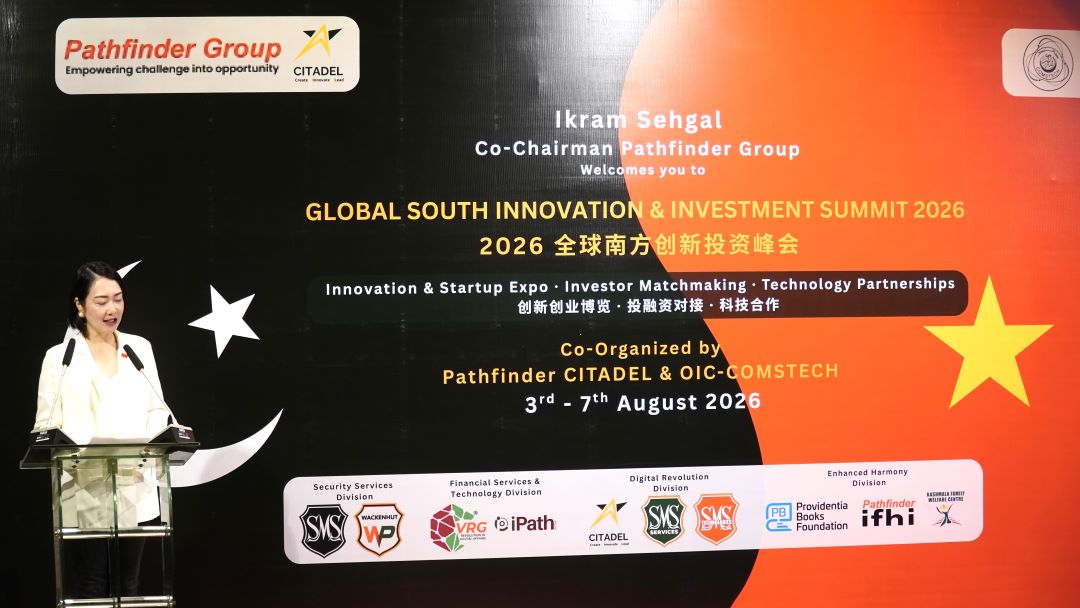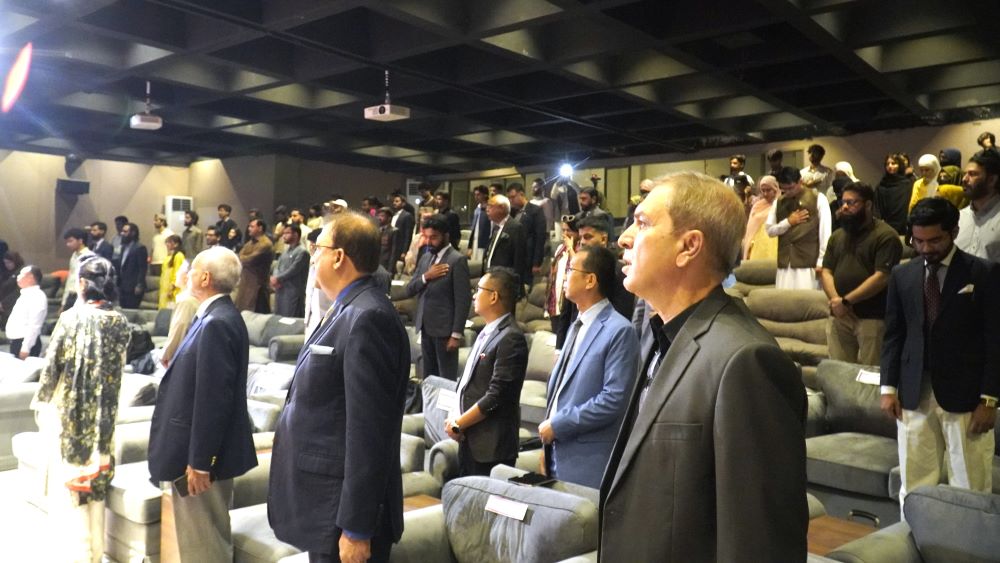






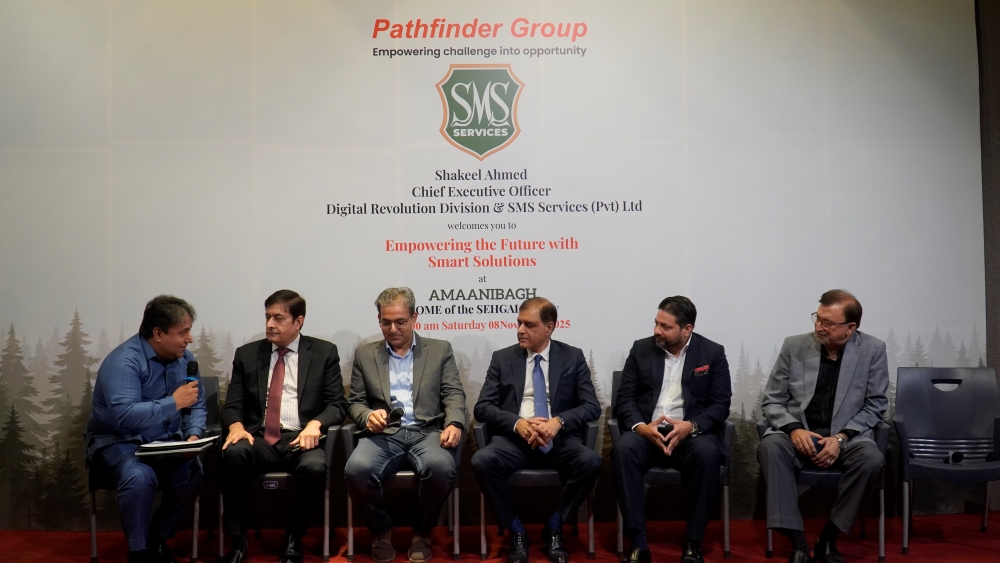
An insightful event was organised by the Pathfinder Group on Saturday, November 8, 2025 at AmaaniBagh Angoori, Islamabad. The event “Empowering the Future with Smart Solutions” highlighted the Group’s digital financial revolution by its Digital Revolution Division (DRD). Distinguished corporate leaders, technologists, policymakers, and innovators deliberated on the future of smart technologies and digital transformation in Pakistan.
Sehrish Mustafa Moderator
Today’s gathering celebrates innovation, resilience, and vision— values that have long defined the Pathfinder Group’s journey in transforming challenges into opportunities. Pathfinder has built a diverse ecosystem spanning security, technology, finance, digital services, interfaith harmony, and social impact. Together, these initiatives reaffirm Pathfinder’s mission to build a secure, smart, and connected Pakistan, embodying a commitment to excellence, execution, and integrity. Pathfinder is dedicated to significantly improving client performance and fostering an environment for exceptional people. To officially commence this event and share the vision guiding this innovation, we invite the corporate head of the Digital Revolution Division (DRD) and SMS Services Private Limited (SMSS). Please welcome the Chief Executive Officer of DRD and SMSS, Shakeel Ahmed, for his opening remarks.
Shakeel Ahmed CEO DRD & SMSS
Bismillah-ir-Rahman-nir-Rahim. Distinguished guests, esteemed members of the industry, academia, government, and the business community, Assalamu Alaikum, and a very warm welcome to you all. It is a great honour and privilege to welcome you on behalf of the Pathfinder Group, an organisation that has proudly served Pakistan for more than four decades. Since its inception, Pathfinder has stood as a symbol of trust, discipline, and innovation, with a strong and diverse presence across security services, cash-in-transit operations, consultancy, technology, and fintech. Throughout this remarkable journey, Pathfinder’s purpose has remained constant: to serve the nation with integrity, excellence, and foresight. Today, we gather to celebrate a new milestone in that legacy: the beginning of a bold new chapter in Pathfinder’s evolution – the era of digital transformation. In line with Pathfinder’s vision to stay ahead of technological change, the Pathfinder Group has established the Digital Revolution Division, which comprises two forward-looking companies: SMS Services Private Limited and SMS Technologies Private Limited. This division represents Pathfinder’s unwavering belief that the future belongs to intelligence, connectivity, and digital capability. Through this initiative, we aim to redefine how technology serves both business and society, offering integrated solutions across ERP and IT systems, AI and IoT platforms, cybersecurity, fintech innovation, e-commerce, smart infrastructure, and digital transformation consulting. This gathering brings together leaders, innovators, and visionaries who are shaping Pakistan’s digital future across various sectors, including banking and finance, telecommunications and IT, academia, and both the public and private sectors. Your presence here is a testament to our shared commitment to building a smarter, safer, and more connected Pakistan. Later in today’s event, we will present detailed insights into the Pathfinder Group’s journey and the vision behind the Digital Revolution Division. We will showcase how our legacy of excellence continues to evolve through technology, innovation, and national service. On behalf of the entire Pathfinder family, I extend my deepest gratitude for your presence and support. Thank you for joining us on this momentous occasion, and once again, welcome to a new era of Pathfinder’s journey towards a digital Pakistan.
Sehrish Mustafa, Moderator
Pathfinder Group’s four divisions, play a unique role in contributing to Pakistan’s progress. “Empowering the Future with Smart Solutions.” will take a deep dive into how technology is actively transforming critical infrastructure, spanning areas such as security, financial services, and corporate advancement. You will hear about the Security Services Division (SSD) from Jahangir Javed, the COO of Wackenhut Pakistan.
Jahangir Javed COO Wackenhut Pakistan (WPPL)
Bismillah-ir-Rahman-ir-Rahim. A very warm welcome and good morning. I will provide an overview of the Security Services Division (SSD) of the Pathfinder Group. The Pathfinder Group operates with over 15,000 employees and has a presence in 75 towns and cities. We have two major security services companies: Security and Management Services Private Limited (SMS) and Wackenhut Pakistan Private Limited (WP). Our vision and mission statement are: to be globally recognized as the leading security company, delivering responsible integrated services through shared goals, proactive responses, and a strong commitment to human rights and welfare. Our leadership team includes our Chairman, Zarrar Sehgal, Co-Chairman, Ikram Sehgal; and Deputy Chairman, Maj Gen (Retd) Shakeel Hussain. Other key leaders are Col. Ashiq Hussain, Senior CEO of SMS; Col. Hassan Raza, COO of SMS; Wing Commander (Retd) Sagheer Hussain, CEO of the RCS Division and I bring 18 years of experience to the security industry. I have been leading Wackenhut Pakistan for the last four and a half years. The company was established in 1977 and we have been providing services to financial institutions and various customers in our country for nearly five decades.
Security and Management Services (SMS) has three core sub-divisions:
• Guarding Division: This division offers both armed and unarmed static guards, as well as close protection services for executives and bank presidents. We also provide event management, event security, and project management services. SMS is unique in holding ISO 1878 certification, which reinforces our leading position in the industry. Furthermore, SMS has the largest security services contract in the world providing services to the United States Embassy for over 35 years, along with various consulates and esteemed clients. Our clientele includes the Italian Consulate, the Japanese Consulate, and others.
• Electronic Safety Services Division: This division offers a range of electronic security solutions, including intruder alarms, satellite vehicle tracking, CCTV installation, and other security gadgets for banks and various industries. We have been serving a diverse clientele, primarily banks, along with some non-banking customers, for over four decades. Our control room serves as the backbone and nerve centre for all our operations. We maintain control rooms in Karachi, Lahore, Islamabad, Peshawar, and Multan, backed by a strong monitoring and response team. This team efficiently dispatches mobile response units to address on-ground situations and requirements promptly.
• Research and Collection Services (RCS): This division provides a variety of services for banks and non-banking customers, such as background checks, employee verification, due diligence, security audits, and bad debt recovery
Wackenhut Pakistan
As the Chief Operating Officer of Wackenhut, I have proudly been maintaining an excellent track record for over four decades. We serve a nationwide clientele, primarily consisting of banks. Currently, Wackenhut employs more than 3,000 staff members and operates 450 armoured vehicles across the country, catering to both financial institutions and non-banking customers. Our fleet exclusively utilises basic B4 and B5 built in armoured vehicles. Our main services include vault cash-intransit, transportation of cash by air, ATM refilling, and cash sorting facilities. Wackenhut is unique in holding contracts for over 1200 off-site ATMs nationwide on behalf of 12 different banks. As previously mentioned, we are the only company in the industry that exclusively uses B4 and B5 built-in armoured vehicles. Although seven to eight companies are operating in Pakistan, employee safety is our top priority. We import these armoured vehicles from the UK to ensure the highest safety standards.
Since opening in September 2021, our Cash Processing Centres (CPCs) have been operational for over three years. Alhamdulillah, we have facilities in Karachi, Lahore, and Islamabad, where we have processed nearly 50 billion in cash to date. Due to the positive response from banks, we are now expanding our cash processing centres to additional cities across the country. Our primary clientele includes almost all banks, along with several non-banking customers, for their cash collection, ATM replenishment, and cash deposit machine operations, as well as other related services. Both Wackenhut and SMS are unique and maintain dedicated Training Schools in Karachi, Lahore, and Islamabad.
The Pathfinder Group also publishes internal materials monthly, including a magazine namely the Defence Journal and the country’s very first newsletter (in Roman Urdu) that was launched six months ago under the direction of our Group Co-Chairman. This newsletter, highlights our contributions to improving people’s lives and encourages other companies to follow the example set by SMS and Wackenhut.
The key features and benefits mentioned by Shakeel Ahmed emphasis that the Pathfinder Group and its employees work as a family. These benefits include industry-leading salaries for our crews, employees, and guard force which are credited to their accounts before the end of each month. We provide comprehensive health insurance, including OPD coverage to employees, the guard force and crews. Additionally, we offer free education for employees’ children at Jajja Cadet College, highly qualified and subsidised meals for staff and operate our own dedicated training schools and medical centres with professional instructors and doctors. In the unfortunate event of a guard’s death, widows receive continued salary support and assistance is provided for their children’s employment and education. We strive to remain the industry-leading security company in Pakistan.
Sehrish Mustafa, Moderator
The Security Services Division continues to set the standard for excellence and trust in the security industry. From safeguarding institutions to creating secure environments, Pathfinder’s commitment to security remains its strongest foundation. The Financial Services and Technology Division (FSTD), which consists of two companies: Virtual Remittance Gateway (VRG) and iPath Pvt Ltd. This division is at the forefront of digital finance innovation, simplifying transactions and promoting financial inclusion. Now, let us hear the story of innovation in financial technology from the CEO of Virtual Remittance Gateway, Salman Ali.
Muhammad Salman Ali, CEO Virtual Remittance Gateway (VRG)
Our Fintech Division was established within the Pathfinder Group in 2013, driven by the Sehgal family’s core mission to serve the underserved population of Pakistan. VRG was created to provide a platform for the “deprived” individuals in the country— those lacking access to essential financial services. Without these services, it is difficult for them to thrive in our increasingly digital age. VRG became the first company in Pakistan to acquire a PSO/PSP license in 2013, positioning us as the nation’s domestic payment gateway. Our journey became even more exciting when the Pakistan Telecommunication Authority (PTA) encouraged us to apply for a new license. This license was vital for establishing more technology-driven touchpoints, particularly for the majority of Pakistanis who, five years ago, did not own smartphones. At that time, only 36% of the population had access to smartphones, leaving a significant portion without internet access or mobile applications to utilise financial services.
USSD: Bridging the Digital Divide
The only widely accessible technology available for this segment is Unstructured Supplementary Service Data (USSD), a technology that has revolutionised financial access in Africa and the Philippines. VRG became the first and currently the only company in Pakistan to obtain the Third-Party Service Provider (TPS) license as a USSD aggregator for all telecom operators. This achievement allows us to consolidate all telecom operators and banks onto a single platform. Imagine the potential of the data and services we can provide. In addition, we reached another milestone by becoming the first non-banking entity in Pakistan to secure a license for end-to-end operations on a public cloud. Our mission is to bridge the digital divide, especially for the underserved and unbanked populations in Pakistan. Currently, only 23% of Pakistan’s adult population are financially included. What about the rest of the population? According to estimates from the State Bank, 100 million people in Pakistan remain unbanked. It is crucial to bring them into the financial system, but challenges persist with the availability of 3G, 4G, and the slow rollout of 5G. So, how can we include them?
Strategic Focus Areas for Digital Financial Inclusion
Our strategic focus areas are:
1. Digital Financial Inclusion:
This is our top priority. We are collaborating closely with the State Bank on the National Financial Inclusion Strategy as a key player. Our projects are frequently highlighted by the State Bank on a global scale.
2. Interoperability:
Why is there a lack of interoperability in Pakistan? Why can’t you transfer your mobile balance from Jazz to Telenor? Why can’t you visit a branch of Bank A to cash a check from Bank B? This kind of interoperability is already implemented in places like Europe.
3. Women’s Empowerment:
This is a crucial area where we must empower women. Examples from Bangladesh, the Philippines, and Africa show that when women are empowered, the entire nation becomes empowered.
4. Government Payments:
This is an exciting area. Programs like the Benazir Income Support Program, which is one of the largest philanthropic initiatives in the world, need to be digitized to ensure transparency. People should not have to wait in long lines at camps to receive their funds. Instead, they should be able to receive money directly on their feature phones, not just on smartphones.
5. Remittances:
It is the foundation of Pakistan’s economy. We are actively working on becoming the first company to facilitate stablecoin-based remittances to Pakistan.
Core Offerings
Our core offerings include:
• A USSD platform.
• Payment APIs available for fintech companies and banks to integrate.
• Remittance enablement.
• A robust agent network – similar to those you’ve heard about for JazzCash, EasyPaisa, UBL Omni, and Zindigi.
Currently, financial services operate in separate silos. Why can’t you deposit money into your HBL account from an EasyPaisa agent? There is no interoperability, which creates these silos. This is where our exciting new developments come into play.
1. Asaan Mobile Account (AMA)
A Global Success Story
The Asaan Mobile Account is the flagship product of the State Bank of Pakistan. We launched this project 28 months ago, achieving something unprecedented on a global scale. Recognised by the World Economic Forum (WEF), the World Bank (WB), and the UNDP, we have successfully created 13.34 million new accounts in Pakistan—an accomplishment unmatched anywhere else in the world. Even more noteworthy is that 36% of these accounts are held by women, significantly contributing to women’s empowerment, as endorsed by both the World Bank and the State Bank of Pakistan (SBP).
These are not just statistics; they are verifiable figures available on the State Bank’s website. So, what’s the next step for the AMA, particularly for our colleagues in the banking industry? Initially, USSD services for the AMA began with bank branches and later expanded to microfinance banks. Just two days ago, we received approval for USSD services to be available for all commercial banks in Pakistan. Imagine this: 145 million commercial accounts can now access USSD services, even in areas with no internet access, whether in the mountains or deep at sea.
2. Agri-Inclusion
Empowering Farmers through USSD
Pakistan is primarily an agrarian nation, as farmers contribute 20% to the country’s GDP annually. However, many farmers often struggle to access financial services. To address this issue, we collaborated with ZTBL, the largest agricultural bank in Pakistan, to enable 500,000 farmers to use USSD services.
This project was launched last year in January at the World Economic Forum (WEF). It is being widely recognised globally for providing farmers with access to financial services via USSD on feature phones, allowing them to receive instant loans from ZTBL. We are now focusing on the next phase of this initiative: offering technology-based advisory services through USSD, which would be another first in the industry. By empowering farmers with digital financial services, we enable entire families to benefit, eliminating the need to visit bank branches or agents. Farmers can simply use their feature phones to conduct various transactions effortlessly.
3. Agent Interoperability
Seamless Transactions
This is a very exciting development for agents and interoperability. Under the guidance of the State Bank, we have implemented a live solution that allows anyone with an HBL account to access cash-in and cash-out services at an EasyPaisa agent. We have created this interoperable platform, and the good news for the banking industry is that the SBP has now permitted agents to serve accounts from all commercial banks. This is a significant advancement.
4. Raast Payment to Merchant:
Digitising Small Businesses
We have also prioritised the Raast payment system for merchants, especially focusing on the countless small Dhabas and Kiryana stores across Pakistan. There are approximately 5.5 million Small and Medium-sized Enterprises (SMEs) in the country, contributing 40% to our GDP. Unfortunately, many of these individuals struggle to make digital payments because they lack access to smartphones and internet services to scan QR codes. To address this issue, we have implemented a solution that is currently live with HBL and is being rolled out in collaboration with the State Bank. This allows any HBL account holder to visit an enabled Kiryana store, dial a USSD code (2262) on a feature phone, select the merchants till number, and complete their payment. Our product has been recognised by the SBP, and we are now proposing it to the Benazir Income Support Program (BISP).
We believe that BISP customers, after receiving government funds, should have access to digital payment services for groceries, allowing them to maintain a transparent record of their spending. These are just a few of the initiatives we are actively pursuing right now. All these efforts are live and are making a significant impact, both nationally and globally.
We remain committed to this work because the vision of the Pathfinder Group, the Sehgal family, and the entire organisation is to support the deprived and underserved people of Pakistan. Thank you very much.
Sehrish Mustafa, Moderator
The finance revolution is connecting millions of Pakistanis to the financial ecosystem and making inclusion a reality. Now, I would like to invite Air Cdre (Retd) Farhan Ahmed to represent the newly established Pathfinder School of Excellence: CITADEL – Centre for Innovation, Technological Advancement, Digital Entrepreneurs, and Leadership. CITADEL is empowering a new generation of tech leaders and digital entrepreneurs, standing at the forefront of Pakistan’s digital evolution. The institution nurtures tech-driven entrepreneurship, cultivates leadership, and fosters innovation through research and mentorship. Please welcome Air Cdre (Retd) Farhan Ahmed.
Air Cdre (Retd) Farhan Ahmed, Director CITADEL
It’s indeed an honour to speak as a member of the Pathfinder family. What I am going to discuss with you today is a bold and timely initiative that sits at the intersection of entrepreneurship and leadership: Pathfinder CITADEL, a Centre for Innovation, Technological Advancement, Digital Entrepreneurs, and Leadership. In today’s ever-changing technological and economic landscape, the gap between what our graduates learn at universities and what the market needs has never been wider. Pakistan faces several socioeconomic challenges, including high rates of graduate unemployment and the underutilization of talent. CITADEL aims to transform this landscape by turning potential into performance, ideas into viable ventures, and talent into enduring jobs. This is not merely a training program; it is a systemic, ecosystem-driven approach to cultivate an innovation culture that can compete on the global stage.
CITADEL is a comprehensive initiative envisioned to prepare young professionals and leaders alike for the demands of the 21st century. It is guided by a simple yet ambitious framework with three clear vertical operating models:
1. Career Jumpstart: An outcome-focused skill academy and executive development hub whose mission is to bridge academia and industry through targeted upskilling in emerging technologies and essential soft skills, culminating in national and global placements for all participants.
2. Escape Velocity Accelerator: A venture development engine for startups with high growth potential that focuses on AI, fintech, climate tech, health tech, deep tech, and other high-impact domains, providing mentorship, acceleration support, and access to investment-ready pathways along with global linkages.
3. Strategic Innovation Consulting: A leadership and organisation transformation center that helps corporations navigate digital infrastructure, measurable transformation and leadership development. Thus, elevating employee happiness and productivity while strengthening competitive advantage.
Taken together, these three verticals form a coherent, scalable pathway from skill to employment, startup scale, and from enterprise to productivity growth.
CITADEL aims to achieve for Pakistan a market-driven, investment-ready value chain that converts talent into meaningful employment and ideas into scalable ventures, contributing to a productive, innovation-led economy. It is a practical “talent-to-job engine” designed to close employment gaps, especially within the 2040 demographic window.
This will be done by aligning skills with market demands within an ecosystem that unlocks regional and global opportunities through collaboration with universities, industries, and policymakers, creating a robust pipeline of talent, ventures, and leadership capable of competing internationally. This three-tier program is not theoretical but focuses on real-world impact and scalable solutions that can develop into an international standard of competence. We are addressing graduate unemployment with tangible outcomes through:
• Startup Scaling via Escape Velocity Accelerator: Turning innovative ideas into scalable, investment-ready ventures and positioning Pakistani founders on the global radar.
• Strategic Innovation Consulting: Equipping leaders to steer digital transformation, enhance productivity, and cultivate organisational resilience.
Our approach is nationally grounded and globally ambitious, built on collaboration with leading universities, corporations, and government entities. This creates a rich ecosystem that enhances resources, mentorship, and opportunities for our talent.
This initiative is about more than individual success; it aims to cultivate a culture of innovation, continuous learning and strategic risk-taking that spans across various industries and institutions. A significant milestone in our journey was the recently held Pathfinder CITADEL Startup Challenge for Davos 2026. This national competition identified the top eight startups from Pakistan to pitch on a global stage, specifically targeting market-ready founders in AI, fintech, climate tech, health tech, deep tech, and other impactful fields. The challenge utilised a three-stage nationwide assessment process, with each startup evaluated by a panel of expert judges. The final stage concluded on October 25th, where our esteemed judges selected a focused cohort to represent Pakistan at Davos 2026. These chosen young founders will gain global visibility among leaders and investors, exposure to international media and access to Pathfinder CITADEL’s acceleration programs, mentorship and corporate linkages.
This competition is more than just a contest; it serves as a launchpad—a concrete mechanism to connect Pakistan’s innovation potential with global markets, investors, and policy discussions on an international platform. It embodies CITADEL’s mission to elevate talent and ventures to prominently compete globally, accelerating the transformation of ideas into scalable impacts. To realise this vision, we invite collaboration with policymakers, academia, industry, and investors who share our commitment to an innovation-driven growth narrative for Pakistan. CITADEL represents a comprehensive, practical, and scalable pathway—one that transitions individuals from learning to earning, from prototypes to products, and from local relevance to global competitiveness. Together, we can transform Pakistan’s innovation culture by shaping a future where young engineers, designers, and entrepreneurs thrive not only at home but also on the global stage.
At this point, I would like to announce the outstanding individuals who will be representing Pakistan and Pathfinder CITADEL on the global stage. Please join me in congratulating these exceptional founders who will be accompanying us:
• Edversity
• Vector Ai
• Chrio (Sports tech)
• Swich
• Ekko
• AI Team force
• Edkasa (a woman-led startup)
• AiBL (Health Tech)
Sehrish Mustafa Moderator
Thank you very much, sir, and congratulations to all the selected startups for Davos 2026. Next, I would like to highlight the corporate social responsibility portfolio of the Pathfinder Group. We take pride in our initiatives that extend beyond business, initiatives that strengthen communities, promote understanding, and contribute to a better society. Moving forward, we have established the Enhanced Harmony Division (EHD), which encompasses two significant initiatives of the Pathfinder Group. First, the Providentia Books Foundation (PBF); second, the Pathfinder Inter Faith Harmony Initiative (PIFHI), a platform dedicated to promoting interfaith harmony, mutual respect, and unity among communities. Maj Gen (Retd) Shakeel Hussain, Deputy Chairman of Pathfinder Group, will present the Enhanced Harmony Division (EHD) on behalf of Brig (Retd) Mujahid Alam, CEO of PBF and PIFHI.
Maj Gen (Retd) Shakeel Hussain, Deputy Chairman Pathfinder Group
What I am sharing today is mainly about our efforts to give back to society. That is the core and theme of this company. Many inspiring stories unfold in this world every day, especially within our society, but few come to the forefront and often they don’t even reach the attention of closed social groups. Today, I will share two such stories, both involving the granddaughters of our Co-Chairman, Ikram Sehgal: Amaani Sehgal and Elena Sehgal. One of the granddaughters, Amaani, had the idea of reaching out to the underprivileged for their education, while the other, Elena, focused on promoting interfaith harmony. Both young girls were doing what they could at their own level until they spoke to their grandfather. He promptly provided resources, organised efforts, and ensured their initiatives achieved the best outcomes. I will elaborate on these today.
Providentia Books Foundation Promoting Literacy and Learning
Amaani Sehgal is the founder of the Providentia Books Foundation. She is currently studying at Cornell University, and her grandfather is very proud of her achievement. (He wanted to attend Cornell himself, but ended up in the Pakistan Army). Amaani is the driving force behind this initiative. Our CEO, Brigadier (Retd) Mujahid Alam, currently abroad revisiting his children, oversees both organisations. Fatima Saqib is the Vice President of Providentia Books Foundation and the Chief of Staff is Captain Parvaiz Riaz.
The vision of the Providentia Books Foundation is to promote literacy and learning among underprivileged children by ensuring equal access to books and educational resources. This effort aims to bridge the gap between privileged and disadvantaged communities. We are deeply committed to supporting those in need, as our mission is to provide hope and opportunity through the effective use of resources. This sense of hope is crucial; it motivates us to keep going, especially in a world where hope and happiness are often in short supply.
Our objectives include encourage reading, partnering with schools, promoting sustainability, connecting donors and mobilising communities through books and volunteer support. We hold meetings, sign Memorandums of Understanding (MoUs) for collaborations, collect book donations, sort them and distribute them to those in need. We have gathered data on numerous schools that urgently require these books and have already partnered with approximately 500 schools with ongoing efforts. We are also collaborating with various NGOs, as well as five publishers and press organisations. Our network is expanding daily. So far, we have collected 70,000 books and distributed 61,000 of them. The boxes on the right side of the screen are placed in schools where children can drop off books they no longer need. We collect these, sort them, and distribute them accordingly. To date, we have established 10 libraries in various locations and schools in underserved areas and this process continues. In recognition of their contributions, participating children and volunteers receive Providentia caps and certificates of appreciation.
Pathfinder Inter Faith Harmony Initiative (PIFHI) Fostering Coexistence
Moving on to our next initiative, the Interfaith Harmony Initiative, which is crucial for the social integrity of the Pakistani society. This initiative is a brainchild of Elena Sehgal, who is studying at the Brearley School, New York. From her vision, the PIFHI was officially launched. Our goal is to promote mutual respect, peaceful coexistence, and cooperative action among the diverse religious and spiritual communities in Pakistan. The mission of PIFHI is to foster dialogue and understanding through joint community engagement focused on education, collaboration and leadership.
PIFHI Objectives:
• Facilitating respectful inter and intra-faith dialogue.
• Promoting interfaith harmony among youth.
• Launching cooperative service projects.
• Conducting capacity-building workshops.
• Collaborating with faith-based organisations, educational institutions, NGOs, government departments, and international networks.
To date, we have held two events. The initiative was launched on August 2nd, 2025, and it was chaired by Amaani Sehgal. The second event was the first meeting of the advisory council, which took place on September 13th. The advisory council includes our Co-Chairman, Ikram Sehgal, Jewish members Dr Marc Siegel and his wife Linda Zangwill, as well as representatives from various faiths, including Sikh, Hindu, Parsi, Christian, and Muslim communities. It was an honour to have such a distinguished group of individuals, who have significantly contributed to their respective fields, in attendance. The atmosphere they created was remarkable and can only be experienced rather than described.
I hope that education and interfaith dialogue will keep tyranny at bay in this country, particularly those tyrants who attempt to exert control through language, power, and violence. Additionally, I encourage you to dream. Dream as much as you can, but do so sincerely and passionately, because Allah Almighty has His ways of guiding you and supporting your aspirations. Thank you.
Sehrish Mustafa, Moderator
The Enhanced Harmony Division reminds us that progress is not only technological but also moral. It emphasises the importance of building bridges between people of different faiths and communities. Let us return to where innovation meets execution: Digital Revolution Division (DRD) and SMS Services (SMSS) Private Limited. Together, these entities form the technological backbone of Pathfinder’s future, driving smart solutions, digital connectivity and modern service platforms for Pakistan’s public and private sectors. Please join me in welcoming once again Shakeel Ahmed, CEO of Digital Revolution Division and SMS Services.
Shakeel Ahmed, CEO of DRD & SMSS
What you have just seen and witnessed was merely a glimpse into the incredible journey of Pathfinder. I believe my colleagues could have spoken for hours about Pathfinder’s milestones, its commitment to excellence and the national and international recognitions it has earned over the decades. But today, we turn the page to a new and inspiring chapter in that story—a chapter that carries Pathfinder’s legacy of innovation into the digital future.
This is the new world of Pathfinder, where technology meets purpose, where connectivity, intelligence, and innovation come together to reshape future industries. This is Pathfinder’s Digital Revolution Division, empowering the future with smart, digital, and transformative solutions. We provide smart safety and security solutions, smart building management systems, smart manufacturing solutions, smart agriculture solutions, cybersecurity solutions, retail intelligence and customer insights, ERP and customised business solutions, and managed telecom services.
Smart Safety and Security Solutions: Real-time, AI-Driven Protection
We provide real-time IoT and AI-driven alert systems for emergency detection, incident analysis and incident response. Consider this scenario: It’s 2:00 a.m. at a large industrial facility where the night shift is running smoothly until a small gas leak begins in one corner. Nobody notices, and within minutes, this leak escalates into a major hazard. Now, imagine if our system could have detected it earlier. This is exactly what we offer. Our sensors continuously monitor the environment, ensuring timely alerts are sent to the backend AI engine. The AI engine analyses the situation and determines whether to alert the relevant authorities for action or to take autonomous measures. This not only saves time but also helps save lives.
Let me present another scenario where we provide smart security that thinks, acts, and protects. Our IoT and AI systems act as tireless eyes and ears, working around the clock. Imagine it is midnight, your family is asleep, and the neighbourhood is quiet. Suddenly, there’s unexpected movement at the corner of your property—someone attempting to climb the gate. What they don’t know is that something is always watching and sensing them. Our IoT sensors and AI video surveillance system continuously analyses the situation. Whenever an anomaly is detected, an alert is sent to the backend AI engine. The AI engine assesses the situation and decides whether to notify the control room and, at the same time, alert the rapid response team. These trained guards can reach the incident location within minutes, equipped with all necessary information, including GPS coordinates. This ensures a prompt dispatch to the site, enhancing safety and protecting your valuables.
Smart Building Management System: Intelligent and Efficient Operations
We offer smart building management systems that provide system controls, real-time monitoring, proactive maintenance, and energy optimisation. Have you ever entered a building and felt it was “alive”? The lights brighten automatically, and the air conditioning adjusts to your comfort. This once seemed like science fiction, but it is now a reality, thanks to the IoT-based sensors and AI-driven solutions we provide. Now, imagine a building on Jinnah Avenue, perhaps in the Blue Area, with 100 offices or apartments and thousands of lights, along with numerous systems operating independently. Currently, typical buildings have security systems, surveillance systems, power systems, HVAC, and escalators that function separately. Our smart building management system centralises control by integrating all these disparate systems onto a single platform. With our dashboard, you can seamlessly control the entire building’s systems.
Smart Manufacturing Solutions: Enhancing Efficiency and Productivity
We provide smart manufacturing solutions designed to enhance efficiency and productivity. Consider a scenario where just one machine in a manufacturing unit stops working or experiences a delay, glitch, or a calibration error. Such issues can halt the entire production line, decrease efficiency, and increase costs, leaving everyone uncertain about what’s happening. Our sensors and AI platform continuously monitor all machines in the facility. If any unusual activity is detected, timely alerts are sent to the relevant personnel. For instance, the system might indicate that “machine number seven needs service within the next 12 hours.” This is how we ensure effective manufacturing management. Additionally, we offer systems that improve supply chain visibility and productivity. From the moment a product is manufactured in the factory to its journey through warehouses, to retailers, and finally to the customer, you can track each product and its exact location.
Smart Agriculture Solutions: Precision Farming for a Sustainable Future
We are providing smart agriculture solutions in four key ways:
1. IOT Sensors for Crop Management:
We track soil moisture, temperature, nutrient levels, and real-time weather conditions using IoT sensors. This data is sent to our AI agent for analysis, enabling predictions for optimal irrigation and fertiliser schedules.
2. Livestock Tracking and Health Monitoring:
We offer livestock tracking and health monitoring using IoT wearable devices. These devices continuously transmit data on animal movements to our backend AI engine, which monitors the health of the animals. If any issues are detected, an alert is sent to the farmer. This allows them to isolate the affected animal from the flock, helping to prevent the spread of disease to others.
3. Remote Sensing for Crop Health: We utilise remote sensing technology, such as satellite and drone imagery, to monitor crop health and conditions for precision agriculture. This is integrated with Geographic Information Systems (GIS), which combines spatial data to create detailed maps of the area. These maps assist farmers in planning interventions for improved crop management.
Comprehensive Cybersecurity Solutions: Protecting Digital Assets
The Digital Revolution Division platform focuses on cybersecurity, offering a range of comprehensive solutions. We provide Security Operations Centre (SOC) services for continuous monitoring and management of security events across enterprises. This approach ensures the rapid identification and response to cyber threats and incidents, utilising threat intelligence and analysis to anticipate and mitigate risks. Additionally, we offer centralised management of security tools and incident workflows, promoting collaboration between security operations and IT teams for effective remediation. Furthermore, we deliver proactive vulnerability management. Our services include regular security assessments and periodic security audits to ensure your systems remain secure. We also provide automated patch management solutions.
Retail Intelligence and Customer Insights: Data-Driven Engagement
In the retail sector, we offer retail intelligence and customer insights. This is one of our key strengths, as we utilise big data analysis. Our big data tools collect and process large volumes of information to identify customer buying patterns. By analysing this data, we help retailers strategically engage with customers through data-driven campaigns. This allows for precise targeting and fosters one-to-one relationships based on individual customer preferences. With our approach, you can send customised promotional advertisements, ultimately enhancing customer loyalty and boosting sales.
ERP and Customised Business Solutions: Driving Operational Excellence
We take pride in one of our core strengths: our experienced team has successfully delivered and implemented ERP solutions for medium to large-scale industries. We have a proven track record of successful ERP implementations across various sectors. Our primary focus areas include retail, manufacturing, and logistics. Additionally, we offer ERP services for any other business area that has specific requirements.
SMS Technologies
Under the Digital Revolution Division, we have SMS Technologies, a company that specialises in managed telecom services. We offer telecom tower design, manufacturing and installation of high-performance telecom towers, as well as field-level maintenance, comprehensive site management, preventive and corrective maintenance and on-ground technical support. Our focus is on ensuring network uptime and the reliability of telecom towers. Additionally, we provide Service Level Agreement (SLA) and Key Performance Indicators (KPIs) management services to guarantee uninterrupted services for end-users. Moreover, we offer renewable energy solutions, including solar and hybrid energy systems, aimed at helping operators reduce their operating costs.
We are also exploring numerous other areas, particularly in Artificial Intelligence (AI). Recently, we collaborated with a Saudi company to develop an “AI in a Box” solution. This innovative product allows you to plug a box into your premises to achieve smart functionalities without relying on cloud-based AI. As we stated at the outset, at Pathfinder, technology meets purpose. Connectivity, innovation, intelligence and security come together to reshape industries. We are committed to empowering the future with smart, digital and transformative solutions. Thank you.
Sehrish Mustafa, Moderator
It is my great honor to invite Ikram Sehgal, Co-Chairman of Pathfinder Group, a visionary leader and patriot whose commitment to Pakistan’s progress continues to inspire generations.
Ikram Sehgal Co-Chairman, Pathfinder Group
First of all, it is a great honor and privilege to have my sister Sultana Siddiqui here, not just because of what you have done for Pakistan, but because of what you continue to do. In fact, many of the things we are doing and you are doing align in many ways. Inshallah, as we move forward, that connection will become even clearer because in this globalized world, everything must be viewed in one context and we must learn to leverage that context.
I have written fifteen volumes. The sixteenth volume is titled ‘National Security Strategy of Pakistan.’ I was the first person to deliver a lecture on national security strategy in 2002 at the National Defence College, which later became NDU. The concepts of kinetic and non-kinetic warfare were then primarily prevalent but today, those terms have evolved into hybrid warfare, artificial intelligence, and the modern ways of conflict that we have witnessed recently, from Ukraine to Israel’s attack on Iran, and even our own responses between May 7th and May 10th.
Writing many things that may not be palatable to everyone, I have titled my upcoming book, “Tapping Out-of-the-Box Solutions through Natural Intelligence.” Not Artificial Intelligence, but Natural Intelligence, because whatever AI can do, it can never replicate what people like Sultana do. She brings the soul of Pakistan to the world, and you cannot infuse a soul into Artificial Intelligence. I am very proud of you, Sultana, and proud of our friendship and relationship. Whatever we do in the future, Insha’Allah, will have one purpose, what Clausewitz called the “Selection and Maintenance of Aim,” and that aim is Pakistan and its image. That is our mission, to project Pakistan. I will share something a friend of mine once said. He was an Indian, actually a Dogra, who set up the first IIT. I met him at the World Economic Forum (WEF) some 25 years ago and asked for his help in setting up something similar in Pakistan. He refused. When I asked him why, he replied, “Because your youth is far better than ours.” And he was right.
I admit, I do not understand 90 % of what IT people talk about, as I am just entrepreneur and nearly computer illiterate, but what I do know is that the youth of Pakistan have immense potential and brilliant ideas. To learning those ideas CITADEL was a necessity. Interestingly, what we are doing now was something Sultana mentioned to me about three years ago, when she started promoting startups. She used to bring them to her studio and introduce them almost like in an auction: “This is my startup; how much will you bid?” We are now doing the same, but systematically, at the world’s highest forum, WEF, and they are genuinely excited about it.
As Salman and Gen Shakeel have already said we must remember that Pakistan is an agricultural economy. Our strength lies in the Indus Valley, which depends on agriculture. We produce wheat, rice, cotton, fruits, and vegetables, among the best in the world, yet much of it rots in the fields because we lack proper systems of preservation and logistics. That is why we focused on ZTBL, the Agricultural Development Bank of Pakistan.
I am proud to recognize Zeeshan Mazhar, Chief Digital Officer at ZTBL, here. He said something beautiful, like “Let a hundred flowers bloom.” What can we do for our farmers? What we are doing now is cutting-edge and the world is beginning to take notice. Farmers can now order online, get loans, buy seeds and fertilizers, and have them delivered to their doorstep. The aim, as Shakeel Ahmed is working on, is to cut out the middleman. If a farmer produces something worth 50 rupees and it sells for 500 rupees in the market, yet he only receives 50, where is his incentive? That is what we are trying to change. Thank you, Zeeshan, for this work.
I am also very proud of what CITADEL has achieved with the startups. We have had international participation, even the Swiss Ambassador was here. As you can see, we have featured him on our Defence Journal cover. Every year at the WEF, we noticed that every night in Davos, there were Bollywood nights with Shah Rukh Khan, Ajay Devgan, and many others, and they were doing this for their country without charging a rupee.
Meanwhile, many of our people demand large sums to represent Pakistan. So, I thought, how do we counter that? I did some research and found that Qawwali has never been performed in Davos. The West loves Sufi music, and Nusrat Fateh Ali Khan’s voice still resonates globally. So, we decided to host the first-ever Qawwali Night in Davos. We are calling it Sufi Music from the Indus Valley. We are taking a small, lesser-known but talented Qawwali group who have already performed beautifully here at AmaaniBagh. We are also taking an electric tandoor from Pakistan, since gas is not allowed there, and will serve ‘Garam Naan’, ‘Daal’, ‘Chapli Kebab’, and Vegetables. We will call it Indus Valley Food because that is who we are, the people of the Indus Valley. And you know, our neighbours took Allama Iqbal’s song “Sare Jahan Se Acha” and turned it into their national anthem
but that is our song. Our Qawwals will sing it there in Davos: “Sare Jahan Se Acha, Hindustan Hamara, Cheen-o-Arab Hamara, Hindustan Hamara.” Congratulations to all the startups going with us to Davos. We will handle the logistics, visas, tickets, accommodation, and so on, in due course. I also want to thank my staff. No one achieves success alone. I am living my dream, but I could not do it without the dedicated personnel of Pathfinder Group. They go above and beyond the call of duty every day. When I left the Army as a Major, I did not even know what Letter of Credit (LC) was. I thought it was a girl’s name. I learned everything on the job. But the most important lesson I have learned is this: say your prayers, look after your people, and they will look after you. Finally, I would like to acknowledge Lt Gen Azhar. Though we have never met in person before, we had spoken many times over the phone. You embody the finest qualities of a soldier. Thank you for being here. Thank you, everyone, the CITADEL Group, SSD Group (Jahangir), FSTD Group (Salman), DRD, and EHD (General Shakeel). A special thanks to our female staff who worked overtime to make this event successful. Thank you all very much.
Sehrish Mustafa, Moderator
It’s an honor to have you here, Madam Sultana Siddiqui, the founder of Hum Network Ltd. We would love to hear from you.
Sultana Siddiqui President & Founder of Hum Network Ltd
Thank you so much, Ikram Bhai, because the way you said with respect that I consider you as my own sister, there is no greater honor and respect than this. When someone says to me that I am like their mother or like a sister, I understand that this is the respect our youth have. I am not a technology expert, but I am fond of it, and I believe in it. I think that we should take care of our country, and I believe in two things about how the country can move forward: one is youth, and the other is women. If we invest in them and move them forward, then our country can move forward. Wherever we go, we should uplift the image of our country. When I go abroad to do shows, the purpose is not to earn money, not at all. I go because when people say that this is happening in Pakistan, that is happening, and that women are imprisoned, I feel that our focus should be on education and youth to change these perceptions.
In our television network, we try to take the youth and women forward because I think that women are more serious, more focused, and better planners in their work. After all, nature has given them these skills. It does not mean that males are not capable. I have three sons, and they are doing a good job. One of them is in the IT field, so whenever I go to Silicon Valley, he teaches me something new, and I learn with great interest. My grandchildren are very impressed with me, saying that their grandmother is learning new technology. Whether there is something or not, I try to learn with them.
Ikram Sehgal talked about Davos. I went there with you. People like you take the image of Pakistan forward. Governments come and go, but we should do our part, and we will always remain in the highest position. People come through our votes, so who is important? It is us. Therefore, we should keep doing our work.
I will say one thing that just came to my mind. How can we use this technology positively? You will have to tell this to the youth and put it in the minds of children because many are misusing it. They get upset and say bad things to others. I always say we have 230 to 240 million children and youth; we can make them our strength through positive guidance. Teach them that if they say such things, it reflects on their upbringing. Thank you very much, Ikram Sehgal, for bringing about such event that help expand people’s minds. When I went to Davos, I said we must include the youth in these discussions.
Let me tell you one more thing. I chose television as my career, and I was told at home that it was too modern a field. I took it up at a time when even men were hesitant to come on television. But I believed I could change people’s mindsets. My children were young then, and I was single and divorced, so I had the drive to do something meaningful. I realized that television was a medium through which we could influence society. When I started my channel, I said we would only run Pakistani content. If we run entertainment, it will be purely entertainment, while news will be separate. That was my vision and thought. Today, you can see that our television industry is far ahead of many countries.
I can proudly say that 80 to 90 per cent of the people working in this field have come through our training and experience. I have one request to all of you. Because I am perhaps the oldest person here, I will give some advice. Whatever Allah has given us, we should continue to share it. The more we give to the world and help others move forward, the more we grow ourselves. Many people do not understand this. Allah gives and tests, and He takes and tests. So, thank Allah for what you have and continue to share and contribute to the progress of our country. Thank you.
Panel Discussion
Sehrish Mustafa
The title for this discussion is “Driving Digital Transformation in Pakistan: Challenges and Opportunities.”
The panel discussion will be moderated by Imran Jattala, Advisor at CITADEL. He founded the National Incubation Center for Aerospace Technologies. He is a prominent figure in the global innovation landscape.
The panelists for this session include:
1. Shakeel Ahmed, Chief Executive Officer of Pathfinder Digital Revolution Division and SMSS. He has over 30 years of distinguished experience in the information technology industry.
2. Dr Usman Zia, Assistant Professor at NUST, specializes in enterprise solution architecture. He brings over 18 years of experience leading design and development teams for enterprise business applications.
3. Dr Kamil Tarar, A Digital Economy Expert. He has served in the Pakistan Army and held senior advisory roles in the Federal Ministry of Food Security as an e-government specialist. Additionally, he worked as the SPS Specialist for the World Trade Organization, representing the Government of Pakistan.
4. Zeeshan Mazhar, Chief Digital Officer at Zarai Taraqiati Bank Limited (ZTBL). He is an experienced and adaptable professional in banking, alternative distribution, and channel partnering. He brings over 20 years of experience in digital banking, fintech integration, card center development, e-banking solutions, retail business development and enterprise solutions, among many others.
5. Air Cdre (Retd) Khalid Banuri, Principal Advisor at CITADEL. He has an extensive 44- year career in public service, aviation, training, education and outreach. His expertise lies in senior-level management, policy analysis, research, lecturing and writing. In recognition of his outstanding contributions, the Government of Pakistan has honored him with two prestigious awards, the Sitara-e-Imtiaz (Civil) for excellence in policy analysis and the Sitara-e-Imtiaz (Military) for his dedicated services to the Pakistan Air Force.
Imran Jattala, Moderator
The topic for today’s session is Digital Transformation in Pakistan. Digital transformation impacts every vertical of society, whether it’s media, the judiciary, the armed forces, defense, or the banking sector; it influences every aspect of our lives. Digital transformation is the future, and the future is already here. Today, we are honored to have dignitaries and esteemed panelists from academia and industry with us. We’ll be asking them how digital transformation is shaping up in Pakistan, what the future holds, and where we are heading as a nation.
My first question to you, is about Pakistan in general: What is the current state of digital transformation at the national level, and how is it unfolding, particularly within your respective academic or industry verticals?
Dr Usman Zia, Asst. Professor NUST
I think Pakistan’s digital transformation journey really took off after we began addressing the communication bottlenecks, though, as Salman Ali, CEO of VRG, rightly pointed out, challenges remain. Around 70% of our population is still on 2G networks, which shows how far we still have to go. However, since 2013, we’ve made remarkable progress. Speaking from an academic perspective, being affiliated with NUST, I’ve witnessed a radical shift in the mindset of our students. Their innovative thinking, curiosity, and appetite for learning have expanded tremendously. They’re now much more forward-looking.
Social media has played a significant role in this transformation by creating awareness that our generation didn’t have. Today’s youth understands that if they don’t act quickly and innovate, they risk falling behind, and that urgency is actually fueling our national digital transformation. Once the youth are empowered, they can effectively contribute to our Small and Medium Enterprises (SMEs).
One thing I hope to see over the next 5 to 10 years, with the support of platforms like SMS and our large enterprises, is a renewed focus on strengthening SMEs. Over the past 5 to 8 years, much of our attention has shifted toward freelancing. While freelancing contributes to the gig economy, the real foundations of a strong nation lie in its enterprises. I hope that we steer our digital transformation journey toward building and empowering SMEs, because strong enterprises will ultimately make Pakistan both financially and digitally resilient.
Imran Jattala, Moderator
Dr Kamil Tarar, you have national and international experience. What’s your perspective on Pakistan’s digital transformation landscape at the national level?
Dr Kamil Tarar, Digital Economy Expert
The next wave of digital transformation will be driven by cryptocurrency and blockchain. This shift is already happening globally, and in Pakistan, even informally, around 30 to 40 million people, mostly youth, are already involved in cryptocurrency. You’d be surprised to know that they collectively hold assets worth around $20 billion, and according to one study I reviewed, the annual trade volume is approximately $300 billion.
We simply can’t ignore this reality. A Crypto Council has been established and a young minister has been appointed to lead it. However, I believe he currently lacks the technical knowledge and experience needed to effectively engage with key institutions such as the State Bank, FBR, and SECP. That’s one of the reasons why progress in this space has slowed down.
Just to clarify for everyone here, there’s a misunderstanding in how crypto is being discussed nationally. Authorities have mixed up crypto trading and investment with crypto mining, which is actually just a small part of the broader crypto ecosystem. What we really need is a strategy to integrate all segments of the population into our financial system, and there are established global models we can learn from. Blockchain, in particular, extends far beyond crypto currency. It helps eliminate corruption, improve governance and offers immense potential in agriculture, IT, industry, and supply chain management. The world is rapidly moving toward blockchain adoption, and that’s the next frontier for Pakistan as well.
I also want to appreciate Ikram Sehgal’s platform, which I believe is the best place to discuss such forward-looking ideas. I’m truly grateful for the innovative panel and participants gathered here today. I’ve even invited one of my friends from Dubai, who works in AI and manages a platform that books private jets globally, simply because I felt this discussion was important enough for him to attend.
Finally, I’d say that Pakistan must find a way to legalize cryptocurrency in a controlled manner and actively adopt blockchain technology. We shouldn’t just aim to catch up; we should aim to lead. Our youth have the capability and creativity to build blockchain-based solutions for the world. For example, my son, a young lawyer based in Dubai, is now recognized among the top crypto legal experts there and contributes significantly to Dubai’s crypto ecosystem. This is exactly the kind of talent we must encourage so our youth can participate legally, confidently, and globally in the digital revolution ahead.
Imran Jattala, Moderator
Even the President of the Bank of Punjab mentioned this just yesterday at an event, that Pakistanis have invested around $20 billion in cryptocurrency. The annual trade volume is estimated at over $300 billion, which is just slightly below our total GDP. That shows the scale of the crypto economy that already exists informally in Pakistan. So, clearly, this topic deserves a dedicated session of its own, not just a brief mention. Zeeshan Mazhar is representing ZTBL, serving the farmers of this country. How do you see digital transformation shaping Pakistan’s agriculture sector and supporting our farmers?.
Zeeshan Mazhar, CDO ZTBL
As far as ZTBL, or the banking industry as a whole, is concerned, if you really want to see digital transformation in action, the Asaan Mobile Account (AMA), a product of VRG, is one of the most significant examples. It already has millions of active accounts across more than 20 banks, and these accounts are being used by farmers, women, and individuals from underserved areas of Pakistan, many of whom don’t even own smartphones. This model has been recognized and validated on various platforms and by multiple regulatory authorities. Similarly, Easypaisa and JazzCash are other powerful examples of digital transformation. Whether it’s salary disbursement or money transfers, people across Pakistan are now using these platforms daily. Digital transformation is growing rapidly, and every day, it’s becoming a stronger part of our financial ecosystem.
At ZTBL, we’ve undergone a complete turnaround in the past three years, guided by visionary leaders like Ikram Sehgal and other senior figures who have supported the adaptation of digital platforms for financial inclusion. Over this period, ZTBL has onboarded multiple digital channels, enabling us to serve nearly half a million farmers. Today, farmers can not only apply for loans digitally but also repay them digitally, which is a huge milestone for us. Beyond that, we’re embracing artificial intelligence as well. We’ve recently launched an AI-driven advisory service, developed under the leadership of Rehmat, our Chief Technology Officer, who oversees this technological transformation. To put it into perspective, just four years ago, ZTBL was operating around 40 ATMs in total. Today, we have internet banking, mobile banking, USSD services (through VRG’s platform), and even WhatsApp banking. We operate through 501 branches across 482 cities, towns, and villages. Our field officers now use Jazz-powered digital tablets, which enable them to reach and onboard customers, perform biometric verifications, process loan applications, generate leads, and even open accounts, all digitally. This is the real change. This is what digital transformation at ZTBL looks like. We’re growing every day and steadily moving forward according to our roadmap toward a fully digital, inclusive banking future.
Imran Jattala, Moderator
I am the son of a farmer, and I’ve seen this transformation happening on the ground myself. I can tell this audience with confidence; this really is happening at the grassroots level. I would like to ask Mr. Banuri that with your vast experience across diverse domains from defence and flying jets to nuclear diplomacy, and now your role in the corporate sector and academia, how do you view digital transformation and its impact from your unique perspective?
Air Cdre (Retd) Khalid Banuri, Principal Advisor CITADEL When we talk about digital transformation in Pakistan, the personal loss I sometimes feel is that you no longer need me to fly fighter airplanes, because now the machine can do it. But what we have instead is an enormous global opportunity, worth billions and trillions of dollars.
The real advantage I see is that there’s a growing realization in Pakistan that we, too, can claim a share of this digital pie. Of course, this realization needs to be translated into actionable steps and tangible outcomes. If we reflect on what we’ve discussed since morning, two recurring themes stand out. One is diversity, and we’ve heard numerous examples of diversity in thought, in approach, and in sectors. The second is corporate social responsibility, the idea of giving back and empowering the next generation.
Both these themes are integral to digital transformation, because digital transformation is not just about technology; it’s about people. It’s about the evolving interaction between humans and machines, and how that relationship shapes our future.
Imran Jattala, Moderator
Shakeel Ahmed represents Pathfinder Group, and we are on the supply side of the technology. We’re helping industries transform. How do you see digital transformation at a national level?
Shakeel Ahmed, CEO DRD & SMSS
If we compare Pakistan with other countries, we have made significant progress, particularly in connectivity and internet access. In terms of digital payment systems, we are also moving forward. Many enterprises have successfully adopted software and ERP systems to automate their business processes. However, I believe that digital transformation in Pakistan is still fragmented. Most people focus primarily on automation, but they do not fully leverage data-driven intelligence. The real need is to integrate emerging technologies, such as AI, IoT, and cybersecurity, into a unified digital platform, which can deliver real and sustainable impact.
Imran Jattala, Moderator
What is one of the biggest opportunities of digital transformation for Pakistan?
Shakeel Ahmed, CEO DRD & SMSS
I believe the emerging technologies, and we have to focus on them. For the young people sitting here, the obvious opportunity seems to be generative AI, but we must not forget that traditional AI still matters a lot. Enterprises require both traditional AI and generative AI. Not everything can be handled by Large Language Models (LLMs); there are things you still need to do yourself.
Dr Kamil Tarar Digital Economy Expert
I believe Blockchain has the greatest potential because it will transform the entire world, not just the IT sector, through its applications across multiple industries. Pakistani youth, being IT-enabled and equipped with high-quality education and strong technical understanding, are well-positioned to take the lead globally.
Zeeshan Mazhar Chief Digital Officer ZTBL
Ikram Sehgal has taken the initiative to create a platform through CITADEL. God willing, the startups on this platform will demonstrate that they can perform, deliver excellent products, and support other organizations, including banks like ours. Their fintech solutions can be adopted and utilized by institutions, creating a win-win situation for both banks, retail institutions, and the startups themselves. I strongly believe that these are the people we need to collaborate with. Banking is the job of banks, while the role of startups is to provide innovative solutions. They represent the future, and we must work with them.
Air Cdre (Retd) Khalid Banuri Principal Advisor, CITADEL
The 360 solution that CITADEL provides, technology, innovation, entrepreneurship and leadership, everything under one roof.
Imran Jattala, Moderator
If I may summarize, banking, entrepreneurship, and digital transformation are all helping us domestically. But perhaps the biggest boost right now is coming through crypto diplomacy. For instance, when we hear that former President Trump mentioned crypto on multiple occasions, seven times initially, and then eight times on the latest occasion, it’s clear that crypto diplomacy is playing a significant role in supporting Pakistan. Thank you all for participating in this futuristic discussion.
This transcription was prepared by Rabia Iqbal, with contributions from Fahad Rasheed.