




Pakistan, China and the Global South in the AI Era
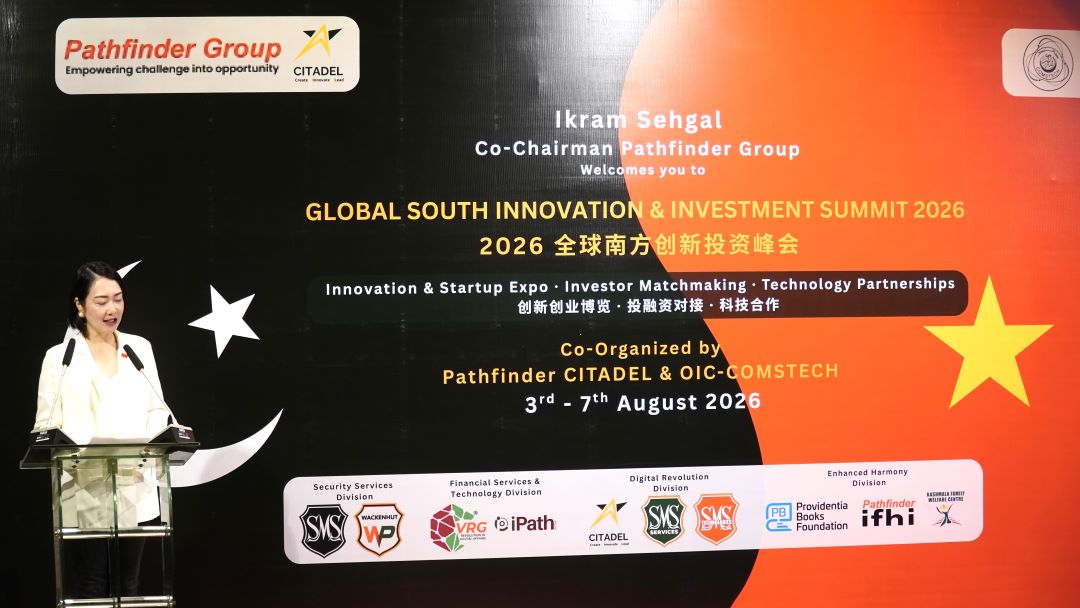
A five-day summit in Islamabad brought startups and investors from Pakistan and China into the same room. The more consequential story is what it reveals about a wider strategic choice: whether the Global South helps write the rules of the AI era, or simply lives by rules written elsewhere. The summit was jointly convened by OIC-COMSTECH, Pathfinder Group, Pathfinder CITADEL and the Commercial Culture Association of China (CCAC)
Not the Next IT Sector
Every technological revolution of the past two centuries has reorganized power around a single axis. Industrialization reorganized power around manufacturing capacity and access to energy. The rise of information technology reorganized it around computing and connectivity. The digital transformation of the last two decades reorganized it around platforms, data flows and e-commerce. In each case, the countries that mattered most were the ones that controlled a specific layer of the new economy coal and steel, semiconductors and software, bandwidth and cloud infrastructure.
Artificial intelligence does not fit this pattern, and policymakers who treat it as simply the next item on that list are making a category error with strategic consequences. AI is not a sector. It is a general-purpose capability that touches every sector simultaneously the way electricity did, but compressed into a fraction of the time. A single set of underlying techniques, applied with only modest adaptation, can improve a factory’s production line, a hospital’s diagnostic accuracy, a bank’s fraud detection, a military’s targeting cycle, a newsroom’s content pipeline and a government’s tax collection. No prior technology has offered that breadth of application from a comparatively narrow technical base.
This is why the language typically used to discuss AI in the Global South “digital economy,” “innovation ecosystem,” “startup growth” understates what is actually at stake. Those frames are not wrong, but they are partial. They describe AI as an economic opportunity to be captured. They say much less about AI as a determinant of national power: the ability of a state to defend itself, secure its information environment, sustain its industrial base, retain its skilled workforce and preserve a measure of control over decisions that affect its citizens.
For Pakistan and the wider Global South, the practical question this raises is not whether to adopt AI that decision has effectively already been made by the pace of global diffusion. The question is whether these countries will be participants in shaping how AI develops, who benefits from it, and under what rules it operates, or whether they will simply inherit technologies, standards and dependencies designed elsewhere, for other purposes, by other interests. That is the distinction between a co-creator and a consumer, and it is the distinction this article is built around.
It is also why a five-day summit convened in Islamabad in 2026 is worth examining closely not as an event, but as a case study in what serious technology cooperation between Global South partners can look like when it moves beyond the language of “landmark” declarations toward the harder, less photogenic work of connecting institutions, capital and people.
The Summit as Case Study, Not Ceremony
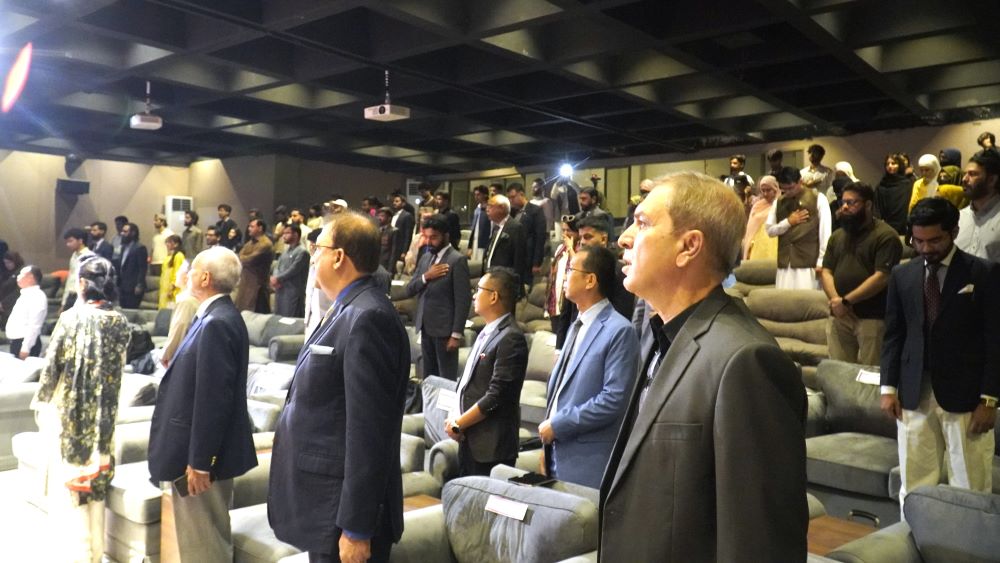
The Global South Innovation & Investment Summit 2026, jointly convened by OIC-COMSTECH, Pathfinder Group, Pathfinder CITADEL and the Commercial Culture Association of China (CCAC), ran across five days in Islamabad and brought together a working combination that is still uncommon in this part of the world: a multilateral scientific body, a Chinese industry and technology association, a domestic innovation platform, and a cross-section of Pakistani entrepreneurs, investors, public-sector institutions and chambers of commerce.
What makes the Summit analytically interesting is not any single session, but rather its overall architecture. It moved deliberately through five distinct registers of engagement ideas, capital, infrastructure, private-sector institutions, and finally direct commercial matchmaking each building on the one before it. That sequencing is itself a statement about how technology cooperation between developing countries ought to be structured: not as a single high-level signing ceremony, but as a layered process that connects policy dialogue to capital, capital to infrastructure, infrastructure to business institutions, and business institutions to actual deal-making between named counterparts.
Five Days, Five Layers of Engagement
The first day was built around thought leadership a Global South technology dialogue addressing AI sovereignty, industrial and workforce transformation, ethical AI, and Pakistan’s position in an emerging technology landscape. The value of this kind of session is easy to dismiss as talk, but the substance matters: it is where technology policy is explicitly connected to economic and national-security policy, rather than treated as a narrow, technical, ministry-level concern. A country that confines its AI conversation to a technology ministry, without connecting it to finance, defense, education and foreign policy, will discover the limits of that framing later than it should.
The second day shifted from ideas to capital, with a Startup Expo and Pitch Arena featuring fourteen Pakistani startups, alongside Investor Group Huddles that brought Chinese and domestic investors into direct contact with founders. This is where the argument that technological sovereignty is not the same as technological isolation becomes concrete. A country builds strategic capability not by shutting its entrepreneurs off from the world, but by giving them access to capital, markets, research partners and supply chains they cannot yet generate at home. Connecting Pakistani startups to international investors and technology ecosystems is not a departure from self-reliance; it is one of the few realistic paths toward it.
The third day turned to infrastructure, with engagements involving Silicon Village, Capital Smart City and the Special Technology Zones Authority. This is an easy stage to underrate, because roads, zoning and connectivity lack the appeal of an AI panel. But an AI ecosystem is not built on algorithms alone. It requires power, compute, secure data centers, reliable connectivity and physical spaces designed for research and manufacturing to sit near one another. Countries that treat AI purely as a software and talent problem, without addressing the underlying infrastructure, tend to produce impressive pilot projects that cannot scale.
The fourth day moved to the private sector, through engagements with the Islamabad Chamber of Commerce and Industry and the Rawalpindi Chamber of Commerce. This stage carries a specific argument: government-to-government relationships, however important, cannot by themselves deliver economic transformation. Pakistan-China cooperation in technology has to increasingly operate at the level of business-to-business, university-to-university, investor-to-founder and industry-to-industry engagement a denser, more distributed set of relationships than a bilateral summit communiqué can capture.
The fifth and final day was devoted to direct one-to-one business meetings between Chinese delegates and Pakistani counterparts. This is the stage that matters most, and the one least visible to outside observers. Conferences create conversations. Partnerships create outcomes. The genuine measure of a summit of this kind is not the size of the audience on day one, but the relationships, technology partnerships and commercial ventures that are still active a year later. That verdict cannot be delivered at the close of the event it can only be delivered by what follows it.
Pakistan and China: The Next Phase of a Long Relationship
Pakistan-China cooperation has, for decades, been defined substantially by infrastructure, energy, connectivity and defense, with the China-Pakistan Economic Corridor as its most visible expression. That framing has served both countries, but it is also incomplete for the period ahead. The technologies most likely to shape competitiveness and security over the next decade AI, semiconductor-adjacent capabilities, robotics, cybersecurity, cloud infrastructure, advanced manufacturing, digital payments, smart-city systems sit outside the infrastructure-and-energy paradigm that has defined the relationship so far.
Extending Pakistan-China cooperation into these domains carries real strategic potential, without requiring speculation about specific transactions or commitments that a single summit cannot itself deliver. The more precise way to state the opportunity is this: Pakistan should be seeking technology partnerships, not technology dependency. A partnership implies two-way exchange market access for Chinese firms and capital, and genuine technology transfer, skills development and co-development for Pakistani institutions. Dependency implies a one-way flow in which Pakistan absorbs finished technology without building the domestic capacity to adapt, improve or eventually compete in it. The difference is not rhetorical. It determines whether the relationship strengthens Pakistan’s long-term bargaining position or narrows it.
Artificial Intelligence and National Security
If there is a single argument this article wants policymakers in Islamabad to sit with, it is this one: a nation that treats AI purely as a technology-ministry issue may discover, too late, that it is actually a national-security issue.
The economic-security dimension is the most familiar. AI reshapes productivity, employment structures, trade competitiveness and the relative advantage of manufacturing economies. Countries that integrate AI into their industrial base early tend to compound advantages in cost and quality that are difficult for late adopters to close.
The defense dimension is less discussed publicly in Pakistan but no less real. AI is increasingly embedded in intelligence analysis, surveillance, autonomous and semi-autonomous systems, decision-support tools and cyber operations. A country that has no independent capacity in these areas is not simply behind technologically it becomes reliant on external providers for capabilities that sit close to the core of national defense planning.
Cybersecurity cuts both ways. AI expands defensive capability faster detection, better anomaly recognition but it also expands the sophistication, speed and scale of offensive threats, from automated intrusion attempts to AI-assisted social engineering. A national cybersecurity posture built for the pre-AI threat environment will not hold up unmodified.
The information environment is a related and increasingly urgent concern. Synthetic media, automated influence operations and deepfakes have already demonstrated the capacity to distort public discourse in multiple countries. For societies with lower levels of digital literacy and less-developed fact-checking infrastructure, this is not a hypothetical risk it is a governance challenge that will arrive regardless of whether institutions are ready for it.
Human capital is the constraint underlying all of the above. A country without a sufficient base of AI-literate engineers, researchers and policy specialists cannot independently evaluate, adapt or govern the technology it is importing it can only accept the terms on which it is offered. And data sovereignty follows from the same logic: as data becomes a strategic resource in its own right, heavy reliance on external cloud and computing infrastructure creates a dependency that is difficult to reverse once a country’s institutions, companies and citizens have built their workflows around it. None of this argues for technological self-sufficiency, which is not realistically available to a country at Pakistan’s current stage of development. It argues for treating AI capability-building as a component of national resilience planning, evaluated with the same seriousness applied to energy security or currency stability not as an adjunct topic delegated entirely to a single ministry.
The Global South’s Strategic Dilemma
The honest starting point for this discussion is that AI capability is concentrated, and concentrating further. The United States retains an enormous advantage in frontier AI research, venture capital depth and the scale of its technology companies. China has built substantial capability across AI research, advanced manufacturing, digital infrastructure and state-supported technology development, and has done so faster than most forecasts anticipated a decade ago. A small number of other economies parts of the European Union, South Korea, Japan, the Gulf states through sovereign investment are constructing their own strategies and, in some cases, their own foundation models.
Most Global South countries sit outside this frontier tier, and the risk is not that they fail to adopt AI-adoption is already happening, driven by consumer platforms and enterprise software regardless of domestic policy. The greater risk is that they adopt AI entirely as consumers: buying finished systems, accepting externally set standards for data handling and model governance, and building no independent capacity to evaluate, adapt or challenge the terms under which those systems operate. None of this is an argument against the United States or against China, nor should it be interpreted as one. It is a description of an emerging structural reality: the global technology ecosystem is increasingly organized around a small number of countries and companies, which creates real opportunities for partnership but also real asymmetries for everyone else. The question for Pakistani and other policymakers is therefore not simply which power to align with, but a more fundamental one: Who writes the rules for the technologies that will shape the next several decades of economic and strategic life? If developing economies are not represented when AI governance frameworks, data standards, intellectual-property regimes and deployment norms are being developed, they may find themselves implementing rules designed without sufficient consideration of their specific circumstances.
Ethical AI Is Not an Abstract Debate
Discussions of AI ethics in international forums often drift toward abstraction-broad statements about fairness, transparency, and human oversight that are difficult to disagree with but equally difficult to operationalize. For countries like Pakistan, however, the stakes are more concrete than this framing suggests.
Algorithmic systems trained and validated primarily on data from other contexts can behave unpredictably when deployed in different linguistic, economic, or social environments. Surveillance capabilities developed for one stated purpose can be repurposed for another, particularly where oversight mechanisms are weak. Automated decision-making in lending, hiring, or public-service allocation can reproduce and scale existing inequities if left unexamined. Employment disruption caused by automation can fall disproportionately on economies with large informal-sector workforces and limited social-protection infrastructure, a category that includes Pakistan.
These are not concerns that can be addressed by importing another country’s regulatory template wholesale. They require institutional capacity-regulators who understand the technology, legal frameworks adapted to local conditions, and a level of public digital literacy sufficient to make oversight meaningful rather than merely nominal. Pakistan’s National AI Policy 2025, approved by the federal cabinet in July 2025, explicitly identifies responsible and ethical AI deployment as one of its structural pillars, alongside AI infrastructure, workforce development, and international collaboration. This represents a recognition, at least at the policy level, that governance cannot be an afterthought to adoption.
The broader principle for the Global South is straightforward: countries should not wait until AI governance frameworks have already been established elsewhere before entering the debate. Early participation, even from a position of relatively limited technical capacity, can shape outcomes in ways that late participation cannot.
Why Collaboration Is the Only Viable Path
No developing country, and few developed countries, can independently build every layer of the AI stack: fundamental research, large-scale computing capacity, proprietary data, applied engineering talent, deployment infrastructure, and the regulatory expertise required to govern it all. The scale of investment required across these layers exceeds what any single Global South economy can realistically generate domestically within a reasonable planning horizon.
This is the practical case for what might be called collaborative sovereignty: the idea that a country does not surrender strategic autonomy by collaborating internationally, and may in fact strengthen it, provided the collaboration is structured deliberately rather than accepted passively. Partnerships that transfer skills, co-locate research, diversify a country’s set of technology partners and build domestic institutional capacity expand what a country can do independently over time. Partnerships that involve only the one-way purchase of finished systems do the opposite they may solve an immediate operational problem while quietly increasing long-term dependence.
The distinction matters because collaboration and sovereignty are often presented in Pakistani and Global South policy discourse as being in tension with one another, as though the sovereign choice is to do less internationally. The more accurate framing is that intelligently structured collaboration in research, talent exchange, shared computing infrastructure, joint ventures and regulatory learning is one of the few realistic mechanisms through which a country in Pakistan’s position can build the domestic capability that genuine sovereignty eventually requires.
Pakistan’s Opportunity, Realistically Assessed
An honest account of Pakistan’s position starts with its constraints. Domestic research and development expenditure remains low relative to regional peers. There is a meaningful skills gap in advanced AI competencies, even as broader digital literacy expands. Computing infrastructure and reliable power supply remain limiting factors for compute-intensive work. Industry-academia linkages are often described, accurately, as fragmented. Venture capital depth is thin compared with regional markets such as India or the Gulf, and policy implementation has historically lagged policy design.
Set against these constraints are genuine strengths that should not be understated either. Pakistan has one of the youngest populations in the world, a growing technology workforce, and an entrepreneurial culture visible in its expanding startup ecosystem. Its geographic position gives it strategic relevance to both South and Central Asian connectivity corridors. Its relationship with China provides an unusually deep channel for potential technology partnership relative to most Global South economies. Its domestic market, though constrained by purchasing power, is large in absolute population terms. Its diaspora represents a source of capital, expertise and international networks that few countries of comparable size can match. And its freelance and IT-services economy which the Ministry of IT and Telecommunication and the State Bank of Pakistan have both reported growing sharply through fiscal year 2025-26, alongside record overall ICT services exports demonstrates that Pakistani technical talent already competes successfully in global digital markets when given access to them. The realistic ambition, then, is not for Pakistan to become a frontier AI power, that is not a credible near-term goal for any economy at its current stage of development. The realistic and achievable ambition is for Pakistan to build sufficient strategic capability that AI adoption strengthens, rather than erodes, its economic and national sovereignty: enough domestic talent to evaluate and adapt imported technology, enough infrastructure to host critical data and applications domestically where security requires it, and enough institutional capacity to negotiate technology partnerships on reasonably equal terms rather than accept them on offer.
The Role of Conveners: Pathfinder and the Institutional Bridges
Summits of this kind do not organize themselves, and the institutional actors who convene them play a role worth examining briefly, without turning the analysis into promotion. Pathfinder Group and Pathfinder CITADEL functioned in this instance as ecosystem builders and conveners, connecting youth, startups, investors, government, academia, industry and international partners within a single structured process. That connective function is, in itself, a scarce capability in developing economies, where the gap between having entrepreneurs, having capital and having policy support is often an organizational failure rather than a shortage of any single ingredient. OIC-COMSTECH brought a different and complementary institutional weight: a standing bridge between science, technology and innovation policy across the Organization of Islamic Cooperation and the wider Global South, giving the Summit a multilateral dimension beyond a bilateral Pakistan-China exchange. CCAC, as the Chinese counterpart association, provided the commercial and technological channel the practical means by which Chinese investors and technology firms engaged directly with Pakistani counterparts rather than through diplomatic intermediaries alone.
The broader lesson from this combination is a structural one rather than an institutional one: organizations with different mandates multilateral, commercial and domestic-convening can produce disproportionate impact when they align deliberately around a shared strategic objective, in a way that no single institution acting alone could replicate.
From Economic Security to National Security
There is a chain of reasoning that runs through nearly every section of this article, and it deserves to be stated explicitly as its own argument. Technology capability builds economic capability. Economic capability builds industrial capability. Industrial capability builds strategic capability. And strategic capability, cumulatively, builds national resilience the capacity of a state to absorb shocks, defend its interests and retain agency over decisions that affect its citizens.
The traditional separation between “economic security” and “national security” as distinct policy domains, administered by different ministries with different vocabularies, is increasingly difficult to sustain in an AI-shaped world. A vulnerability in a country’s data infrastructure is simultaneously an economic risk and a security risk. A shortfall in AI-literate talent is simultaneously a competitiveness problem and a defense-readiness problem. Pakistani and Global South policymaking structures that keep these conversations administratively separate will find themselves managing the symptoms of a single underlying condition through two uncoordinated bureaucracies.
Policy Recommendations
The following recommendations are offered with implementation, not aspiration, in mind.
1. Treat AI as a cross-government national priority, coordinated at a level above any single ministry, rather than as a technology-sector portfolio item.
2. Build secure, domestically hosted data infrastructure for categories of information where external dependency carries genuine security risk, without pursuing blanket data localization that would isolate Pakistani firms from global markets.
3. Invest sustained, multi-year funding in AI human capital – not only elite research talent, but the broader base of engineers, technicians and public-sector staff who will implement AI systems in practice.
4. Strengthen university-industry research linkages through structured co-funding mechanisms, rather than relying on informal or ad hoc partnerships.
5. Develop practical, risk-based AI regulation that protects citizens without freezing innovation, learning from, rather than copying wholesale, regulatory approaches designed for different economies.
6. Deepen domestic venture-capital capacity for AI-relevant startups, including instruments that de-risk early-stage investment for local and diaspora investors.
7. Use international partnerships explicitly as technology-transfer mechanisms, with skills development and co-development written into agreements rather than treated as an incidental benefit.
8. Build regional AI cooperation mechanisms with other Global South and OIC economies facing comparable constraints, to pool research, talent and negotiating leverage.
9. Integrate AI planning formally into economic and national-security strategy processes, so that the two are developed jointly rather than in parallel.
10. Set an explicit national objective of becoming a co-creator of AI applications and governance norms relevant to Pakistan’s own context, not merely a downstream consumer of systems designed elsewhere.
Conclusion: A Window That Will Not Stay Open
The Global South Innovation & Investment Summit 2026 should be understood as a microcosm of a larger task rather than an end point in itself: connecting entrepreneurs to capital, institutions to one another across borders, infrastructure planning to technology strategy, and economic policy to security policy. It also means governing the resulting systems responsibly, with meaningful input from the societies that will live under them. None of these steps is sufficient on its own; together, however, they describe what serious engagement with the AI era actually requires-distinct from the language of summits and declarations that too often substitutes for meaningful action. The defining question of this era is not simply which country or company builds the most powerful AI system. It is whether the resulting technology contributes to a world in which nations retain agency over their own economic futures, societies retain a meaningful measure of human dignity and oversight in how these systems are deployed, and the benefits of technological progress are not confined permanently to a handful of countries and firms that reached the frontier first.
For Pakistan and the wider Global South, that outcome will not emerge automatically, nor will it result from participation in events alone, however well-organized those events may be. If it is to be achieved, it will require the sustained accumulation of precisely the kind of unglamorous institutional work this Summit represents: research partnerships that are followed through, capital commitments that translate into functioning companies, regulatory frameworks that are effectively implemented, and talent pipelines that are adequately funded. The window for shaping the AI future, rather than simply inheriting it, is open. It will not remain open indefinitely.
This Article Co-author by @uzair-alvi