

Pakistan’s Structural Opportunity in a Fragmenting Global Trade Order
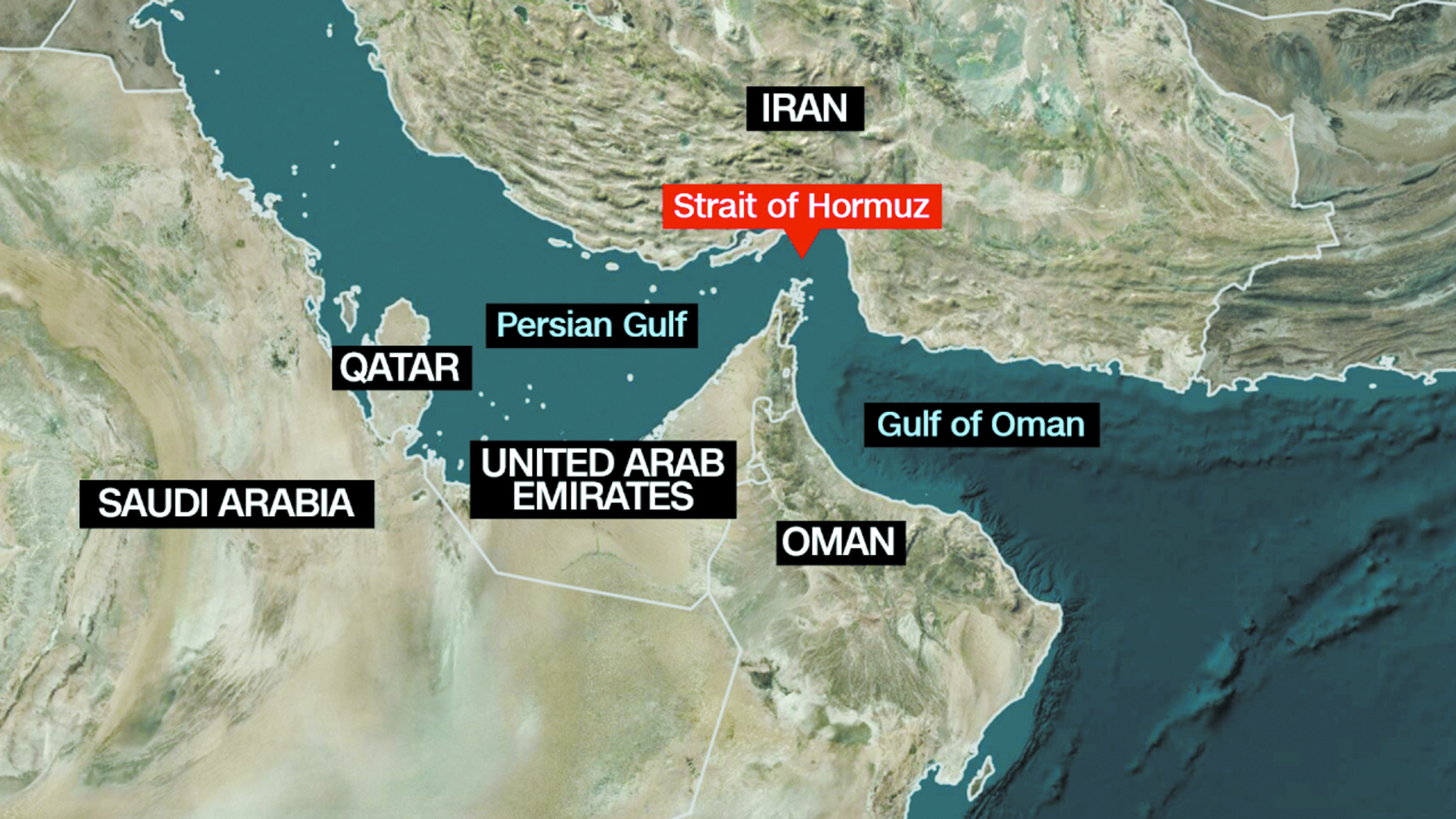
The escalating conflict in the Middle East is not confined to the battlefield; it is increasingly a contest over trade, energy, and the control of global supply lines. It increasingly resembles a modern proxy war, where major powers are influencing the flow of goods and resources. As tensions disrupt key maritime corridors such as the Strait of Hormuz, the ripple effects are being felt far beyond the region through rising energy prices, higher freight and insurance costs, and growing uncertainty in global markets. In such a landscape, countries positioned outside the most vulnerable chokepoints, particularly Pakistan, may find new relevance in an increasingly fragmented trade order.
For China, the conflict involving Iran, Israel, and the United States has exposed a critical vulnerability. Higher oil prices, increased shipping risks, and pressure on strategic reserves are already feeding into rising production costs. Although oil accounts for a relatively modest share of China’s overall energy mix (almost 18%), it remains indispensable for petrochemicals and freight. More importantly, there lies a risk: despite diversification efforts, China’s economy is to some extent dependent on the Strait of Hormuz. The back-to-back visit of President Trump to China and President Putin’s scheduled meeting with President Xi within the same week is particularly significant in the post-Cold War era. These high-level engagements reflect Beijing’s serious efforts to secure stable energy supplies and strengthen strategic partnerships during the US-Israel-Iran confrontation. China appears increasingly inclined toward expanding fossil fuel cooperation with Russia, including greater pipeline connectivity to reduce its dependence on vulnerable maritime routes and enhance energy resilience in the event of a Taiwan-related crisis. Since 2022, China-Russia trade has surged, with China now purchasing more than a quarter of Russia’s exports. Beijing has also invested over $367 billion in Russian fossil fuels since the Ukraine war began, reinforcing its long-term energy security strategy amid instability in the Middle East.
Emerging frameworks illustrate classic geopolitical theories. Nicholas Spykman’s Rimland Theory posits that control over Eurasian coastal fringes, particularly Middle Eastern chokepoints, shapes global power. Similarly, Alfred Thayer Mahan argued that maritime dominance, linked to key routes, ensures strategic supremacy. Today, these concepts are being tested as power evolves; while naval presence is vital, influence now increasingly derives from control over resources, technology, and supply chains. Chokepoints have transformed from mere geographic features into strategic tools in the competition for trade, energy, and information flow.
Beijing’s response reflects strategic caution rather than confrontation. China does not aim for the collapse of the U.S., but rather its recalibration. It seeks a balance where American dominance no longer limits its strategic space. Its goal is to preserve the system, reshape power dynamics, and expand its role, contributing to a gradual move toward multipolarity rather than chaos. In this war, China’s reaction carries special weight. Through alleged support in the transfer of drone technology and BeiDou satellite navigation systems, China has helped prepare Tehran for sustained combat.
At the same time, the world is witnessing a broader geopolitical shift. The United States, long the dominant maritime and economic power, now faces a more complex landscape in which rivals such as China and Russia are increasingly assertive, whether through diplomacy, economic leverage, or indirect strategic support to regional actors. Overlapping but not always identical interests among allies, particularly between Washington and Israel, add further layers of uncertainty to an already volatile environment.
Regional actors are already recalibrating. Saudi Arabia, for instance, is exploring alternatives to sustain petroleum exports by expanding the East–West Petroline, considering capacity enhancements, and rerouting shipments through the Suez Canal. These efforts reflect a broader shift toward reducing dependence on vulnerable chokepoints.
This recalibration is not limited to the Gulf. The United States, China, and Europe are all reassessing and investing in domestic and alternative routes. In this uncertainty, Pakistan can reposition itself as a regional maritime trade hub by strategizing its coastal and land trade routes. By developing its natural deep-sea ports of Karachi and Gwadar, it can provide the world with a “Hormuz‑free gateway” to the Arabian Sea. This alternative maritime route would take ships from Gwadar west to Djibouti, then north through the Suez Canal, offering a direct link to European markets. This corridor reduces exposure to Gulf tensions and connects South Asia to Europe via East Africa, a route repeatedly suggested by defence analyst Ikram Sehgal over the last decade.Unlike traditional Gulf ports such as Dubai’s Jebel Ali or Iran’s Bandar Abbas, which require vessels to navigate the narrow, blockaded Strait, Pakistan’s coastline opens directly onto international waters. This geographic advantage reduces war‑risk insurance premiums, eliminates “funnel” congestion, and offers global shipping lines a more reliable route.
For China, this is a strategic hedge. The China-Pakistan Economic Corridor (CPEC) creates a ‘land-bridge,’ a secure and shorter link between energy supplies from the Persian Gulf and Western China, reducing reliance on the vulnerable Strait of Hormuz and the Malacca Strait. A conventional maritime route from the Persian Gulf to China’s eastern seaboard spans roughly 12,000 km, whereas routing through Gwadar and overland corridors significantly shortens both distance and exposure to disruption. Additionally, Gwadar’s 14.5-meter depth can accommodate the world’s largest vessels, unlike many regional ports with shallower basins. By shifting part of its energy transit overland, Beijing can address its long-standing “Malacca dilemma.”
At the same time, this connectivity positions Pakistan as a transshipment bridge for landlocked Central Asia, offering the shortest route to warm waters and more reliable access to global markets. For Europe, cargo travelling through Pakistan to the Suez Canal and onward to Mediterranean ports offers a more predictable transit route.
The economic implications are substantial. The Gwadar Free Zone, entering a critical growth phase, is expected to attract export-oriented industries and expand port capacity significantly by the end of the decade. With the addition of five new berths by 2028, Gwadar is forecast to handle over 10 million tons of cargo annually, much of it diverted from congested or war‑threatened Gulf ports. By 2030, the Free Zone and associated port activities are projected to contribute roughly $30 billion annually to Pakistan’s GDP, creating an estimated 40,000 direct and indirect jobs in the Balochistan region. These numbers do not even include the multiplier effects on Karachi, which already handles the majority of Pakistan’s external trade and can be further modernized with automated cranes, expanded container yards, and digital customs clearance.
Complementing this, Pakistan’s recent delivery of goods to Tashkent via Iran demonstrates a parallel shift toward diversified, land-based connectivity. With routes through Afghanistan repeatedly disrupted, especially in the aftermath of the U.S. withdrawal and the resulting security strains, Islamabad has increasingly turned westward. The Iran corridor, linking Karachi and Gwadar through the Rimdan crossing onward to Central Asia, is emerging not just as an alternative but as the most practical and stable pathway for overland trade.
In an era of contested trade corridors, Pakistan’s location is fast becoming a strategic asset rather than a peripheral advantage. When the war ends, the region will not revert to an older equilibrium. Instead, it will move toward a more plural, militarized, and crisis‑prone order: The United States will remain indispensable but no longer sufficient; security will be built on managed vulnerability, deconfliction hotlines, maritime guarantees, and transactional ceasefires rather than grand reconciliation. A near-threshold nuclear Iran may further redefine regional dynamics.
As power is diffusing across new blocs, and the old rules-based order, once assumed to protect stability, especially for weaker states, appears increasingly strained. The lesson is clear: economic power is no longer defined solely by financial dominance or technological edge. It is increasingly tied to geography, connectivity, and the ability to navigate and, when necessary, bypass the world’s critical trade arteries.
In this fractured landscape, Pakistan’s structural opportunity lies not merely in navigating instability but in capitalizing on it, positioning itself as an alternative maritime artery for global trade. While Islamabad continues to play a role in de-escalation, it must simultaneously accelerate port development, strengthen logistics infrastructure, and actively market its Hormuz-free routes to global shipping and investment networks.