


What a 25th Birthday at a POW Camp Taught Me about Thinking Bigger
In 2024, I was a 23-year-old at the WEF’s Annual Meeting of New Champions (Summer Davos) in Dalian, representing Global Shapers Pakistan and my country’s youth. An emerging entrepreneur seeking inspiration and answers. I didn’t have a massive running business at Summer Davos.
I had a project, Career Counselling for All, which we had been running in underprivileged schools across Islamabad, Rawalpindi, and the hills of Murree, grade 8 to 12. Kids who had never met a software engineer, a policy analyst, a branding expert, or an entrepreneur. We’d show up, run sessions, and watch their eyes change. After a year of execution, we applied for the Innovation Prize of the WEF and Global Alliance for Youth.
One night in Dalian, I received a secret email. We had won. And we weren’t allowed to tell anyone.
The next day, still carrying that quiet energy, I met Muhammad Salman Ali from VRG for the first time. He told me about the Pathfinder Group. About Mr. Ikram Sehgal. About the Pakistan Pavilion at Davos. About a network of schools and foundations and institutions that could take what we’d built in a few classrooms in Islamabad and scale it across the country. I didn’t fully understand the magnitude of that introduction at the time. I do now.
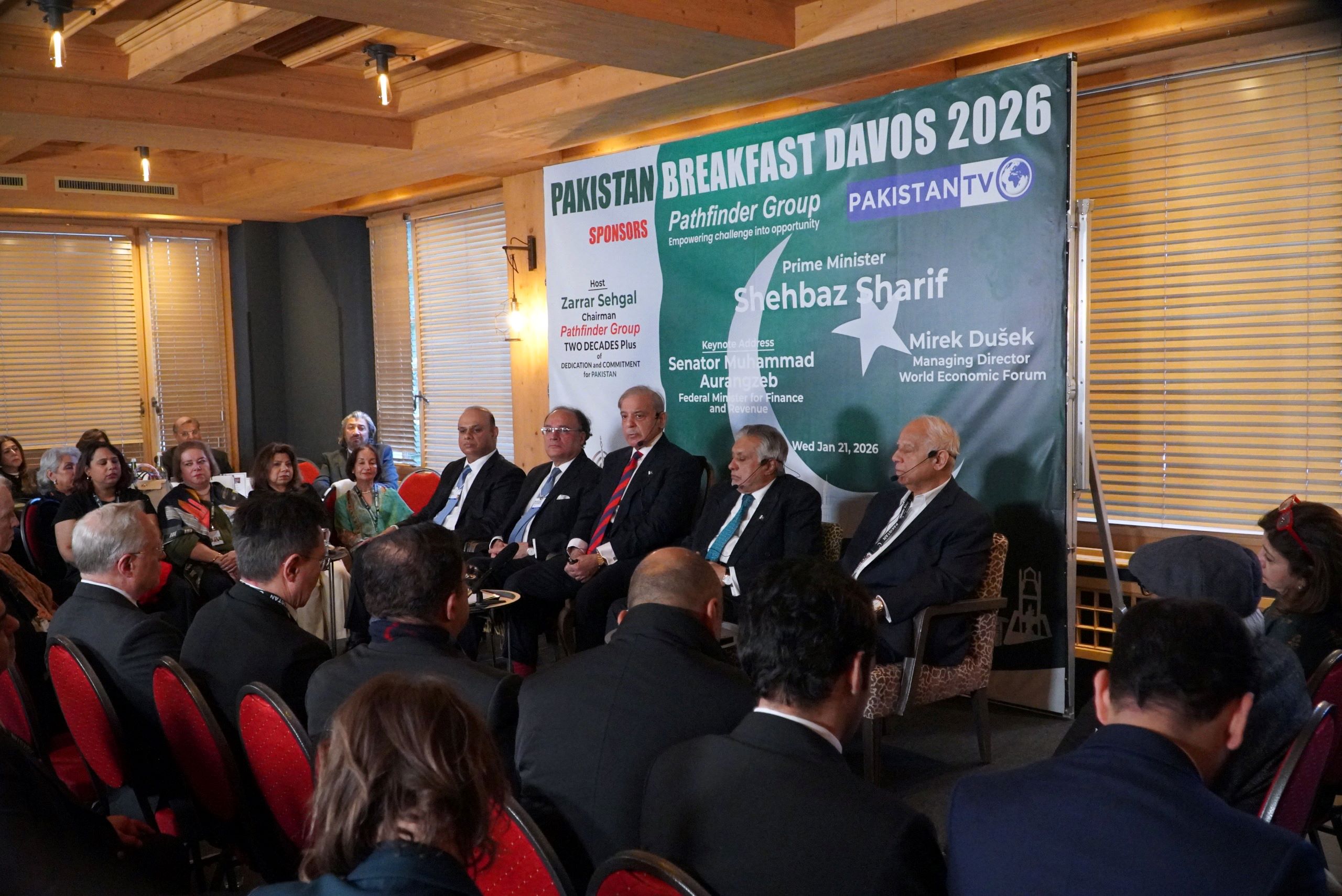
A year and a half later, my company VECTOR AI was at Davos. Not as spectators. As part of the Pakistan Pavilion, the same stage that Mr. Sehgal built from scratch over 20 years ago. We pitched at the Pathfinder CITADEL Startup Challenge. We made business. We represented. And somewhere between the snow and the suits, I learned something I hadn’t expected to learn in Switzerland: that there is a quiet cult of people in Pakistan who have spent decades keeping this country’s head high on the global stage. No noise. No posters. Just patriotism to what our ancestors gave it all for.
There is a narrative about Pakistan that the world defaults to. It involves instability, corruption, brain drain, and wasted potential. And then there are the people who have spent their entire lives writing a different story, not by arguing with the narrative, but by building something so undeniable that the narrative has to move. Mr. Sehgal is one of those people. The Pakistan Breakfast at Davos wasn’t funded by the government. The Pakistan Pavilion wasn’t a state initiative. A private citizen decided that his country deserved a seat at the most influential table in the world, and then he built that seat himself. For twenty years. Every January. While the world’s media was writing obituaries for Pakistan, this man was hosting its Prime Ministers, its Army Chiefs, and its business leaders in the Swiss Alps and saying: we are here, and we are not going anywhere.
That was the seed of Meet the Leader.
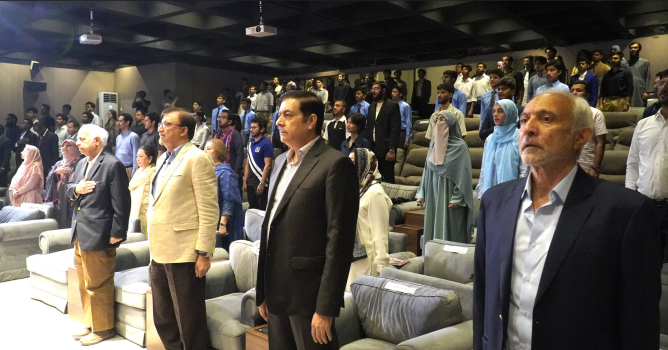
On May 10th, 2026, we sat Mr. Ikram Sehgal down in front of 45 Global Shapers and over a hundred students at AmaaniBagh, his family’s home in Angoori, and asked him to tell his story. The unfiltered one.
What came out was not what I expected.
This is a man who escaped a POW camp in 1971. Built a 12,000-person conglomerate from nothing. Hosted every Pakistani Prime Minister at Davos for two decades. And when you ask him the secret, he doesn’t talk about bookish business strategy. He doesn’t talk about the ever-so-glorified hustle. He talks about God. He calls himself a “Zariya”, a vessel. Not the destination, just the medium through which good passes. His heroes? Not CEOs or generals. His father, Majeed Sehgal. And the greatest of all time: Muhammad Ali Jinnah. There is a specific kind of humility that only comes from people who have seen it all. It doesn’t perform. It doesn’t announce itself. It just sits there, quietly, while the room figures out that they are in the presence of something rare and then came the moment that I have not been able to shake since.
Mr. Sehgal told us that on his 25th birthday, he was a prisoner of war who had escaped captivity and made his way to the American Embassy in Calcutta, seeking help. That is the memory he carries of turning 25. A man alone, in a foreign city, in a rival country, in the middle of a war, walking into an embassy and asking for a chance to survive.
I celebrated my 25th birthday at the WEF’s Annual Meeting at Davos. At the biggest conference in the world. Representing Pakistan. Representing the Global Shapers Community. Representing VECTOR AI at the Pakistan Pavilion’s CITADEL Startup Challenge. And I came back with business.
The distance between those two stories should not make me comfortable. It should send shivers down my spine. Because if a man who was a prisoner of war at 25 could build everything that Ikram Sehgal built, a conglomerate, a global platform, a legacy of 12,000 people, a vessel through which good passes, then what excuse do I have to think small? What excuse does anyone in my generation have?
None. Absolutely none.
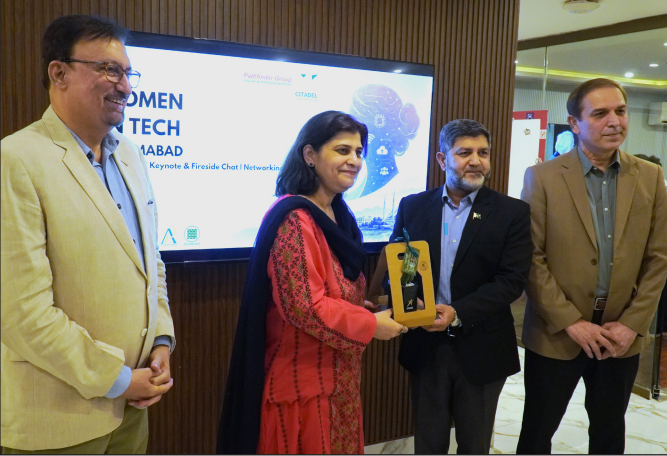
As a moderator, the hardest part of that session was not asking the right questions. It was knowing when to let it all sink in. When a man with five decades of conviction is talking about faith, about his people, about why he stayed when everyone told him to leave, you do not interrupt that. You let it breathe. And you hope that every twenty-something in the room is absorbing what you are absorbing. The day did not end with the conversation. We signed a Memorandum of Understanding between Pathfinder CITADEL and Global Shapers Pakistan. the first formal institutional partnership between a Pathfinder Group entity and the Global Shapers Community Pakistan at the national level. And through that partnership, the career counselling initiative that won the Innovation Prize two years ago in Dalian will now be executed this summer across CITADEL’s skill development camps and Pathfinder’s foundation school networks.
A project that started in a few classrooms in Islamabad. An award received in secret in China. An introduction through a cold meeting invite through the Forum Live app. A pitch at Davos. A seat at the AM26. A conversation at a family home. A signed partnership. And now, execution at scale. Full circle does not even begin to describe it.
Here is what I believe, and what this journey has made impossible to un-believe: Pakistan does not lack talent. It does not lack ambition. It does not lack ideas. What it lacks, and what it is slowly, quietly building, is a connective tissue between the people who dream and the people who have already done. Between the twenty-three-year-old running career workshops in Murree and the man who built the Pakistan Pavilion at Davos. Between a generation that wants to build and a generation that already has.
The Global Shapers Community exists to be part of that connective tissue. So does CITADEL. So does the Pathfinder Group. And so, in its own small way, does VECTOR AI. My ambition going forward is not to build a successful company. That is a given. My ambition is to build something that makes it easier for the next twenty-three-year-old to go from a classroom in Murree to Davos, and to come back. To build here. To stay here. To make this place impossible to ignore.
Mr. Sehgal called himself a Zariya. A vessel. I think that is the highest ambition any of us can hold. Not to be the story, but to be the reason someone else’s story becomes possible.
Beyond Geography. Not because it’s easy. Because it’s ours.