



Context
The escalation of open warfare between the United States, Israel, and Iran in early 2026—characterized by some as the “Third Gulf War”—has radically upended the strategic architecture of the Middle East. At the center of pre-war Western diplomatic planning were two highly integrated concepts: the Abraham Accords, aiming to build a normalization bridge between Israel and Arab states, and the Board of Peace (BOP), an international framework established under UN Security Council Resolution 2803 to oversee a post-conflict administration, international stabilization force, and real estate transformation in Gaza.
However, the military campaign launched on February 28, 2026, under the U.S.-Israeli codename “Operation Epic Fury”, fundamentally collided with the core assumptions of these frameworks. Instead of solidifying a prosperous, integrated, and Western-aligned trade bloc, the kinetic conflict exposed deep structural flaws in regional deterrence, shattered the prospects of two-state solution, and triggered an unprecedented shift in the balance of power.
1. The Disintegration of the Pre-War Vision: BOP and Abraham Accords Under Fire
Before the military escalation of 2026, the Abraham Accords and the Board of Peace functioned as a synchronized carrot-and-stick diplomatic strategy. The political objective was clear: circumvent the core issue of Palestinian statehood by offering massive economic, infrastructure, and technological incentives to the Arab world, effectively managing the region from the outside-in. The BOP was envisioned as a multi-layered colonial and financial administration—overseeing a Gaza Executive Board and a Palestinian National Committee—meant to signal a new era of regional co-prosperity.
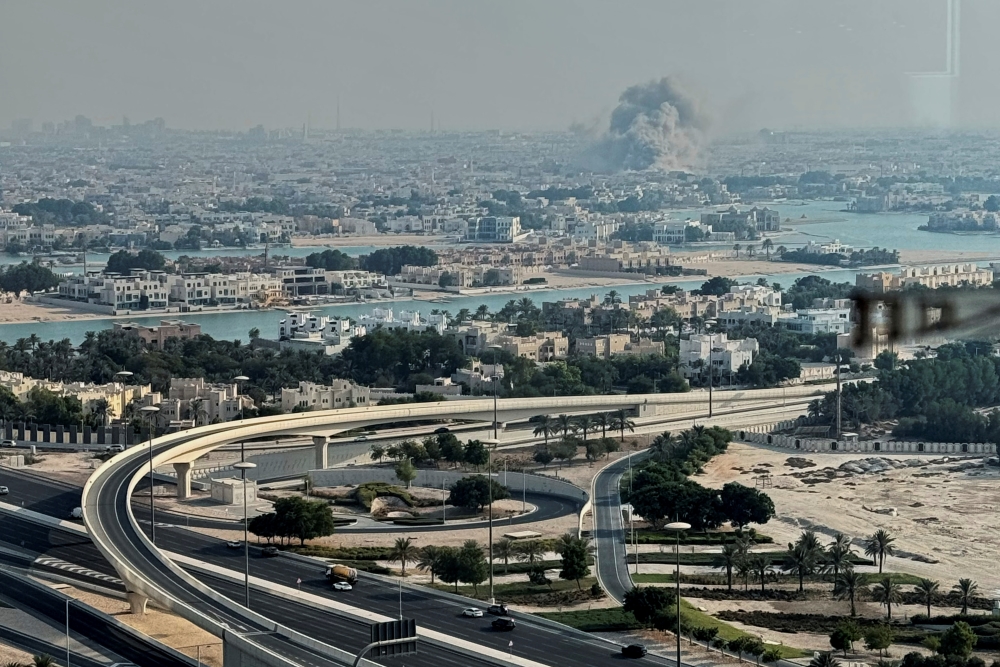
When Operation Epic Fury commenced with devastating strikes on Iranian command structures, nuclear sites, and energy facilities, this vision suffered an immediate kinetic shock. Rather than acting as bridges for trade, the Abraham Accords were abruptly tested as raw military alignments. Iran’s retaliatory doctrine did not spare the region; Tehran launched waves of drones and ballistic missiles targeting not only Israeli territory but also Western assets and allies across the Gulf.
The BOP’s ambitious plans for Gaza—such as beachfront hotels and special economic zones—were instantly frozen as global energy markets panicked and global fertilizer and agricultural supply chains broke down. The war exposed an untenable contradiction: attempting to build an institutional framework for peace while simultaneously fighting a total regional war.
2. The Great Divergence: Independent Israeli Maneuvers vs. Joint Strategy
A central complication in the future of the BOP and the Abraham Accords is the apparent divergence between American diplomatic objectives and Israeli kinetic execution. While the United States has continuously attempted to orchestrate a diplomatic off-ramp, Israel has aggressively expanded its military footprint. Israel’s actions in Gaza, its incursions into Lebanon, and its unilateral willingness to strike deep into Iranian territory—even during active diplomatic windows—have created two starkly different strategic interpretations – that pose the most acute risk to the Interim Ceasefire Deal.
Interpretation A: The Maverick State Acting Unilaterally
This perspective argues that Israel is acting in open contradiction to Washington’s goals. Israeli leadership has made it clear that they no longer view the Oslo Accords or a two-state solution as viable frameworks. By pursuing a permanent military solution rather than a political compromise, Israel is explicitly prioritizing the absolute destruction of the “Axis of Resistance” over the long-term diplomatic health of the Abraham Accords. They are gambling that Arab states will eventually be forced to accept a dominant, nuclear-armed Israel as a fait accompli, regardless of the Palestinian issue.
Interpretation B: A Tightly Orchestrated Joint Strategy
Conversely, realism suggests that Israeli actions represent a coordinated, dual-track “Good Cop / Bad Cop” strategy with the United States. While Washington acts as the diplomatic negotiator—offering terms, carrots, and structural limitations—Israel functions as the unhinged kinetic hammer. By maintaining maximum military pressure on Gaza, Lebanon, and Iran, Israel forces adversaries to negotiate from a position of acute vulnerability, allowing American diplomats to demand structural concessions that would be nearly impossible to attain through standard statecraft.
Regardless of which interpretation is accurate, the structural fallout is identical: Israel’s complete abandonment of the Palestinian political track has severed the primary artery through which the Abraham Accords were expected to expand to critical Muslim-majority nations like Saudi Arabia and Pakistan, who have historically conditioned formal normalization on a viable two-state solution.
3. The 60-Day Ceasefire: Why Iran Emerges in an Enhanced Position
The multi-week diplomatic push that culminated in the temporary cessation of hostilities has set the stage for a potential 60-day extended ceasefire. However, an assessment of the strategic balance indicates that if a prolonged ceasefire is institutionalized under current conditions, Iran will have effectively won the geopolitical argument, shifting the regional balance of power in its favor with far reaching implications.
Despite enduring massive leadership losses and targeted degradation of its conventional military facilities during the initial strikes of Operation Epic Fury, Tehran demonstrated profound asymmetric resilience:
• Weaponization of the Chokepoints: By effectively throttling the Strait of Hormuz and imposing a massive $2 million transit toll on commercial tankers while outright banning American and Israeli vessels, Iran proved it could hold global energy markets hostage. It’s not clear whether the toll or fees will remain in any future deal.
• Surviving Regime Change Ambitions: Iran successfully weathered a decapitation campaign that killed its highest officials, proving that its institutional and proxy network could function and retaliate even under extreme duress.
• Demonstrated Retaliatory Reach: By launching direct, sustained missile strikes against Israel and retaliating against U.S. bases in the region, Iran dismantled the myth of Western invulnerability.
As far as its nuclear program is concerned, Iran had previously committed to not attain weaponized capability. The major criticism of the earlier agreement with Iran reached in 2015 Joint Comprehensive Plan of Action (JCPOA) under the Obama administration was that it neither addressed Iran’s wider behavior in the region nor its ballistic missile program. On the positive side, JCPOA was backed by P5+1 countries i.e. US, China, Russia, France, UK, and Germany – along with the European Union.
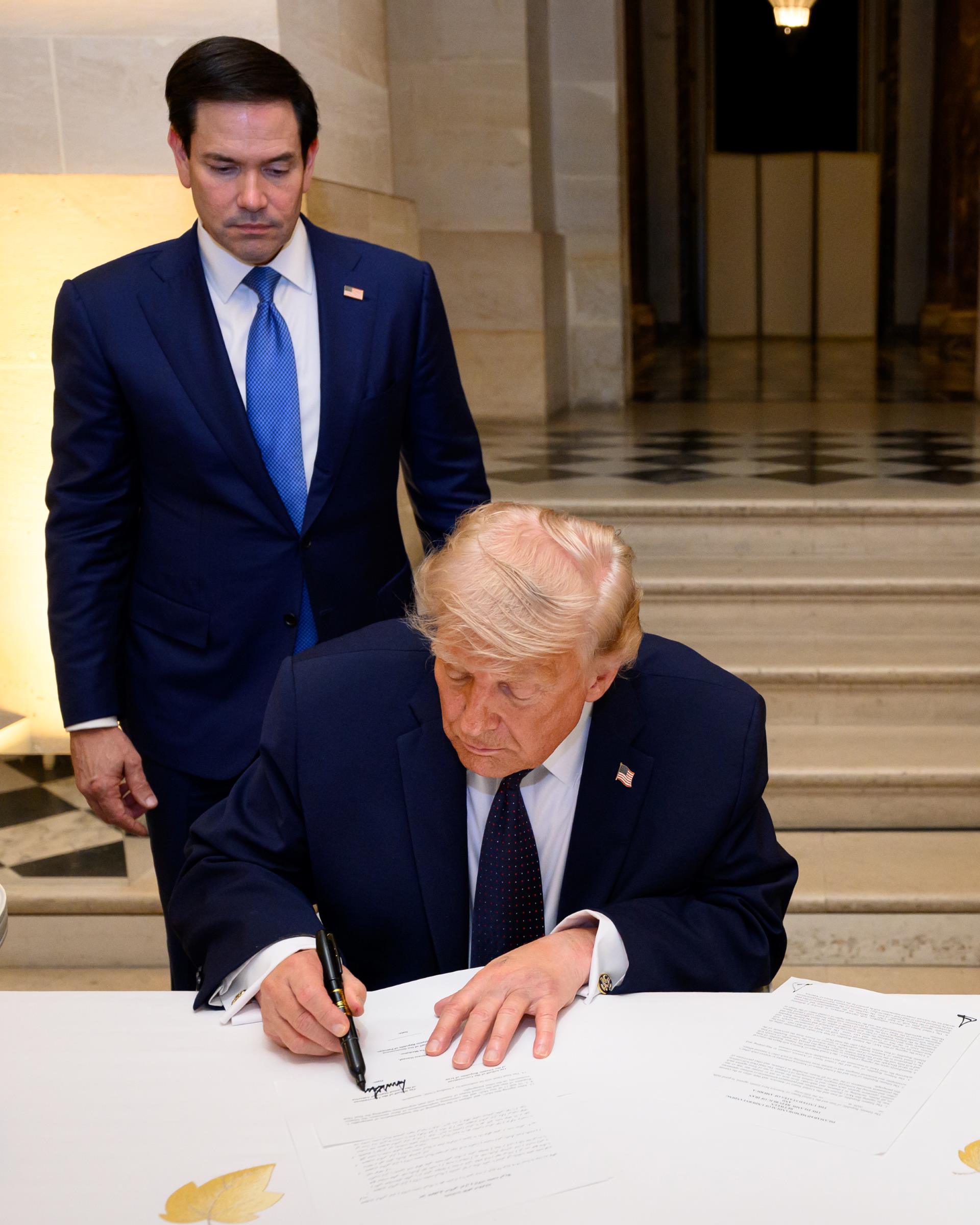
In the present context, P5+1 were not in the negotiating loop – but this does not indicate that they may not partake in any future roles. While frictions between NATO and US have increased over Ukraine and military approach towards Iran, President Trump is likely to seek support from the leaders at the G7 Summit meeting held in France, where he electronically signed the Islamabad MOU. However, in the escalating great power rivalries environment, the involvement of G7 nations will be quite nuanced.
Deciphering from the information available so far, nothing within the preliminary terms of the present ceasefire suggests that a 60-day truce will compel Iran to permanently abandon its regional proxy network. For Iran, groups like Hezbollah and Hamas are vital defensive organs. Because forcing their complete dissolution is beyond the scope of a standard ceasefire, Israel will view any finalized U.S.-Iran document with deep suspicion and may ultimately refuse to honor its terms, preferring to continue its military campaign.
4. The South Asian Pivot: Pakistan and India’s Subcontinental Tussle in the Gulf
The 2026 conflict has also manifested the subcontinental rivalry of India and Pakistan directly into the Middle Eastern theater, altering the geopolitical balance of power between the two nuclear-armed neighbors.
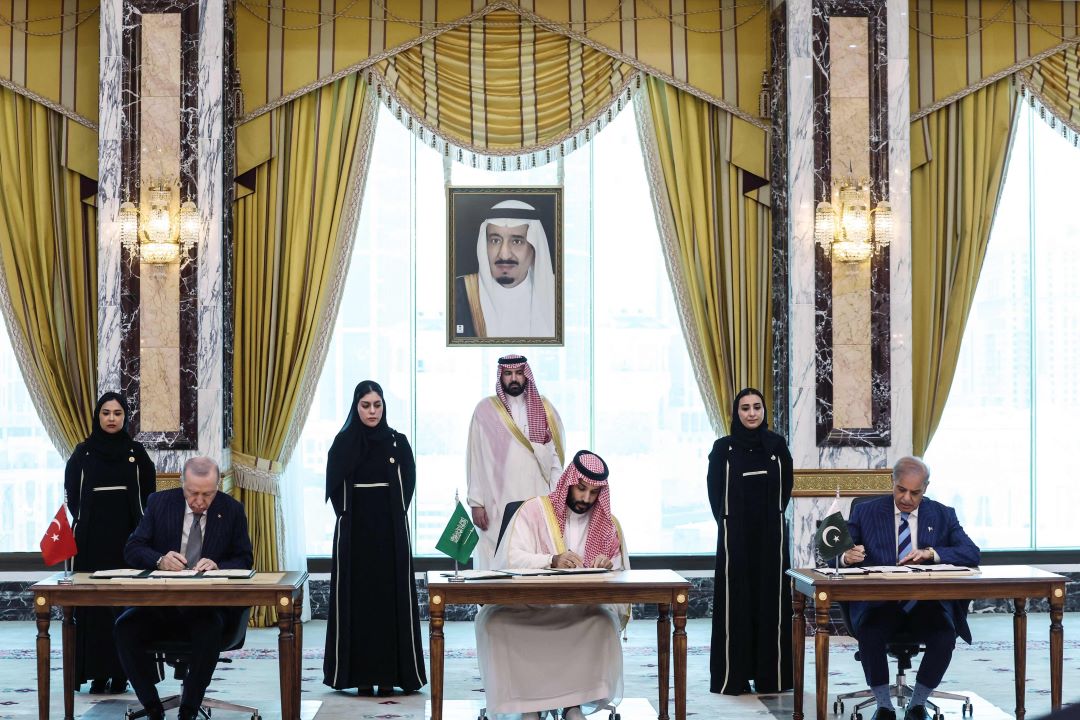
With the collapse of direct Western-led communication channels during the peak of the fighting, Pakistan leveraged its historic 900-kilometer border with Iran and its deep institutional ties with the Arab Gulf to emerge as the prime mediator between Washington and Tehran. The resulting “Islamabad Peace Process”—headlined by face-to-face talks in April 2026 between U.S. Vice President JD Vance and Iranian Parliamentary Speaker Mohammad Bagher Ghalibaf—elevated Pakistan into an indispensable global peace broker. By opening up back-channel communication lines via its Interests Section in Washington, Pakistan successfully negotiated the temporary cessation of hostilities, protecting its own vital economic interests, specifically the massive flow of worker remittances from the Gulf.
This diplomatic triumph directly challenges India’s long-term strategic investments in the Middle East. Over the previous decade, New Delhi had built a formidable geopolitical axis anchored on deep technological, defense, and economic ties with Israel and the UAE. India viewed this alignment as a way to project power westward and isolate Pakistan.
However, as Pakistan successfully positions itself as the necessary arbiter of regional stability between the U.S. and Iran, India’s rigid alignment with the Israel-UAE axis risks locking it out of the broader post-war regional consensus. If the Middle East transitions into a managed “cold peace” where Iran’s equities are formally recognized, Pakistan’s diplomatic capital will grow, neutralizing some of the strategic leverage India had accumulated through its partnerships.
5. Conclusion: The Structural Impasse of the Grand Vision
The grand vision originally championed by the Abraham Accords and the Board of Peace has arrived at a structural impasse. The only plausible pathway for these frameworks to move forward as instruments of a durable, comprehensive regional peace requires two simultaneous, seemingly impossible geopolitical concessions:
1. Iran must join the bandwagon, abandoning its regional agenda and accepting a formalized integration into a security architecture alongside Israel. This would be accompanied by the cassation of support for Hezbollah and Hamas.
2. Israel must accept a viable, sovereign two-state solution, ceasing expansion of territory either via settlements or military use. This will provide the necessary political cover for Saudi Arabia, Pakistan, and the wider Muslim world to formally normalize ties.
Given current political realities, neither condition is achievable. Israel’s domestic political landscape remains firmly set against territorial compromise, viewing military containment and absolute security dominance as its only viable future. Concurrently, Iran’s clerical and military elite view their asymmetric deterrent power and proxy networks as the sole shield preserving the Islamic Republic from Western-orchestrated regime change.
Consequently, whether the conflict transitions through continued military attrition or a formalized ceasefire, the Board of Peace and the Abraham Accords will be forced to mutate. Rather than tools for authentic peace and regional integration, they will function as a defensive alignment designed not to resolve the region’s core disputes, but to manage an unstable and fractured “cold peace.”