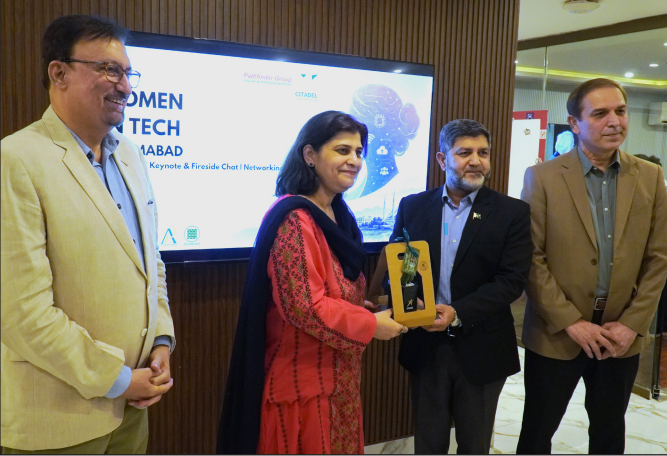





In a rapidly changing global economy, where technological advancements reshape industries and redefine job roles, the urgency to equip the next generation with the right skills has never been more pronounced. Enter the Pathfinder Center for Innovation, Technological Advancement, Digital Entrepreneurs and Leadership (CITADEL) — a groundbreaking initiative in Pakistan that aspires to bridge the widening skills gap and prepare young professionals for the demands of the 21st century. The Pathfinder CITADEL is a visionary initiative spearheaded by Mr. Ikram Sehgal, founder of the Pathfinder Group. More than an idea, CITADEL is a mission-driven platform systematically tackling Pakistan’s core challenges: graduate employability, job creation, and economic growth. By weaving together academia, business, and government into a single innovation ecosystem, CITADEL architects’ world-class solutions that connect Pakistani talent to opportunity.
1. A Vision for the Future
Graduate unemployment in Pakistan presents a critical socio-economic challenge that threatens the country’s development trajectory. Despite significant efforts to enhance educational access and skill development, a persistent mismatch between academic output and market demand continues to hinder employment prospects for graduates. This article evaluates the role of CITADEL’s academic–industry–government partnerships in mitigating graduate unemployment. By examining current initiatives such as CITADEL’s Career JumpStart Institute, Escape Velocity Accelerator, and Strategic Innovation Consulting, we explore how CITADEL’s collaborative strategies can bridge the gap between education and employment, drive innovation in skill development, and ultimately contribute to a more robust job market.
2. Background and Key Statistics
Pakistan’s demographic landscape is dominated by a young population. According to the National Human Development Report, 64% of the population is under the age of 30, with 29% falling within the 15– 29 age bracket. Despite this youthful demographic, challenges such as a 29% illiteracy rate among youth and only 6% achieving over 12 years of education indicate serious shortcomings in the quality and reach of the educational system. Furthermore, only 39% of these young individuals are gainfully employed, and a staggering 9.45 million children remain out of primary school.
The following table summarizes key statistics on youth and graduate unemployment in Pakistan:
| Indicator | Value | Source |
| Youth population (under 30) | 64% | National Human Development Report |
| Youth aged 15–29 | 29% | National Human Development Report |
| Illiterate youth | 29% | National Human Development Report |
| Youth with over 12 years of education | 6% | National Human Development Report |
| Employed youth | 39% | National Human Development Report |
| Children out of primary school | 9.45 million | National Human Development Report |
| Graduate unemployment rate (2019) | 16.5% | State of Graduate Unemployment in Pakistan |
| Peak graduate unemployment rate (2014–2015) | 20.1% | State of Graduate Unemployment in Pakistan |
| Average unemployment rate (1999–2019) | 9.54% | State of Graduate Unemployment in Pakistan |
| Annual increase in graduate unemployment | 0.74% | State of Graduate Unemployment in Pakistan |
| Unemployed educated youth (with professional degrees, 2022) | 31% | Bridging the Skills Gap report |
| University–industry linkages (World Bank ranking) | 63rd out of 163 | Disaggregating the Graduate Unemployment in Pakistan |
Graduate unemployment further exacerbates the problem. The State of Graduate Unemployment report estimates that the graduate unemployment rate was 16.5% as of 2019, with peaks of up to 20.1% in earlier years. The average unemployment rate for graduates over the period 1999– 2019 stands at 9.54%, with an annual increase of 0.74%. Additionally, 31% of educated youth with professional degrees were reported to be unemployed in 2022. These figures highlight the urgent need for systemic reforms and collaborative partnerships that can align educational outcomes with market demands.
3. The Three Fundamental Challenges
1. Graduate Employability
Every year, hundreds of thousands of Pakistani university students gain degrees—but far too few secure quality jobs. There’s a pronounced mismatch between academic learning and the demands of contemporary industry. Graduates face a lack of real-world experience, digital savvy, and entrepreneurial confidence that global employers require.
2. Jobs Creation
With 4 million young people entering the workforce annually, Pakistan’s ability to create jobs— particularly high-value, future-ready jobs—is a make-orbreak challenge. Conventional sectors cannot absorb this influx; new ventures and technology-driven startups will be essential engines for employment.
3. Economic Growth
Pakistan’s path to economic strength depends on high-impact entrepreneurship, research commercialization, and the ascendance of value-added industries. Without systemic innovation, the risk of stagnation and missed opportunities grows each year.
4. CITADEL’s Solution Framework
Addressing such complex, interconnected challenges takes more than incremental reforms. CITADEL’s approach is both holistic and targeted, revolving around three intertwined programs:
1. Career JumpStart Institute: Empowering Work-Ready Graduates
CITADEL’s Career JumpStart Institute is designed to close the employability gap at its source— during higher education. The program bridges academic theory to job market realities through:
• Industry-Aligned Curriculum: Co-designed with corporate partners, curricula focus on emerging fields such as Artificial Intelligence, Data Science, FinTech, and Digital Marketing. Students learn not just “what,” but “how”— through practical projects, case studies, and problem-solving challenges.
• Integrated Internships and Real-World Projects: Every participant completes industry placements or capstone projects, gaining hands-on experience and building a professional portfolio.
• Soft Skills and Career Counseling: Communication, teamwork, creativity, and leadership span every module. Resume clinics, interview preparation, and networking events empower graduates with transferable skills.
• Digital Literacy Programs: Workshops and certifications in digital tools ensure every graduate is prepared for remote work, global freelancing, and the demands of the digital economy.
By making employability—not just education—the final destination, Career JumpStart equips a new generation of Pakistanis to thrive in high-demand fields both locally and globally.
2. Escape Velocity Accelerator: Fueling Startup and Job Creation
To meet the vast need for employment creation, Pakistan must foster an entrepreneurial culture where ideas transform swiftly into businesses. The Escape Velocity Accelerator is CITADEL’s engine for this mission, offering:
World-Class Incubation: Early-stage founders receive workspace, technology resources, seed funding access, and business development support.
• Expert Mentorship: Guidance from experienced entrepreneurs, investors, and technical experts helps new ventures avoid common pitfalls and scale more quickly.
• Market Access and Investor Linking: Demo days, pitch competitions, and global networking events connect Pakistani startups with markets and funders at home and abroad.
• Startup Bootcamps & Hackathons: Intense, cohort-based programs seed ventures in high-impact sectors—fintech, agri-tech, edtech, and green energy.
• Freelancing & Gig Economy Platforms: Training programs help graduates monetize digital skills instantly, creating jobs even before traditional salaried employment is reached.
Through Escape Velocity, CITADEL doesn’t just create jobs—it builds entire industries from the ground up, forging a self-propelling ecosystem where innovation breeds more opportunity.
3. Strategic Innovation Consulting: Driving National and Corporate Growth
Sustaining economic transformation demands more than grassroots efforts; institutional leadership and systemic change are essential. CITADEL’s Strategic Innovation Consulting suite supports public and private sector leaders in evolving toward global best practices:
• Executive Development Programs: Training for C-suite leaders, policymakers, and senior managers in strategy, digital transformation, and innovation management.
• Sectoral Innovation Conferences: High-impact summits and roundtables connect thought leaders to share insights on topics like Smart Cities, Industry 4.0, and Future of Work.
• Custom Innovation Consulting: Tailored advisory for corporations, government agencies, and universities on R&D commercialization, digital infrastructure, policy planning, and more.
• Policy Advocacy & Ecosystem Building: CITADEL leverages its triple-helix network to align national strategies with execution, helping craft policies that unlock investment and encourage entrepreneurship.
By upgrading institutional capacity, CITADEL ensures the impact of innovation cascades beyond individual achievements to national advancement.
5. CITADEL in Action: Building the National Ecosystem
CITADEL’s campus is both physical and digital — a worldclass innovation hub featuring:
• Advanced Makerspaces: Rapid prototyping labs, VR/ AR suites, and robotics workshops for entrepreneurs, students, and researchers. • Incubation Centre: A dedicated space for startups to develop and pitch their ideas.
• STEAM Learning Spaces: Inspiring the next generation with hands-on Science, Technology, Engineering, Arts, and Mathematics programming.
• Digital Media Studio: Facilitating video production, graphic design, and content creation.
• Innovation Library: Offering books, journals, and online tech resources.
• Co-working Space: A collaborative environment with 50 seats.
• Collaboration Zones: Co-working, event venues, and digital meeting rooms connect talent, corporates, and policy leaders beyond geographic boundaries.
Yet the heart of CITADEL is its community — a vibrant network of mentors, employers, investors, alumni, and policymakers united to drive Pakistan’s innovative future forward.
6. CITADEL Operating System (OS)
The Pathfinder School of Excellence operates on the CITADEL Operating System (OS), which focuses on high-tech ecosystem creation. The CITADEL OS encompasses a mission for hightech ecosystem creation, a culture of continuous improvement, and a vision that extends to Mars and beyond. The values of humility, confidence, creativity, and agility guide the center’s direction.
7. CITADEL Team and Operations
The Pathfinder School of Excellence is managed by a dedicated team comprising a Program Director, Skills Development Manager, Incubation Manager, Executive Development Manager, Community Manager, and other essential staff. The team ensures the smooth operation of the center and effective delivery of its programs.
The center’s operations are guided by a preliminary budget that covers infrastructure, equipment, staff salaries, and other essential expenses. The annual budget planning includes multi-source funding, certification-based revenue, sponsored research, and partnerships with government and CSR programs.
8. Looking Ahead: Pakistan’s Place in the World
CITADEL’s story is just beginning. By 2030, the ambition is clear:
• Pakistan will be recognized as a top-50 innovative nation and leading entrepreneurial ecosystem in the region.
• Unemployment rates among new graduates will be halved.
• Startups will be the fastest-growing source of new quality jobs and national exports.
With its triple-helix approach, CITADEL is showing Pakistan— and the world—how a nation can convert its greatest challenges into boundless opportunities.
Pathfinder CITADEL is ushering in a new era of learning and economic growth in Pakistan by directly addressing the core challenges of graduate employability, job creation, and sustained economic development. Through its integrated solutions—Career JumpStart Institute for future-ready skills, Escape Velocity Accelerator for launching startups and driving entrepreneurship, and Strategic Innovation Consulting for institutional transformation—CITADEL continuously adapts to market needs and emerging technologies. Supported by the Pathfinder Group and global experts, CITADEL is shaping not just a skilled workforce but a vibrant community of innovators and leaders, fueling a wave of innovation and resilience that is set to redefine Pakistan’s socio-economic future.
Pathfinder CITADEL is not merely responding to Pakistan’s needs. It is reimagining what’s possible: a new model where education is job-focused, entrepreneurship is everyday, and innovation fuels inclusive economic growth.
Through its three pillars—Career JumpStart Institute, Escape Velocity Accelerator, and Strategic Innovation Consulting— CITADEL is forging the future, one graduate, startup, and leader at a time.
Pakistan’s next decade belongs to those who build it. With CITADEL, the builders are ready
Contributed by: Imran Jattala