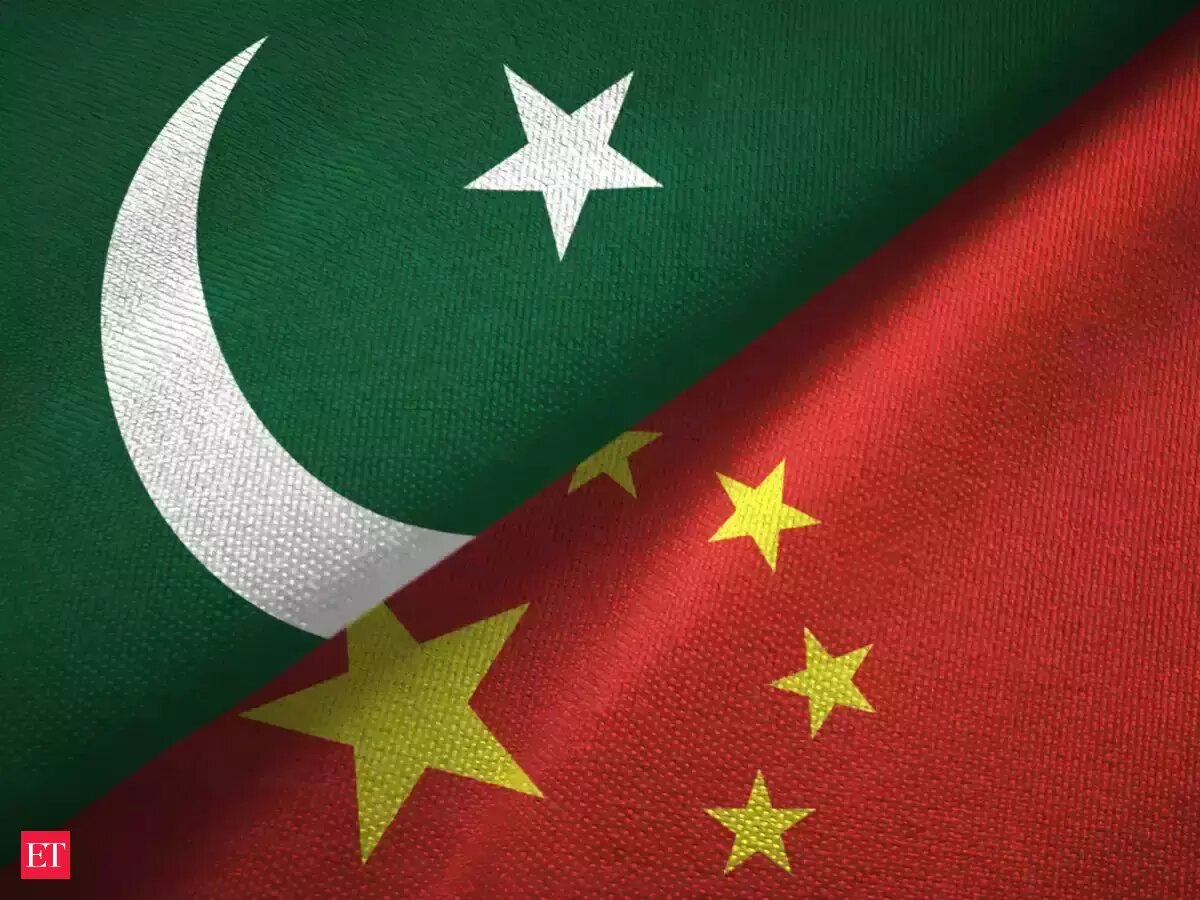
Since establishing diplomatic ties in 1951 China and Pakistan have enjoyed close and mutually beneficial relationship, this bond has strengthened with the passage of time. One of the first countries to recognize the Peoples Republic of China in 1950, Pakistan has remained a steadfast ally even during Beijing’s period of international isolation in 1960s and early 1970s. In fact Pakistan provided the secret “bridge” in July 1971 for Henry Kissinger to visit China and start the historic rapprochement. When Kissinger was leaving Beijing after his visit, Zhou En Lai told him, “do not forget the BRIDGE you have used, you may have to use it again!”
China has long provided Pakistan with major military, technical and economic assistance. Some experts even predicted that the growing relations between the United States and Pakistan’s arch rival, India would prompt Pakistan to push for even closer ties with its longtime strategic security partner, China. However we need to balance this relationship by keeping up our ties with the US. Pakistan must never forget that the US has always been of great assistance to us during the natural disasters we have faced eg flood and earthquake, etc. Except for the present 2022 floods, the US has always been the “fastest with the mostest”.
Other than China being willing to invest in developing a strategic partnership with Pakistan, Beijing has taken a principled stand on the issue of Pakistan’s membership of the Nuclear Supplier’s Group (NSG), its listing in the Financial Action Task Force and sanctions. China recognizes Kashmir to be a dispute between India and Pakistan and calls for a peaceful solution to the problem in line with UNSC resolutions, UN Charter and bilateral agreements between India and Pakistan. China openly opposed the unilateral action by India of revoking the special status of Jammu and Kashmir in August 2019 because the Indian decision not only violated UNSC resolutions on Kashmir but also the bilateral Simla Agreement between India and Pakistan. In recent years, Pakistan and China have focused special attention to their economic cooperation. Pakistan was amongst the first countries to join China’s Belt and Road Initiative (BRI). As a pilot project of the BRI the China Pakistan Economic Cooperation (CPEC) boasts of tangible outcome in about six years of its life. CPEC helped Pakistan overcome its persistent energy shortfall, some major energy projects were completed in record time and more are in the pipeline, in keeping with Pakistan’s strategy to diversify its energy mix.
India claims to resist the BRI and CPEC project due to it passing through Pakistan’s Kashmir and Gilgit-Baltistan areas (India claims these regions belong to them). India’s fervent distaste for CPEC is due to two other reasons. Firstly, CPEC’s success would bolster China’s position as the regional hegemon, strengthens its superpower status. If CPEC works, Pakistan, a historic rival of India, would become a stronger and more stable regional and economic actor. The US has replaced Pakistan with India as its primary ally in South Asia, it is propping up India in an attempt to negate Chinese influence. In 2018, the White House even suspended $2 billion of military aid to Pakistan, while it concurrently supported India with economic and military partnerships, with India seemingly now placed in the warm embrace of the US, Pakistan finds itself being paired with China.
On October 29, 2022 in response to an initiative by the Karachi Council on Foreign Relations (KCFR) under the banner ‘Long Live China-Pakistan Friendship’, His Excellency Li Bijian, Consul General of the Peoples Republic of China addressed a members of the KCFR. The Deputy Director of the Political Section of the Consulate General of China, Mr. Shang Hailong was also present. The distinguished guests were welcomed by Admiral Khalid Mir, Chairman KCFR, among others. Mr. Li Bijian’s focus was primarily on progress achieved by CPEC vis-vis the many projects in Pakistan, also on strengthening Pakistan’s economy, among other points. The world is witnessing rivalry between the big powers, there is growing stress because of this competition, but this is happening outside of Asia and countries in this region are ‘more or less sticking together. This is ‘the spirit of Asia’ where unity, security, development will ultimately bring about a ‘win-win situation’.
With a population of 220 million, Pakistan is one of the most influential countries in the Islamic world. Despite some current problems, it has a robust economic future as it also has a very resilient private sector. Add to that the large numbers of diaspora that every year send in remittances worth $30 million to Pakistan. Mr. Bijian acknowledged that Pakistan is the future of Asia and will even fly higher.
The Chinese CG emphasised he wanted to not only give a better understanding about CPEC but some updates on the progress of this mega project. Initiated in 2015 by Chinese President Xi Jinping the government has been working very closely and the first phase has already been completed and is now in the second phase. In the first phase China helped Pakistan solve it energy shortage problem. CPEC focused on inter-government cooperation projects and the construction of several coal power plants, hydropower plants, wind power plants, and nuclear power plants, and achieved fruitful results including the completion of the M-5 Expressway, the second phase of the Karakoram Highway and the Orange Line. Railways and other major projects greatly eased Pakistan’s electricity and traffic problems. While some global technical issues are still being faced, solar power plants are functioning very well in Pakistan.
On work related to solving Pakistan’s transportation problem, some major projects have been completed like M5, the Super Highway connecting Multan to Sukkur and the upgrade of the second phase of Karakoram Highway. A very big project, Metro in Lahore and the Orange Line is also completed. In transportation sector, the Eastbay Expressway in Gwadar completed too. In the area of telecommunication there is ongoing collaboration which is going very well. The first fiber line connecting China and Pakistan via Karakoram highways (KKH) is now in operation.
While many projects are ongoing in the first phase, there is negative propaganda tarnishing CPEC image. The Chinese CG told the audience Pakistan will really get a huge benefit from the CPEC projects. Some people have mentioned about Gwadar and the “debt trap” which is a fabrication used by some intentionally. The calculation might be different, but by the end of last year, the total external debt of Pakistan was roughly $120 billion. Out of this $120 billion, less than 10% is owned by China, and the other 90% owned by western countries, especially financial institutions. Can you imagine calling 10% as a “debt trap”? What about the rest 90%? The Chinese finance to carry out these projects has three categories i.e. number one is government aid, which Chinese government will provide all the finance free of charge. Some projects going on in Gwadar, include the Gwadar New International Airport, one of the biggest investments and one of the major airports in Pakistan which will be commissioned next year hopefully in August, including the Training Institute, the Middle School and a furnished hospital. A water sanitation plant will produce 5000 tons of water on daily basis is now under construction. Another category is preferential loans provided by Chinese financial institutions, the interest rate of preferential loans is always under 2%, and not more than 2%. Finally is the commercial loans, not provided by the government but by the financial institutions and banks. So that is the three ways through which the CPEC projects are being financed.
In the second phase the main feature would be B2B i.e. Business to Business focusing on industry, manufacturing, agriculture and the socio-economic progress of the local people. Just last year, the Joint Working Group and Joint Commission of CPEC has held 11 meetings. Since the inception of CPEC, the government of Pakistan has been very cooperative and supported implementation of CPEC projects.
The Chinese CG said unfortunately China could not open up completely right now because it has a 1.4 billion population, 300 million are senior citizens who are more susceptible to COVID. China has a philosophy to look after their senior population, that’s their tradition. These people, especially those retired, worked really hard for building the modern Chinese nation. To protect this big, 300 million population, they have this quarantine prevention and protection measures in place. The Consul General ended his address saying that “to fix this efficiently in a transparent, scientific ways would have to be found.”
IKRAM SEHGAL