
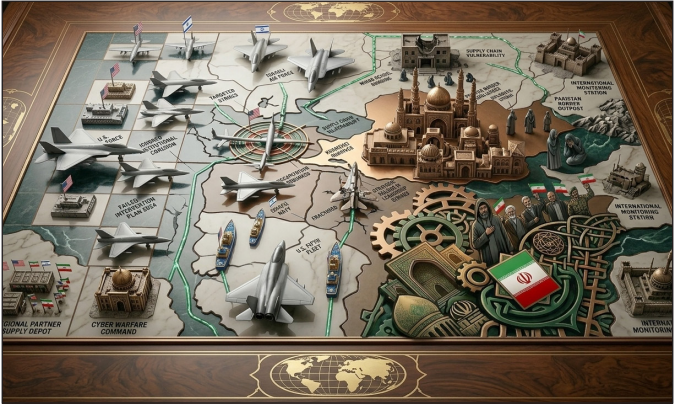
US-Israel Strategic Gamble in Iran
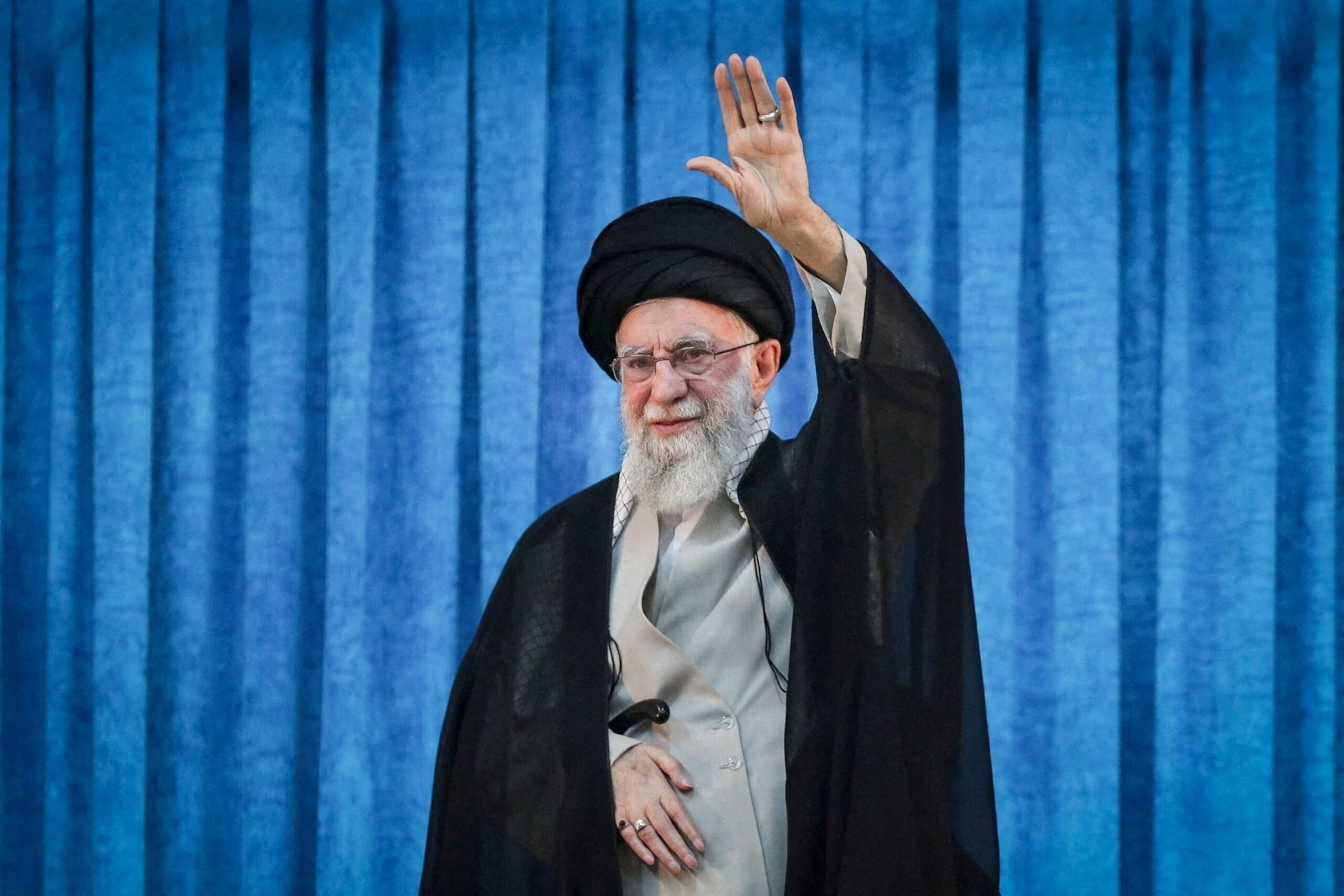
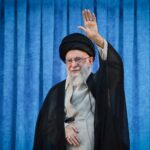
The war launched by the United States, led by President Donald Trump, and Israel, under Prime Minister Benjamin Netanyahu, against Iran has revealed the stark limits of military overreach and strategic misjudgment. Early in the conflict, targeted strikes eliminated Iran’s Supreme Leader, Ayatollah Ali Khamenei, along with senior commanders – a move intended to decapitate Tehran’s political and military command. Yet, the resilience of Iran’s leadership and the continuity of its state institutions proved decisive until now, demonstrating that removing a single figure, even one as central as Khamenei, cannot dismantle a deeply entrenched political system. What was intended to be a swift, decisive campaign instead revealed the durability of Iran’s governance, inflicted severe human suffering – including the tragic bombing of a girls’ school in Minab – and destabilized global energy markets. The operation thus exposed a stark lesson in strategic hubris, forcing Washington and Tel Aviv to confront the limits of military power.
At the core of this conflict lies a fundamental miscalculation:
that eliminating Iran’s top leadership would trigger systemic collapse.
Tehran’s rapid adaptation, including the mobilization of loyal paramilitary forces and intelligence networks, underscores that political pliability cannot be undone by precision strikes alone. This strategic misjudgment has intensified regional instability, amplifying human suffering, and revealing the broader challenges of confronting deeply rooted governance systems with external force.
This pattern of miscalculation echoes previous interventions in Iraq and Libya, where the removal of leaders created power vacuums and prolonged conflict rather than delivering stability. Yet, Washington and Tel Aviv underestimated Iran’s overreliance on military solutions. The US, in particular, has demonstrated inconsistent strategic messaging, with President Trump alternating between assurances of imminent success and threats of long-term engagement. By aligning itself closely with Israeli priorities, Washington is bearing the economic, military, and diplomatic costs of a war whose political gains remain uncertain.
For Israel, the calculus is more direct. Prime Minister Netanyahu has long portrayed Iran as an existential threat and pursued policies to limit its regional influence. The current conflict continues that trajectory, targeting both Iran’s nuclear ambitions and its broader political stability. However, what advances Israeli objectives does not align with regional stability or US long-term interests, creating a mismatch that has intensified both the scope and the costs of the conflict.
Iran has responded with a strategically calibrated approach that avoids direct conventional confrontation while maximizing asymmetric pressure
Iranian missile and drone strikes on US military bases in Iraq, Kuwait, Saudi Arabia, the UAE, Qatar, and Bahrain have starkly demonstrated the vulnerability of US installations throughout the Gulf. These operations have forced Gulf states to confront an uncomfortable reality: their longstanding reliance on US security guarantees does not necessarily protect their own national interests, but instead primarily serves Israeli strategic priorities. The strikes have shaken confidence in Washington’s commitments, prompting Gulf states to reconsider traditional security arrangements and explore alternative security frameworks that involve regional dialogue and conflict mediation.
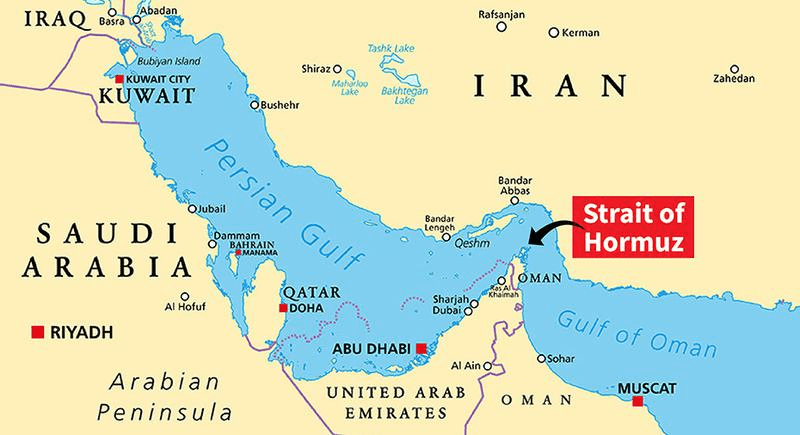
Simultaneously, Iran has jammed the Strait of Hormuz, a vital global oil transit route that carries roughly 20.9 million barrels per day, or about 20 percent of the world’s petroleum consumption
This oil is heavily destined for Asia, with China receiving around 37–38 percent, other major Asian countries, including Japan and South Korea, taking roughly 36– 38 percent combined, India importing about 14–15 percent, while the US depends on only 2–2.5 percent of the flow. This move has escalated uncertainty in energy markets, driving up global oil prices and compelling governments to prepare emergency responses. Washington requested allied navies to send warships to escort oil tankers through the Strait of Hormuz, but key partners, including Germany, Spain, Italy, and the Gulf States rebuffed the demand, unwilling to risk confrontation with Iran or become entangled in a conflict primarily serving Israeli objectives.
This rejection exposed a critical reality for the US and Israel: that their allies are unwilling to fully commit to enforcing their strategic agenda in the Gulf, signaling limits to coalition support and undermining claims of unified regional authority. The targeting of critical Gulf infrastructure, including LNG facilities, refineries, and oil terminals by Iran, is part of a broader strategy designed to impose economic costs on adversaries while forcing renewed diplomatic attention.
Tehran’s approach highlights the leverage it retains despite overwhelming conventional opposition and underscores the risks of prolonged military escalation
Beyond military and economic dimensions, the humanitarian toll of the war is devastating. Civilian casualties in Iran continue to mount, with critical infrastructure severely affected. The bombing of a girls’ school in Minab by the US/Israel reportedly killing over 160 students, epitomizes the indiscriminate human cost of modern warfare.
Each civilian death not only represents a moral failure but also fuels resentment that sustains cycles of retaliation, undermining claims of precision or restraint.
Legal and ethical questions compound the crisis. Many observers argue that US and Israeli actions violate established norms of international law, with no UN Security Council authorization and no justification for preemptive use of force. If such practices become normalized, the fragile framework regulating armed intervention risks further erosion, with profound implications for international stability.
Economic consequences of this conflict on Pakistan are immediate. Disruptions in Gulf energy routes have triggered market volatility and rising oil prices. These developments carry tangible domestic repercussions for Pakistan: inflation is rising, fiscal pressures are mounting, and the currency is weakening.
Islamabad also faces a delicate diplomatic challenge. Public opinion in Pakistan largely sympathizes with Iran, particularly in light of civilian casualties, while the country maintains critical economic and strategic relationships with Gulf states, including Saudi Arabia and the UAE, now directly threatened by the conflict
Rising instability along the Iran– Pakistan border, particularly in Balochistan, could exacerbate security challenges, giving militant groups opportunities to exploit regional chaos. Pakistan must carefully balance public sentiment, economic pressures, and strategic partnerships to avoid being drawn further into a war it did not initiate.
Looking ahead, several scenarios are plausible. Iran is likely to continue asymmetric operations while the US and Israel conduct targeted strikes, keeping the conflict in a state of precarious tension. Diplomatic interventions by major powers could enable partial de-escalation, but political will remains limited. Escalation remains a persistent risk, as further civilian casualties or attacks on Gulf infrastructure could draw new regional actors into the conflict, potentially triggering a wider Middle Eastern war. This uncertainty emphasizes the importance of proactive diplomacy, conflict mediation, and contingency planning by all regional and global stakeholders.
The conflict exemplifies the limits of military power as it has destabilized the region and inflicted severe humanitarian and economic costs.
The choice confronting both Washington and Tel Aviv is stark: continue escalating a costly and ineffective war or pursue a political solution that addresses the underlying regional dynamics. Without diplomacy, the consequences will extend far beyond Iran, reshaping Middle Eastern geopolitics and exacting a lasting toll on human lives.
The longer this conflict persists, the clearer it becomes that it is not a demonstration of strength, but a reflection of strategic failure, with civilians paying the heaviest price.