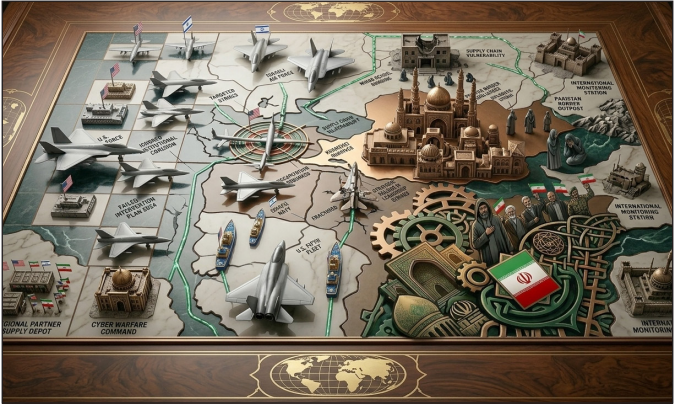




A Fictitious Scenario on how Venezuela could have countered the U.S. Raid
The Preamble
In the final weeks of 2025, the pressure campaign against Caracas was assembled with methodical precision. Carrier strike groups rotated into the southern Caribbean; destroyers established overlapping patrol arcs; submarines seeded the approaches to Venezuelan ports. Air assets forward-deployed through Colombia and the Dutch Caribbean, tightening response times to minutes. Sanctions enforcement shifted from paperwork to presence; shipping insurers withdrew; fuel and spare parts stalled offshore. Parallel to the military geometry ran a narrative offensive. Washington framed the siege as humanitarian containment rather than coercion; briefings emphasized corruption, narcotics, and electoral illegitimacy. Regional allies echoed the language, media partners amplified defectors and leaked intelligence, and the phrase “orderly transition” replaced “intervention.” By the turn of the year, the siege was complete in all but name; a ring of steel at sea, a choke on finance and logistics, and a moral argument rehearsed daily for international consumption.
In most forecasts, such pressure produced rapid fracture. Yet this reconstruction turns on a different hinge. Had Caracas planned with discipline, it could have transformed the siege into a contest of endurance rather than submission. The tools were available: decentralised command; redundant communications hardened against electronic attack; civil defense calibrated for disruption rather than spectacle; selective information warfare to fracture the imposed narrative abroad. By conserving forces during the encirclement and striking only at the moment of overreach, Venezuela could have raised the costs without inviting annihilation. Resistance would not have meant victory in the conventional sense; it would have meant denying momentum, stretching timelines, and converting a clean operation into a politically expensive stalemate. In such conflicts, survival is strategy; and pain, applied sparingly and at the right instant, can be enough to make even a superpower hesitate. The porcupine, after all, survives not by overpowering predators, but by making every bite painful.
The Siege Takes Shape
The crisis, in this scenario, began in late November 2025. U.S. officials accused President Maduro of manipulating national elections and responded with sweeping new sanctions. Diplomatic pressure quickly gave way to military signaling. By mid-December, the USS Gerald R. Ford (CVN-78), the U.S. Navy’s most advanced nuclear-powered aircraft carrier, entered the Caribbean at the head of a carrier strike group.
From its vast flight deck, the Ford could deploy F-35 Lightning II stealth fighters and EA-18G Growler electronic warfare aircraft. The F-35’s low-observable design allowed it to evade many conventional radar systems, while the Growlers specialized in suppressing enemy sensors and communications. Together, they represented the spear point of American air dominance.
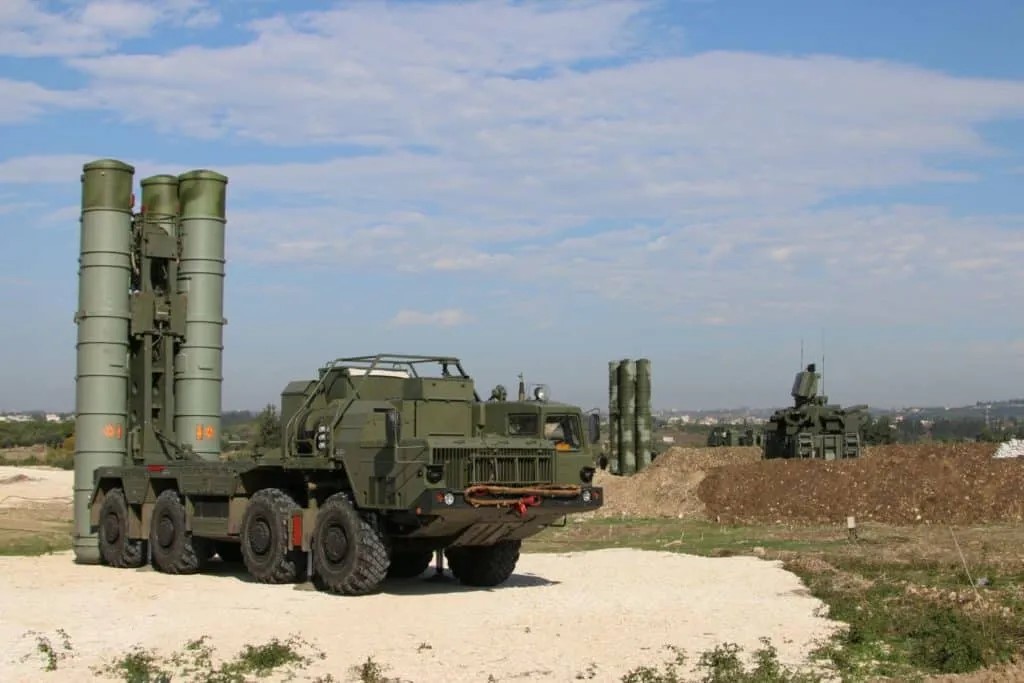
In this counterfactual, however, Venezuela might have anticipated such a confrontation. Over preceding years, Caracas could have quietly deepened military cooperation with Russia, China, and Iran. Advanced versions of the Russian S-400 air defense system would have been acquired and dispersed inland. These mobile missile batteries would have combined long-range interceptors with radars designed to detect even stealth aircraft. Access to China’s BeiDou satellite network could have ensured resilient navigation and positioning, independent of U.S.-controlled systems. Iran, for its part, might have provided hypersonic strike capabilities; fast, manoeuvrable weapons traveling at speeds above Mach 5 and capable of evading most existing missile defenses.
Binding these disparate systems together would have been an AI-assisted command-and-control architecture. Data from radars, satellites, and electronic sensors would have flowed into centralized fusion nodes, enabling faster analysis and decision-making than traditional human-led systems could have managed.
Blunting Pressure without Firing a Shot
Throughout December, Venezuela in this scenario would have resisted the temptation to strike first. Instead, it might have leaned heavily on non-kinetic measures designed to fray the edges of the American operation.
Russian-supplied electronic warfare systems, including platforms like the Krasukha-4, could have intermittently jammed U.S. sensors. Drone feeds from MQ-9 Reapers might have degraded without warning. Communications links would have flickered. None of this would have amounted to an overt act of war, but it would have introduced friction and uncertainty. American commanders might have found themselves questioning the reliability of their situational awareness.
Simultaneously, Venezuelan cyber units, trained with foreign assistance, could have launched quiet intrusions into logistics and planning networks. Shipping schedules might have slipped. Spare parts would have arrived late or at the wrong ports. Intelligence assessments could have contradicted one another. Each disruption would have been minor in isolation, but cumulative in effect.
Deception would have amplified the impact. Decoy convoys could have rolled through the countryside. Fake command posts might have emitted electronic signatures designed to attract surveillance. Social media campaigns would have pushed images of U.S. warships looming off the Venezuelan coast, framing the blockade as imperial aggression rather than law enforcement. Diplomatically, Caracas could have leaned on partners in Moscow, Beijing, and the broader BRICS grouping to stall any unified international response. Time, under this strategy, would have become a weapon. As Washington would have expended resources to maintain the blockade, Venezuelan forces might have repositioned, conserved strength, and prepared for escalation.
The Raid
By January 1, 2026, the standoff might have entered its third week. The U.S. Navy would have maintained its presence offshore, launching routine patrols, but would have achieved no decisive breakthrough. In this imagined account, American intelligence, shaped by Venezuelan misinformation, could have concluded that Maduro was sheltering in a hardened bunker complex near Caracas.
Acting on that belief, U.S. planners would have authorized a direct-action raid. Just before dawn on January 3, the operation might have commenced. F-35s and Growlers would have moved first, probing Venezuelan defenses and attempting to suppress radar systems. Under their cover, twelve MH-60 Black Hawk helicopters modified for low-altitude special operations, could have approached from the sea carrying roughly one hundred Delta Force operators.
The objective would have been straightforward; insert rapidly, breach the facility, seize Maduro, and extract before Venezuelan forces could have reacted. In this scenario, surprise would have been assumed. It would not have existed.
The Ambush
Satellite-linked radars, integrated through AI-driven fusion systems, could have detected the incoming helicopters at distances exceeding fifty kilometers. Within moments, concealed S-400 batteries might have activated. Long-range 40N6 interceptors would have streaked skyward, guided by powerful radar seekers. Several Black Hawks could have been destroyed mid-flight, their wreckage falling into jungle terrain below.
The remaining helicopters might have pressed on, but the operation would already have been compromised. As Delta teams could have fast-roped into the target perimeter, Venezuelan defenses would have snapped shut. Drone swarms, small, autonomous, explosive-laden systems, might have descended on the landing zones, disrupting formations and inflicting immediate casualties.
From concealed positions, VN-16 armored vehicles could have opened fire using Kornet-EM laser-guided missiles. Accurate at ranges up to five kilometers, the weapons would have targeted helicopters on the ground and perimeter security elements. Additional S-400 launches might have engaged aircraft overhead, while militia units armed with Igla-S shoulder-fired missiles could have finished off damaged helicopters attempting to escape.
Pinned down in exposed terrain, the Delta operators would have found air support unreliable. Venezuelan electronic warfare systems might have scrambled targeting data, forcing U.S. pilots to have held fire for fear of fratricide. The raid, conceived as a swift decapitation strike, would have devolved into a desperate fight for survival.
Escalation at Sea
As the ground battle could have intensified, Venezuela might have escalated horizontally. Mobile launchers along the coast would have fired hypersonic missiles toward the U.S. carrier strike group. Traveling at extreme speeds and following unpredictable trajectories, the weapons could have overwhelmed shipboard defenses. One destroyer might have been struck outright; an amphibious assault ship could have suffered significant damage.
Forced into evasive maneuvers, the Gerald R. Ford would have withdrawn to a safer distance, severing the close air support that the raiding force would have depended upon. By mid-morning, the operation might have collapsed. Survivors could have withdrawn under fire, leaving behind casualties and wreckage. No high-value target would have been captured.
Strategic Aftermath
In this hypothetical outcome, the United States could have lost multiple helicopters, might have suffered dozens of killed or wounded operators, and would have absorbed unexpected damage to naval assets. The carrier group would have pulled back, its immediate mission abandoned. More damaging still would have been the blow to credibility. Such a failure on January 3, 2026, might have marked a turning point. Within days, Washington could have been forced to scale back operations and reopen diplomatic channels under UN or BRICS mediation. The lesson would have been stark; in an era of networked warfare, technological superiority alone might not have guaranteed success. By combining patience, deception, non-kinetic disruption, and rapid kinetic escalation, Venezuela could have transformed an almost inevitable defeat into a warning. The objective for Venezuela should have been never to win outright, but to impose costs high enough to alter the adversary’s calculus.
Lessons to be learned
Beyond the immediate tactical and operational dimensions of this imagined confrontation lies a broader, more uncomfortable lesson for states navigating the emerging global order. The central takeaway is not about Venezuela, or the United States, or any specific weapons system; it is about preparedness as a matter of national survival. The era in which security could be outsourced to alliances, guarantees, or abstract norms has visibly eroded. No treaty clause, international resolution, or moral appeal can be relied upon when hard interests collide. In this environment, the first and overriding responsibility of any state is the credible defense of its own sovereignty. No external power will arrive in time, or at all, to defend a nation that has failed to prepare itself. The assumption that global rules will restrain force, or that international opinion will deter coercion, is increasingly detached from reality.
Power politics has returned in a raw, transactional form, governed less by law than by leverage. In such a system, vulnerability invites pressure, and weakness tempts intervention. This reality is especially stark for countries endowed with strategic resources or positioned astride vital trade routes. Energy reserves, rare minerals, chokepoints, undersea cables, and maritime corridors are no longer merely economic assets; they are strategic liabilities if left undefended. Geography, once a blessing, can rapidly become a curse. History shows that nations occupying such positions are rarely left alone for long, and the contemporary world offers no evidence that this pattern has changed. On the contrary, intensifying competition over supply chains, energy security, and access routes has made these states more exposed, not less. In this environment, deterrence is no longer a luxury but a necessity, and deterrence today extends far beyond traditional notions of military mass. It demands resilience across domains: air, sea, cyber, space, information, and the cognitive battlefield of perception and narrative.
Preparation, therefore, is not about matching a stronger adversary platform for platform. That is neither feasible nor required. It is about imposing uncertainty, cost, and risk at every level of escalation. States that survive and retain autonomy will be those that integrate non-kinetic capabilities with selective kinetic strength, that harden their systems against disruption, and that cultivate the ability to absorb shocks without collapsing. This includes robust civil defense, redundant logistics, domestic industrial capacity, and command structures designed to function under attack. It also requires political will; deterrence fails when adversaries believe a society lacks the resolve to endure pain. In a world increasingly governed by what might be described as the law of the jungle, survival favors those who signal clearly that coercion will be met with consequences.
The Gen-Z Factor
In recent years, the Gen-Z cohort has increasingly been treated not merely as a demographic, but as a contested domain. Raised inside algorithmic ecosystems, exposed to constant narrative flux, and instinctively skeptical of institutions, Gen-Z has proven uniquely vulnerable to influence operations that blur activism, identity, and entertainment. Adversarial actors have learned that persuasion no longer requires overt propaganda; it requires cultural fluency. Memes, short-form video, irony, moral absolutism, and selective outrage have become delivery systems for geopolitical messaging. Grievances are amplified, historical complexity is flattened, and national legitimacy is reframed as moral failure. What looks organic is often engineered; what feels spontaneous is frequently guided. The weaponization works because it exploits asymmetry. States communicate slowly, formally, and defensively; Gen-Z communicates emotionally, rapidly, and performatively. External actors insert themselves into this gap, posing as allies of justice, anti-imperialism, climate action, or digital freedom, while quietly steering discourse toward paralysis, distrust, and internal fragmentation. The objective is rarely to convert Gen-Z into supporters of an adversary; it is to detach them from their own national narratives, to make loyalty feel naïve and sovereignty feel suspect. A disengaged or internally hostile youth population is, strategically, almost as valuable as a defeated army.
Counter-measures cannot rely on censorship or reactive messaging; those approaches only reinforce the perception of authoritarian control. The more effective response lies in narrative competition rather than narrative suppression. States must recognize that Gen-Z does not respond to official spokespeople or sanitized patriotism. Credible counter-narratives must be built from within the cohort itself, using its language, humor, aesthetics, and moral frameworks. This requires cultivating Gen-Z creators, analysts, artists, and micro-influencers who are intellectually independent but strategically aligned; not mouthpieces, but interpreters. When Gen-Z sees its own peers articulating national interests in ways that acknowledge flaws, complexity, and reform, the narrative regains legitimacy.
A strong counter-narrative team would therefore function less like a propaganda unit and more like a cultural intelligence cell. It would map digital sentiment in real time, identify narrative pressure points, and seed alternative frames before adversarial narratives harden into consensus. Crucially, it would empower Gen-Z voices to challenge external manipulation openly; to expose how outrage is monetized, how algorithms reward division, and how “anti-system” rhetoric is often recycled power politics in progressive clothing. When the illusion of organic dissent is punctured by insiders rather than authorities, the effect is far more destabilizing to adversarial influence.
Ultimately, the contest over Gen-Z is a contest over meaning. Nations that treat young citizens as liabilities to be managed will continue to lose narrative ground. Those that treat them as strategic partners; intellectually respected, culturally fluent, and morally engaged; can invert the weaponization entirely. In that reversal, Gen-Z does not merely resist influence operations; it becomes the force that turns them back on their architects, reframing adversaries not as rebels against power, but as manipulators of the very ideals they claim to defend.
For nations of the Global South, it has become necessary; and urgent in the context of today’s information flows; to articulate a counter-narrative that identifies the real drivers of instability and youth exploitation. Increasingly, evidence points not to local governments alone, but to an entrenched international establishment composed of hegemonic states, financial institutions, and transnational corporations whose interests transcend borders but evade accountability. These actors shape economic policy through conditional lending, extractive trade regimes, and regulatory capture, while simultaneously dominating the digital information space. The result is a generation that is economically constrained offline and cognitively manipulated online.
Greed-Beyond-Borders
Concrete patterns are visible. In Gaza, sustained military operations are financed, armed, and diplomatically shielded by the same governments and defense corporations that publicly champion “rules-based order.” In Sudan and parts of the Sahel, prolonged conflicts are fueled by foreign arms flows and resource interests tied to gold, oil, and rare minerals, while youth populations are left with displacement rather than opportunity. Across several African states, multinational mining and agribusiness firms extract value through long-term concessions, leaving behind environmental damage and minimal local development. In Latin America, IMF-backed austerity programs and investor-state dispute mechanisms have repeatedly constrained national control over lithium, copper, and water resources; commodities essential to the global green transition, yet extracted at the expense of local futures.
At the same time, Gen-Z is being mobilized in cyberspace as a force multiplier. Algorithmic platforms reward outrage, moral absolutism, and performative activism, allowing external narratives to convert legitimate anger into strategic paralysis. Youth are encouraged to see themselves as permanently aggrieved but politically powerless; constantly mobilized, yet rarely organized toward structural change. This is exploitation in a modern form: not conscription into armies, but conscription into information warfare, where attention, emotion, and identity become expendable assets. Crucially, this narrative cannot be imposed from above. It can only emerge authentically from within Gen- Z itself. The role of the state, intellectual class, and civil institutions is not to dictate ideology, but to provide clarity and evidence; to reveal patterns that are deliberately obscured.
When Gen-Z is shown how the same corporate actors profit simultaneously from war, reconstruction, surveillance technology, and data extraction; when connections are drawn between sponsored humanitarian rhetoric and material outcomes on the ground; the illusion fractures. What appears as fragmented injustice resolves into a coherent system. The narrative must make one point unmistakable: this trajectory does not stop at Gaza, Sudan, or Latin America. A generation trained to accept precarity, permanent crisis, and algorithmic manipulation is being normalized globally. If unchallenged, the subjugation of Gen-Z; economically through debt and underemployment, cognitively through information control; becomes universal. Enlightenment, therefore, is not ideological radicalization; it is strategic awareness.
When Gen-Z recognizes that its future is being quietly extracted; time, attention, labor, and moral energy siphoned through social media and propaganda ecosystems; it becomes far harder to weaponize. It is time that nations under attack learn that the same networks currently being used to fragment, sow discord, and distract must be turned outward, exposing the architects of exploitation rather than serving them. The surge of anti-hegemonic consciousness that has spread worldwide, most vividly among Gen‑Z in the wake of Gaza, must be transformed into a strategic weapon against those seeking to destabilize the nation‑states of the Global South.
Conclusion
The uncomfortable truth is that the global system has entered a phase where worst-case planning is not alarmism but prudence. States that cling to outdated assumptions about restraint and benevolence do so at their own peril. Preparedness does not guarantee peace, but unpreparedness virtually guarantees vulnerability. The strategic environment rewards those who anticipate conflict, invest early, and accept that self-defence is not an option but an obligation. In the absence of a reliable global referee, each nation stands largely alone. Those that recognize this reality, and act on it decisively, may not win every confrontation; but they will shape the terms on which any confrontation occurs. In the emerging global landscape, the Gen-Z factor is anything but peripheral. It has evolved into a strategic instrument, a Weapon of Mass Mobilisation (WMM) capable of reshaping political realities without a single shot fired. The prototype test cases are already visible: movements in Bangladesh and Nepal have demonstrated how digitally-native cohorts can ignite systemic disruption almost overnight. What began as local grievances now serves as proof of concept for a new domain of conflict, where influence, identity, and algorithmic amplification converge to challenge state sovereignty as decisively as any missile or drone.
The final lesson is, that even weaker nations can survive and maintain sovereignty if they are prepared.
The porcupine does not need to kill the eagle. It only needs to make it bleed.