
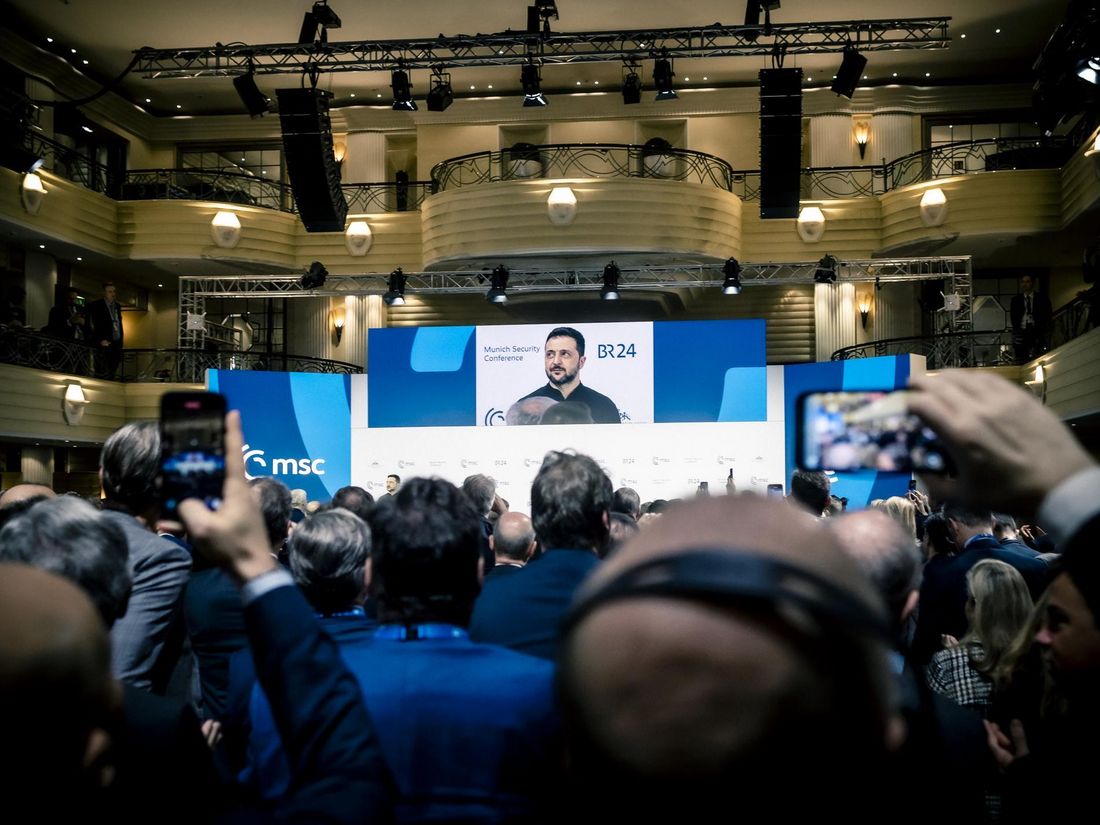
More than 40 world leaders gathered in Munich Germany from 13 to 15 February 2026 to discuss top issues in international security during the world’s largest gathering of its kind, the 62nd Munich Security Conference (MSC), an annual conference on international security policy that has been held since 1963. Formerly Munich Conference on Security Policy, it has become the most important independent forum for the exchange of views by international security policy decision-makers. The purpose is to bring together higher government representatives to engage in an intensive debate on current and future security challenges. It includes heads of states, governments and international organisations, ministers, members of parliament, high-ranking representatives of armed forces, science, civil society, as well as business and media. Under the banner of peace through dialogue, senior politicians, diplomats, military and security experts not only from the member countries of NATO and the European Union, but also from other countries are invited to discuss the current issues in security and defence policies.
Pakistan was represented by the highest military leadership Field Marshal Asim Munir, Chief of Defence Forces, which is indicative of Pakistan’s relevance in the current political landscape. His presence in this biggest security policy related gathering and exchanging views with the world leaders is an opportunity that will earn Pakistan dividends in times to come. The 62nd MSC was overshadowed with the future of transatlantic alliance NATO between the US and its European allies that was put to jeopardy first by the statements of Mr Trump as soon as he assumed Presidency, reinforced by the Vice President J D Vance during last year MSC when both stressed on more contribution by the European members of the alliance.
It was an uphill task this time for the US Secretary of State Marco Rubio, who had to bring in some consolation for the friends simultaneously a tough stance for the competitors. It is important to note that the US National Security Strategy, promulgated in November 2025, does not state countries like China and Russia as the US adversaries, contrary to what previous such documents mentioned. Mr Rubio focussed on convergences that the US and allies enjoyed and tried to assure the friends that the transatlantic alliance could still work, should the members other than the US fulfill their responsibilities. He received a standing ovation since his speech carried the message of reassurance and partnership as compared to what VP Vance’s last year.
More focus was laid on German Chancellor Friedrich Merz, the chief host and big brother of Europe, whose speech would be the policy of EU. He warned that the U.S.-led, rules-based global order was over and urged that Europe must now focus more on its own strength and solidarity. He however, also aspired for healing ties with Washington as the relationship between the US and Europe according to him was underestimated by many, especially in the backdrop of Europe’s geography and capability to negotiate challenges without the US. Merz blasted the bullying nature of big power politics waged by the US, China and Russia. He mentioned that the natural resources, technologies and supply chains were becoming bargaining tools in the zero-sum game of the major powers, which he termed was a dangerous game.
There was disappointment over neglect of Europe in negotiations between Russia and Ukraine as well as with Iran. The messages from the US and Germany were therefore, diligently focussed by everyone as they were the harbinger of future of NATO. Ongoing conflicts like Russia-Ukraine war and impending conflict between the US and Iran were talk of the town. Europe is apparently not in favour of negotiated settlement of Russia-Ukraine war; it wishes Russia to lose on ground before coming to the table. Europe’s apprehensions are reflective in President Putin’s response to the negotiations as he seems unwilling to come to a negotiated settlement, especially as demanded by the US. As regards to the issue with Iran, Europe feels it could act as a balancing factor just as it did in 2015 when JCPOA was signed.
Europe’s frustration for not having been involved in the talks about both conflicts is therefore genuine as not only such a measure deprives Europe of wishful outcomes but also reduces its due role in political and security matters around the globe. It further provides Europe an indication that the US wishes to go alone on such important missions and does not care for the friends, an overall sign of weakness to the adversaries about NATO. In such a backdrop, it is being contemplated around the world whether Europe can win against Russia without the US or in an event of conflict with Iran, will the US be successful in achieving its objectives without its friends onboard. And more importantly, what about the future challenges that may be posed by China; will the US and Europe join hands in that eventuality. The MSC could not provide these answers, but it appears that the happenings on ground in future will do so. Analysts believe it will be late by then.
The MSC is organized privately and is used exclusively for discussion; hence there is no common final communiqué and an authorization for binding intergovernmental decisions also does not exist. But it is an important event, perhaps one of the most serious ones where future security policies are hinted at and the temperament with which issues are going to be handled in future can be adjudged easily. From the tone and tenor of 62nd MSC, it is obvious that the world’s future will be governed with high handedness and power demonstration far from a rules-based order. This is important for the countries like Pakistan who tread in the middle of conflicting situations while keeping their own interests supreme.