

Trump’s Action Against Venezuela
Implications For Pakistan’s Counter-Terrorism Strategy
Introduction
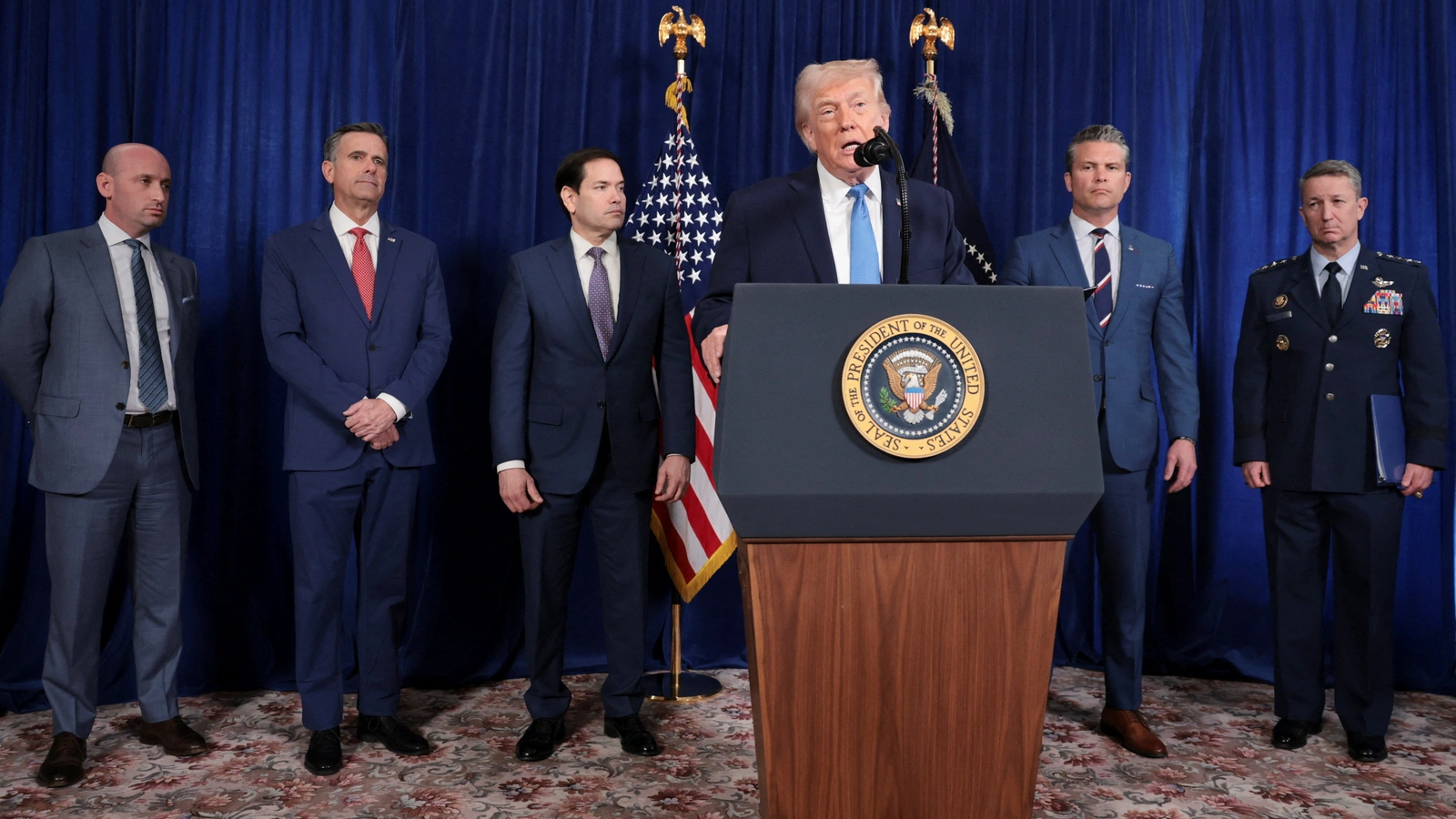
The decisive action reportedly taken by U.S. President Donald Trump on 4 January 2026 against Venezuela’s Nicolás Maduro regime marks a significant development in the evolving doctrine of international security, counter-narcotics enforcement, and extraterritorial accountability. Justified on grounds of alleged drug trafficking, systematic human rights abuses, and regional destabilization, the move reinforces a growing international principle:
State sovereignty can no longer shield regimes that tolerate terrorism, enable transnational crime, or export instability beyond their borders.
Although geographically centered in Latin America, the implications of this action extend well beyond the region. For states confronting cross-border terrorism and state-enabled militancy, the precedent strengthens the legitimacy of proactive responses against external sources of insecurity. In South and Central Asia, this relevance is particularly pronounced for Pakistan, which continues to face persistent threats from terrorist sanctuaries operating from Afghan territory and state-sponsored hybrid warfare by India.
These challenges should not be viewed solely through the lens of Pakistan’s national security. Afghanistan’s transformation into a permissive environment for internationally designated terrorist organizations represents a broader threat to regional and global security, with direct implications for China, Central Asia, the Middle East, and West- ern interests. The regrouping and operational freedom of such actors undermine international counterterrorism frameworks and facilitate transnational violence.
Similarly, India’s alleged use of covert operations, extraterritorial actions, and proxy-based destabilization, coupled with rising ideological extremism, reflects a troubling normalization of sub-conventional warfare. Such practices erode international law, weaken global counterterrorism cooperation, and risk setting dangerous precedents worldwide. In this context, the U.S. action against Venezuela serves as a strategic signal rather than an isolated event. It underscores the principle that states affected by externally sponsored terrorism have the right within international law, to seek accountability and adopt calibrated measures to counter persistent threats.
For Pakistan, this moment offers both legal validation and strategic opportunity to move beyond a predominantly defensive posture and pursue a proactive, multidimensional response.
The Rationale Behind Action Against the Maduro Regime
The U.S. justification for action against Nicolás Maduro rests on:
1. Alleged involvement in international drug trafficking networks, particularly those funneling narcotics into North America;
2. Gross and systematic human rights violations, including repression of political opponents and civil society;
3. Regional destabilization, with Venezuela becoming a hub for illicit financial flows and armed non-state actors.
Under international law, while state sovereignty remains a cornerstone of the global order, it is not absolute. The doctrine of self-defence, UN Charter, and the evolving norm of holding leaders individually accountable for transnational crimes increasingly inform state behaviour.
Maduro’s authoritarian governance, corruption, and alleged criminal entanglements have hollowed out Venezuelan institutions, triggered mass migration, and undermined regional security. His removal, proponents argue, could create space for democratic reform, improved governance, and regional stabilization.
Not an Isolated Case: Precedents of Extra-Territorial Action
The action against Venezuela does not exist in isolation. History offers multiple examples where states, particularly major powers have exercised extra-territorial force to neutralize threats deemed intolerable.
1. Operation Just Cause Panama (1989)
The U.S. invasion of Panama to remove Manuel Noriega, accused of drug trafficking and corruption, remains a seminal case. Despite international criticism, Noriega was captured, extradited, and tried in U.S. courts. Over time, the action came to be viewed as a successful intervention against a narco-state, reinforcing the idea that criminalized leadership can invite external action.
2. Abbottabad Raid Pakistan (2011) The U.S. operation that killed Osama bin Laden inside Pakistan was conducted without explicit host-state consent, justified by Washington as a necessity to eliminate a global terrorist threat. While controversial, the raid demonstrated that harbouring or being perceived to harbour terrorist leadership erodes claims to inviolable sovereignty.
3. Israeli Strikes in Syria
Israel has repeatedly targeted Iranian-backed militias and infra- structure inside Syria, citing existential threats and regional security imperatives. These actions, though contested diplomatically, have largely been tolerated due to the perceived legitimacy of Israel’s security concerns.
4. Turkish Operations in Syria and Iraq
Turkey’s military campaigns against Kurdish groups it designates as terrorist organizations illustrate another accepted pattern: preemptive and cross border self-defence when neighboring territories are used to launch attacks.
5. Indian Occupying Princely States after independence from British
At the time of India’s independence in 1947, the subcontinent comprised approximately 565 princely (or “native”) states operating under indirect British suzerainty. These entities enjoyed varying degrees of autonomy and, following British withdrawal, were legally entitled to accede to India, accede to Pakistan, or remain independent, consistent with principles of self-determination.
In practice, the integration of these states into the Indian Union was neither uniform nor fully voluntary. Of the 565 states, around 562 were absorbed through political pressure, coercive diplomacy, economic blockades, intelligence operations, and, in some cases, direct military intervention. In states such as Hyderabad, Junagadh, Jammu & Kashmir, Manipur, and later Sikkim, accession occurred under disputed circumstances, accompanied by prolonged military presence, suppression of dissent, and persistent allegations of human rights
violations. Following consolidation, several former princely states, most notably Jammu & Kashmir and regions across the northeast, experienced sustained militarization. International and local human rights organizations have documented allegations of extrajudicial killings, enforced disappearances, mass detentions, sexual violence, demographic manipulation, and severe restrictions on political freedoms, often under extraordinary laws such as the Armed Forces (Special Powers) Act (AFSPA).
These policies have prolonged instability and deepened cycles of alienation rather than reconciliation. Beyond its internal territories, India has been accused of exporting instability beyond its borders. Pakistan has repeatedly cited evidence of Indian state-sponsored terrorism, sabotage, and intelligence-linked militant activity, including support for proxy elements via Afghan territory. Similar allegations of covert interference and security pressure have emerged in Nepal, Sri Lanka, and Bangladesh, periodically straining regional relations. Consequently, India remains the only major South Asian state with persistent disputes with nearly all of its neighbors, including Pakistan, China, Nepal, Bangladesh, and Sri Lanka.
This pattern reflects a continuum of post-independence state conduct—from forceful territorial consolidation to the sustained use of coercive security and sub-conventional tools—raising serious concerns for regional stability and the credibility of international norms governing sovereignty and human rights.
Collectively, these cases demonstrate a clear trend: international practice increasingly recognizes security necessity over rigid interpretations of territorial sovereignty
Pakistan’s Security Reality: Terrorism from Afghan and India Soil
Pakistan’s situation is, in many respects, more compelling than several of the above examples. For over two decades, Pakistan has borne the human, economic, and strategic cost of terrorism, with tens of thousands of civilian and military casualties, due to full state sponsorship terrorism from India and fully proxy support through Afghanistan as well.
Afghanistan
The most persistent and lethal terrorist threat confronting Pakistan today emanates from Tehreek-e-Taliban Pakistan (TTP) and allied militant groups operating with relative impunity from Afghan territory.
Multiple assessments, including United Nations Analytical Support and Sanctions Monitoring Team reports, have acknowledged that:
• The Afghan Taliban leadership has maintained ideological, logistical, and operational ties with the TTP;
• Afghan soil is systematically used for training, recruitment, planning, command-and-control, and launch of cross-border terrorist attacks into Pakistan;
• Afghan authorities have failed or refused to take meaningful, verifiable action against these groups, despite repeated diplomatic engagements;
• India has allegedly provided financial, intelligence, and logistical support to Afghan-based elements hostile to Pakistan, further complicating the security environment.
Estimated Scale of Terrorist Attacks (2021–2025)
Based on Pakistani security briefings, UN monitoring reports, and global terrorism datasets, it is estimated that:
• Between 1,500 and 2,000 terrorist attacks of varying intensity (including suicide bombings, IED attacks, targeted killings, border as saults, and infrastructure sabotage) were carried out inside Pakistan over the past five years by TTP and affiliated groups operating from Afghan territory;
• These attacks resulted in over 3,000 fatalities and several thousand injuries, with Pakistani civilians, law enforcement personnel, and security forces bearing the brunt of the violence;
• A sharp escalation has been observed since August 2021, coinciding with the Taliban’s return to power in Kabul, indicating enhanced operational freedom and cross-border mobility for militant networks;
• The majority of attacks have been concentrated in Khyber Pakhtunkhwa and Balochistan, though high-profile incidents have also targeted major urban centers and strategic infrastructure.
This sustained campaign of violence demonstrates that Afghan territory is not merely a passive sanctuary but has functioned as an active launchpad for transnational terrorism.
The scale, consistency, and organization of these attacks fundamentally undermine Afghan claims of sovereignty-based immunity from accountability. Under established international norms, states that knowingly tolerate or fail to prevent the use of their territory for cross-border terrorism bear responsibility for the consequences, particularly when such threats pose clear risks to regional and international security.
This reality fundamentally undermines Afghan claims of sovereignty-based immunity from accountability
India
Indian BJP government’s approach to promoting Hinduism and its impact on minorities, particularly Muslims, is serious human right violation. Hindutva is an ideology that seeks to define Indian culture primarily in terms of Hindu values and identity, promoted most vocally by the Bharatiya Janata Party (BJP) and its ideological parent, the Rashtriya Swayamsevak Sangh (RSS).
Its core premise is that India is fundamentally a Hindu nation, not merely a secular state with equal protection for all religions. Critics argue this ideology inevitably sidelines all minorities especially Muslims leading to polarization and discrimination.
There have been reports of large number attacks on Muslims, Christians, and other minorities, often perpetrated by groups aligned with the BJP and with every passing day it has been increasing. It has been a serious concern about the marginalization of minority groups in India and promoting terrorism inside and outside India.
It is not a hidden fact what India is doing in Kashmir, other princely states, terrorist action in Pakistan, Canada, Australia, Sri Lanka, Bangladesh, Nepal, and Burma (Myanmar).Now is a time to be act in an offensive mode instead of defensive against India. Critics argue that the BJP’s policies are eroding India’s secular foundations and promoting a Hindu nationalist agenda by:
1. Discriminatory Policies and Laws Targeting Minorities.
2. Hate Speech, Social Polarization, and Violence.
3. Institutional Bias and Impunity.
4. Forced Deportations and Border Abuses.
5. Broader Patterns of Social Marginalization.
From an analytical perspective:
1. Policy shift since 2014 The BJP’s ascent correlates with legal and administrative changes that embed a majoritarian religious identity in governance.
2. Institutional impact Law enforcement and legal frameworks have shifted in ways that weaken protections against discrimination.
3. Cultural tensions Hate speech, political rhetoric, and social polarization have increased across public spheres, contributing to violence and distrust.
4. Human rights perspective International watchdogs categorize many actions as discriminatory, signaling concerns beyond bilateral narratives.
International Law and Pakistan’s Right to Self-Defence
Under UN Charter, a state has an inherent right to self-defence if subjected to an armed attack. Modern interpretations increasingly accept that non-state actors operating from foreign territory can trigger this right when the host state in this case the Taliban regime led by Maulana Umar is unwilling or unable to act.
Pakistan’s case meets this threshold clearly:
• Attacks by TTP constitute armed attacks;
• The Afghan Taliban regime has shown unwillingness to neutralize these groups;
• Diplomatic engagement and bilateral mechanisms have repeatedly failed.
• Change the defensive into offensive posture towards India Thus, Pakistan’s targeted, proportionate, and intelligence-driven actions against terrorist leadership or infrastructure would be consistent with international counter-terrorism norms.
The Precedent Set by Venezuela:
Strategic Implications for Pakistan Trump’s action against Maduro strengthens the argument that leaders who enable transnational crime or terrorism can be held accountable, regardless of geography.
For Pakistan, this precedent reinforces three critical points:
1. Moral Legitimacy
Pakistan’s actions would be defensive, not expansionist, aimed at protecting its population. 2. Legal Justification International practice increasingly supports action against nonstate threats sheltered by regimes.
3. Normative Consistency What is acceptable for major powers cannot be denied to states facing existential security threats.
Criticism of Pakistan for defending itself, while tolerating or endorsing similar actions elsewhere, reflects selective morality rather than principled internationalism.
Strategic Opportunity Time for Decisive Pakistani Leadership The current global environment presents a rare opportunity for Pakistan to reframe its counter-terrorism posture. The international system is increasingly pragmatic, prioritizing stability and threat neutralization over formalistic adherence to sovereignty claims. India is facing mounting internal strain as disputes between several state governments and the central authority intensify over fiscal autonomy, political centralisation, cultural identity, and internal security management. Opposition-ruled states including Kerala, Tamil Nadu, Punjab, Karnataka, and West Bengal have accused New Delhi of discriminatory financial practices, particularly in GST revenue distribution and borrowing constraints.
These frictions weaken state governance capacity, deepen political alienation, and limit India’s ability to maintain sustained external strategic focus. Political centralisation has further strained centre–state relations through the expanded role of centrally appointed governors and increased federal intrusion into constitutionally devolved domains. This trend has eroded democratic norms and exposed a widening gap between India’s external narrative and its internal governance realities. For Pakistan, such discord creates diplomatic space to challenge India’s claims of stability and democratic maturity in regional and international forums.
Identity-based tensions especially resistance to perceived Hindi imposition in southern and northeastern states have reinforced regional nationalism and diluted national cohesion. More critically, persistent ethnic and governance crises, most notably in Manipur, underscore serious shortcomings in internal security management. Alongside continued unrest in Kashmir and Maoist-affected regions, this internal overstretch constrains India’s strategic bandwidth. Collectively, India’s federal and internal security challenges constitute a structural vulnerability. For Pakistan, these trends underline the importance of calibrated diplomacy, strategic narrative engagement, and prudent security planning in an increasingly volatile regional environment. For over three decades, Pakistan has consistently maintained that India has pursued a sustained strategy of destabilisation, particularly in Balochistan, through intelligence operations and proxy networks, including elements operating from Afghan territory. These concerns have been raised at international forums with supporting evidence.
While Islamabad has exercised strategic restraint, the May 2025 conflict underscored Pakistan’s credible capabilities in air power, missile deterrence, and electronic warfare. In this evolving strategic context, Pakistan must move beyond a reactive posture and adopt a proactive, legally grounded approach strengthening deterrence, exposing hostile actions through diplomatic and legal channels, and employing coordinated state instruments to safeguard national security while preserving regional stability. Pakistani leadership must therefore:
• Think strategically, beyond reactive measures;
• Prepare diplomatically, ensuring legal and narrative clarity;
• Execute decisively, focusing on high-value terrorist targets rather than broad-based escalation.
Such action must be precise, intelligence-led, and framed within international law to avoid civilian harm and regional destabilization.
Pakistan–Bangladesh Mutual-Defence Pact
A Pakistan–Bangladesh mutual defence treaty modeled on the Pakistan–Saudi Strategic Mutual Defence Agreement (2025), would formalize security cooperation under the principle that an attack on one would be treated as an attack on both. While current engagements (early 2026) remain at the level of arms sales, joint training, and deeper military coordination, such as potential JF-17 acquisitions, the logical next step would be a binding defence pact, particularly if Bangladesh’s post-election leadership gravitates toward closer alignment with Islamabad, Riyadh, China and Ankara. The rationale lies in shared strategic interests: Pakistan would expand its regional footprint; Bangladesh would gain access to training, modern platforms, and defence technology; and both would seek to counter India’s growing regional dominance. For Pakistan, such a pact also fits into a broader shift from a purely defensive posture toward a more assertive strategy aimed at countering perceived Indian influence through Afghanistan, especially in Balochistan and KPK. However, deep historical sensitivities rooted in the 1971 war remain a political constraint in Dhaka making any formal alliance domestically delicate.
Addressing Likely International Criticism Predictably, Pakistan may face criticism from segments of the international community. However, precedent suggests that effective action followed by sustained stability ultimately reshapes narratives. Rather than condemning Pakistan, the international community should:
• Recognize Pakistan’s disproportionate sacrifices in the global war on terror;
• Acknowledge the Afghan Taliban’s role in perpetuating insecurity;
• Support regional counter-terrorism frameworks that prioritize outcomes over optics.
Implications for India, Assam,and the China Factor
A Pakistan–Bangladesh defence alliance would significantly alter India’s strategic calculus by creating the possibility of a two-front pressure environment. Pakistan on the west and Bangladesh on the east.
This is especially sensitive for India’s northeast, where Assam and the vulnerable Siliguri Corridor (the “Chicken’s Neck”) form the critical lifeline connecting the region to the mainland. Any formal alignment could intensify Indian military vigilance, infrastructure militarization, and border deployments in Assam, while also raising concerns about militant networks and cross-border security challenges. The situation becomes more favourable if Bangladesh aligns simultaneously with China through defence and economic frameworks linked to CPEC and the broader Belt and Road Initiative.
Such a China–Pakistan–Bangladesh strategic triangle would consolidate a China-centric power bloc in South Asia, exert coordinated diplomatic and military pressure on India’s eastern and western flanks, marginalize Indian connectivity projects, and potentially allow external powers indirect strategic access to the Indian northeast, thereby reshaping the regional security architecture and elevating Assam into a frontline geopolitical space
Conclusion
Trump’s action against Venezuela’s Maduro regime represents more than a regional intervention; it reflects the consolidation of an emerging international doctrine that rejects sovereignty as a shield for regimes that export instability, enable transnational crime, or tolerate terrorism. The message is clear: persistent threats emanating from state-controlled or state-tolerated spaces invite accountability. For Pakistan, this moment reinforces a hard reality, national security cannot be subordinated indefinitely to diplomatic caution when citizens’ lives are at stake. Pakistan’s right to self defence against terrorism originating from Afghan territory, India, and against state-enabled hybrid warfare, is firmly grounded in international law, supported by precedent, and reinforced by its sustained sacrifices in the global war on terror.
Decisive yet proportionate action would not represent escalation, but enforcement of long- standing international norms. By acting responsibly, legally, and with strategic clarity, Pakistan would not only safeguard its population but also contribute to restoring credibility to global counter terrorism frameworks. The strategic window is evident; the obligation to act now rests squarely with Pakistan’s leadership.