




Where Steel Thinks, and Survival Speaks
The battlefield no longer bleeds in silence
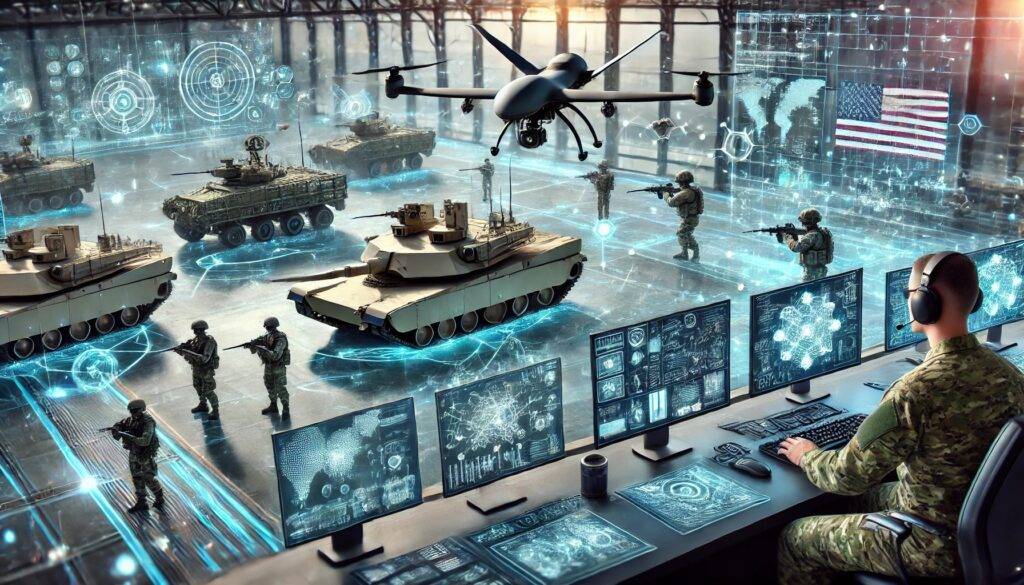
It breathes, a vast organism of steel and silicon, pulsing with its own rhythms. Engines churn like beating hearts. Drones drift overhead like circling neurons. From the churn of tank treads to the flicker of radar pulses, a strange awareness has begun to stir, one that does not simply see the enemy, but feels the state of its own body.
In this new theatre of war, endurance eclipses aggression. The first salvo no longer seals victory; it merely sets the tempo. The true winner is the side that refuses to collapse, that sustains its heart beat through exhaustion, disruption, and deception. Already, sensor fusion sharpens our eyes, letting missiles whisper through clouds and artillery find their mark in the dark. But precision alone is not survival. A tank that hits perfectly but dies of thirst on the road is a pyre, not a victory. A battalion that fights brilliantly but starves for fuel becomes a statistic in a war of attrition.
Now imagine a war machine that not only knows where its enemies lie, but senses its own pulse with uncanny clarity. It hears the rattle of a failing gearbox before the crew notices, smells the thinning fuel before a gauge flickers, and warns the commander not when defeat arrives, but when exhaustion begins to bloom.
This is the Self-Aware Battlefield, a fusion of combat intelligence and logistical consciousness. An ecosystem where every vehicle, every gun, every soldier becomes a data node; where AI orchestrates not just attacks but endurance, and where foresight replaces frantic reaction.
Lessons Written in Ash and Snow History whispers warnings to those who listen. No army, no matter how valiant survives without its lifelines.
In 1812, Napoleon’s Grande Armée marched into Russia, half a million strong, banners snapping in the cold wind. But it wasn’t cannon fire that devoured them. It was distance. It was hunger. Supply lines stretched across endless steppes, wagons mired in snow, soldiers gnawing leather when the bread ran out. By winter’s end, over 400,000 were gone, not to bullets, but to starvation and exposure. A century later, in World War II, the lesson reversed. The Allies didn’t just outfight the enemy, they outfed themselves. The Red Ball Express, a thundering artery of trucks across France, delivered over 400,000 tons of supplies in mere months. Fuel, ammo, food, all flowing like lifeblood. Victory marched on diesel and discipline.
Today, this old truth wears new armor. In the Russia-Ukraine war, tanks burn not for lack of courage but for lack of fuel. In 2022, Russian columns, long, serpentine, overconfident, crawled toward Kyiv, only to stall in the mud. Their convoys, rigid and centralized, became open wounds, easy prey for Ukrainian drones and ambushes. Engines coughed to silence. Vehicles were abandoned, soldiers stranded.
Across the line, Ukrainian brigades fought lean, adaptive. They decentralized depots, used civilian infrastructure to disguise supply, even summoned volunteer resupply by app. Commercial drones ferried ammunition over shelled roads; crowd-sourced logistics sustained units in the crucible of Mariupol. Innovation became armor.
In these battles, logistics wasn’t background, it was destiny. The message is unmistakable: In the next war, survival belongs to the force that feels its own hunger, and answers it before it starves.
The Birth of Awareness
Now, step into the nerve center of a modern brigade. Screens glow in a subterranean command post. Data streams like veins of light. On one map, red icons creep, enemy armor tracked by satellite and drone. On another, a mosaic of green, amber, and red pulses, the Resource Status Overlay. Each color is a heartbeat.
– Green a tank platoon, full-bellied and ready to strike.
– Amber an artillery battery, low on shells, its barrels glowing with fatigue.
– Red a supply convoy, halted by a mechanical fault, one axle away from catastrophe.
The commander watches the overlay like a doctor studying vitals. He doesn’t guess. He knows. Because each machine on the field has become a storyteller.
Tanks and IFVs whisper their truth
“Fuel 62%. Ammunition: 20 APFSDS, 12 HEAT, 1,000 coax rounds. Engine hours 1,240. Transmission temperature rising.”
Mobile artillery confides its pain
“Barrel wear at threshold. Accuracy decline imminent.Firing cadence unsustainable.”
Supply trucks hum their whereabouts and cargo
“Grid NL453214. 5,000 liters JP-8. 2 pallets 120mm shells. 1 container rations.”
The AI listens. It maps the heartbeat of the army, turning chaos into consciousness. Edge computing hums on the vehicles themselves, filtering noise, transmitting only what matters. Even under jamming, the system breathes. IoT sensors sniff for tampering, sense cold seeping into fuel, warn of degradation before it poisons the fight. In desert trials, M1 Abrams telemetry caught a whisper of sand in its lungs, grains in the air intake, and rerouted the unit before the engine seized. In field artillery drills, sensors on M777 howitzers tracked barrel heat and life cycles, warning crews to rest before their shells began to drift wide.
The battlefield is no longer blind. It sees outward, and inward.
Project Convergence: The Awakening
In 2025, under the sun-seared skies of Yuma, Arizona, the U.S. Army staged a glimpse of tomorrow, Project Convergence Capstone 5.
There, amidst autonomous carriers and drone sentinels, a new doctrine flexed its muscles. AI systems fused sensor data with logistical health in real time. When a frontline unit’s ammunition dipped below threshold, the system didn’t wait for a plea. It calculated, predicted, and dispatched.
Unmanned vessels slithered across contested waters, their hulls glinting under radar sweeps, changing course as enemy sensors flared. They delivered ammo not where it was needed last, but where it would be needed next.
Supply convoys adjusted paths mid-mission, slipping through safe corridors mapped by AI projections. Resupply times shrank by 25%. Commanders never faced an empty magazine. The future spoke through numbers, but it sang through rhythm: An army breathing in perfect tempo, never gasping for air.
Anatomy of Awareness Components of the Self-Aware Battlefield
Before the mind awakens, the body must be built.
Before the oracle can whisper, the nerves must learn to feel.
Across the scorched plain, a web of sensors hums like a second skin: drones spiraling through smokeveiled skies, their lenses glinting as they drink in every flicker of motion. Radar dishes swivel on groaning mounts, rippling invisible waves through the thick, electric air. Far above, satellites blink like distant stars, watching everything with cold, unblinking eyes. Below, engines throb like heartbeats. Tanks growl across shattered earth, each vibration feeding data into the invisible bloodstream. Telemetry surges through fiber and ether: fuel at 80%, ammo at 40%, coolant temperature rising; numbers that shimmer like lifeblood through digital veins. Convoys drag supply lines across the terrain, their manifests RFID tagged and tracked, every crate a heartbeat in the organism of war. This is no longer a field of battle, it is a living body, a network of senses and sinew, pulsing with awareness.
• Every drone is an eye.
• Every radar, a nerve.
• Every logistic route, a vein carrying sustenance to the front.
And at its core, a silent consciousness stirs; ready to orchestrate, to sustain, to endure.
Together, these elements fuse into a single sentient battlespace: aware, adaptive, and alive. With these elements synchronized, the AI assumes its dual role of the strategist and the sustainer; orchestrating combat rhythm and endurance alike.
Components Of The Self-Aware Battlefield
Here’s a concise description of each component shown in the infographic
1. Sensor Web
A mesh of drones, radars, satellites, and ground-based sensors that continuously scan the battlefield: detecting enemy movement, terrain changes, and environmental conditions in real time.
2. Real-Time Telemetry
Embedded sensors in vehicles and weapons systems stream live data: fuel levels, ammunition counts, engine health, and system diagnostics; giving commanders a heartbeat-level view of force readiness.
3. Predictive Logistics
AI-powered algorithms analyze consumption trends and operational tempo to forecast resupply needs: automatically dispatching convoys, drones, or autonomous vehicles before shortages occur.
4. AI Strategist
An intelligent decision engine that fuses combat data with logistical health, dynamically prioritizing units, forecasting risks, and advising commanders on when to fight, refit, or reposition for maximum endurance.
AI: Quartermaster and Oracle
The Combat Resource Manager, an AI born from war’s exhaustion has no rank, yet commands foresight no human can sustain. It sees formations not as icons on a map, but as organisms, each with stamina, fatigue, and appetite.
Its creed is simple: fight without breaking.
When Tank Platoon Alpha flashes 80% fuel, 40% shells, it calculates not just capacity but consequence. A nearer platoon may tempt with proximity, but the AI knows fatigue is a killer in disguise. Better a rested flank than a weary spear. It whispers:
“Deploy Bravo; let Alpha breathe.”
It distributes the war like a conductor balancing notes, no section overstretched, no rhythm faltering. Facing a fortress? The AI searches its digital arsenal, finds bunker-busters idle in a jet not yet tasked, and redirects them. Ammunition is not scattered; it’s sculpted. Freshness becomes a weapon. Waste becomes extinction.
The Pulse of Survival Prophecy in the Mud: Predictive Logistics
In war, the difference between readiness and ruin can be a single fuel line, a single hour. The selfaware battlefield does not wait for hunger. It prophesies it. Inside the AI’s core, algorithms hum like monks at prayer, absorbing patterns, battle tempo, terrain, consumption rates, weather drag, and enemy interference, weaving them into curves of depletion. Each curve is a whisper of tomorrow.
On the command screen, a pulse of amber glows near the front:
“Tank Company Bravo, 120mm stocks will dry in 45 minutes at current rate.”
A blinking prompt follows:
“Resupply vector: grid NL123456. Dispatch convoy now.”
No human finger has tapped a request. The need was seen before it was felt. Its prophecy, not guesswork, built from the scars of the past.
In the Russia-Ukraine war, such foresight could have rewritten the maps. Russian armor stalled not for lack of courage but for lack of diesel. Convoys, rigid and overexposed, became tombs in waiting. Had predictive analytics charted ambush zones, convoys might have rerouted through safer shadows, conserving lives and momentum.
In modern simulations, predictive logistics fuses real-time telemetry with historical burn rates. It senses terrain drag, how mud or incline devours fuel 30% faster. It hears the cold’s whisper on batteries. It reads the rhythm of firefights, projecting ammo depletion like a ticking clock.
Where once commanders reacted to red alerts, now the system foresees the fade.
• It dispatches drones before the silence.
• It sends fuel before the engines sputter.
• It moves with the grace of inevitability.
The same foresight extends to machine health. In the heat of battle, self-propelled howitzers like “Thunder-06” pound the earth with thunder. Every shot scours the barrel’s soul. The AI watches, counts each round, each surge of heat, and murmurs:
“120 shells fired this hour. Barrel lifespan: 30 rounds remaining. Redirect to cool sector.”
Such precision has precedent. Military aviation already lives by this creed, predictive maintenance keeps helicopters like the AH-64 Apache from falling from the sky, sensing vibration and heat anomalies before blades falter. Now, the ground learns to listen too.
Digital twins, virtual echoes of every tank and truck, simulate wear and tear before reality does. They conjure futures where every bolt’s fatigue is mapped, every bearing’s sigh predicted. But prophecy is only as true as its vision. Faulty sensors can lie. So the AI cross-examines, comparing inputs, rejecting the weak, trusting the chorus. In this war of attrition, knowledge becomes ammunition.
Every second foreseen is a lifetime bought.
Dynamic Prioritization and Staggered Commitment
The battlefield is never still: it writhes, shifts and breathes.
Frontlines blur like smoke in the wind, and what was vital a heartbeat ago turns hollow in the next. In this chaos, human instinct flails; emotion clings to the urgent, not the essential. But the AI sees through the haze; not in moments, but in patterns. To it, the war is a living mosaic, each tile pulsing with color: threat, need, fatigue, potential.
A drone swarm hums at the periphery, painting the sky with live intelligence; enemy armor stirs near a riverbank, heat signatures flaring crimson. Elsewhere, an infantry column crawls through the ruins, their stamina dropping like flickering bars on a screen.
• The AI weighs it all, not with haste, but precision. A whisper threads through its neural core:
• “Who must act now? Who must wait?”
• In its calculus, urgency is never loud; it’s measured.
• A strike team, though eager, is held in reserve; their energy banked for the counterpunch. • A fatigued platoon is rotated out before breaking, like a frayed tendon eased before snapping.
Another flank, under pressure, receives reinforcements; not because it screams loudest, but because its fall would shatter the rhythm.
To the AI, war is a pulse: throb, release, throb again. Every surge must be followed by a breath.
It commits forces not in waves of emotion but staggered pulses of purpose.
Like a maestro pacing crescendos, it times every move, one formation striking while another gathers strength, one supply chain surging as another pauses to replenish.
No element burns out; no spark dies unseen. In this choreography, the battlefield becomes an organism in harmony: resilient, responsive, self- healing.
Even retreat is a tool; not shame, but strategy. A unit falling back draws the enemy forward into the jaws of prepared artillery. Deception isn’t chaos; it’s geometry.
And through it all, the AI’s awareness hums: mapping, adjusting, breathing life into endurance.
Here, command is no longer a shout through static; it’s a whisper in the veins of the machine, a mind moving legions like sinew flexing beneath steel.
In the heart of this web, the AI is not a commander; it is a composer of survival, a mind that knows:
• when to strike
• when to hold still
• when to bleed, and
• when to heal.
The Rhythm of the Refit No warrior fights forever. Even steel must breathe.
In the old wars, exhaustion crept like frost, unnoticed until the guns clicked empty, the engines coughed black smoke, the men slumped behind walls of fire. Commanders drove until the gears cracked. There was no music, only noise.
Now, the AI orchestrates a rhythm, a heartbeat of fight and rest, of thrust and withdrawal. It becomes the choreographer of endurance.
The command net whispers orders crafted not from desperation, but design:
“Platoon Charlie, 25% fuel, 15% main gun ammo. Disengage to Rally Point Delta for top-up.
Platoon Alpha covers your pullback. ETA: 10 minutes.”
The units move like dancers in sequence; one breathes while another strikes. Engagement be-
comes a pulse, not a grind. In the silence of a lull, the AI finds windows of healing. It threads maintenance into the gaps between battles, keeping readiness above 80% across weeks of ceaseless grind. Like a medic tending wounds mid-fight, it preserves the army’s vitality.
This doctrine mirrors lessons carved in Eastern mud. In Ukraine, Russian units often burned bright and died fast, attrition outpacing refit. Their armored corps suffered up to 50% losses in some brigades, not from enemy fire alone but from neglect of rhythm. Ukrainian formations, by contrast, cycled troops, rotating at 50% depletion, sustaining defense through deliberate breathing.
Now, the AI refines that art. It watches not only machines but men. Wearables track crew fatigue, heart rates, micro-shakes, the tremor of overuse.
Ethical algorithms weigh human endurance against tactical gain, calling retreats before bravery becomes folly. The system’s purpose is not command, it’s conservation.
In the coming wars, generative AI will run thousands of simulated cycles, searching for perfection, the optimal window to pull back, refuel, rotate. Perhaps dusk, when enemy drones lose their eyes. Or the hour before dawn, when fatigue blinds even the bold.
• No more redlining to ruin.
• No more glory in burnout.
Victory now belongs to those who pace the storm.
A Concrete Scenario: Holding the Line through the Night
The battlefield shivers beneath a leaden sky. It is 0300 hours, cold, wind-sliced, the horizon faint with approaching dawn. Across the ridge, the 2nd Armored Brigade holds a fraying front.
They must endure twelve hours, long enough for division reinforcements to arrive.
Enemy probes test the line, armor rolling through the mist, their silhouettes black against the ashgray fields. The thunder grows. In the command shelter, light from the Resource Status Overlay flickers across faces drawn tight with fatigue.
Battalion 1-68 blinks amber:
• Fuel: 50%
• Main Gun Ammo: 40%
• Barrel wear: rising
• Projected endurance: 90 minutes
The AI pulses an alert:
“Battalion 1-68 at 40% combat efficiency. Risk of collapse in 1.5 hours.”
A cascade of recommendations blooms across the screen:
• Deploy Battalion 2-35 (85% fuel, 95% ammo) for counter-thrust.
• Dispatch resupply convoy: 2 autonomous trucks, ETA 40 minutes.
• Rotate Battery C-52: 90% barrel wear, shift salvo burden to A-22 (40% expended).
The commander breathes once, nods. Orders fly, encrypted FRAGOs (Fragmentary Orders – small updates), crisp and spare. Outside, the night stirs.
From beyond the ridge, unmanned resupply vehicles emerge, their lights dark, guided by GPS alternatives and inertial beacons immune to jamming. Overhead, drones with infrared eyes sweep for ambushes, plotting silent corridors through the fog.
At the front, 1-68 holds the line with fire and grit, shells roaring into the dark. The enemy presses, flashes, silhouettes, the scream of tracked armor, but the rotation unfolds like a dance. 2-35 rolls forward, engines throbbing, steel glinting wet in the mist.
The handoff is seamless. 1-68 withdraws under cover of smoke and suppressive fire, slipping through ravines toward the rally point. Fuel lines hiss, loaders clatter shells, crews gulp water as drones whirl overhead. Within two hours, they’re reborn, green on the overlay.
The enemy expected collapse. Instead, they meet fresh steel, guns eager, engines full, eyes clear.
Their assault shatters against endurance.
This is not luck. It’s logistical choreography, foresight given form.
And even as the enemy probe new flanks, the AI watches, measuring, predicting, preparing the next breath.
Should a cyber strike claw at the network, the system’s edge nodes act alone, each vehicle holding its fragment of foresight. Should comms die, decentralized AI carries the memory, guiding individual units to survive without the whole.
War, once chaos, now moves to a steady rhythm, a pulse that will not fade.
Shadows over the Circuit The Enemy Within: Cyber Shadows and Trust
Every prophecy casts a shadow.
The smarter the machine, the juicier the target.
Beneath the glow of predictive dashboards and humming data cores lies a battlefield unseen, the war inside the wires.
Hackers, saboteurs, and adversarial AIs prowl the mesh, seeking a single vulnerability to turn foresight into betrayal:
• A convoy’s route, rerouted by a poisoned algorithm, becomes a trap.
• A barrel flagged for replacement is marked “healthy” by hostile code, until it bursts mid- battle.
• A resupply drone, trusted by the overlay, suddenly vanishes, or worse, delivers to the enemy.
This is the Achilles’ heel of the self-aware battlefield: its brilliance is built upon faith in data.
In Ukraine, both sides learned this truth early. Russian EW units unleashed GPS jammers and malware storms that blinded drones and spoofed coordinates.
Ukrainian hackers, nimble and relentless, infiltrated logistic apps and disrupted truck convoys behind enemy lines. The message was clear, code can bleed.
So, the new doctrine demands resilience through redundancy:
• Air-gapped backups of mission-critical data.
• Edge AI nodes capable of autonomous decisions when the cloud falls silent.
• Zero-trust architecture, where no device, no signal, no packet is believed without proof.
The warfighter of tomorrow will carry not just a rifle but a firewall. And the AI must be paranoid by design, questioning every sensor reading, every friendly beacon, cross-checking against independent feeds like a detective with a map full of red strings.
The self-aware battlefield must doubt itself to survive.
Because one false prophecy can kill more than ignorance ever could.
Ethics in the Loop: Humanity’s Hand on the Wheel
When the machine sees further than the man, who commands the future?
In the quiet hours of war, when the overlay hums with perfect logic, a question rises:
Should it be allowed to decide who fights, who rests, who dies?
Commanders now wrestle with the temptation of automation. The AI offers optimal rotations, perfect resupply windows, casualty-minimizing maneuvers, yet its calculus is cold, stripped of empathy, ignorant of valor.
What if a platoon chooses to stand, to buy one more hour for a convoy to break through?
What if the machine calls retreat, and honor demands defiance?
Thus, doctrine carves the line in code:
Human in the loop.
• AI advises; humans decide.
• AI predicts; humans feel.
It is the moral contract of this new age that war even mechanized must remain anchored in conscience.
Warfighters become philosophers. Generals become ethicists.
The code itself becomes accountable, its logic transparent, auditable, free of bias or unseen command.
Nations codify this creed. NATO’s AI Principles of Use mandate reliability, traceability, and human oversight. Even as Project Maven and Palantir’s AI-driven intelligence cores integrate deep into operational planning, oversight remains the keystone.
Machines may map the chaos, but only a human heart may steer through it.
The Quantum Horizon Yet the future does not stop at algorithms.
Beyond today’s neural nets, quantum AI stirs, its circuits pulsing in probabilities, reading patterns no silicon mind can see.
In these entangled realms, logistics simulations unfold across billions of parallel realities, testing every convoy route, every refit rhythm, every cyber defense in the blink of an eye.
A commander may ask:
“If the enemy strikes here, in fog, with 60% fuel and 30% morale, how do we hold?”
And the quantum oracle will whisper:
“Here is your path. One in a million. But enough.”
Such power remakes warfare into a game of foresight, where every choice is informed by echoes of infinite futures.
But quantum eyes see deeper than comfort allows, into vulnerabilities unseen by man, into patterns of fear and fatigue written in human behavior.
The line between strategy and surveillance blurs. And again, ethics must stand guard.
The self-aware battlefield will need philosophers as well as coders.
Allies in the Mesh: NATO, Palantir, and the Coalition of Code
Across the Atlantic, alliances have adapted.
NATO’s Allied Command Transformation experiments with AI-led sustainment grids, interoperable across nations, translating logistics languages into a shared lexicon.
A Polish drone calls for fuel, a German convoy an
swers, a Turkish satellite validates route safety, all choreographed by a shared AI brain.
Palantir’s MetaConstellation feeds this orchestra, streams of satellite data and frontline telemetry woven into predictive tapestries, highlighting choke points and attrition trends before they bite.
It is no longer about who fields the most tanks, but who sees the furthest.
Coalition warfare becomes coalition intelligence, a mesh of minds, human and synthetic, bound by trust and timing. The warfighter of tomorrow fights not alone, but as a node in a living network, sustained not just by steel and blood, but by insight.
The Unbreakable Front
As the sun lifts over the battlefield, the rhythm holds.
• Convoys glide through corridors carved by foresight.
• Barrels swap before they burst.
• Crews rotate like lungs, exhaling exhaustion, inhaling resolve.
The front line, once brittle and bleeding, becomes a living thing, pulsing, adaptive, aware.
War has always been entropy, the slow unraveling of order under pressure. But now, with AI’s eyes, quantum’s vision, and human conscience, the unraveling can be delayed, maybe even reversed.
In the silence after the guns, the soldier stands beneath the rising light, knowing: It was not luck.
• It was preparedness that could feel.
• A mind that could foresee.
• A heart that chose when to act.
The future of warfare is not just firepower:
• It is awareness.
• It is endurance.
It is the pulse that never fades.
References
[1] CNA Corporation. (2023). Russian military logistics in the Ukraine war. https://www.cna.org/reports/2023/10/Russian-Military-Logistics-in-the-Ukraine-War.pdf
[2] DefenseScoop. (2025, April 14). NATO inks deal with Palantir for Maven AI system. https://defensescoop.com/2025/04/14/nato-palantir-maven-smart-system-contract/
[3] EY. (2025, May 5). Smart arsenal: The role of AI in military asset management. https://www.ey.com/en_us/insights/government-public-sector/the-role-of-ai-in-military-asset-management
[4] Finabel. (n.d.). The role of AI decision-making for land-based operations. https://finabel.org/wp- content/uploads/2025/01/67.-The-Role-of-AI-Decision-making-for-Land-based-Operations.pdf
[5] Finabel. (2025, July 17). Lines of sustainment: Evaluating Ukrainian military logistics in the Russo-Ukrainian war. https://finabel.org/lines-of-sustainment-evaluating-ukrainian-military-logistics-in-therusso-ukrainian-war/
[6] Military & Aerospace Electronics. (2025, May 12). Artificial intelligence (AI) in next-gen combat vehicle crew stations. https://www.militaryaerospace.com/computers/article/55289379/artificial-intellgence-ai-in-next-gen-combat- vehicle-crew-stations
[7] RAND Corporation. (2023). Russian logistics and sustainment failures in the Ukraine conflict. https://www.rand.org/pubs/research_reports/RRA2033-1.html
[8] Scandinavian Journal of Military Studies. (2022). Russian logistics in the Ukrainian war: Can operational failures be attributed to logistics? https://sjms.nu/articles/10.31374/sjms.158
[9] U.S. Army. (2023). Future of army logistics: Exploiting AI, overcoming challenges and charting the course ahead. https://www.army.mil/article/267692/future_of_army_logistics_exploiting_ai_overcoming_challenges_and_charting_th e_course_ahead
[10] U.S. Army. (2025a). Redefining logistics: Army demonstrates breakthrough in autonomous ship-to-shore resupply. https://www.army.mil/article/285029/redefining_logistics_army_demonstrates_breakthrough_in_autonomous_ship_to_ shore_resupply
[11] U.S. Army. (2025b). Project Convergence Capstone 5: The future warfare. https://www.facebook.com/USarmy/posts/project-convergence-capstone-5-the-future-warfare-pc-c5-will-pushthe- limits-of-/1085842490237757/
[12] U.S. Army War College. (2025). Integrating artificial intelligence and machine learning technologies into command. https://publications.armywarcollege.edu/News/Display/Article/4244312/integrating-artificial-intelligence-and-machine- learning-technologies-into-comm/
[13] U.S. Government Accountability Office. (2022). Actions needed to further implement predictive maintenance. https://www.gao.gov/products/gao-23-105556