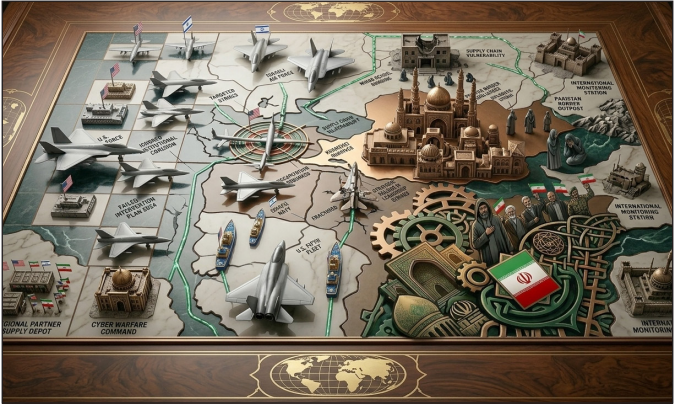

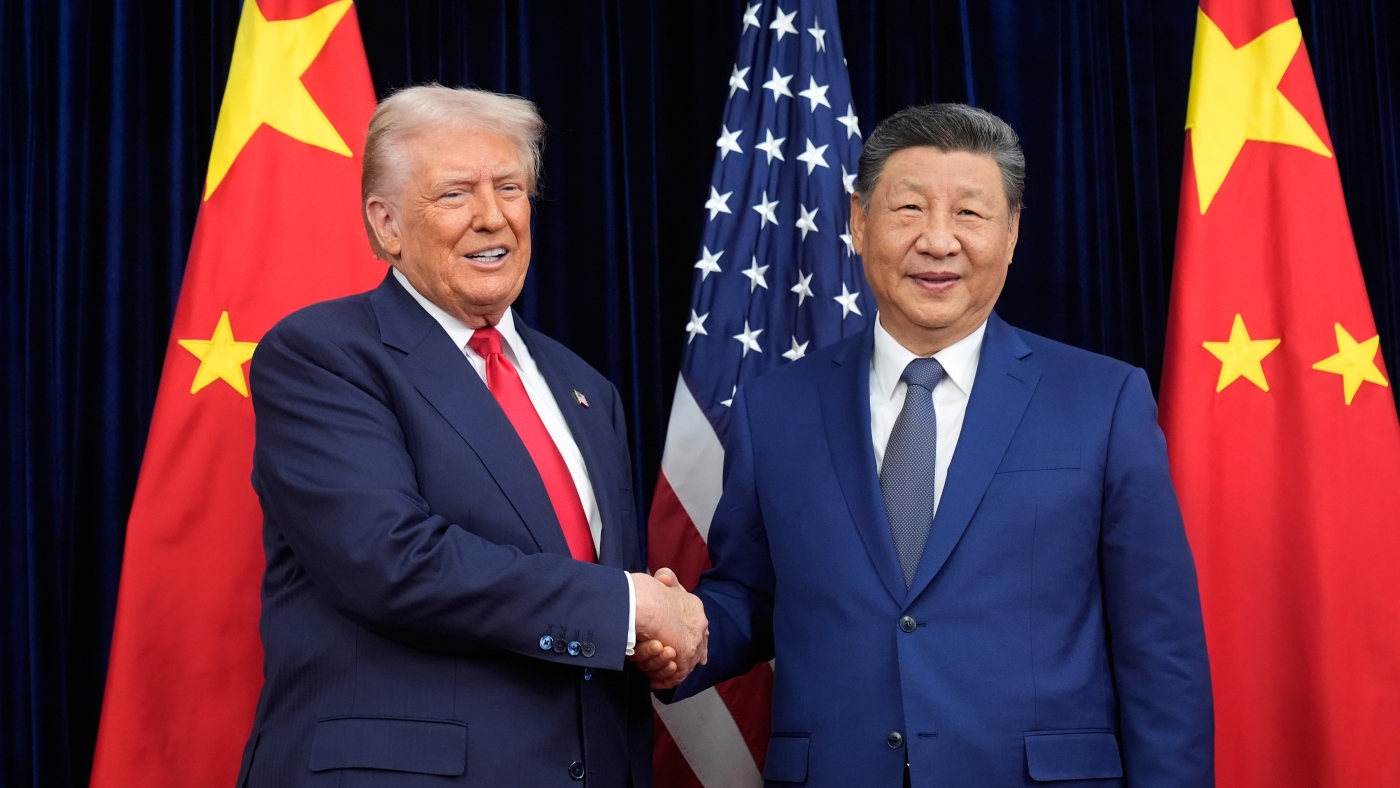
In the increasingly multipolar world, a “New World Order” with China and the U.S. competing for power is already underway. The US-China rivalry is described as a ‘new bipolarity,’ where the two countries are intensely competing across military, economic, ideological, and technological spheres. The world is witnessing a fundamental shift away from the bipolar US and Western hegemony towards a more complex and contested global power structure. In this era, the central battlegrounds are technology and climate change, where influential multipolar blocs led by the Global South are claiming power from the Global North.
The Global South Bloc is implementing its manifesto to alter the post-Cold War global order and seek freedom from long-standing external dominance through the expansion of the BRICS cooperation mechanism. This bloc explicitly aims to foster a more inclusive, multipolar international system that better represents and incorporates the voices and shared development challenges of the Global South. The bloc is increasingly characterized by China’s economic power and the strategic geopolitical roles of middle powers, including major energy producers and countries with crucial geographic advantages.
For the West, this shift is characterized by intensifying geo-economic fragmentation. It is compelling Western powers, notably the EU and the US, to adopt a policy of ‘de-risking’ rather than outright decoupling from rivals like China. This approach combines economic security with green and digital industry policies. At the core of this systemic change, technology has emerged as the principal lever of national power, dictating global competitiveness, with the intensifying Sino-American rivalry centered on dominance in strategic sectors such as Artificial Intelligence (AI) and semiconductors.
These global power shifts, however, are not limited to abstract economic or technological competition – they have direct implications for regional stability. The American withdrawal from Afghanistan exemplifies how global realignments intersect with local security dynamics, creating both challenges and responsibilities for neighboring states.
The security crisis, the non-inclusive Taliban regime, the lack of political leadership, economic hardships, and the refugee crisis in Afghanistan have directly affected Pakistan. A new wave of terrorism began after 2021, with Khyber Pakhtunkhwa (KPK) and Balochistan bearing the brunt of the escalation. According to an article published by the Institute for Strategic Studies, Research and Analysis (ISSRA), in the year 2022, there were 348 attacks in total, with 244 occurring in KPK and 104 in Balochistan. The situation worsened in 2023, rising to 514 attacks, including 344 in KPK and 170 in Balochistan.
By 2024, the numbers had climbed even further, reaching 423 attacks in KPK and 293 in Balochistan—a staggering total of 716 incidents. The year-on-year increase in terrorist attacks and casualties in Pakistan reflects a worsening security situation, with 2023 seeing over a 50% rise compared to 2022. The loss of around 2,000 security personnel since 2022 emphasizes the human cost, as violence-related fatalities rose from 980 in 2022 to 1,524 in 2023 and 1,612 in 2024, along with rising security forces’ deaths in 2025.
This surge in terrorism in Pakistan is an indication of another war against terrorism, especially as India has strategically increased its influence in Afghanistan over the last decade. India has not even hosted more than 15,000 Afghan refugees, whereas Iran and Pakistan have hosted 5.2 million refugees; Iran holds 3.47 million, and Pakistan hosts 1.75 million.
For almost 4 decades, Pakistan has sheltered and fed the Afghan people and shared limited resources in education, health, and economic assistance. However, the current Taliban government seems to have forgotten this generosity, and its ongoing animosity towards Pakistan is evident. They have offered safe havens to Tehrik-i-Taliban Pakistan (TTP) for launching their attacks. Another threat to Pakistan’s security landscape is India’s expanding role in Afghanistan. With more than US$3 billion invested across 400 development projects, India has entrenched itself as a long-term stakeholder in Kabul, using its presence to counter terrorism threats to its own territory, limit Pakistan’s influence, and curb China’s expansion in the region. The presence of the Foreign Minister of Afghanistan for a weeklong visit to India during the border clashes between Pakistan and Afghanistan strongly indicates India’s control. The joint statement by Amir Khan Muttaqi and Dr Subrahmanyam Jaishankar proves a striking hypocrisy in New Delhi’s Afghanistan policy.
Despite repeatedly raising concerns at the UN, most recently on 6 March 2024, about terrorism, inclusive governance, and the rights of women, children, and minorities, none of these issues appeared in the statement. Instead, India announced the reopening of its embassy in Kabul and shifted to a purely transactional agenda, focusing on trade, mining opportunities for Indian companies, connectivity through the India–Afghanistan air freight corridor, and cooperation on hydroelectric and humanitarian projects, including a 30-bed hospital in Kabul and five maternity clinics in Paktika, Khost, and Paktia. For Pakistan, this increasing India–Afghanistan alignment is deeply detrimental: it undermines border security, complicates counterterrorism operations, accelerates proxy dynamics, and creates an unfavourable geopolitical environment on its western flank. This growing Indian influence must also be viewed within a wider strategic realignment.
As the Sino-US trade war intensifies, Washington continues to elevate India as its principal regional counterweight, while China accelerates its ambitious Belt and Road Initiative (BRI) across Eurasia. Beijing, recognizing the vacuum in post-2021 Afghanistan, has significantly expanded its footprint in Afghanistan, leveraging infrastructure, mineral, and connectivity to reshape the balance of power. Beijing’s deeper engagement is driven by Afghanistan’s estimated $3 trillion mineral wealth, particularly lithium, copper, and rare earths, vital for China’s high-tech industries, from electric vehicles to AI hardware. Since 2021, Chinese firms have secured more than $6.5 billion in extraction deals, with a further $10 billion in lithium contracts under negotiation, while Beijing signals political support in return for Taliban assurances on security non-interference.
The interests of China in Afghanistan are also visible in the construction of the Wakhan Corridor, a determined road-and-rail linkage that will connect China directly to Badakhshan. With gravel work on the 120-kilometre Grand Pamir Road nearing completion, the Taliban’s ministries insist the project is proceeding without delay. Economic experts argue that this corridor will fundamentally alter Afghanistan’s external relations by enabling direct exports to China and reducing Kabul’s dependence on Pakistani transit routes. As China increasingly pursues its own Afghan policy, bypassing Gwadar, opting for routes via Bandar Abbas and Central Asia, and engaging Kabul independently, Islamabad must rethink its strategic alliances for security and stability.
With all the discussions, the message for Pakistan is unmistakable: economic centrality is not guaranteed. In this multipolar era, national interests must coincide with regional development. Pakistan’s economic growth depends on a stable western border, assertive counterterrorism, and the reliable functioning of Gwadar and Karachi ports.
A stable and secure Pakistan can assert to China that Pakistan is indispensable to China’s regional vision and prevent long-term trade diversion toward less feasible Central Asian routes. For Beijing, securing CPEC—whose anchor is the crown jewel of Gwadar, is critical for sustaining the shortest overland-maritime link from Western China to global markets. If instability persists along Pakistan’s western frontier, China may feel compelled to expand the Wakhan and Central Asian corridors, not because they are efficient, but because they appear politically safer. Despite all goodwill and hardships, hosting Afghan refugees and providing a free trade corridor to landlocked Afghanistan, Pakistan now faces a new wave of terrorism along its western border, shaking Islamabad.
Pakistan’s sovereign national security takes precedence over China’s strategic interests in Afghanistan’s Wakhan Corridor. Pakistan has every sovereign right to defend its territory and citizens against cross-border aggression. With terrorist attacks rising—particularly in Khyber Pakhtunkhwa—Islamabad can no longer rely on goodwill or verbal promises from Kabul. A firm military posture is now essential to compel the Taliban to negotiate seriously. Pakistan must make it unmistakably clear that continued TTP activity operating from Afghan soil will invite precise, targeted responses inside Afghanistan. This calibrated hard-power approach is aimed not at escalation for its own sake, but at forcing the Taliban to take concrete steps: formally recognising the Durand Line as the international border, dismantling TTP sanctuaries, and halting all anti-Pakistan militancy emanating from their territory.
Pakistan has already paid an enormous price in its war against terrorism – over 80,000 lives and billions of dollars. It cannot and must not become the battleground of yet another proxy war. International actors must recognise that Pakistan’s red lines are rooted in its national security, not regional power politics. A stable Afghanistan is crucial for regional development, but stability cannot be built on Pakistan’s blood. Only when Kabul acts decisively against terrorism can a genuine path to peace and cooperation emerge. The soft power and humanitarian approach will only come into play after the Taliban government realizes and admits the military superiority of Pakistan.