


Introduction
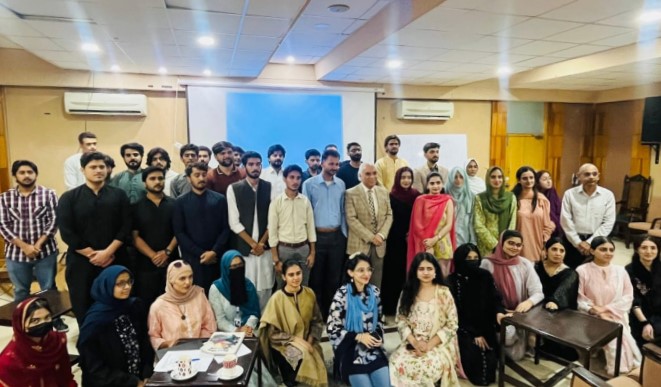
Assalam-o-Alaikum and good morning everyone. It is always a great pleasure to interact with the young generation of Pakistan, who are the future leaders of our beautiful country. Today we will talk about something that is not only important for us as individuals, but for our society and our country. I want to talk to you about a subject that has the power to transform our society — the Pathfinder Interfaith Harmony Initiative. This is not just another project. Our goal is simple: to build bridges of understanding, respect, and unity among people of different faiths in Pakistan.
It is a vision for a Pakistan where people of all faiths, backgrounds, and cultures can live together in peace and respect. Why? Because no nation can progress if its people are divided. Unity is the foundation of strength. The Importance of Interfaith Harmony for Pakistani Society is profound and multifaceted. In a country founded on the principle of a homeland for Muslims but with a constitution that guarantees equal rights to all citizens, interfaith harmony is not just a moral ideal but a practical necessity for national survival and progress.
What is Interfaith Harmony?
When you hear the word harmony, what comes to your mind? Let’s take a minute — share one word with me, peace, unity, respect, friendship. Harmony means different things, but all of them lead to one idea: living together with respect. When we say interfaith harmony, we mean respect, dialogue, and cooperation between people of different religions. It does not mean changing anyone’s faith. It means understanding differences, celebrating diversity, and focusing on what unites us rather than what divides us.
Upholding the Foundational Ideology and Constitution
Pakistan was created to provide a safe haven for Muslims of the subcontinent. However, its founder, Muhammad Ali Jinnah, explicitly envisioned a pluralistic state. In his famous speech of August 11, 1947, he said:
“You are free; you are free to go to your temples, you are free to go to your mosques or to any other place of worship in this State of Pakistan. You may belong to any religion or caste or creed—that has nothing to do with the business of the State.”
Promoting interfaith harmony is, therefore, a direct fulfillment of Jinnah’s vision and a reinforcement of the constitutional guarantees of equal rights and freedom of religion for all citizens.
Pakistan’s Diversity – A Hidden Strength
Pakistan is a country of beautiful diversity. We have Muslims from different sects, Christians, Hindus, Sikhs, Parsis, Kalash, and Buddhists. If we look at this diversity as a weakness, we will always be divided. But if we look at it as a strength, we can turn Pakistan into a powerful, united nation. Remember, a garden with only one flower is not a bouquet. True beauty is when many flowers bloom together as a big beautiful garden.
The Challenges We Face
Sadly, intolerance and misunderstandings sometimes create unnecessary tensions. We see divisions on the basis of sects, religion, or even language. When we don’t try to understand others, we build walls instead of bridges. That weakens our unity. These divisions weaken us, and they stop us from progressing. They damage Pakistan’s image in the world. And they go against the teachings of Islam, which clearly calls for justice, respect, and kindness.
Pathfinder Interfaith Harmony Initiative – What It Does
The Pathfinder Initiative is about action, not just talk. This initiative is about dialogue, respect, and working together. Pathfinder creates platforms like seminars, workshops, cultural exchanges, and youth-led community service projects. The goal is not to change anyone’s faith, but to promote understanding. Students like you are invited to take part, to lead discussions, to create art, to write, to volunteer. The aim is to build bridges of understanding. It is about showing the world that Pakistan’s youth believe in unity, respect, and peace.
Why It Matters for Pakistan National Security and Social Cohesion
This is arguably the most pressing reason. A society divided along religious lines is inherently unstable.
● Reduction in Sectarian and Communal Violence: Intolerance towards religious minorities often fuels violence, leading to loss of life, property, and a pervasive sense of insecurity. Interfaith dialogue and understanding can de-escalate tensions and build resilience against extremist narratives.
● Countering Extremism: Violent extremist groups thrive in environments of religious intolerance and ignorance. By promoting harmony, the state and society can rob these groups of their recruiting grounds and build a united front against them.
● Strengthening National Unity: When citizens of all faiths feel they are valued and protected members of the society, their loyalty to the state strengthens. This creates a more unified and resilient nation against both internal and external threats.
Economic Development and Prosperity
Social stability is a prerequisite for economic growth.
● Investor Confidence: No investor, domestic or international, wants to put their money into a country plagued by religious strife and instability. Interfaith harmony creates a predictable and peaceful environment conducive to business and investment.
● Human Capital Development: Persecution or discrimination can lead to the migration of skilled individuals from minority communities (a “brain drain”). A harmonious society retains all its talent, allowing every citizen to contribute to the nation’s economy.
● Tourism: Pakistan possesses immense potential for religious tourism (e.g., Sikh holy sites in Nankana Sahib, Hindu temples in Katas Raj). This potential can only be realized in an atmosphere of safety and welcome for international pilgrims.
Upholding a Positive International Image
Pakistan’s international standing is significantly impacted by its record on human rights and treatment of minorities.
● Soft Power and Diplomacy: A nation known for its religious tolerance and pluralism earns respect on the global stage. This positive image can translate into stronger diplomatic ties and greater influence.
● Combatting Negative Stereotypes: Promoting interfaith harmony actively counters the global narrative that often unfairly labels Pakistan as an intolerant society, showcasing its diverse and inclusive potential.
Enriching Cultural and Social Fabric
Pakistan is not a monolith; it is a tapestry of diverse cultures and religions that have coexisted for centuries.
● Preserving Heritage: Minorities are custodians of unique cultural traditions, languages, festivals, and architectural heritage (like ancient temples and churches). Their full participation enriches the national culture.
● Shared Values: Most religions preached in Pakistan—Islam, Christianity, Hinduism, Sikhism—share core values of peace, compassion, justice, and charity. Focusing on these commonalities builds bridges and fosters a shared sense of morality and community.
● Moral and Ethical Imperative: Beyond all pragmatic reasons, there is a fundamental ethical duty. As a majority-Muslim nation, Islamic teachings themselves emphasize justice and kindness towards people of other faiths. The Quran clearly states:
Surah Al-Mayida
“There shall be no compulsion in [acceptance of] the religion.” (2:256)
Surah Yunus 10:99
English: And had your Lord willed, those on earth would have believed — all of them entirely. Then, [O Muhammad], would you compel the people in order that they become believers?
Roman Urdu: Aur agar tumhara Rab chahta to zameen ke tamam log iman le aatein. Kya phir tum logon ko majboor karoge taake woh iman laayen?
Explanation: God emphasizes that faith is by divine will and human choice — the Prophet’s role is not to force belief.
Surah Al-Kafirun 109:6
English: For you is your religion, and for me is my religion.
Roman Urdu: Tumhara mazhab tumhara, aur mera mazhab mera.
Explanation: A concise statement of peaceful coexistence and religious autonomy.
Challenges and the Way Forward
Achieving interfaith harmony is challenging due to deeply entrenched prejudices, misuse of blasphemy laws, and extremist ideologies.
Key steps to promote it include:
● Educational Reforms: Revising school curricula to promote tolerance and highlight the contributions of religious minorities.
● Legal Protection: Ensuring the strict and impartial implementation of laws that protect minorities and their places of worship.
● Political Will: Leadership at all levels must consistently and unequivocally condemn bigotry and violence against minorities.
● Grassroots Initiatives: Encouraging interfaith dialogues, community projects, and cultural exchanges that bring people of different faiths together.
● Responsible Media: The media must play a constructive role by promoting stories of harmony and countering hate speech.
Pathfinder’s Role
Pathfinder Group is fully committed to supporting this vision. It provides leadership training, mentorship, and dialogue platforms where students can voice their ideas. Pathfinder believes that if young people learn to live in harmony today with respect and dialogue, Pakistan will be stronger tomorrow.
Call to Action
You are not just students, you are the future leaders of Pakistan. Start small. Respect your classmates. Listen before judging. Share positive messages on social media for unity and harmony, not hate. Volunteer for interfaith activities. Each small step builds the Pakistan we all dream of. You should be the catalyst for very positive change and improvement of our society and country.
Conclusion
For Pakistan, interfaith harmony is not a luxury or a Western import. It is essential for honoring its founding principles, ensuring its national security, driving its economic development, and fulfilling its moral and religious duties. A peaceful, prosperous, and truly strong Pakistan is one where every citizen, irrespective of their faith, can live without fear and contribute to the nation’s journey forward. If we choose harmony over hate, respect over rejection, and dialogue over division, we will not just dream of a better Pakistan, we will build it together and make it rise. Together, we can make this dream a reality.