


A Managerial and Cultural Learning Journey (Sponsored by PATHFINDER GROUP)
Introduction
Globalisation has transformed the dynamics of business and management education. For management students, learning is no longer confined to textbooks and classroom discussions it requires practical exposure, intercultural competence, and adaptability to diverse work environments. As an MBA student at Quaid-e-Azam University, Islamabad, I recognised early on the importance of integrating academic theory with practical, real-world experiences that could prepare me for a global career.
One remarkable opportunity that bridged this gap for me came through AIESEC, a globally recognised, UN-affiliated student organisation that provides international internships and leadership development programs. AIESEC not only connects students with professional opportunities abroad but also nurtures their leadership and cultural understanding. Through this platform, I successfully secured an internship at Star Anakulu (Star Kindergarten), located in Ankara, Türkiye.
My internship experience was more than just a professional engagement. It became a journey of management learning, cultural adaptation, and personal growth. I had the chance to practice management skills directly relevant to my MBA curriculum, ranging from communication strategies to organisational behaviour. I also gained exposure to working with children, staff, and even handling special students an opportunity that strengthened my interpersonal skills, patience, and leadership qualities.
This article presents a documented reflection on my exchange internship. It narrates the process of securing the opportunity, outlines my responsibilities at Star Anakulu, examines the cultural learning I gained in Türkiye, and highlights how the entire experience connects to my MBA studies and future career development.
Securing the Internship through AIESEC
The first step toward this life-changing experience was applying through AIESEC in Pakistan, which connects local students with international opportunities. The process was structured and competitive, requiring me to present my skills, motivation, and readiness for an international experience.
As an MBA student, I emphasised my interest in management exposure and my strong interpersonal communication skills. Since AIESEC internships are tailored to individual skills and aspirations, I was matched with Star Anakulu in Ankara, where English-speaking interns were needed to support staff, engage with children, and assist in various management-related tasks.
The application process itself was a learning experience. It required me to showcase my resume, leadership potential, and adaptability, which are vital components in both the academic and professional world. The interviews and discussions also helped me reflect on my strengths, such as my ability to communicate in English, my interest in working across cultures, and my aspiration to grow as a global manager.
Upon receiving confirmation, I prepared for my journey to Türkiye, motivated by both professional curiosity and cultural excitement. The fact that AIESEC is an UN-affiliated platform gave me confidence in the credibility of the program. I knew this internship would not only enrich my professional profile but also allow me to become a cultural ambassador of Pakistan in another country.
Experience at Star Anaokulu (Star Kindergarten)
My arrival in Ankara was followed by a warm welcome from both AIESEC in Ankara and the team at Star Anaokulu. The kindergarten was a dynamic environment where staff members, children, and sometimes parents interacted daily. Despite being primarily an educational institution, the workplace had many managerial and organisational aspects that resonated with my MBA studies.
Responsibilities and Tasks
My role included:
1. English Communication Support
I interacted with staff and students using English, helping them improve their language skills while enhancing cross-cultural communication.
2. Classroom and Student Management
I helped organise student activities, particularly assisting with special students who required extra attention, ensuring inclusivity and smooth participation.
3. Administrative Support
I contributed to managing schedules, coordinating with staff, and maintaining organised workflows in the kindergarten.
4. Investment Communication Role
Interestingly, I was also involved in communication tasks related to investment dealings, where my English proficiency was a valuable asset in connecting with external stakeholders.
5. Teamwork and Collaboration
I worked closely with the staff, learning how organisational culture in Türkiye functioned, and comparing it with management theories I had studied in my MBA program.
Key Learnings from the Internship
Organisational Management:
The kindergarten, though educational, operated like any small organisation, requiring planning, coordination, and leadership.
Special Student Management:
Dealing with children requiring extra care taught me empathy, patience, and adaptive leadership.
Communication as a Management Tool:
My ability to communicate in English was not just about language it became a managerial skill that helped build relationships, resolve misunderstandings, and foster collaboration.
Practical HR Management:
Managing staff cooperation, resolving minor conflicts, and maintaining motivation reflected HR concepts from my MBA.
This practical exposure enriched my theoretical understanding, proving that management skills are universal and can be applied even outside conventional corporate offices.
Cultural Exchange and Learning in Türkiye
One of the most enriching aspects of my internship was cultural immersion. Living in Ankara, Türkiye’s capital city, gave me a first-hand experience of Turkish traditions, lifestyle, and values.
Global Village (Cultural Exchange)
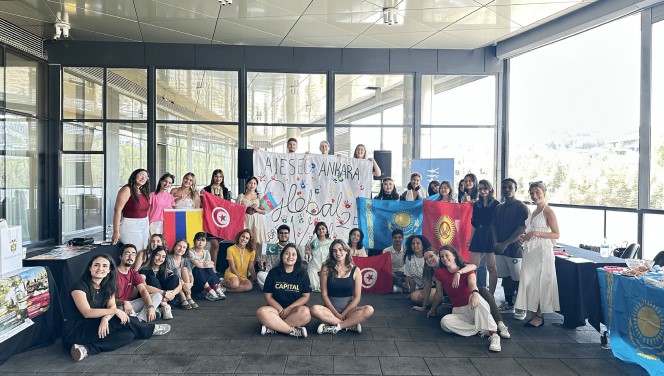
During my internship at Star Kindergarten in Ankara, Turkey, through the exchange program organised by AIESEC, I had the privilege of participating in a highly enriching cultural event. The program was attended by interns and students from 49 different countries, each of whom represented their national culture through traditional clothing, flags, music, and other cultural expressions. The event served as a platform to foster intercultural dialogue, global understanding, and mutual respect among young people from diverse backgrounds.
As a representative of Pakistan, I proudly showcased my heritage by wearing traditional Pakistani dress and carrying the national flag. My attire reflected the rich cultural values of Pakistan, which are deeply rooted in history, tradition, and diversity. The Pakistani dress stood out as a symbol of modesty, elegance, and identity, and it received great admiration from participants who were eager to learn more about my country. The green and white colours of the Pakistani flag further strengthened the representation, symbolising peace, harmony, and progress. Many participants approached me to ask questions about Pakistan’s traditions, festivals, food, and hospitality, which gave me an opportunity to present a positive image of my homeland and highlight the cultural richness it has to offer.
The event was not only about cultural display but also about creating opportunities for meaningful engagement. It encouraged participants to reflect on the idea of unity in diversity, as each country shared its unique traditions while celebrating common values of respect and cooperation. The atmosphere was vibrant, filled with music, performances, and cultural showcases, creating a sense of global community under one roof.
Another remarkable aspect of the event was the participation of senior representatives from the United Nations (UN), who delivered briefings on future opportunities for youth. They guided us on how to explore scholarships, international programs, and career advancement opportunities through UN-supported initiatives. Their insights were particularly valuable for young students like myself, as they highlighted the importance of cross-cultural competencies, leadership, and global networking in shaping successful professional careers.
This experience was deeply transformative for me. It not only allowed me to strengthen my sense of national pride by representing Pakistani culture in Turkey but also enhanced my global outlook by interacting with people from nearly fifty different countries. The exposure to such cultural diversity taught me the significance of tolerance, empathy, and collaboration in an interconnected world. Moreover, the encouragement from UN officials to pursue international opportunities further motivated me to aim higher in my academic and professional journey.
In conclusion, the cultural event in Ankara was more than just a celebration of traditions; it was a global learning platform that connected young leaders across continents. By proudly representing Pakistan through my traditional dress and flag, I contributed to cultural exchange while also gaining invaluable experiences and insights for my future career. This opportunity not only enriched my internship but also broadened my vision as an MBA student preparing to play an active role in international platforms.
Adapting to a New Culture
Initially, I faced challenges differences in language, food habits, and daily routines. However, with time, I adapted by:
● Learning basic Turkish phrases to ease communication.
● Participating in cultural events and local gatherings.
● Respecting Turkish customs while sharing aspects of Pakistani culture.
Cultural Similarities and Differences
As a Pakistani, I found several similarities with Turkish culture, especially in terms of hospitality, family values, and respect for traditions. Both cultures share a strong sense of community and generosity. We are also connected through a rich Islamic history, which influences our customs, festivals, and social practices. At the same time, I noticed differences in work culture, time management, and communication styles, which broadened my cross-cultural awareness.
Interpersonal and Cross-Cultural Skills
By interacting daily with Turkish colleagues, students, and locals, I developed:
● Interpersonal skills: learning to listen actively, empathise, and communicate effectively across cultural boundaries.
● Adaptability: adjusting to new environments and practices while maintaining professionalism.
● Cultural intelligence: the ability to interpret cultural nuances and integrate them into my interactions.
These skills are crucial for any manager in today’s globalised business environment.
Connection to MBA Studies
The internship was not isolated from my academic journey. In fact, it served as a practical laboratory where I applied many concepts I learned in my MBA program at Quaid-e-Azam University.
Strategic Management: Observing how the kindergarten planned activities, managed resources, and engaged stakeholders was a small-scale reflection of corporate strategic planning.
Human Resource Management: Coordinating with staff, resolving challenges, and motivating colleagues directly related to HR theories studied in my coursework.
Organisational Behaviour: Experiencing different leadership styles and team dynamics gave me insights into organisational culture.
Cross-Cultural Management: Adapting to Turkish culture while maintaining my identity as a Pakistani directly applied concepts of global management.
Communication and Negotiation: Acting as a communicator in investment-related dealings demonstrated how managerial communication works in practice.
The ability to connect theory with practice not only reinforced my academic learning but also prepared me for future professional challenges.
Career Development and Future Outlook
This internship has had a profound impact on my career aspirations. As an MBA student, my ultimate goal is to work in managerial and leadership roles where I can contribute to organisational growth. The experience in Ankara has strengthened my career profile in several ways:
1. Global Exposure
Employers value candidates with international experience, as it demonstrates adaptability and cultural intelligence.
2. Practical Skills
From communication to conflict resolution, the internship sharpened my practical managerial skills.
3. Networking
I established valuable contacts in Türkiye, expanding my professional network beyond Pakistan.
4. Leadership Readiness
By taking initiative and managing responsibilities independently, I demonstrated readiness for leadership roles.
The experience also inspired me to consider international career opportunities in education management, human resources, and global business communication.
Living like a Local – A Cultural Exchange Experience in Türkiye
My internship experience in Ankara, Türkiye, extended far beyond professional learning it became a deeply transformative cultural journey that reshaped the way I view the world, communication, and the concept of global citizenship. Living in a new country as part of an AIESEC exchange meant not only working in a professional setting but also stepping completely outside my comfort zone to live, travel, and interact like a true local. This immersive experience allowed me to appreciate the subtleties of Turkish culture, their community-oriented lifestyle, and the intricate balance between tradition and modernity that defines life in Türkiye.
When I first arrived in Ankara, the sights, sounds, and language felt unfamiliar. However, with time and effort, these differences evolved into sources of learning and inspiration. I decided early on that I would not live as a tourist; I wanted to live as a local to understand the everyday rhythms of Turkish life, their values, their communication styles, and their social norms. This decision became one of the most rewarding aspects of my internship journey.
One of the most profound cultural experiences was navigating Ankara’s public transport system. Initially, the idea of using trams, metros, and buses in a completely new city without knowing the language felt intimidating. Yet, it became one of my greatest teachers. Each day as I traveled to work, I observed how people interacted how they greeted each other, how they respected queues, and how even in busy urban environments, there was a sense of collective responsibility. Turkish public transport is not just a mode of commuting; it is a social microcosm that reflects their discipline, hospitality, and civic sense. Using it daily helped me develop independence, punctuality, and the ability to adapt quickly in unfamiliar situations. It taught me the importance of patience and observation skills that are equally valuable in business and management.
Living independently in Ankara also taught me how to manage daily life in a culturally and linguistically different environment. From grocery shopping to ordering meals, every interaction was a learning opportunity. Turkish culture places great emphasis on hospitality and respect, and I was often moved by the kindness of strangers who went out of their way to help me find directions or understand instructions. These gestures reminded me that communication goes far beyond language it’s about empathy, openness, and a willingness to connect. As a management student, this realisation strengthened my belief that successful leadership is grounded in emotional intelligence and human connection.
I also learned the art of adaptability through food and lifestyle. Turkish cuisine is rich, diverse, and deeply rooted in tradition. Sharing meals, whether at small local cafés or with my colleagues at Star Anaokulu, became a way to bond, learn, and engage with people. I began to understand that in Turkish culture, meals are more than nourishment they are a form of social expression, a way of bringing
people together. This experience reinforced the value of shared experiences in building trust and teamwork, principles that apply equally to workplace dynamics and cross-cultural management.
Exploring local neighbourhoods and markets further enriched my understanding of the Turkish way of life. The local bazaars, with their vibrant displays of spices, fruits, and handmade crafts, reflected a culture that values craftsmanship, authenticity, and face-to-face communication. Observing the rhythm of bargaining and social interactions helped me see how business in Türkiye often relies on relationship-building and mutual respect, rather than purely transactional exchanges. This insight is invaluable for anyone pursuing a career in finance or management, where relationships and trust often form the foundation of successful partnerships.
An equally significant takeaway from my time in Türkiye was the sense of community and collectivism that permeates daily life. In Pakistan, community values are also deeply ingrained, but experiencing them in another cultural setting provided a comparative perspective. Turks take pride in helping one another, celebrating together, and maintaining close family and social ties. This sense of togetherness translated even into workplace culture colleagues were cooperative, inclusive, and supportive, creating a work environment where everyone contributed to collective goals. From a managerial viewpoint, I realised how crucial cultural values are in shaping organisational behaviour and employee motivation. Understanding this dynamic will help me become a more empathetic and effective manager in multicultural teams.
My solo travels across Ankara and other nearby regions offered valuable lessons in independence and self-reliance. Navigating without complete fluency in the language forced me to become resourceful and confident in decision-making. Using maps, public transport apps, and even gestures to communicate, I learned that adaptability is one of the most critical soft skills in any cross-cultural or professional context. Every challenge whether missing a bus, ordering the wrong dish, or misinterpreting directions became an opportunity to grow. Over time, I became more comfortable with ambiguity and uncertainty, realising that true confidence comes from embracing discomfort and finding solutions on your own.
In addition to independence, solo traveling also taught me cultural sensitivity and open-mindedness. Experiencing Türkiye from the perspective of an ordinary resident, rather than a visitor, exposed me to both its modern dynamism and its deep-rooted traditions. I noticed how people balanced modern lifestyles with strong cultural and religious values, how history blended seamlessly with progress, and how respect for elders and hospitality remained central to daily life. This ability to appreciate cultural complexity has made me more aware of how cultural intelligence is essential in global business leadership.
One of the most inspiring aspects of living in Türkiye was witnessing the discipline, punctuality, and civic sense of its people. Public spaces were well-maintained, public transport systems were efficient, and there was a strong emphasis on respecting rules and collective welfare. Observing this culture of discipline reinforced my belief in organisational structure and effective management systems values that are vital in the world of finance and business operations. It also inspired me to think about how similar practices could be implemented in my own community and workplace environments back home in Pakistan.
My cultural immersion also gave me a new appreciation for language as a bridge rather than a barrier. Though I initially struggled with Turkish, I learned essential phrases and gestures that helped me connect with locals. This experience taught me that willingness to learn and respect another’s language earns trust and goodwill. It reminded me that in business, as in life, showing respect for another’s culture builds strong, lasting relationships.
The exchange program also helped me redefine the meaning of leadership. Leadership in an unfamiliar environment isn’t about authority it’s about adaptability, empathy, and collaboration. Whether I was assisting teachers, communicating with staff, or coordinating with other interns, I learned to lead by example, by listening, and by being open to learning from others. This understanding of leadership aligns closely with the modern business world’s emphasis on inclusive and participative management.
On a personal level, my time in Türkiye fostered a deeper sense of global citizenship. Living abroad taught me that despite cultural differences, the values of kindness, respect, and cooperation are universal. I became more tolerant, understanding, and aware of the importance of cultural harmony. I also learned that true growth happens when we step outside familiar environments and challenge our assumptions about the world.
Every day in Türkiye offered small but profound lessons. Observing how people greeted each other with warmth, how they valued tea breaks as moments of connection, and how they celebrated both small and big achievements together, reminded me that balance and human connection are essential for both personal happiness and professional success.
In retrospect, the cultural exchange experience transformed my worldview and personality. I returned to Pakistan with not only professional insights but also a renewed sense of empathy, resilience, and global awareness. I learned to appreciate the beauty of diversity and the strength that comes from embracing new perspectives. Living like a local in Türkiye taught me independence, humility, and the importance of continuous learning.
This journey also reshaped my understanding of what it means to be a management professional in the 21st century. Business and management are no longer confined to offices they thrive in cultural understanding, social adaptability, and ethical leadership. My time in Türkiye demonstrated that being successful in global business means being able to connect with people from all walks of life, understanding their values, and finding common ground amidst diversity.
In conclusion, my cultural exchange experience in Türkiye through AIESEC was not just an internship it was a chapter of self-discovery and transformation. From navigating public transport to adapting to a new culture, every experience became a lesson in leadership, communication, and emotional intelligence. I learned to find comfort in discomfort, to communicate beyond words, and to lead with empathy and understanding. These lessons will continue to guide me not only in my professional journey as a future finance and management professional but also in my personal growth as a globally conscious individual.
Acknowledgment to Pathfinder Group
I am deeply grateful to the Pathfinder group for their unwavering support throughout my journey. The organisation has always felt like family to me, playing a vital role in shaping both my education and personal growth. This is not the first time they have supported me; the Pathfinder family has been there for me since the beginning of my educational journey. From helping me pursue my studies at Cadet College Jajja after matriculation, to Lawrence College Ghora Gali, then Quaid-e-Azam University, and now this exchange internship in Türkiye, their continuous support has been instrumental in my development. From sponsoring my internship to assisting with every step of the process, the Pathfinder team and its esteemed Co-Chairman ensured I was cared for like one of their own sons. Their encouragement and trust not only made this exchange internship possible but also strengthened my confidence and sense of belonging. I will always remain thankful to the entire Pathfinder family for their guidance, generosity, and belief in my potential.
Thank you for being a constant source of inspiration and for shaping the person I am today.
Conclusion
My exchange internship in Ankara, Türkiye, through AIESEC and hosted by Star Anakulu, was a transformative journey that combined academic relevance, cultural learning, and personal growth. It allowed me to practice management concepts from my MBA studies in a real-world environment, enhanced my communication and interpersonal skills, and broadened my worldview through cultural immersion.
Such opportunities highlight the importance of international exchange programs in today’s interconnected world. They prepare students not only as professionals but also as responsible global citizens. As I move forward in my MBA journey and future career, I carry with me the cherished memories, valuable lessons, and strengthened leadership skills gained from this experience.
I firmly believe that more students should take advantage of platforms like AIESEC, which not only empower youth but also build bridges across cultures. My time in Türkiye has been a testament to how global experiences can transform academic learning into meaningful professional development.
References
AISEC. (n.d.). About AISEC. Retrieved October 2, 2025, from https://aiesec.org
United Nations. (n.d.). Careers and opportunities. United Nations. Retrieved October 2, 2025, from https://careers.un.org
Star Kindergarten. (n.d.). About us. Star Kindergarten Ankara. Retrieved October 2, 2025, from https://www.starkindergarten.com.tr
AIESEC. (2023). About AIESEC. Retrieved from https://aiesec.org
AIESEC International. (2015). AIESEC and the United Nations: A partnership for youth leadership. Retrieved from https://aiesec.org/partnerships
Briscoe, D. R., Schuler, R. S., & Tarique, I. (2012). International human resource management: Policies and practices for multinational enterprises (4th ed.). New York, NY: Routledge.
Hofstede, G., Hofstede, G. J., & Minkov, M. (2010). Cultures and organizations: Software of the mind (3rd ed.). New York, NY: McGraw-Hill.
Kolb, D. A. (2015). Experiential learning: Experience as the source of learning and development (2nd ed.). Upper Saddle River, NJ: Pearson Education.
Mintzberg, H. (2004). Managers not MBAs: A hard look at the soft practice of managing and management development. San Francisco, CA: Berrett-Koehler.
Schunk, D. H. (2012). Learning theories: An educational perspective (6th ed.). Boston, MA: Pearson.
Trompenaars, F., & Hampden-Turner, C. (2012). Riding the waves of culture: Understanding diversity in global business (3rd ed.). New York, NY: McGraw-Hill.
United Nations. (2015). Transforming our world: The 2030 Agenda for Sustainable Development. Retrieved from https://sdgs.un.org/2030agenda
Yukl, G. (2013). Leadership in organizations (8th ed.). Upper Saddle River, NJ: Pearson.