





Since centuries, sea has remained as a medium of cooperation and conflict. With the advent of modern technologies, the amalgamation of air, sea and land has transformed the warfare. Billy Mitchell’s demonstration of targeting a warship by aircrafts in 1921 may have been an effort to divert resources from building costly capital ships, but it was nevertheless a peek into the future. Not much has changed except for the launching platforms have become smaller, stealthier and far more lethal. The most recent example is a targeting of a Russian fighter aircraft by Ukrainian Armed Forces through an Uncrewed Surface vehicle (USV) by a surface to air missile. But a major difference in what happens at land or in air over land and at sea is the exposure to public. The chances of the masses knowing of a targeting of a fighter aircraft at sea by a USV are minimal but when it comes to events on land, everyone comes to know.
The most recent example is the Pakistan India conflict where India blatantly targeted civilian infrastructure and population through air launched weapons as part of Operation Sindoor. In return, Pakistani Armed Forces launched Operation Bunyanum Marsoos and targeted Indian Military assets through surface launched missiles and drones and put an end to Indian aggressive and belligerent behaviour. The damage at both ends was for all to see. Nothing was hidden from the public eye. But what happened at sea remained oblivious to the masses. It is not that Pakistan and India did not operate at sea, or what happened at sea was not of any military significance.
India had its designs set to hurt Pakistan economically by targeting its maritime infrastructure in the garb of alleged terrorist hideouts as it had targeted mosques and madrassahs and killed innocent children and women. The deployment of Indian Naval surface, sub surface and air assets were a testament to its designs but they could not bring into fruition any of those designs because of the posture put forward by Pakistan Navy.
By tracking its every move, and being present in the position from where Indian Navy had planned to take an advantage, it denied Indian Navy an opportunity to target Pakistan’s Maritime Infrastructure and PN assets. The first thing that comes to mind is the Pakistan Navy Submarine Force. Pakistan Navy Submarine Force has always performed with distinction in all crises be it 1965/ 1971 war or Post Pulwama 2019/ Post Pahalgam 2025 and that too with absolute stealth and unbeknownst to its adversary. The silent warriors have once again played their part in the defence of the nation, without much fanfare and exaggeration.
Since its inception in 1964, PN Submarine Force has continued to be the anchor of PN’s strategy of posing a credible threat that has pushed Indian Navy’s planners back to the design table. It is worth remembering that it was Pakistan Navy, that despite financial constraints, became the first Naval force in the region to field an operational submarine at sea in 1964 despite India sending its crew for initial training earlier than Pakistan.
The performance of PN Submarine Ghazi in 1965 later became a beacon for all submariners to follow. In 1965, it was GHAZI that had forced Indian Naval Commanders to not venture their warships out of Mumbai harbour for fear of being attacked by GHAZI. In 1971, despite the loss of GHAZI in an accident off Vishakapatnam, it was the PN Submarine Force that stood tall again in time of great difficulty for the nation.
The Daphne class PN Submarine HANGOR under the command of then Cdr Ahmed Tasnim (Later Vice Admiral), became the first conventional submarine to sink a warship INS KHUKRI after World War II. This was not the only first; PN Submarine Force was also the first in the region to deploy an Air Independent Propulsion system onboard submarine which gave it additional operational capability to evade enemy ships and aircrafts. The test firing of cruise missile from an underwater dynamic platform is no doubt a great success, and with the induction of new HANGOR class Submarines being co-developed with China, Pakistan’s deterrence posture would be further strengthened in the future.
It is worth mentioning that Indians over the past two decades have inducted six French Scorpene class submarines and plan to induct more Air independent propulsion fitted submarines under Project 75I. This is in addition to Russian Kilo class submarine and German 209 class submarines already in their inventory.
The Indians have the capability to target PN assets and Pakistan’s Maritime infrastructure through these submarines. The reason for their abject failure to undertake any offensive action through their sub surface platforms could largely be due to the frequent detections of Indian Submarines by Naval Air Arm of Pakistan Navy.
It is pertinent to note that PN Maritime Patrol Aircrafts have been regularly detecting Indian Submarines and gaining valuable operational information through these detections. It is quite possible that these detections undertaken by PN Air Arm in times of peace and crises, had deterred Indian Navy planners from conducting any operations closer to Pakistan’s coastline. What could also be the case is their poor safety record with the Submarines. Indian Navy has been guilty of damaging three of its own submarines through major fires/ flooding over the past decade or so. Nevertheless, the fact that Indian Navy is capable of undertaking strategic deterrence patrols through Nuclear powered submarines is something that needs to be catered for with greater focus and attention by Pakistani war planners.
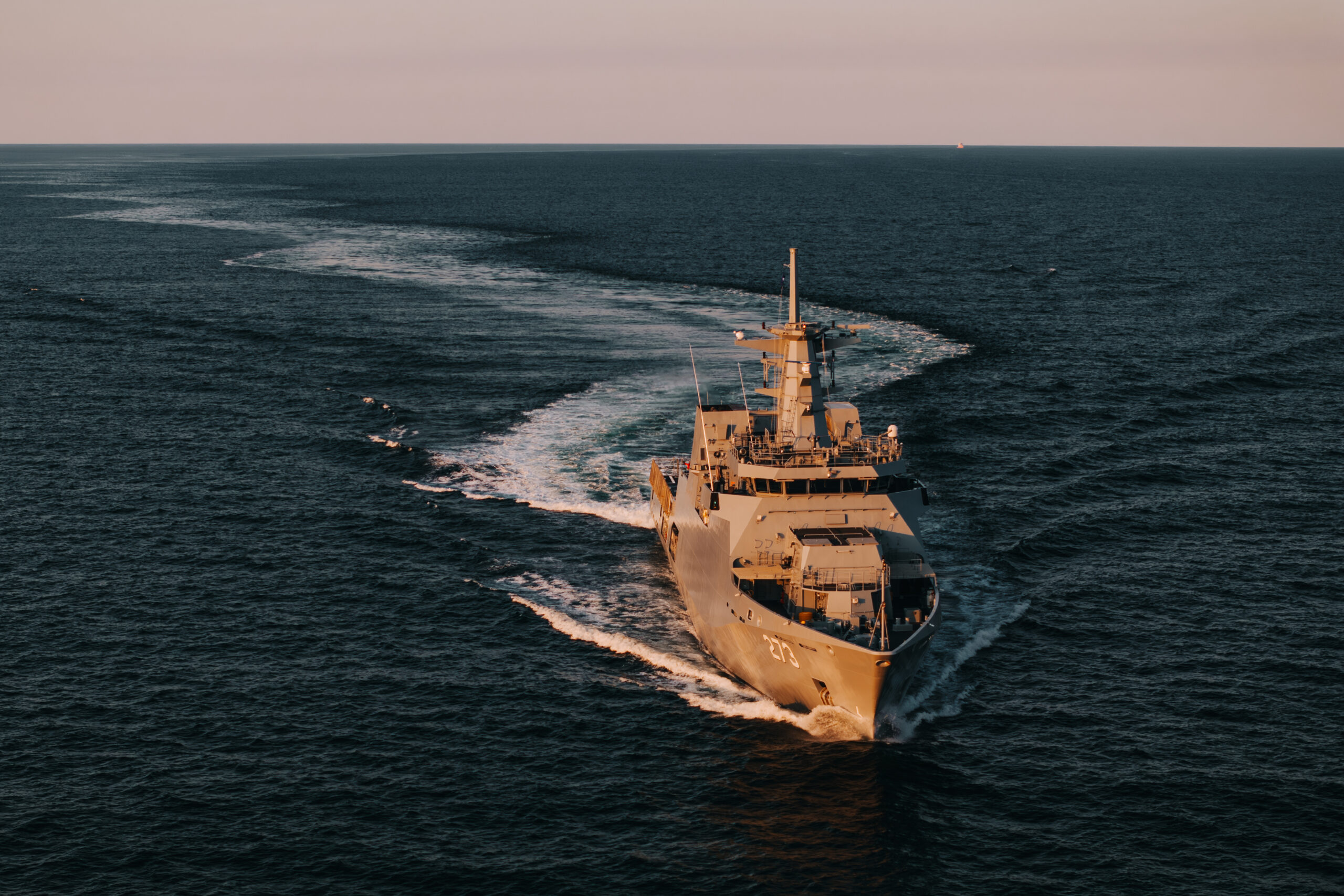
PN Surface fleet for a long time suffered due to reduced number of assets linked to lack of financial support. But lately, PN with the finances made available as part of Armed Forces Development Plan, has recently inducted ships of various types that includes Type 054 destroyer from China, MILGEM corvettes from Turkiye and OPVs from Romania. The availability of these ships helped Pakistan maintain its Sea Lines of Communications (SLOCs) during the recent Pakistan-India crises of 2025. It also allowed PN to keep an eye on Indian activities in Gulf of Oman and Arabian Sea ensuring they had no operational surprise in the context of naval warfare.
India has over the last decade gradually upped the ante from phantom strikes across LOC to targeting trees and mosques/ madressahs across international border. Although it has suffered humiliation every time around, it is also indicative of an extremely belligerent and risks adverse India. PNs actions during Operation Bunyanum Marsoos remain shrouded in secrecy but there is no doubt that it stopped Indians from any further misadventure in the maritime domain. This is indeed a success as Indian Navy, which aims to become a Blue Water Navy and poses itself as the force through which India would projects its posture as ‘Net Security Provider’ in the region, was ultimately forced to pull out from any attacks on Pakistani assets or territory.
“Pakistan must be prepared for all eventualities and dangers. The weak and the defenseless, in this imperfect world, invite aggression from others. The best way in which we can serve the cause of peace is by removing temptation from the path of those who think that we are weak, and therefore, they can bully or attack us”
Quaid e Azam Muhammad Ali Jinnah 23rd January, 1948, at PNS DILAWAR, Karachi
Nevertheless, this Indian behaviour needs careful examination as maritime domain is the only domain where India has not yet ventured into. This requires of the Pakistani nation in general and Pakistan Armed Forces in particular, to remain technologically abreast, operationally vigilant, and ready to respond to any misadventure by Indian Armed Forces in the maritime domain.
This also requires of PN to keep keen eye on Indian Naval operations by effective utilization of surface, sub surface, air and space assets.
PN has always held its forte against a bigger enemy in the shape of Indian Navy, what is required now is to ensure that training and preparedness take a front seat in this battle of technology, acumen and mastery at sea, under the sea and over the sea.