



Introduction
The aerial dimension has always been, and will continue to be, the pivotal arbiter in any future conflict between Pakistan and India. The recent events of May 2025, specifically the Indian Air Force’s (IAF) ill-fated “Operation Sindoor,” serve as a profound case study, offering invaluable insights into the evolving aerial equation and the critical role of surprise, decision cycle superiority, and multi-domain operation (MDO) integration. This article, revolving around Pakistan Air Force’s (PAF) operational philosophy and validated by the recent triumph, aims to articulate how PAF will continue to dominate the Indo-Pak aerial landscape through proactive, pre-emptive, and technologically advanced strategies.
Operation Sindoor – A Narrative of Failure and Deceit
The genesis of “Operation Sindoor” on 07 May, 2025 was rooted in a familiar Indian playbook: a false flag terrorist attack in Indian Illegally Occupied Jammu and Kashmir, immediately and baselessly attributed to Pakistan. This cynical ploy was then leveraged to construct a meticulously crafted narrative of retaliation. This narrative, however, quickly unravelled when confronted with the irrefutable reality of the PAF’s decisive response. The IAF, actSqn Ldr Farrukh Iftikhar Introduction ing on this concocted pretext, launched a comprehensive aerial package, ostensibly targeting non-military sites within Pakistan. Their fighters, largely comprised of advanced platforms, attacked Pakistani airspace with aggressive intentions, seeking to impose their will.
The objective was clear: to surprise and overwhelm the PAF through numerical superiority and technological edge. However, PAF had been preparing for such a contingency for decades, ensuring training for decisive response to Indian aggression.
The Defensive Masterclass – PAF’s Beating Response
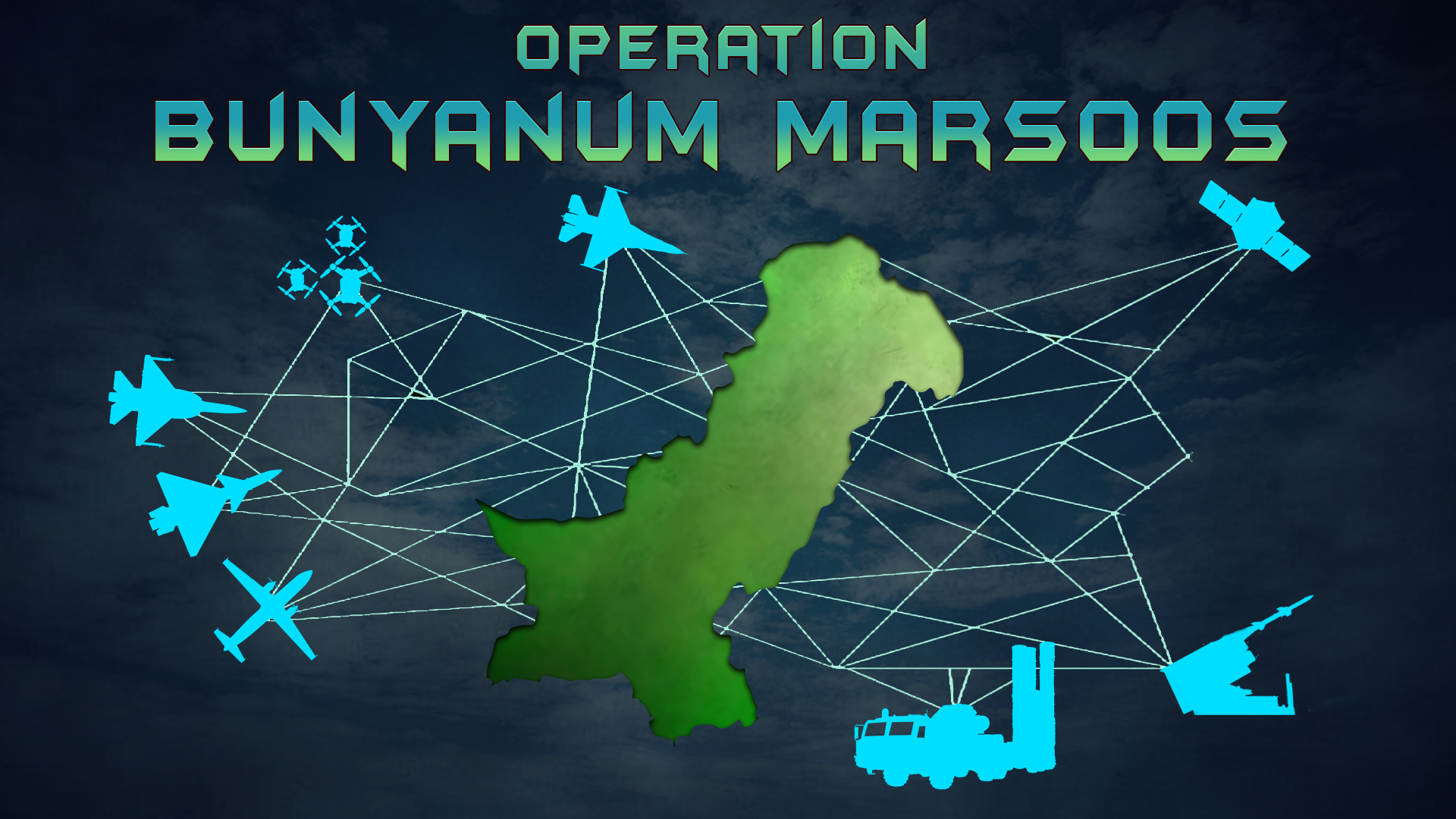
The PAF’s conduct of defensive operations on 07 May, 2025 was nothing short of a masterclass in aerial defence, effectively turning the tables on the aggressor and forcing the IAF onto a desperate defensive posture. PAF Integrated Air Defence System (IADS), operating with unparalleled precision and promptness, detected the inbound Indian formations well in advance. This allowed for a coordinated and calibrated response in responding with an unexpected and overwhelming show of force. PAF, utilising its modern arsenal, including the formidable J-10C fighters armed with PL-15 beyond visual range (BVR) missiles and JF-17s BlockIII, engaged the Indian aggressors from optimal stand-off distances. Air Commodore (retired) Khalid Chishti, a respected voice on air warfare, underscored the efficacy of this engagement, noting how “33 Indian Rafale’s failed against Pakistani J-10C”1 , leading to significant Indian losses.2 the employment of PL-15 missiles proved particularly devastating and its advanced technology was confirmed even by Indian sources, who acknowledged finding its debris within their territory3 . Crucially, the PAF’s Electronic Warfare (EW), cyber-attack and satellite jamming capabilities played a pivotal role in effectively blinding and disorienting IAF battlefield awareness4 . The IAF, after suffering significant aerial losses was profoundly surprised and the notion of air to air combat was evidently a losing proposition for them. Assessing the lethality of PAF’s PL15, HQ-9B Surface-to- Air Missile (SAM) and MDO capabilities, the IAF was forced to shift her strategy and resorted to employing only stand-off weapons to avoid further direct aerial engagements.
Lessons from India Pakistan Conflict
Both PAF and IAF as well as contemporary world may draw valid lessons in the aftermath of these events. Prominent aspects of the conflict are delineated in the ensuing paragraphs.
LR-BVR remains of Centric Value: The conflict unequivocally confirmed that BVR engagements, facilitated by advanced missiles like the PL-15 and superior radar systems, are the future of air combat.
MDO Emerge as an Imperative: The effective integration of kinetic, EW, cyber, and space-based capabilities proved decisive for PAF. Future air wars will be fought across all domains simultaneously.
Decision Cycle Superiority: The speed at which battlefield information is gathered, processed, and acted upon (the OODA loop) is paramount. PAF’s ability to shorten its decision cycle provided information superiority and leveraged a critical asymmetric advantage to PAF leadership.
Resilience of IADS: Robust and layered IADS, integrating both SAMs and airborne interceptors, remains indispensable in deterring and defeating aerial threats.
Underestimation of Threat: The primary IAF miscalculation was a profound underestimation of PAF’s integrated AD capabilities, particularly the efficacy of PL-15 and the sophistication of PAF EW capabilities. They appeared to operate under the flawed premise of their superiority, influenced by the notion that the acquisition of a few advanced platforms would guarantee aerial dominance.
Lack of Integration: IAF’s heterogeneous fleet, comprising aircraft from various origins (French, Russian, British and indigenous), likely contributed to challenges in seamless integration of platforms and data links, which is crucial in a high-intensity, network-centric conflict5 . This became apparent when their data links were reportedly disabled, rendering their “advanced net-centric warfare” capabilities ineffective.
IAF Future Strategies and Tactics
Learning from their May 2025 debacle, IAF will undoubtedly adapt its strategies and tactics in any future conflict. Their likely shifts will be informed by their perceived “successes” with standoff attacks and observations from recent global conflicts. Following the end of hostilities, on 12 May, 2025, Prime Minister Narendra Modi announced a new Indian military doctrine, signalling a more aggressive stance against cross-border so-called terrorism, indicating that India will make no differentiation between the government sponsoring terrorism and the think tank behind.
Increased Reliance on Standoff Weapons (SOWs) and UASs:
Having suffered significant losses in direct aerial engagements, IAF will likely double down on its strategy of employing long-range SOWs, such as SCALP EG cruise missiles and AASM Hammer Glide Bombs, launched from within their own territory to minimise risk to their manned platforms6 . This will be coupled with extensive use of UAS for ISR, Electronic Support, Suppression of Enemy Air Defence (SEAD) and potentially even strike missions, leveraging their cost-effectiveness and reduced risk to trained aircrew. The Russia-Ukraine and Israel-Iran conflicts has demonstrated the prolific and impactful role of UAS in modern warfare. Same was highlighted by Chief of Defence Staff General Anil Chauhan, that India’s military had been forced to modify its tactics after an unspecified number of IAF fighter aircraft were shot down by PAF fighters and missiles.
Enhanced EW and Cyber Offensive Capabilities:
While deliberating the lessons of Ops Sindoor Indian Deputy Chief of Army Staff Lt Gen Singh also highlighted the growing importance of EW. India will undoubtedly invest heavily in improving its EW capabilities to jam and disrupt PAF communications, radars, and data links. Simultaneously, aggressive cyber-attacks targeting Command and Control (C2) systems, AD networks, and critical infrastructure will be a key component of IAF strategy.
SEAD: Recognising the effectiveness of PAF’s integrated AD, IAF will likely prioritise destructive SEAD missions. These could involve concentrated anti-radiation missile and Loitering munitions aimed at degrading SAM sites and radar networks before any strike.
The effectiveness of aerial aggression without incorporating SEAD holds marginal value, as Iranian response to Israeli strikes demonstrated a capability for large-scale missile and drone launches, however mostly intercepted.
SWARM Technology: Inspired by recent global conflicts, IAF may attempt to employ Smart War Fighting Array of Reconfigurable Modules (SWARM) to overwhelm AD systems, creating saturation attacks to open corridors for more sophisticated standoff weapons
Countermeasures to Future IAF Tactics
PAF is fully cognizant of the evolving threat landscape and is continuously adapting its doctrine, training, and capabilities to counter these potential IAF tactics. To ensure Pakistan’s continued aerial dominance and strategic advantage in any future Indo-Pak aerial confrontation, PAF shall have to work upon a contextual mitigation strategy.
Proactive Pre-emption:
PAF must maintain its doctrine of proactive pre-emption, leveraging intelligence superiority to strike first at critical enemy capabilities should hostilities become inevitable. This includes targeting enemy forward Bases, Integrated Air Command and Control System (IACCS) nodes and high-value airborne assets. The element of surprise, as demonstrated on 07 May, 2025, is paramount in shaping the outcome.
Next-Generation Air Superiority Platforms:
Plan for the acquisition or indigenous development of next-generation air superiority fighters with stealth and advanced sensor fusion to maintain the qualitative edge.
Enhanced Multi-Layered AD:
To counter IAF’s increased reliance on SOW and UAS, the PAF may further bolster its multi-layered AD network. This includes the acquisition and integration of advanced short-range air defence systems for UAS interception, alongside inductions of kinetic and non-kinetic interceptors including long-range SAMs and Direct Energy Weapons.
Dynamic and Dispersed AD Assets:
To mitigate the threat of pre-emptive SEAD strikes, the PAF may emphasise increased mobility and dispersal of its AD assets. This includes the development of ‘shoot-and-scoot’ capabilities for SAM systems and the use of active decoys and Multi-Spectral Camouflaging nets to mislead enemy ISR and disrupt its target development.7
Enhanced MDO Integration:
Further deepen the integration of kinetic, cyber, space, and EW capabilities into a truly unified Common Operational Picture. This requires continuous inductions and operationalization of latest technology in the field of aerospace, cyber and EW systems according to vision of CAS Air Chief Marshal Zaheer Ahmed Baber Sidhu.8
Training: Retired Air Marshal Arshad Malik while talking on media about Ops Marka-Haq pointed out that training was a big factor in this operation and training gives you much confidence. Similarly, former CAS Air Chief Marshal Sohail Aman while interacting with media on Ops Marka-e-Haq also emphasized that dealing with an enemy which is three and a half times larger and carries modern air force which is numerically as well as technically advanced, so we knew which areas do we really need to turn the tables off and that is where we began our training.
Accelerated Decision Cycle (OODA Loop):
Continue to invest in cutting-edge training, including virtual reality and augmented reality simulations that replicate complex multi-domain air combat scenarios. Integrate Artificial Intelligence (AI) into decision-making processes and combat systems to augment human capabilities in cockpit and C2 tier to shorten the observe-orient-decide-act (OODA) loop.
Indigenous R&D:
Continue to prioritise indigenous research and development, particularly in advanced BVR missiles, stealth technology, and advanced EW suites. The success of JF-17 Block-III underscores the importance of self-reliance and in the same context, NASTP is a major strive in this direction.9
Conclusion
The skies over Pakistan are not merely a geographical space; they are a sacred trust, defended by the indomitable spirit and unmatched professionalism of PAF. The events of May 2025 provided irrefutable proof of PAF capabilities and the wisdom of strategic doctrine. The next aerial war will indeed define the Indo-Pak aerial equation. However, by embracing proactive and pre-emptive strategies, relentlessly pursuing decision cycle superiority, continuously integrating MDO capabilities, and investing in advanced technologies and training, PAF will ensure that the scales of aerial power remain firmly tilted in Pakistan’s favour.
1. Air Commodore (Retired) Khalid Chishti, “How 33 Indian Rafael’s Failed against Pakistani J-10C | Air Commodore (R) Khalid Chishti Analysis,” GNN HD, YouTube video, 28 May 2025, accessed 3 July 2025, https://www.youtube. com/watch?v=_Ive8sn-W88.
2. Muhammad Hassaan Naqvi. 2025. “Pakistan’s Air Dominance: The Leadership behind the Victory – SACH TV.” Such TV. June 2025. https://www.sachtv.pk/pakistan/general/item/131375-pakistan-s-air- dominance-the-leadership-behind-the-victory.html.
3. Thomas Newdick, “Chinese-Made PL-15 Air-To-Air Missile Components Came Down Intact Inside India,” The War Zone, 9 May 2025, accessed 3 July 2025, https://www.twz.com/air/parts-of-a-pakistani- pl-15e-air-to-air-missilecame-down-relatively-intact-in-india-after-air-battle.
4. Baqir Sajjad Syed, “Situationer: PAF’s cyber-space blitz humbles IAF,” Dawn, 15 May 2025, accessed 3 July 2025, https://www.dawn.com/news/1911123
5. Shamil Abdullah, “Assessing the Role of Air Power in the 2025 India-Pakistan Standoff,” The Society for Vulnerable India, 13 June 2025, accessed 3 July 2025, https://thesvi.org/assessing-the-role-of-air- power-in-the-2025-india-pakistan-standoff/.
6. Daniel Shats, Grace Mappes, Karolina Hird and Fredrick Kagan, “The India-Pakistan Conflict: Observed Capabilities and Potential Transformations in Air Forces,” ECSSR.ae, 23 June 2025, accessed 3 July 2025, https://www. ecssr.ae/en/topics/security-defense/2/201218.
7. How Does It Work Podcast. 2025. “Air Marshal Explains Pakistan’s Air Defense Strategy and India’s Propaganda | EP279.” YouTube. May 9, 2025. https://www.youtube.com/watch?v=oIVE3_HCksI.
8. Air Chief Marshal (Retired) Sohail Aman, “PAF vs IAF: Strategy, Power & Lessons from Operation Bunyanun Marsoos,” Sanober Institute Roundtable, YouTube video, 30 June 2025, accessed 3 July 2025, https://www.youtube.com/watch?v=-lzOid3aUeU.
9. Web Desk, and Web Desk. 2023. “Air Chief Declares NASTP a ‘Major Landmark.’” ARY NEWS. August 5, 2023. https://arynews. tv/air-chief-declares-nastp-a-major-landmark/