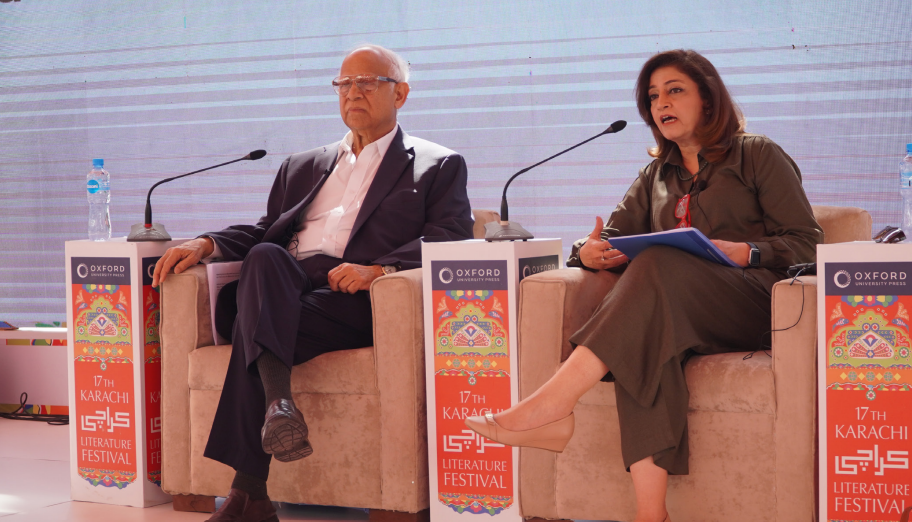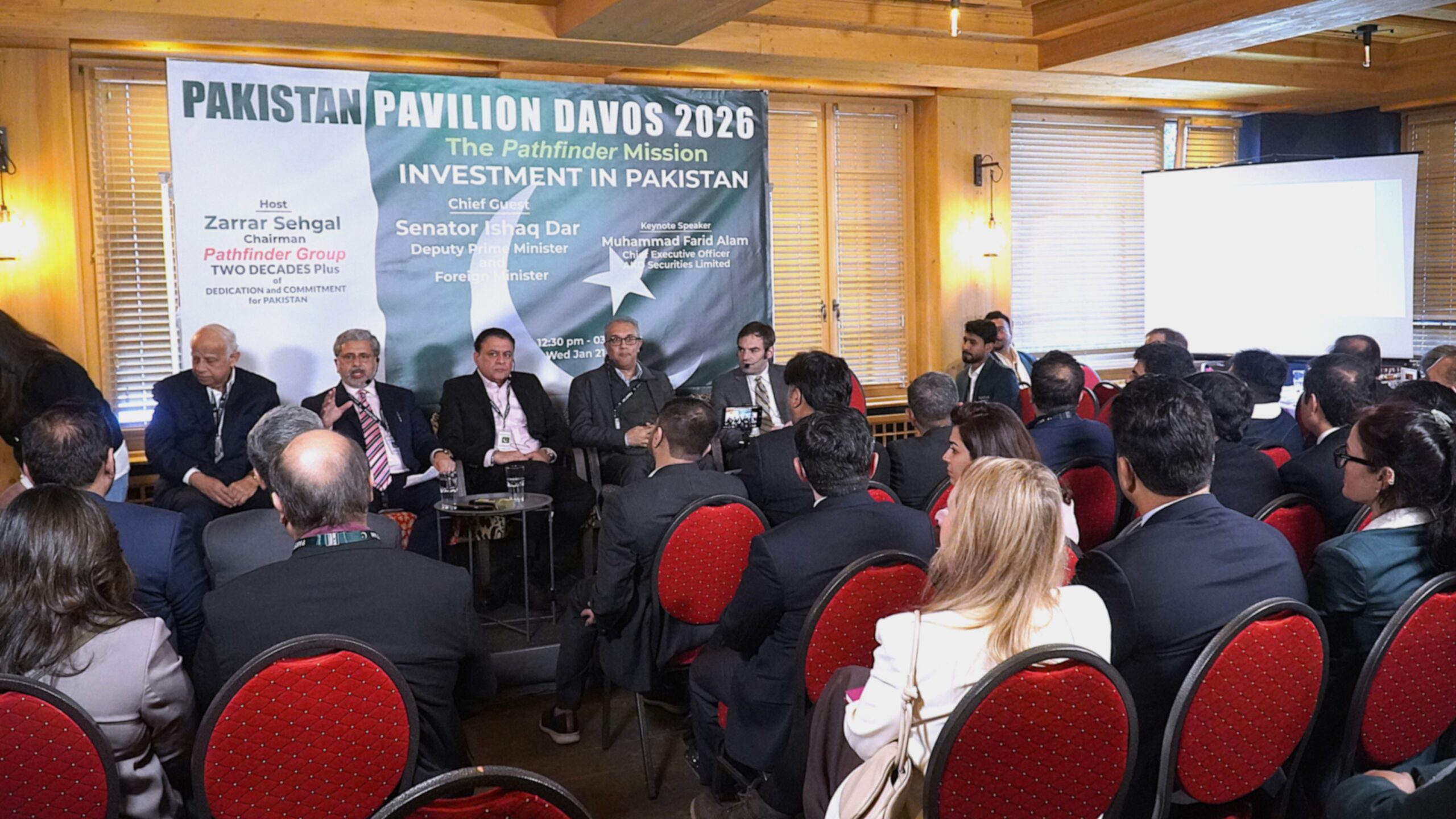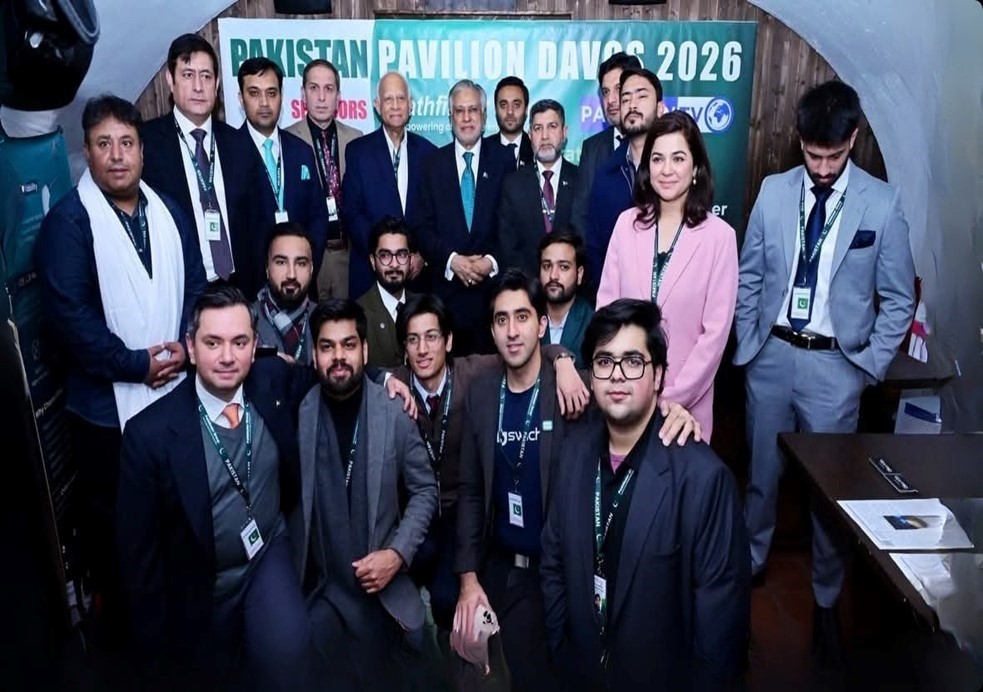




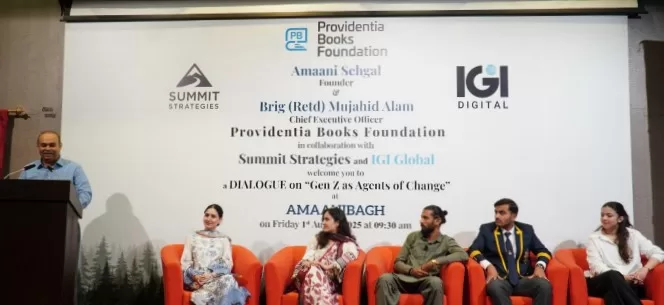
The Providentia Books Foundation, in collaboration with IGI Global and Summit Strategies, successfully hosted a dynamic dialogue titled “Gen Z as Agents of Change” at the AmaaniBagh Auditorium in Angoori, Islamabad. The event brought together experts, academics, students, and industry professionals for meaningful discussions on the role of Gen Z in shaping Pakistan’s future. Aimed at bridging generational perspectives, the dialogue encouraged intergenerational exchange between Gen Z and millennials, focusing on educational reform and national development. Prof. Dr Huma Baqai was the Master of the Ceremony. Dr Salma Malik was the moderator for the first session. Sehrish Mustafa, Executive Officer at the Karachi Council on Foreign Relations (KCFR), was the coordinator and moderator of the event. The transcription of the event is as follows:
Dr Huma Baqai Moderator/Rector, MiTE
When I walked in this morning, it was almost like a family reunion, and it was also like a Davos reunion. So, I just loved the vibe and the energy. This is my second time here. We had a great session last year, and when we talked about leadership, I, here on this stage, said that let’s have a center for leadership and let’s have more such dialogues. I will just take you through the journey in a minute but the whole idea was that Pakistan does not have a center of leadership, it does not have a dedicated center for innovation or digitalization and if we are supposed to compete in the global environment today, especially these young people sitting here, we need to give them directions and options and we can’t write them off as the Gen Z irresistible, irresponsible and the freelancing nation, it does not want to take up jobs seriously. I think that’s a very superficial analysis of this very energetic group of people who are going to take over from us. We are going to have a very timely and productive conversation about the same. But before I start, let’s begin with the name of Allah (Qirat and the National Anthem of Pakistan were played).
So now we formally begin the dialogue. It is, of course, my pleasure and privilege to welcome you all to this important and timely event, “A Dialogue on Gen Z as Agents of Change,” and their role in Pakistan’s future. Each one of you sitting here, of course are very esteemed guest, but you’re also change makers. So, having made you a part of the dialogue is critical. We gather here today not just to celebrate the power of ideas but to reflect on the transformative potential of a generation that is often misunderstood, occasionally dismissed, and yet undoubtedly rising. And now we have statistics to tell us that Gen Z is taking up policy-making roles really fast because they’re doing things which is allowing them to jump the generation gap or the experience gap, so to speak.
Gen Z was born into a world shaped by the digital revolution, climate crisis, and sociopolitical uncertainty, which represents something very unique. They are connected, vocal, value-driven, but beyond hashtags and headlines, they are beginning to shape policy, culture, and innovation. Not only globally, but also here in Pakistan.
As we launch this dialogue, I invite you to take a moment to reflect on how this generation compares with those that come before. Each era had its defining strength. So we had baby boomers, who were us, that brought scale. Then we had Gen X, then millennials, our children, largely the grown-up lot, brought energy and adaptability. And then, of course, Gen Z brings urgency. That is the word defining Gen Z. It brings urgency. Urgency to confront long-ignored challenges like climate, injustice, mental health, digital equity, digital divides, and political accountability.
This generation refuses to wait for their turn, and that perhaps is their greatest strength. And that is what I referred to when I said that they’re jumping the gap, disrupting legacy systems, and engaging in civic life at scale. They are no longer merely the consumers of change, as we were; we consumed change and adapted to it. They are the cocreators of change. What the world is going to look like tomorrow will be determined by this generation. However, this rise comes with its own set of challenges. We often hear critiques that they have short attention spans. I have been teaching all my life, and I realized in the last five years that I constantly compete with the phone, and anybody who’s in the classroom uses their phone, and I constantly compete with their attention span. I constantly have to retake the classroom, as monologue teaching is becoming obsolete. You can’t engage this generation if you do that. So, there is a discussion that is needed: when do we turn classrooms into learning labs? That is where Gen Z will thrive and listen to what you have to say. And also of course, there’s this digital fatigue and hyperpolarization. The hyperpolarization in this generation needs to be addressed. And while these are valid concerns, they’re not the whole story.
In preparing for today’s dialogue, I came across some fascinating statistics and also some fascinating terms that I had not heard before, and at times, perplexing concepts emerging from what we call the Gen Z culture. And let me share a few of them with you. These are the words that I didn’t know until I got Ikram Sehgal’s call. He said you’re hosting the event, and I agreed. What I am talking about, and I need to look into it, and what’s this all about?
So, how many of you have heard of a ‘Bare Minimum Monday’? I grew up talking about a proactive Monday, sort of hitting the ground running on a Monday. So Monday is where you begin your life. Now this generation wants a bare minimum Monday. I don’t see any hands raised from the audience,
so nobody’s heard about it. I had also not heard about it. It is where individuals intentionally begin their week doing only the essentials to manage burnout and start gently. We were told to start with vigor, start with full force, and this generation says start slow, because they are concerned about mental health and other issues.
I think this other term you would know, it’s called ‘Sunday scaries.’ I’ve experienced the Sunday scare. So, what are Sunday scaries? The creeping anxiety many experience on Sunday evenings, anticipating the stress of the upcoming work week. We used to call it the Monday blues. You’ve all heard about Monday blues, but the term they use is Sunday Scaries. I have more interesting terms. And then this term was fascinating because I’ve been in positions of academic leadership running institutions for the last almost 20 years now, it’s called ‘Quiet Quitting.’ Anybody who heads an institution knows what quiet quitting is. It means where workers fulfil their job descriptions but refuse to go above and beyond in employment where they feel undervalued. And this generation values being valued.
So, if you don’t value them, they will do a ‘quick quiet quitting’ and then they will ease out of organizations. The loss is ours. It’s not theirs. There is another interesting term called ‘Conscious unbossing,’ you don’t have to be a boss. You don’t have to be a puppet that does what the boss says. So, bossing is out; It’s absolutely out. So, we need to consciously unenforce a growing preference for decentralized trust-based workplaces that prioritize autonomy over traditional top-down hierarchies. So the new terms are a factory of leaders, not one leader. Everybody in their space needs to be a leader, and we need to build them accordingly.
According to some statistics, one in three Gen Z workers has admitted to job catfishing. Have you heard of that? Job catfishing. They’ll go out in the market, they’ll get a nice offer, come back to you, and pitch it to you. Ask, are you treating me better both in terms of remuneration, flexing work hours, and all of that, or I’m going out. And it’s become more prevalent now than it used to be in the past. And I don’t know how many of you have done it, but even millennials do that. They’re shortlisted for an interview, and they never turn up on the first day of the job. You’ve all experienced it. This tells us something important that there is a disconnect between conventional professional expectations and the evolving realities of today’s job market, influenced by digital autonomy, economic instability, and shifting values around loyalty, labor, and self-worth. Gen Z is challenging conventional norms and redefining success to include balance, meaning, and fairness.
They prompt us to ask difficult questions about our systems and the future we envision. Today’s event encourages critical reflection and dialogue, featuring diverse voices, including Gen Z. Our goal is to understand and learn from them, avoiding romanticization or vilification, and to co-create practical pathways for the future. Let’s empower this generation with the tools and trust they need to lead.
I want to take a moment to thank the visionary minds behind today’s event, Ikram Sehgal, Amaani Sehgal, and Brig ® Mujahid Alam. Your leadership is setting the stage for this dialogue, and I am, for once, very excited about it. I would also like to extend gratitude to our distinguished panelists and speakers. We will be hearing from Air Commodore (retd) Khalid Banuri, Professor Dr Salma Malik, Sehrish Mustafa, Asad Ikram, Imran Jatala, and also Mr Zarrar. Thank you for lending your time, experience, and wisdom to this conversation. So let us begin the dialogue with curiosity, respect, and perhaps even a bit of humility. But Gen Z may not just be our future. They might in many ways be our teachers. Let’s begin today’s proceedings. I want to now invite Amaani Sehgal, founder of Providentia Books Foundation. I’ve been a small part of it. She came to my university to interview me, and I loved every question she asked me. Amaani, please come on stage.
Amaani Sehgal Founder, Providentia Books Foundation
My name is Amaani, and I am going to give you a brief introduction to the history of Providentia Books Foundation (PBF) and its mission. About five years ago, I remember learning from my father that many corporations were trashing excess books instead of donating them for a greater purpose. This shocked me because, as many of you would agree, donating a book to charity seems far more reasonable than throwing it into a dump pile or setting it on fire. To me, it felt like a waste of education and a serious blow to the environment. That moment reminded me of something from my childhood.
I was about seven or eight years old, visiting my Grandfather and Grandmother’s house in Karachi. One afternoon, a bus rolled in, and at first, I thought it was just another transport vehicle. Then I saw a line of students, all around my age, stepping off the bus with a backpack. I later found out that this wasn’t just a school bus. It was a bus that functioned as a school.
Those two experiences planted the seed for Providentia Books Foundation. It began with a simple idea to take books that were sitting on shelves gathering dust, and make sure that they wouldn’t be thrown away or burned, but in stead given to people who could truly benefit from them. Providentia Books Foundation aims to foster a love of reading and learning by opening doors for those who may not have the financial means to access them on their own. But none of this would have happened on my own. Providentia Books Foundation would not exist without Ikram Sehgal, whom I have the privilege of calling my Daada (Grandfather). He has always believed that real change starts with access to education and opportunity. It has been his lifelong mission to uplift underserved communities in Pakistan. He has never been someone who just talks about problems; he acts, whether it is organ izing relief efforts, supporting local schools, or mentoring young people. Daada has always led by example. When the idea of Providentia Books Foundation first came up, he did not treat it like a side project. He gave it his full attention. He asked the right questions, connected us to the right people, and never left the mission drift. Every school we work with is another step toward an equal future. Thanks to Daada’s vision and hard work, PBF has now donated over 60,000 books to 30 schools of NGO’s across five major cities in Pakistan. What started as a simple idea has grown into a movement, and that is because of him. Today, seeing how far it has come is a testament not only to my Daada’s dedication to others but also to the determination to make universal education not a utopian dream but a simple reality. Thank you.
Dr Huma Baqai Moderator/ Rector MiTE
I’m now going to invite Brig (Retd) Mujahid Alam, who’s currently the CEO of the Providentia Books Foundation. He’s a distinguished expert in international security. He’s keeping governance with over 50 years of experience at the national and international level. He served in the Pakistan army for 33 years, holding key positions such as the Brigade Commander, Chief of Staff at Corps headquarters, and Military Attaché to the UK and Sweden. Sir, the floor is yours.
Brig (Retd) Mujahid Alam CEO, Providentia Books Foundation
Bismillah hir Rehman nir Rahim, and a very good morning to everyone. It is my great pleasure to welcome you all to this important dialogue on ‘Gen Z as Agents of Change.’ Today, we gather to recognize and celebrate the potential of a generation that is not only digitally aware but also globally aware, socially conscious, and deeply passionate about justice, innovation, and progress. You, the university students of today, are not just the leaders of tomorrow; you are already shaping the world around you.
Gen Z holds the power to challenge the status quo and lead our country into a more inclusive, progressive, and resilient future. Pakistan’s greatest asset is its youth. You represent energy, creativity, and courage at a time when the country needs all three. Through your innovation, your voice and your action, you can rewrite the narrative on education, climate, technology, governance and social poverty. Pakistan stands at a critical crossroads, and the role of our youth has never been more vital. In their voices, like new ideas, and their plans rest on the future and in their choices, we will find the path to a more tolerant, all-embracing, and sustainable and empowered Pakistan.
Pakistan stands at a defining moment, and your role as change makers, entrepreneurs, researchers and active citizens is not optional. It is an assertion. Let this forum be a space forward in-depth and honest conversations to discover new ways to lead positive lasting change for our country and beyond. May this forum spark conversations that go beyond these walls and ripple across our campuses, communities, and institutions. Together, let us inspire and support Gen Z to take charge, not just as dreamers, but as doers. NASA in America has a poster hanging on its walls with these honeybees dead. Aerodynamically, a bee’s body is not made to smell. The good thing is that the bee doesn’t move. The law of physics says that a bee cannot fly. The aerodynamic principle says that the breadth of its wings is too small to keep its body in flight. But a bee doesn’t know. It doesn’t know anything about physics or its logic and flies anyway. This is what we all can do. This is what you all can do. Fly and prevail in every moment in the face of any difficulty and any circumstance, despite what they say. Let us be peace, no matter the size of our wings. Take flight and enjoy life.
Before I conclude, I extend a very warm welcome to everyone, all the university students, but I’m also delighted that my young boys, my sons from Lawrence College, are also here. They are high school students, and they, along with the staff and their Principal, are here. I’m very happy about it. I’m also very happy that I’m sharing the stage with young Amaani Sehgal, the idea of Providentia Books Foundation originated from her fertile mind and it the credit goes to her Parents also but of course, as she said, Providentia Books Foundation would not have been at this stage without the vision and the unstinted support of Mr Ikram Sehgal, who is the Co-Chairman of Pathfinder Group. So, we thank him most sincerely for that. Thank you, everyone, for being here, and I’m sure we will have very fruitful discussions. Thank you very much.
Dr Huma Baqai Moderator/ Rector MiTE
It is quite inspiring. I’m going to invite Air Cdre (Retd) Khalid Banuri. I knew Khalid before, but I came to know him better after he married my best friend, Dr Salma Malik. He’s a public policy practitioner and a public intellectual with 47 years in public service. He’s also a trainer and an author. Please welcome Air Cdre (Retd) Khalid Banuri.
Air Cdre (Retd) Khalid Banuri
Thank you very much for a very generous introduction. The future of Pakistan, good or bad, will be determined by its youth, especially by people who are between 15 to 29 years of age today. What will happen will depend upon the choices that are made today. These are the words in general for a piece titled, ‘Pakistan’s Moment of Truth’ authored by a Pakistani who’s currently the global President of WWF, the World Wildlife Fund, Dr Adil Najam. He is talking about Pakistan’s future leadership.
Leadership is a strange phenomenon; it is nothing but a set of values and competencies that are intricately interwoven. The values remain constant while the competencies may become diverse depending upon the particular circumstances. One such change in the contemporary world is the intense advent of technologies. In this backdrop, the leadership challenges are also under a transformational change. While leadership remains a factor of values and competencies, the reference nodes, priorities, and approaches to life and work are changing significantly. This is primarily because of the social or political turmoil that occurs when a particular generation is growing up. The forward-looking organizations are endeavoring to make the best of this situation.
Take Pakistan Air Force, for example, which conducted, a couple of years ago in 2023, a multi-disciplinary process of developing the understanding and the issue of behavior change amongst generations since the bulk of the trainees are Gen Z or Gen alpha, while its trainers remain millennials, and several decision makers are Gen X and boomers. The ethos that the PAF has nurtured over the years was put to the test in the recent war in 2025 that was thrust upon Pakistan by India. The young professionals in the PAF, led prudently by its Air Chief, used the human machine interface to create miraculous results. Such great gentlemen are the attributes of true leadership. I welcome all of you to our fourth workshop from a series titled the “Pathfinder Challenge” encouraged and sponsored by the Pathfinder Group, a private sector group of companies that brings together young and old generations into a dialogue process to understand reflective views and finding ways to empower the coming generations to be ready to run Pakistan 20 years from now. Over months in our previous dialogues, Gen Z and others have explored avenues to tackle many diverse subjects that include but are not limited to climate change in the year 2050, developing leaders of character in a world of artificial intelligence, augmenting effective leadership at the workplace, and tackling the fear of failure.
The Pathfinder Challenge is attracting young people from universities and professional forums interested in structured frameworks to navigate different work generations. Our last workshop also explored parents’ views on these approaches. In this Pathfinder Challenge Series, our focus has largely been on Gen Z, A cohort born between the years 1997 and 2012. These digital natives are the currently marketable professionals. For them, gadgets like laptops are often considered obsolete as they mostly live and work through palmtops and smartphones. Their formative years include events of social change like the rise of social media or the COVID-19 pandemic. This generation is considered pragmatic about work, but is often characterized by work and anxiety regarding their prospects. They enter a job market where there are fewer premium formal postgrad degrees, as depicted in the job openings with artificial intelligence and automation that are transforming the market. They put a strong emphasis on diversity and inclusion and are passionate about social justice. They are thus often failing to produce content for the nation, or are reluctant about medium to long-term commitment to work, and elsewhere, thereby occasionally coming into conflict with development. Gen Z, with their ages in 2025 between 15-29 years, are currently high school to undergrad students or young professionals.
Today, we are happy to say that we have five leading institutions participating in the Pathfinder Challenge dialogue on “Gen Z as Agent of Change.” When we chose this title, someone said Gen Z needs fixing, and you guys voted on to seek their views and agency change. I said, let’s find out whether the truth is somewhere in between or not. I’d like to introduce the teams one by one. Team Red from Quaid Azam University, supervised by Dr Salma Malik, Team Blue from Air University, supervised by Ayesha Jamil, Team Yellow from TMUC, supervised by MS Marium Abbas, the nationwide program international foundation here, and also her colleagues, Team Green from SZABIST supervised by Ms Sana Mukhtar, Program Manager BS Social Sciences and Psychology. Notably, Team Gallian from Lawrence College Ghora Gali, led by Mr Arshad, Headmaster and Acting Principal – Spot them in their impressive uniforms.
There are also some more young persons for the thrill or exposure- all are welcome. The way we go about this is that there will be two segments of short verbal interventions. One young coordinator from each institution will be present on the stage, who will coordinate responses from their respective university or institution. Each intervention will last for a maximum of two minutes. There’s a clock running that will tell you that two minutes are over. This way, we also get an exposure to prepare for the eventual digital futures where human decision-making will need to be accomplished in an incredibly short time. So, the first segment is to be moderated by Associate Professor and Director External Linkages from QAU Islamabad, Dr Salma Malik. The theme under discussion is education in Pakistan. The young coordinators for this segment are Minahil Shahid from QAU, Nauman Mushtaq from Air University, Moeen Hasan from TMUC, and Amna Jatoi from SZABIST. While I continue to give the details for the remaining proceedings. I request all of you to join us on the stage.
The second segment, after a short break, shall be moderated by Sehrish Mustafa, Executive Officer, Karachi Council on Foreign Relations. The theme under discussion is about augmenting the future of Pakistan, in which the questions will seek views on a variety of subjects. Thereafter, we shall have at the end, three experts rounding up with takeaway from the deliberation, two short interventions by Abdul Waris Hameed and Imran Jattala, which will be followed up by an overall reflection by our eminent educationalist, VC MITE, DrHuma Baqai. The session will close with remarks from the Chairman of Pathfinder Group, Zarrar Sehgal.
Ladies and gentlemen, boys and girls, let the games begin and the ideas flow. Let us explore fresh woods and pastures new. Thank you.
Dr Salma Malik:
As-salamu Alaykum, everyone. Thank you very much for setting the stage so well. I really don’t have to repeat the rules of the game because they have been made clear to you all. Our first session talks about education. We have already heard from Ms. Amani Sehgal about the potential Gen Z holds and what we can all do. But we also have with us five “tigers” from Gen Z who hold a lot of promise. Some of them are not new to Amaani Bagh; they have been here before, and they have been part of the dialogues we have held in the past. We have seen some fascinating and very spontaneous discussions and presentations come from Gen Z.
Today, we are going to change the mode of our discussion. This session will focus on education, the problems and solutions, especially in the context of Pakistan. We thought it was important to have a mix of students from both private and public universities, and we also have a young team joining the fun from Lawrence College. I’ll save them for last so they can get a sense of the mood before they respond. The questions are very simple and straightforward. The team coordinators may choose to respond themselves or designate one of their team members to answer. Each team has its microphone, so you don’t have to fight for one. In this session, as Dr Huma was talking about the changing lexicon and how Gen Z responds, it was a real challenge. If someone as dynamic as Dr Huma finds this challenging as the head of an institution, imagine us as teachers. We often feel that by the end of every lecture, the students have tortured us! There is a lot of energy in the classroom, but given their energy, I’m already out of breath! So, my first question to each of the teams is, what exactly are the main challenges that you, as members of Gen Z, face in the education system today? For the benefit of our students, I would appreciate it if we could keep this conversation bilingual. So, let’s go with the ladies first. Alphabetically, let’s start with Amna. Amna, you can respond yourself or designate one of your team members to answer, and I’m saying this to the rest of the teams as well. Please share two or three main challenges you face. Your time starts now.
Amna:
Okay, I’ll talk about one aspect. We are stuck with one traditional method, and that is one-way communication. We are not allowed to speak our thoughts out. I mean, sometimes we want to speak, but we hold back our ideas because we know Gen Z thinks a little differently. Because of the generation gap, our teachers might not agree with our viewpoint. So, they will just say, “No, no, you don’t know what you’re talking about.”, but that isn’t always true. Our problems are different, and there’s a generation gap that is very visible in the education system. You can’t clearly convey your point. For example, if I want to talk about mental health, some of our teachers still seem to think that it’s not a real issue. So, if I say that I’m struggling with my academics or can’t give a presentation because I’m not feeling well mentally—which is a very important factor—some teachers will say things like, “Just pray, it will be fine,” or “It’s just an excuse. You’re just trying to get out of it.” But that is not true. We all go through so many things every day, and that definitely affects our academic progress. So, I think the main problems are the generation gap and the traditional method of one-way communication, where they don’t listen. I would say there should be some training for teachers so that we can have an open space. But at the same time, we do have some really nice teachers. Like Ma’am Asma Javed, I love her and the way she teaches. She links our education with our moral upbringing.
Dr Salma Malik:
Thank you so much. I didn’t mean to put you under any stress; I just wanted to be mindful of the time. Very good. Mental health is essential; otherwise, people may just be making excuses. In our day, a good scolding from our mothers was enough for our mental well-being.
Moeen Hasan:
I would say inequality. A lot of people don’t have the same education system; there’s a big difference between O/A-Levels and the Matric system. I can see that because I have friends on both sides. What happens is, when we speak in English, which we were taught to do, those from other systems sometimes feel that we are being impostors—that we are trying to become something we are not. But this is what we were taught. Our system taught us to neglect Urdu almost entirely. Therefore, when we speak to our peers from other sectors, they don’t look at us as equals. They look at us as somebody who is trying to be different. I would suggest that the only way to move past this is to separate the language from the philosophy. We should take the language as it is, but reject the cultural byproducts that come with it. We should not have this mentality. There has been an identity crisis. In Russia, after the fall of the Soviet Union, they didn’t know what they were. For example, the Western Europeans were French or German. So, they asked, “If we are Russian, what does that mean? “For us, it’s the same: “If we are Pakistani, what does that mean?” If you cannot understand who we are as a people, you cannot achieve anything. I think that’s it. Thankyou.
Dr Salma Malik:
Okay, thank you so much. That was wonderful. Now, Noman, what do you have to say?
Noman Mushtaq: First of all, the model we are following today is that we have old solutions for our problems. Instead of just problem-solving, what we need is critical thinking. If a person is going through depression, they might go to a psychiatrist and get a pill. That’s problem-solving; it gives temporary relief. But critical thinking is asking: “What caused that depression? Similarly, there was a time when people would read a book from cover to cover, and after that, they would have a feeling of fulfillment and gratification that they had read something. These days, after scrolling through 30-second videos, we grow into depression. We have consumed so much, yet we feel we are nowhere. Secondly, there’s a need for an emotional connection with students. The rapid advancements and changes our generation has seen, especially the technological ones, were not experienced by previous generations. So, what we need now is to constantly test and check in with students from the very beginning. What is their mental state? What are they thinking right now? A big challenge is that we are not pursuing our interests; we are pursuing the means to earn a living. That is not happening. It’s like throwing a seed on the ground—nothing will grow until you plow the field. We need time to discover ourselves. The identity crisis that was mentioned and the attention issues that Ma’am talked about—these are the problems our generation is facing. We need to come up with solutions, and we have to find those solutions by consulting with this generation itself. Thank you.
Dr Salma Malik:
Thank you so much, Noman. So, two issues that have come up are mental health and the need to channel this generation’s energy.
Student from the Audience:
Let me talk about the biggest elephant in the classroom: the outdated curriculum. Today, AI is writing songs, diagnosing diseases, and even helping us run businesses, but we are still being told to “define photosynthesis” and “list ten minerals of Pakistan.” We don’t need to list minerals; we need to mine our skills. We choose degrees just because “it has a lot of scope.” There is barely any career counseling. I remember the last time I had a good career counseling session was in my fourth semester of my bachelor’s degree. Our education is confusing us more instead of guiding us. Another thing that has already been discussed is mental health, along with the pressure of “you have to get an A+.” And when we want to talk about something new, people say, “What is this useless hobby of yours?” We are not being integrated into this new world of AI. I also want to talk about digital literacy. We are not taught the ethical rules of using AI and media, and that’s why many of us confuse freedom of speech with the freedom to offend. We are not becoming literate in how to use AI and media, and this is also an issue. Then there is the method of how we are taught and how our minds are “coded.” We are digital, visual, fast learners. I just want to say that we don’t want to memorize the world; we want to change it and be the leaders. Let me talk about the biggest elephant in the classroom: the outdated curriculum. Today, AI is writing songs, diagnosing diseases, and even helping us run businesses, but we are still being told to “define photosynthesis” and “list ten minerals of Pakistan.” We don’t need to list minerals; we need to mine our skills. We choose degrees just because “it has a lot of scope.” There is barely any career counseling. I remember the last time I had a good career counseling session was in my fourth semester of my bachelor’s degree. Our education is confusing us more instead of guiding us. Another thing that has already been discussed is mental health, along with the pressure of “you have to get an A+.” And when we want to talk about something new, people say, “What is this useless hobby of yours?” We are not being integrated into this new world of AI. I also want to talk about digital literacy. We are not taught the ethical rules of using AI and media, and that’s why many of us confuse freedom of speech with the freedom to offend. We are not becoming literate in how to use AI and media, and this is also an issue. Then there is the method of how we are taught and how our minds are “coded.” We are digital, visual, fast learners. I just want to say that we don’t want to memorize the world; we want to change it and be the leaders.
Dr Salma Malik:
Thank you very much. It’s another matter that when we check your assignments, you could at least let us know in advance so we don’t have to check so many at once. Okay, Ahmed what do you have to say?
Ahmed:
The challenges that we are facing in our college right now include the curriculum we are studying. The syllabus is about 20 or 30 years old; it’s not the current education we need about artificial intelligence and technology. I would also like to talk about the inequality from some teachers in our classes. The top students who are really good in their studies are treated very well; they are allowed to ask anything they want. But the other boys who are a little bit weak in their studies are not allowed to speak. I think that the harder work needs to be done on the weaker students. The top students are already good; they can do anything. But the weaker students should be given more opportunities to ask questions. Besides that, I would also like to discuss how sometimes when we ask teachers questions that are not in the curriculum, they tell us, “No, no, just study what’s in your syllabus. You have to give the board exam.” I think that needs to be discussed and improved. I also want to talk about the marking scheme of the board examinations. We are forced to cram our syllabus. That is not how we will get educated or move up in the world.
Dr Salma Malik:
Thank you for pointing out these important things. One common thread in what you have all said— besides the many other pertinent points—is that our education is entirely job-oriented. And I would say that even from the teachers’ side, when students come to us and say they want to do their thesis or project on a certain topic, we often ask, “Okay, but what is its market applicability?” Right. And we often find ourselves telling students, “This is what will get you a job.” Then again, when you all come to us for admissions, there’s a running joke that you need to bring a “basketful of marks.” Because you’ll have an art student applying with perfect scores, and when the system works that way, it puts massive pressure on the kids to perform.
It’s all about number-crunching. I have many questions, but I’ll combine a few, as you’ve actually addressed some of the points already. You have all talked about the mismatch between current teaching methods and your ability to learn. So, I’d like you to elaborate on that. What kind of requirements—infrastructural or otherwise—do you think are needed to support new methods? How do different teaching methods impact your ability to learn, and what would your ideal classroom or university campus look like? Let’s start from the end and go down the line.
Anum:
It’s like installing Windows 11 on a Floppy Disk; the system can’t handle it because it’s too much. We, as a generation, are fastpaced, curious, and visual. We grow up watching tutorials, decoding AI, and learning new skills from TikTok in under 60 seconds. And what do our classrooms offer? Monotonous lectures, photocopied notes, and the golden rule: “Memorize this; it will be on the exam.” They don’t give us real-world examples. In school, we were taught how to use a computer without ever actually using one. I myself learned Microsoft Excel by writing out the steps on paper; I never did it practically on a computer. Then, in the practical-based exams, the questions were things like, “Draw the interface of Microsoft Word.” How can a student draw something they have never seen? Moreover, kids in other countries are building robots right now, while we are still building basic motorcycle projects. We had a robotics class in our school, which sounds cool, but it wasn’t. It was just an instruction from a pamphlet. The teacher had no idea what she should be making us learn. She only told us to follow certain steps and apply them. She would say, “Press this button,” but she never told us what its practical use in life was. And we paid a considerable amount for that class. Then there’s our grading system. It doesn’t care about your ideas, your passion, or your priorities. It only rewards whoever can cram the most information and then forget it the fastest right after the exam. So yes, the mismatch is real. But we’re not demanding flying cars. We’re just saying: change this. Thank you.
Dr Salma Malik:
Thank you very much. Our time manager is already giving me strange looks, but the problem is, we have only just started the conversation! So please, allow us to finish this round. From now on, because we are rushed for time, I would also invite you all to briefly suggest a solution along with your answer.
Student from the Audience:
The issue is that we often don’t know the reason why we are studying something. We study science, but we don’t know the philosophy of science. We study math, but we don’t know the mathematical reasoning behind it.
One solution could be that in the first chapter of a science book, for example, they should explain the philosophy of science: Why are we reading this? That’s one thing that could be done. Secondly, our teaching methods need to adapt. We learn more from documentaries, AI, and things like that now. I don’t believe the nature of study has changed, only its form. So, a teacher should adapt. Just as they ask us to analyse a paper, they could also ask us to investigate a documentary. This kind of implementation should happen. Thirdly and this is already implemented to a large extent at my university, there should be a greater emphasis on internal marks. At my university, 55% of the grade is based on internal assessment, and I believe this should be the standard. Instead of deciding a student’s fate based on one final exam a day when they might be unwell or have other issues, we should be given projects or research papers that we have time to work on, like 30 or 60 days. That way, you can see a student’s true capability and what they really want to present.
Dr Salma Malik:
Thank you. As a student from an older generation, one thing I’ve noticed that Gen Z has in common with us is that even if you give them ten years for a project, it still gets done in the last 24 hours So, no matter what you say, a project never gets done over a year. Okay, Noman.
Noman Mushtaq:
First, we need to understand why students are drawn to alternatives. It’s like when a mother asks her son, “Why are you eating out so much?” It’s because he’s getting good food outside—biryani, whatever he wants—and he has that freedom. It’s the same with education. When we see that we have social media, YouTube, and Quora, where everyone is competing to make their content better, we are naturally drawn to it. We can pause the video whenever we want, change it, or watch it at a different time. And what do we get in comparison to that? A classroom where you are not allowed to speak, you can’t question anything, and by the end, you won’t even remember the lesson. On top of that, when the class time is over, the teacher just leaves. It’s a big problem. This goes back to what I was saying about interest. If we prioritise students’ interests and remove the financial pressure, entrepreneurship will flourish. When we allow students to follow their passions, that’s when real innovation happens. As I said before, we need to stop just problem-solving and start addressing the root causes. And with all the latest advancements, like language models and AI, instead of being told we can’t use them, we should be taught how to use them. Teachers should encourage us to discuss things with these new tools. Lastly, if you keep enforcing this old system on us, we will find loopholes. Because of societal pressure to get good marks, get a job, and maintain a high CGPA, students will do what they have to. They’ll find shortcuts, they’ll cheat, they’ll cram the night before just to pass. They won’t have learned anything, they won’t remember anything, and they’ll just move on.
Dr Salma Malik:
So, if I were Noman’s teacher, and if Noman had a remote control, he would pause Madam Salma, change the channel, and put on Alexa or someone else to make his point. Just ask my students who have to endure me. Okay, Amna.
Amna:
I would say that while all the other problems have been discussed, the one thing we’re missing is soft skills. You can have a very good CGPA, you can take all the best courses from Coursera, you can have lots of diplomas and certifications, but when you go for a job interview, they look at all of that, and yet, if you cannot speak confidently, they won’t hire you. As you move forward, you have to communicate and talk to people. So, if you don’t possess these essential soft skills—such as communication, time management, and project leadership—then it’s a problem. I think that, along with our studies, we need to focus a lot more on these skills, which can be developed through activities and different initiatives. You can study as much as you want, but if you don’t have these skills, then it’s no use. I have seen so many brilliant students who are academically very intelligent and have all the knowledge, but if you ask them to speak, they can’t. They can’t explain their ideas to you. I think this is a very big gap that we should try to bridge. That’s all I have to say.
Dr Salma Malik:
Does any other team member want to respond? No? Okay.
Amna’s Teammate: I would like to add that my teacher must have an understanding of mental health and emotional intelligence. Because when they are teaching me, and I am asking them questions or trying to talk to them, if there’s no real discussion between us, then I think there’s a mismatch. If they don’t understand the students’ emotions or their mental health, that’s where the problem lies.
Dr Salma Malik:
Perfect. Yes, you had a question?
Muskan: I would like to ask Azlan Abbas to answer this question.
Dr Salma Malik: Azlan is probably thinking, “What did I do to deserve this?” “Why do I have to answer this question?” I’d like to see how your relationship is after this session! Please, respond. Go ahead.
Shayan’s Teammate: On this topic, my point is that students’ interests are not being cultivated. As Shayan also mentioned, there is too much cramming. I believe that if a proper grading system were introduced, it would boost students’ confidence. When students fall behind or don’t secure a top position, their parents might get discouraged. But with a grading system, it’s different. This year, for example, 56 of our students appeared for their final exams. The top three positions in the class got good marks, but in the A+ grade category, there were 50 students. The A+ is the highest grade, and the other five students got an A grade. The focus was on the position holders, but the overall result showed that almost every student got an A+ grade. So, my point is that a grading system should be introduced in Pakistan. I had heard that this was going to happen, but so far, it hasn’t.
Dr Salma Malik
Thank you. Now Minahil.
Minahil Shahid
As-salamu Alaykum. I’ll just present the solutions that I think are needed at the ground level.
First, we need to create the right kind of activities. For example, in our regular classes, many students might not give presentations. But when the university held an event called “QAU Star,” everyone was willing to participate. We saw people who would never normally speak stand up in a conference hall and confidently share their thoughts. Sir, we will never forget Section 2(4) of the UN Charter now! Second, we need properly trained teachers. Not everyone who has a degree is qualified to be a teacher. I won’t repeat all the points about emotional intelligence, but everyone has a different temperament.
For example, I know my temperament is not suited for teaching. Different people have different skills, so teachers should also be reassessed regularly. Next, just as we need inclusivity for Urdu and English, we also need to include our local languages. If a student understands science better in Pashto, let them pursue that. We also need policy reforms. When you have youth at the table to create policy, make sure those policies are actually implemented. If this generation wants change, if they want a revolution, give them a chance. Their revo lutionary mindset could be what we need today. And all of these issues—the mindset of parents, teachers, and how it impacts education—are connected.
Noman Mushtaq
I would like to add that just as the world is constantly changing, teachers should never stop learning. As technology changes, teachers should be retrained on new things so that it becomes normal. It should be so normal that if a teacher doesn’t know something new, they don’t have to stop.
Amna:
And sometimes, a teacher is assigned a subject that isn’t even their specialty, just because there is a faculty shortage. So, how are we supposed to understand anything? The teachers come in, and they have no idea what they’re teaching. They’ll just use ChatGPT, read it out, and try to understand it as they go. I would say that faculty should be hired more carefully; otherwise, we don’t learn anything.
Dr Salma Malik:
And when your assignments are from ChatGPT, they are very neat, but when we ask you about ‘X’, the answer is about ‘Y’!
Amna’s Teammate:
I would like to add something here. Teachers need to understand current trends, including “meme language.”
Dr Salma Malik:
Sorry, which language?
Amna’s Teammate:
Meme language. A lot of Gen Z’s creativity and conversation happens through memes on social media. You see it with everything, from current events to the recent issue with the minerals. Teachers need to understand this language.
Dr Salma Malik: I was going to call Amaani Sehgal to the stage, but we’ll save that for the end. So, teachers need to know memes, but they shouldn’t look at ChatGPT. That’s for the students, even if it gives whatever answers it wants! I just checked about 80 papers, and I swear, 50 of them were the exact same paper. You might as well have just given me a photocopy.
Student: That’s not what I was saying…
Dr Salma Malik: I know, I know. But these things are there. The real point that you have all made is this: the tools exist, but have we truly taught you how to use them? We know you are going to use them, but have we really educated you on the ethics involved? We try, but then we are also pressed for time, and there’s the pressure for grades and so many other things. We sometimes think you have no pressure, but you have a lot of it. I guess this is the generational gap we are struggling to bridge. There are two or three things you have all pinpointed that are very relevant, and I will try to finish this session on this point. One thing that stands out when we talk about reforming the education sector is that the teacher is just as integral to the process as the student. And the teachers of today—even the very young ones who sometimes look like students themselves—need to learn how the craft has changed and how to incorporate new things. I don’t think that a teacher needs to use memes to explain everything. We would still like you people to read books. The feel of a book is important; it gives you a different relationship with reality. And since you all care so much about climate change and nature, remember that books are a part of nature too. The fact is, your generation has a lot of choices, and you exercise them fully. I remember the first time I saw a computer. I needed 50 copies of an assignment. I asked the operator, “I have this paper; can you give me 50 copies from the computer in an hour?” He said, “Madam, it will take a day.” I said, “But you have a computer! Why will it take a day? What’s the difference between a computer and a typewriter if it isn’t instant?” That was our so-called “choice” back then. You would run circles around me now, because the fact is, this is how we were learning, and now, suddenly, within just 20 years, we have a totally different generation with a very different mindset and way of looking at things. The good thing is that you are all aware of mental health issues; my generation is still just beginning to understand them. The good thing is that you are environmentally friendly. Whenever our department has a “Green Day,” the whole place gets cleaned up. Of course, by 4 p.m., “Green Day” has usually turned back into “Garbage Day” because the mess has returned! But still, at least you guys make the effort, right? You are more empathetic and more confident in yourselves. Our generation lacked that confidence. That was a big problem for us; our career counseling was almost non-existent, and that led to a lot of confusion. I’m really glad to know that you all have this same realization. We see you getting such high marks, and yet we also see that you feel stuck and don’t know how you should move forward. So yes, career counseling is essential. But the last thing I’ll say is this: if Alexa can’t come to the classroom, then Salma Malik has to. But this Salma Malik needs to learn how to be as engaging and as animated as Alexa. But along with that, we also have to see: How do we train our teachers? How do we make our campuses “smarter”? And do we want to use methods with more digitalization alongside the development of your soft skills? Does that make you more ready for the future? I enjoyed this session. It was very fascinating. Thank you so much, and thank you to Lawrence College for joining us at the last hour of this discussion. Okay, a logistical announcement for Gen Z: Food has been arranged for you in the open space outside the hall. You can go and have a snack there and return in a 30-minute break? Okay, let’s make it 20 minutes then!
“Thank you very much. Thank you.”
2nd Session
Sehrish Mustafa: We have our coordinator on stage, Muskan Moazzam from QAU, Rahat Arshad Khan from AU, Gulmina from TMUC, and Azeem Soomro from SZABIST. I would like to begin with the second segment. I want us to consider the future we are aiming to shape for Pakistan. As a student of development studies, I often reflect on how each country’s path to development is unique. Simply copying what has worked for other countries is rarely enough. There is no one-size-fits-all formula. For Pakistan, we must think about what critical skills and systems are needed to empower our youth, foster innovation, and ensure that every citizen has equal opportunities and resources. This is a matter of access. When we talk about children, we discussed education in the last segment. I believe all of us know that around 28 million students are out of school. They lack access to books. So, when we talk about digitalisation and digital classrooms, we must first address the issue of the 28 million out-of-school children. As a student of development studies, I often envision Pakistan in the next 30 years. I see Pakistan as a more just, equitable, and sustainable society. The next 30 years will present unprecedented opportunities in emerging technologies, new economic models, and future-ready skills. But how do we ensure these opportunities lead to a more just society? I will now open the forum to the students on stage: What does a better Pakistan look like to you in 30 years? Additionally, consider what essential skills we should be investing in right now.
Muskan Moazam: My name is Muskan Moazam, and I will be discussing what Pakistan might look like in the next 30 years. It is a great honor for me to initiate the conversation on Pakistan’s future three decades from now, in terms of the skills and motivation we need, the opportunities, and the steps required to achieve that future. This is particularly relevant given emerging technologies like AI, the economic downturn, and the climate crisis. Thirty years from now, it will be 2055, and Pakistan will be over 100 years old. Will it face the same problems as today? Or will it be a nation that is a safe and secure sanctuary of peace for all its residents? Will it be a country where women can thrive without fear, where communities, supported by intelligent government policies, can confront climate change? Will it be a hub of regional and global technological and digital connectivity? Will it be respected among the nations as a responsible and influential global player? Will economic growth be sustainable and offer ample opportunities for the young people of the country to succeed? Will youth be seen as an asset—a silver lining—and not a burden? Will young people be equipped not only with the skills necessary to survive but to excel with emerging technologies like AI, becoming creators and pioneers of opportunity and growth? Will it be a place where differing opinions are welcomed and encouraged, where people live not because they have to, but because they want to? Will it be a safe and secure environment for our children and future generations?
Sehrish Mustafa:
Thank you. Thank you, Muskan. So next, we have Azeem.
Azeem:
Well, I have a slightly different perspective on this. When it comes to skills for Pakistan over the next 20 or 30 years, I believe we need to learn certain things now, and foremost among them are work ethics. If we consider our society as a whole, from the bottom to the top, we all have a ‘messiah figure’ on whom we place all the burden. For instance, after we’ve all had a meal, what do many of us do outside? We think, “I’ll just throw this garbage here, and someone will eventually come and clean it up.” As long as we don’t take responsibility at this basic level, we can’t think about the next 30 years. So, after work ethics, come empathy, mental health, and emotional intelligence. All the other things— AI, coding, entrepreneurship— follow after that. These are your careers; they will help you earn a living. But our primary need is to fix our foundation. Ultimately, we tend to blame the government or some other authority. We say, “This is happening because of them,” or “Our society and system are flawed.” But we don’t look at ourselves or where we stand. I believe we need to work on these issues first. Secondly, if we start addressing these now, in the next 30 years, I see Pakistan as a secular, responsible, and productive country. A country where our women are free and empowered, where they can take responsibility for themselves and don’t have to rely on anyone else. Look at other countries. China is right next to us. If you go there, you will see that women are now empowered. When a woman goes outside, she doesn’t fear harassment or having her mobile phone snatched. Those things don’t happen there. Thank you.
Sehrish Mustafa:
Thank you, Azeem. Now we have Gulmina from the Millennium Universal College (TMUC).
Gulmina:
Hello everyone, I know you have been sitting for a while, so please bear with me on this point. For me, the main issue for Pakistan’s future is this: the law should not just be stated; it should be enforced. If laws are enforced, there will be more industries, more investments, and more job opportunities. This, in turn, would empower our youth. Right now, I would bet that 90% of our youth, including myself, would take the opportunity to go to a foreign country—anywhere in Europe or the world—if allowed. So, this is the main point I want to focus on. For a more empowered youth, the first point is law, and the second is industries. We need more industries and more investments. Thank you.
Sehrish Mustafa:
Next, we have Azlan to share his opinion.
Azlan Abbas:
Hello, everyone. My name is Azlan Abbas, and I am from Lawrence College. We all know that in 30 years, the country will be under our control. We will be responsible for it, but we must start working towards that now, not in 30 years. We need to decide today—right now, this very moment—what will be better for our country, and we must do so with full dedication. First of all, we must modernise ourselves. Look at successful businesses abroad; they are large enterprises. We see trends like drop shipping, and there is a significant interest among our youth, our Gen Z, in things like Bitcoin and cryptocurrency. Many here have heard about them. I believe teachers and lecturers should be brought in from outside Pakistan. They can teach about crypto, online businesses, and how to trade Bitcoin online. This will help bring foreign income into Pakistan, support our currency, and help students learn and grow in the online world. That is my main view on improving Pakistan over the next 30 years. Furthermore, we must be united. I am from Wright House in my college, and our motto is “Unity is Strength.” If the people of Pakistan are united—if they form a single unit—they can work together and resolve the problems Pakistan faces today. We see political parties fighting. One day, one person is arrested; the next day, another. We must put an end to this, unify as one, and fight for our country. You all remember Bunyanul Marsus—that day, we were all united. We didn’t just meet the challenge physically; we were mentally strong and prepared to do whatever it took for our country.
Sehrish Mustafa
So, Generation Z, this is your opportunity to think boldly and consider how your generation can shape the Pakistan we all hope for. No one from outside will come to teach you; you must forge your path. As I mentioned at the start, each development journey is unique. Every country faces its own challenges and must find its own solutions. You need to develop those solutions yourself. Do not wait for a Messiah or someone from the West or China. People might believe China will lead you to development, but that’s unlikely to happen. So, take responsibility. Start thinking about the next 30 years. Now, for the second question, I want to ask Laiba Khan from Air University, What skills do you think are essential for your future?
Laiba Khan
I’ll emphasise three points: firstly, innovation; secondly, sustainability; and thirdly, equality. Starting with innovation, in thirty years, I envisage AI laboratories in Karachi, solar farms in Balochistan, and machine learning systems in Multan. We won’t just be exporting mangoes from Multan; we will also be exporting data centers for machine learning. This isn’t a fantasy or fiction. We are already ranked fourth in the world for freelancing, and many startups are run by our youth. The second point is sustainability. I want you to close your eyes and imagine a clean, clear, green environment with no fog or smog on Lahore’s streets. Visualise sustainable, electric buses on the roads. This isn’t a fantasy; many cities like Singapore are already planning for this. We see memes go viral, so why can’t we create a campaign that reaches globally? I will end with this: thank you so much.
Sehrish Mustafa
I would like to ask which future-proof skills you consider most essential for students. Also, which socioeconomic and technological indicators should we, as Generation Z, aim to improve? Who would like to begin?
Rahat Arshad:
We as Gen Z face a contradiction. We are expected to fix the world, but we rarely have the opportunity, support, or access to do so. This gap between awareness and control causes burnout; we are constantly aware but structurally excluded. So, we must ask: for whom is the future being built? If it just mirrors today’s inequalities, it’s not progress—just exclusion. When discussing today’s world and the skills we need, it’s important to recognise the role social media plays and how it limits our creativity. We’re in an echo chamber, facing algorithms that also box in our identity. When creativity is restricted and the same content is repeated, our identity is constrained too. For change, we need to focus on several key areas. Critical thinking is essential to navigate the vast amount of misinformation. Emotional intelligence is also vital because we know what we want but struggle to achieve it. Design thinking and creativity are crucial for shaping our identities. Furthermore, digital and media literacy are essential, especially since Gen Z often depends on a shadow economy that isn’t formally recognised. We need all of this. Regarding indicators, I think it’s crucial to address inequality socially. I would say equity is more significant here because access is determined by race, religion, and region, and this needs to change. That would be all, thank you.
Sehrish Mustafa:
Okay, now Anna from QAU will share her opinion with us.
Anna:
Regarding the questions about essential skills, I believe they involve a combination of two types: soft skills and hard skills. For soft skills, I would emphasise three main areas. As I mentioned earlier, emotional intelligence, adaptability, and critical thinking. I’ll also explain why these are important. First, our world is changing very rapidly. Everyone needs to be able to learn new things and adapt to different environments. Moreover, they must be able to combine these skills to produce new outputs as required. This kind of adaptability will remain relevant in the future. Second is critical thinking. Ultimately, you need to evaluate everything carefully and conduct a cost-benefit analysis. But you also need to utilise emotional intelligence; you must make human decisions. As they say, it is the person behind the important tool. For hard skills, we need digital literacy, AI skills, and a basic understanding of AI algorithms. So, in summary, technological awareness combined with human insight is essential and will continue to be important. Thank you.
Sehrish Mustafa:
Thank you. Next, we have Azeem from SZABIST University.
Azeem:
It is crucial to concentrate on essential indicators such as connectivity and tolerance, as they play a significant role in shaping social dynamics. A thorough analysis of these factors is vital, considering how they interrelate within a more extensive socio-economic and cultural system. For example, delving into various perspectives conveyed through memes can yield valuable insights into public sentiment and cultural trends. Memes, as a form of digital communication, not only reflect societal norms but also influence perceptions, making them an effective lens through which we can understand the complexities of connectivity and tolerance in contemporary discourse.
Sehrish Mustafa:
Okay, who is going to speak from Lawrence College?
Azlan Abbas:
I would like to say that the most important skill for anyone, not just Gen Z, is communication—how you communicate and talk with others. Many students lack confidence, and we need to change that. Fortunately, our college has started to address this. Yester day, our principal organised an inter-house declamation contest where students had the chance to speak. This should be implemented everywhere: in every college and university, including government institutions. In this way, students will learn how to communicate not only among themselves but also with people outside their colleges and the wider world. Moreover, as I mentioned before, online skills such as trading crypto and Bitcoin should be taught. I will say it again: these skills are essential. That is all.
Gulmina
I’d like to designate this question to a Peer, if you could please.
Peer / Friend from the Audience
As-salamu Alaykum, everyone. There are several issues to address. For instance, rather than concentrating only on indicators like GDP, we must also consider the mindset of the current generation, and legalising trading and other skills like it. When we express or identify issues in society, we are scared of forced disappearances, and that’s the issue. We need to communicate our ideas and problems, but we are helpless as somebody will forcibly take us away from our families. Then, in such a suffocated society, how will we flourish? Thank You.
Sehrish Mustafa:
If somebody is not listening to you, then you need to improve your communication skills, right? Then they will listen to you. I believe that in Pakistan, we teach our students and children how to celebrate success and joy. However, what we fail to teach them is how to face failure, how to respond to sadness, how to behave when opportunities are scarce, and how to differentiate between temper and anger. Ultimately, while we have focused on traditional, IQ-based skills, artificial intelligence is rapidly taking over those roles. But what remains, and what most of you have discussed, is emotional intelligence. These are enduring human skills. In the future, I believe these skills will become even more important, and we must work on developing them. Recently, the World Economic Forum surveyed employers about the skills they seek in their employees. The top ten skills they highlighted are centered on emotional intelligence competencies: leadership & influence, goal focus, empathy & listening, as our panelists mentioned, and also self-development and customer service. So, focus on enhancing emotional intelligence. These are the enduring human skills — the core skills that AI cannot replace. That is my message: invest in yourself, develop yourself, work towards your growth, and serve Pakistan. Okay, we have already exceeded our time, so I would like to invite Mr. Imran Jattla for the key takeaways, but first, I’d like to invite Khalid Banuri to say a few words and invite the other speakers to the stage.
Air Cdre (Retd) Khalid Banuri:
You know, listening to you took me back in time. I was remembering my younger days when we would be asked to give extempore speeches. They would simply ask you to take a slip of paper, go up on stage, and you’d look at it just as you reached the podium and think, “Ya Allah, what do I do? What do I say now?” The easiest way I found was to become a storyteller. I would start with a story and, as I was telling it, think about what to say next. That’s how it all began to develop. Communication skills, emotional intelligence, and mental health—all of these are relevant to this discussion. We’ve heard several perspectives. I tried to take some notes and jotted down 40 points from what you and your predecessors have said, and I hope I’ll be able to reflect on some of them. Now, all good things must come to an end—though we’re not ending right now. This is the takeaway section, and it’s my pleasure to invite my friend, a young millennial just a little older than Gen Z, Abdul Abdul Waris Hameed, to share his thoughts. We will have three takeaways: two short ones, and then a third. So, Abdul Waris, you are next. You have five minutes, sir—not more than five minutes.
Abdul Waris Hameed
Thank you very much. The idea that Gen Z is the problem is not the right approach. This is a common perception that has appeared with every generation. A lot will be expected of you, as has been repeated again and again. However, some people believe that Gen Z can become agents of change—those who organised this event and brought us all here to discuss this. The committed believe this generation is the generation of change. This is Pakistan’s pivotal moment, and they will uplift Pakistan from here. I will focus on three main points. Firstly, the circumstances this generation has faced. They have witnessed a lot—urban flooding, heatwaves, technological shifts— all within a challenging political environment. They are very conscious of this, and as everyone has mentioned, the future depends on what we do today about climate change and sustainable development. The second point is the education system. Many students have essentially lost faith in the education system because they feel it does not address present-day challenges. I am glad that they have identified a key skill that is missing: communication. We are not always able to express ourselves in a way that everyone listens, but this also relates to a lack of opportunities. Unlike previous generations, who might have had a clear answer to “Where do you see yourself in 10 years?” this generation thinks differently. Social media has given them enough space to consider alternative careers and professions, moving away from purely specialised fields. My main takeaway, as highlighted by these bright young people, is that the systems—political, social, and educational—have failed them in many ways. Degrees no longer guarantee a break, let alone the chance to progress. And my final point is that our time is up. Thank you very much.
Air Cdre (Retd) Khalid Banuri
Thank you, Abdul Waris Moeed. He is at the University of Lahore and is doing a lot of research work. He is also one of the major stakeholders in holding annual youth conferences that deal with university students from foreign policy exposure and making foreign policy. It’s my pleasure to call our next guest, Imran Jattala. He is the founder of the National Incubation Center for Aerospace Technologies (NICAT) and an eminent figure in the global innovation landscape. A passionate advocate for innovation, he has been instrumental in leading large-scale innovation programs across Pakistan and the MENA region. His leadership has impacted over 25000 entrepreneurs. He runs his own company and has reportedly guided more than 700 start-ups and facilitated over $10 million in investment in Pakistan. The introduction goes on, but let me just invite him to the stage.
Imram Jattala:
Thank you very much for this opportunity. I will try to be brief. I am what you might call a professional troublemaker. I’m a millennial, so I am positioned between those who are fading out and those who are taking over. I spend my time working with youth and leading development programmes. Each one of you was incredibly impressive. I see three main characteristics in your generation, which are largely consistent worldwide. First, you are digital natives; you were born during the internet explosion. Second, you are hyper-aware. You have so many sources of information. As a ‘90s kid, I only had a TV channel and a radio. You have thousands of sources, and Twitter is now the fastest source of news. We had state media with controlled, limited information; you have unlimited access to it. And last, you are driven by innovation. You challenge the status quo and want to change things. That is the super power this generation possesses, and I am genuinely pleased to see that you are thinking with the right mindset. You have the tools. Trust me, with you, Pakistan will be an amazing country 30 years from now. We can be a regional superpower, a force to be reckoned with.
By passion, I am a student of the philosophy of history. Mehrgarh is one of the oldest civilizations in the world, dating back 9,000 years to 7,000 BC. The Indus Valley Civilization is 5,000 years old. In 1800, the subcontinent accounted for 25% of the global GDP. This region was a superpower. We have been a superpower—realise this—and we can become one again. And don’t be afraid of AI. To use it, you just need to write a good prompt. Prompt engineering is simply about asking a good question. Use your critical thinking skills to analyse a problem, craft a good question, and AI will build things for you. You can change things, create things, and make a better Pakistan. I am always learning from the next generation. We are learning from them. My time is up. We are, I would say, the last of the dinosaurs. We are a bridge between analogue and digital. Allama Iqbal said,
“Khirad ko gulami sey aazad ker Jawano ko peero ka ustad ker.” Thank you very much.
Air Cdre (Retd) Khalid Banuri:
Thank you very much. That was what we expected from you. I have four more people before we end the session: a Gen X, a Gen Z, and probably a Boomer, then we will have the closing remarks. Please bear with me. It is my pleasure to invite Dr Huma, Rector of Millennium Institute of Technology and Entrepreneurship and Vice President of the Karachi Council of Foreign Relations, to share her reflections. I will not specify a time limit, but I hope she will not take more than five minutes. Let’s see. Please welcome.
Prof. Dr Huma Baqai:
I am the baby boomer that he was referring to. But you know, although I may be that, I have worked with youth for the past 30 years. Despite that, today’s sessions were a wake-up call for me. I thought I knew all of this, but my reflections largely focus on Generation Z, which struggles in Pakistan—struggles within a patriarchal, restrictive society that refuses to respond to the changing global environment. That’s why everything I heard in these two sessions felt like an SOS— an alarm from these young, intelligent, informed people. They may not be formally educated, but they are informed, and they are signaling to us and Pakistan: if we do not change course, they will reject us. Some even said, “We will leave.” We heard a very discouraging report that millions of young, productive people are leaving this country because they see no future here.
After hearing this, I was in a meeting where someone dismissed it, saying we shouldn’t worry because these people would be sending remittances. That view is pathetic. Remittances are nowhere close to what these individuals could contribute to this country. To see remittance as a substitute for brainpower is to deny what the future holds. There is a global consensus that material wealth is becoming less relevant and that knowledge is what truly generates wealth. So, unless you keep pace with knowledge, you cannot compete globally. And by the way, knowledge is not just information.
Generation Z is completely overwhelmed by information overload. Knowledge is the ability to use deductive reasoning. It is our job, our duty, to teach them how to do that. I was in Davos, and an American scholar—who is, I should add, a friend of Pakistan— commented that there should be a moratorium on using the word “potential” for Pakistan. For ten years, we must stop saying “Pakistan has potential.” Pakistan is turning 80, and throughout my life, I have heard that word. When my students are underperforming, I call them into my office and say, ‘You have a lot of potential.” So, when we say Pakistan has potential, it essentially means Pakistan isn’t doing well. And Pakistan isn’t doing well because we aren’t treating this generation properly, and now it’s all coming back to us. That’s the harsh reality. One report states that 78% of Pakistani employers are dissatisfied with university graduates. The graduate unemployment rate is 16.5%. With 1.5 million students enrolling in universities each year and a need for 2 million new jobs annually, we are failing them. Someone asked earlier what a degree is worth. I tell you, the degree is worth less than the paper it’s printed on. That’s the true value of the degrees we are producing—all because of what we have done to education. This is an SOS. Please, change the classroom environment. Change the teaching methods.
We have PhDs as teachers, PhDs as researchers. With all due respect to the PhDs present—I am one myself—I had to learn how to teach. We need to step down to the students’ level, listen to them, and speak to them in a language they understand. That’s the real issue. If we don’t change this paradigm, we will lose this generation—it’s already happening.
And regarding mental health: the issues are genuine. Chemical changes in the brain require medical intervention and counselling. There are now several options available for mental health support. Don’t wait for your father, mother, or even your school to help—you must do it yourself. It’s healthy, intelligent, and the way forward. Mental health and anxiety are serious issues. People die from them.
Lastly, as I said earlier, more lives are lost to bad politics than to bad science. Gaza is a pertinent example. Bad politics, not science, causes death. So I urge this generation to participate in politics. If you let people whose interests aren’t yours create policies for your future, you’re handing over your destiny. So, don’t complain later—vote. I know there are doubts about whether voting makes a difference in Pakistan, but please, engage in politics. It is vital. Currently, there is a move in Pakistan to require women to be in leadership roles and on corporate boards, just as it is in India. When they introduced this in India, it aimed to challenge patriarchal policymaking. I commend the organisers and everyone involved in this dialogue. I don’t want to overrun my time, but issues such as identity, mental health, and classroom teaching are critical. Ultimately, all of this is interconnected, rooted in the struggle my generation faces in understanding yours. The worst part is that your generation now sees talking to parents, teachers, and policymakers as pointless. The new trend is to think that university education isn’t necessary. I disagree. Universities are essential—they shape you. Yes, curricula may be outdated, but we now have open MOOCs from MIT and Harvard. You must ensure you reach your goals, and there’s always a way. Because by 2030— and it’s already happening—the world will reward excellence. Excellence will always be recognised, so pursue it. Whether you become a chef, a singer, or a gaming expert, all you need is to aim for excellence, and the world is yours. Pakistan cannot restore its potential unless it takes the lead. Thank you very much.
Air Cdre (Retd) Khalid Banuri:
Thank you for your insightful comments. We value your input, and the discussion won’t be complete until we hear from Amaani Sehgal. The floor is yours.
Amaani Sehgal:
On behalf of Providentia Books Foundation, I would like to thank everyone who spoke today, especially all the panelists. These two sessions were very insightful and informative, closely aligning with many of Providentia Books Foundation’s aims. Thank you all.
Air Cdre (Retd) Khalid Banuri:
It is now my pleasure to invite Mian Imran Masood, the highly esteemed educationist and former Minister of Education for Punjab, to share his reflections on what he has heard today. Thank you.
Mian Imran Masood:
Thank you for the unexpected honor; I didn’t realise I would need to say anything here. It has been an excellent programme with very able panelists and remarkable speakers. I would like to recognize Ikram Sehgal for this wonderful arrangement. I never knew we had such a large facility here. It has been a fantastic discussion. Huma mentioned politics. I have contested eight elections and been elected five times as a member of the provincial assembly. I have served as a minister for many years, including Minister for Education. I have observed the education department closely—its highs and lows—and have studied the entire sector for many years. In 1997, I was the chairman of a task force appointed by the then-Chief Minister, Mr. Shahbaz Sharif, who is now the Prime Minister of Pakistan. You can imagine the Punjab education department, one of the largest departments, we’re talking about 63,000 schools and over 700,000 staff. It educates 12.8 million students. The highest dropout rate in the world is in Pakistan, particularly in Punjab. Approximately 40 lakh children leave school each year without completing their education. Nobody knows exactly why, when, or where these dropouts occur. It presents the biggest challenge. Adding to this, we face a very low and declining enrolment rate, especially for girls. Then there is the cheating mafia and leaks of exam papers—and I am referring to 1997. That year, we conducted a large survey. We visited every school in Punjab, and it was a huge shock to find thousands of “ghost schools.” These are schools listed in records but nonexistent on the ground. Due to these ghost schools, 2.8 billion rupees were being siphoned off. Firing staff is complicated, with many rules—personal hearings, the High Court, the Supreme Court. It was a formidable task. Later, I became a minister and a policymaker. Now, I head the University of South Asia as Vice-Chancellor, so I bring a blend of experience from both the public and private sectors.
My key takeaway is that we must inspire hope and happiness in our children and youth. Hope is vital. Universities are given a charter through Parliament. They are granted autonomy via legislation lawfully backed. Ideally, they should be autonomous, but in practice, there is complete control over curricula and the autonomy of both public and private sectors. There is also confusion in the education department about the medium of instruction: Should it be Urdu or English? In 2002, we introduced the “single national curriculum”—one nation, one book. We have undertaken too many experiments. We need to move past these trials and secure a future for our country. Our youth possess considerable talent; we just need to create a supportive environment. And please, start respecting the private sector. I act as a bridge between the public and private sectors and serve as the chief spokesperson for Pakistan’s private sector association. I constantly remind all regulators and policymakers—HEC, PHEC, you name them—that this is a great responsibility. My final message is this: give our youth hope, happiness, and an inclusive environment. Focus on the art of teaching. Thank you very much.
Air Cdre (Retd) Khalid Banuri:
Thank you very much for that impromptu speech; it was extremely helpful. I’m truly reflecting on this idea of happiness and fostering an environment where happy teams can thrive. Now, it is my absolute pleasure to invite Mr. Zarrar Sehgal to deliver his closing remarks. Zarrar is a partner at Clifford Chance LLP, one of the world’s largest law firms.
He serves as its Global Head of Transport & Logistics and Head of the Banking & Finance group for the Americas. He is also the co-head of the New York Asset Finance Group. He has been a Young Global Leader at the World Economic Forum since 2010 and is recognised as one of the top aviation finance lawyers in the U.S. He has been inducted into the Legal 500 Hall of Fame, and Chambers USA has consistently ranked him as one of the leading lawyers in the U.S. in his field. Besides his distinguished legal career, Zarrar is the Chairman of the Pathfinder Group, which employs over 12,000 people in Pakistan. He is a driving force behind the Asaan Mobile Account (AMA) initiative, which is transforming financial inclusion for millions of unbanked Pakistanis and empowering women financially. Please join me in welcoming Mr. Zarrar Sehgal.
Zarrar Sehgal:
Thank you, Air Commodore. On behalf of the Pathfinder Group, I would like to first thank all our guests for joining us today. It was an exceptionally excellent discussion, and of course, thanks to all our moderators. Dr Huma, I believe you’re considered part of the family now, so I’m not sure if I should thank you, but thank you anyway. Dr Malik, thank you as well. Air Commodore, thank you for keeping us on schedule; you did a fantastic job. And thank you to our speakers, but especially to our panelists.
It was truly inspiring to hear all of you speak. Very impressive. And you know what? I think the word “potential” still fits. I see a lot of potential here, and I’m not afraid to say so. When I look at all of you, I see a bright future, and I am proud to say I can see that future.
I am a proud member of Generation X. We were a simpler generation. We believed that capitalism was excellent, to make money, and be successful. It was a simpler time and the music was better—’80s music is far superior to the music you all have to listen to these days, but maybe I’m a bit biased. But you all face greater challenges; there’s no doubt about it. Things are much more complicated now.
However, what I find most impressive is that you are a fearless generation. You’re brave about issues where we once accepted the status quo—and perhaps still do. You are fearless on issues such as climate change, gender, and Palestine. And you can see it in the darkness of politics—young lights are emerging. In New York, we have a young man running for mayor, Zohran Mamdani. You can discern his fearlessness as he challenges norms. Light is emerging, and I believe it is because of your generation, because you empower people like him and others.
Some of the issues you’re grappling with—and some in this audience know more about artificial intelligence than I ever will—it’s not just about education. Everyone is struggling with these changes, even in the legal field. A document that used to take me ten days of hard work to draft, an associate of mine now drafts in five seconds, then takes two days to review with me. Think about a radiologist who used to spend the whole day analysing X-rays or MRIs. Soon, a program will do that for him, and the field of radiology as we know it will change within just a few years. I believe entire professions will look very different in 30 years, so it’s not just education that is being transformed by technology.
All I can say is: never fear technology. Embrace it. It can only support you. So once again, on behalf of the Pathfinder Group, Providentia Books Foundation, and VRG, thank you. Thank you for supporting initiatives like the Asaan Mobile Account (AMA), which is transforming the lives of the unbanked in Pakistan and enabling us to reach areas previously inaccessible. You will see more new products from us soon.
Thank you all again, on behalf of Ikram Sehgal, who will speak next, and who has contributed a lot and previously hosted these events as well. Thank you, everyone. I would now like to invite Mr. Ikram Sehgal to deliver the final words. Thank you.
Ikram Sehgal
I just want to personally thank all of you for being here. It’s a wonderful day for me, as my granddaughter, who is about to start at Cornell in a few days, is present. I am very grateful for the kind words spoken about me; a grandfather needs to hear that. It’s also meaningful for a grandfather to see visions become reality.
I don’t claim to be a visionary, but unlike my very good friend, I do see potential. Let me address something that was said very kindly about the curriculum. You should know—though as students, you might not—that the first action we took in the Lawrence College Management Committee was to establish a separate school of excellence in innovation and a Director of Innovation being appointed, distinct from the Director of Studies, and he or she will collaborate with the Director of Studies to enhance the curriculum, while also transforming the school into an incubator.
This Centre of Excellence will feature chrome and glass. Of course, you wouldn’t know about that because you only see the swimming pool. Anyway, thank you very much, everyone. So please, after this, those who wish to offer prayers, join us at the Majeed Mosque. For those who don’t, food will be served. Thank you very much.