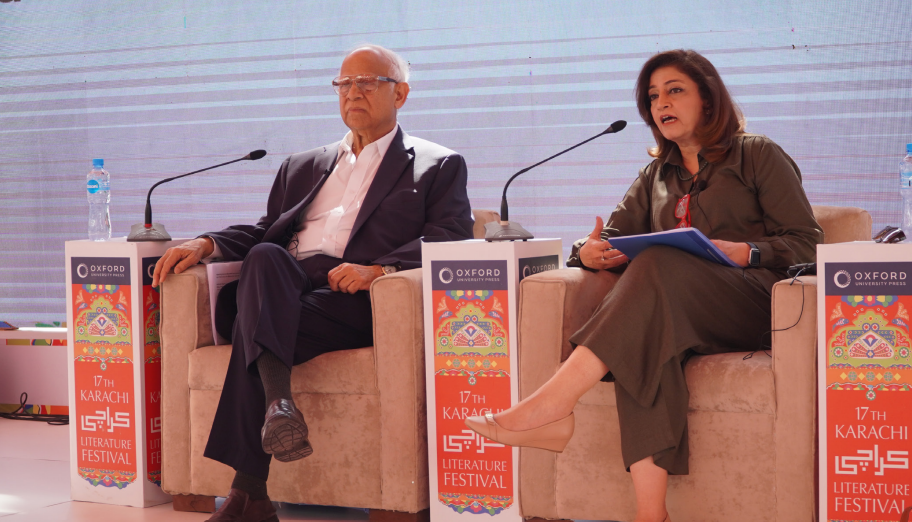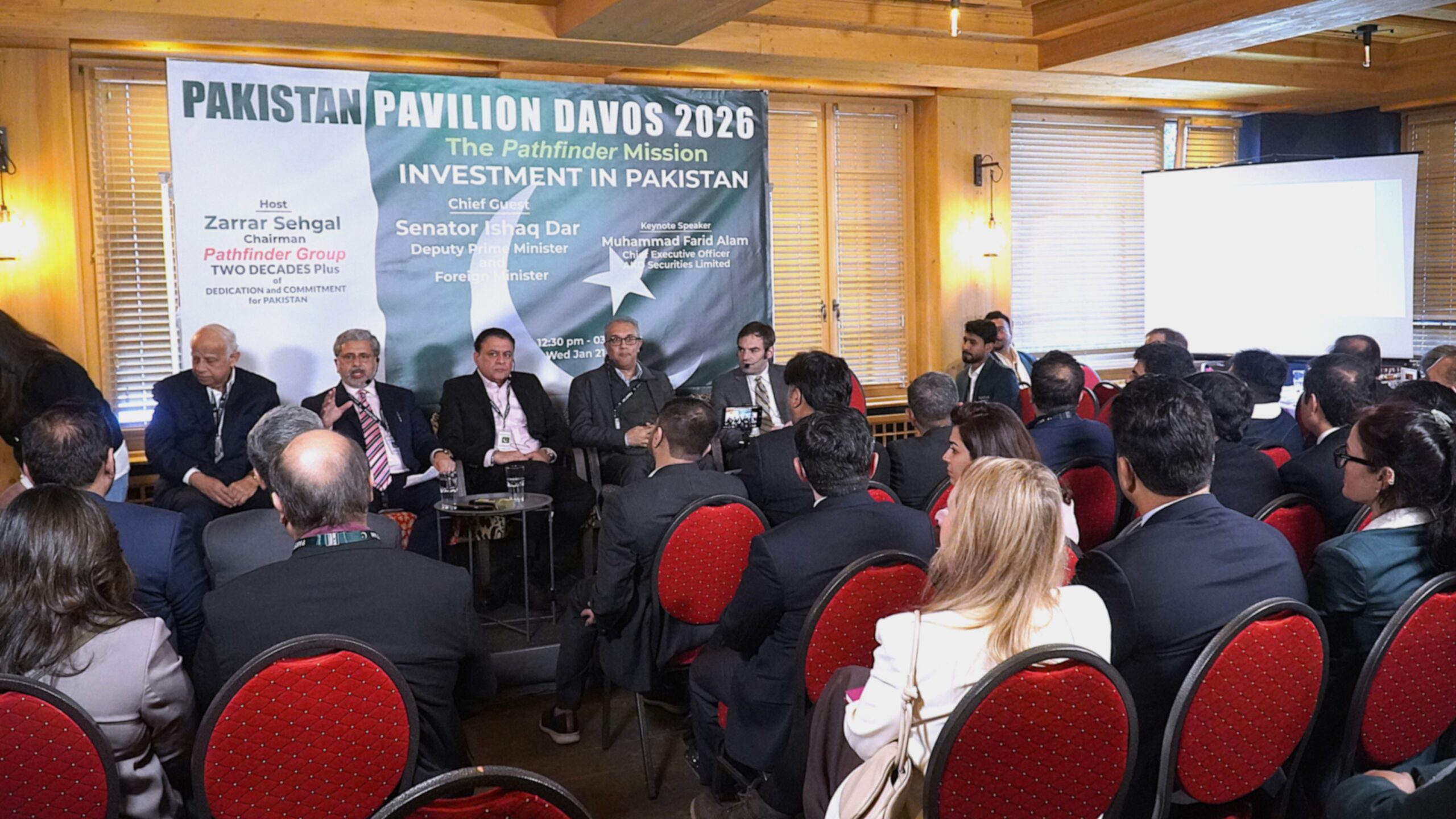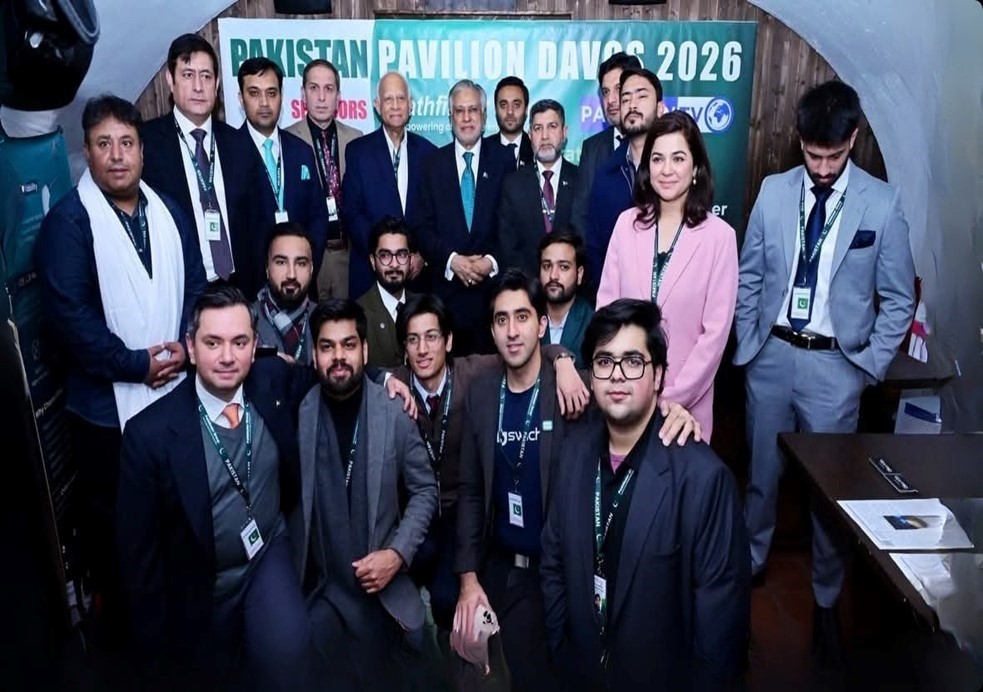




Dr Huma Baqai, Moderator
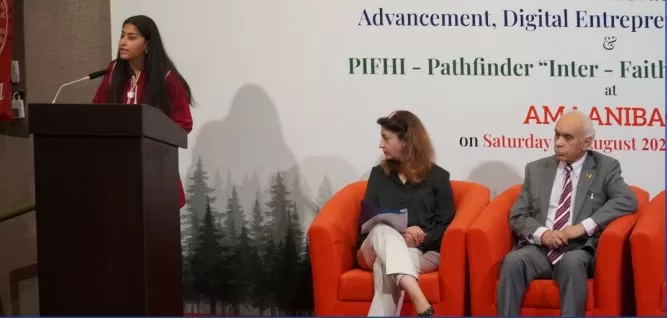
Respected guest, faith leaders, friends, and advocates of peace, a very warm good afternoon. It is a profound honor to welcome you all to the launch of the Pathfinder Interfaith Harmony Initiative. At a time when the world feels increasingly fragmented, we gather here today with a singular purpose. And that purpose is to build bridges of understanding, of empathy, and of shared humanity. This is not just an initiative. It is a commitment to coexistence, dialogue, and peace. And the most wonderful thing is that this initiative comes from a representative of the Z generation. Young people must own this and take it forward. So congratulations, Elena Sehgal, for doing what you’ve done. We’ll hear more from you in a bit. The Pathfinder Interfaith Harmony Initiative aims to promote respectful dialogue between faith communities. Create safe spaces for collaborative action. Celebrate shared moral values that unite us. Counter extremism with education, empathy, and engagement. Through workshops, outreach, educational outreach, collaborative forums, and community projects. It will strive to transform faith into a force for unity rather than division. Before we look ahead, it is important to understand why an initiative like this is so critical and needed in our larger national context.
Minorities in Pakistan are vulnerable. Non-Muslim minorities account for only 3.65% of the population. But that’s still a significant number. These minorities are patriotic, yet somehow very patriotic, because of the narrow-mindedness of some; however, they face persecution. Mr Ikram Sehgal is providing free security to churches all over the country after the attack happened. Those attacks continue to happen, forced conversions continue to happen, and we need to ask serious questions as to why the forced conversions are always of the girls and never of the men.
I can share instances with you that will leave us with our heads hanging in shame. I used to work on secular values and secularism, and I will also take one second to tell you what secularism how illogically it is defined in Pakistan. Secularism in our point of you is “La-diniyat” which means without religion. It is not the lit eral meaning of this concept; it depicts “Mazhabi Rawadari”, which is an obligation by our religion. This concept tells us to protect minorities in Muslim majority arenas and spaces. Why this is critically important is evident from the kind of headlines we see every single day. I was doing a training in Multan on secularism, and the hotel was attacked, and after that, those trainings were suspended because we came out into the open spaces, and we spoke about how critical it is that we have Interfaith Harmony. We also need Intra-Faith Harmony. So I really must congratulate you, and I respect the thinking that must have gone behind this. Elena, you made all of us proud today. Only 3.6 six 5% of the population, including Hindus, Christians, Sikhs, and others.
Despite their small numbers, these communities frequently encounter social discrimination, forced conversions, and even violent attacks on their places of worship. A small minority also has a place in our flag, and Quaid-iAzam made sure to respect that. Despite that, recognizing these challenges, the Federal Cabinet approved Pakistan’s first comprehensive policy on Interfaith Harmony and a strategy on religious tolerance on February 12th, 2025. Took us some time to get there. This policy framework aims to safeguard religious freedom and foster a rights-based approach to social cohesion. Once again, ladies and gentlemen, the government can do this. The communities can, we can, you can, she can. So, with that, to share her reflections and what led to this initiative, I would like to call her the chief guest of today’s event. Let’s hear from Elena what made her think about this initiative.
Elena Sehgal
Aslam-o-alaikum and good afternoon, everyone. I hope you’re all doing well. My name is Elena Sehgal, and I’m the granddaughter of Mr Ikram Sehgal. Today I’d like to speak to you about one of Pathfinder’s most recent initiatives. An effort I feel deeply connected to and one I believe is urgently needed, given the religious and political polarization we are not only witnessing in Pakistan but all around the world.
Pakistan is a country fundamentally founded on diversity, whether that be religious, cultural, or ethnic. That diversity should be utilized as one of our country’s greatest strengths. But when it is misunderstood or deliberately manipulated, it can become a source of deep division. Sadly, we’re witnessing more of that today with a growing spread of misinformation. Over the past year, growing religious tensions have made it clear that faith communities across the country are feeling increasingly divided. Whether through rising mistrust or a lack of understanding between different groups, we are in urgent need of renewed dialogue, empathy, and unity. This challenge is not unique to Pakistan, but around the world, religious polarization is rising reminding just reminding us just how important it is to begin inclusive peace-driven initiatives ourselves.
Religious division damages our communities and fuels distrust, and if left unaddressed, makes it difficult to achieve peace. In response, the Pathfinder Group, grounded in a long-standing commitment to service and responsible leadership, has launched the Pathfinder Harmony Initiative or PIHI. Through a newly established Interfaith Harmony office, we aim to produce lasting change by fostering mutual respect, cooperation, and understanding among Pakistan’s many religious and spiritual communities. Pathfinder has already shown its dedication to solidarity. For example, as talked about before, the SMS security teams have played an active role in protecting churches from targeted attacks, standing not just for unity in principle, but putting themselves on the ground in defense of that principle.
PIHI built on that foundation. Its mission is to facilitate respectful dialogue, strengthen inter-community relationships, especially by empowering youth through education and leadership development. Exactly what is needed. Some of PIHI’s core objectives include one, facilitating interfaith dialogue at the community level, whether that be by launching community service events and joining in with different community religious leaders. Empowering the youth through leadership programs and joint service activities will also be included. Planned activities include an annual interfaith peace forum, school and university outreach, and joint service projects in health, environmental conservation, and disaster response. The initiative will also spotlight real stories from across Pakistan, which would amplify examples of unity already at work in our communities. This mission is especially personal to me because of my own experience back at home in New York, where I co-founded the Agape project this past November, which I will talk about in a bit. So the Agape Project is a youth-led organization that brings together teenagers from diverse faith backgrounds, volunteers from the Christian community, Jewish, Islamic community, Hindus, Buddhists, and many more. We are going to build relationships and serve the community by uniting. There are two Co-founders of the initiative, one is Christian and the other is Jewish, and I am Muslim. We are the co-founders, and we have worked on many community service events throughout the year. Let me briefly share two examples. For our first event, around 30 high school students came together to bake for Grassroots Grocery, an organization serving people experiencing homelessness in the city. More than 150 cookies were delivered to the shelter. But more meaningfully, young people who may have never crossed paths or worked together because of their religious differences work side by side for a shared cause. At our most recent event, 28 volunteers helped plant and decorate a courtyard at Carnegie East House, a nursing home in Manhattan. They were currently building a gardening home under construction and wanted plants to decorate the area. Together, we brought life to a space for elders who spent much of the past few years isolated. Though this may seem like small gestures, this is a reminder that positive change starts with connection.
The simple act of showing up together across the lines of belief is what begins to shift culture and rebuild trust. As I continue growing the Agape project, I’m excited to contribute to and learn from the Pathfinder Interfaith Harmony Initiative. I hope that we can help bridge divides, nurture understanding, and support the next generation of change makers here in Pakistan and beyond. However, before I end this speech, I would like to thank Ikram Sehgal, the man I have the immense honor to call my Grandfather. As many of you know, my grandfather pushes us not only to serve our passions but to serve the people of the world, especially in Pakistan. Recently, I’ve had an immensely impactful conversation with him, where the key takeaway for me was that the purpose of human life is to give beyond anything else. We cannot call ourselves good people or even human if we do not serve to benefit others, no matter who that is or how different they are religiously. Beyond anyone in my life, my dad embodies what it means to be generous and understanding. Sacrifice giving either his comfort, time, or determination to uplift Pakistan. Dada (Grandfather), I can proudly say you lead by example. Your charitable work and actions, a principal part of who you are, are what I believe I want to follow and continue in my own life. Thank you all for your time, and I hope we can have a meaningful discussion.
Dr Huma Baqai, Moderator
Elena, your grandfather just doesn’t inspire you. He inspires a lot of other people. He has mentored a lot of people. He touched many lives, and when I think about Ikram Sehgal, I think he has done his part. But the very next moment, he comes up with conversation with him, where the key takeaway for me was that the purpose of human life is to give beyond anything else. We cannot call ourselves good people or even human if we do not serve to benefit others, no matter who that is or how different they are religiously. Beyond anyone in my life, my dad embodies what it means to be generous and understanding. Sacrifice giving either his comfort, time, or determination to uplift Pakistan. Dada (Grandfather), I can proudly say you lead by example. Your charitable work and actions, a principal part of who you are, are what I believe I want to follow and continue in my own life. Thank you all for your time, and I hope we can have a meaningful discussion. something new. So that’s him, when he came up with that Asaan Mobile Account (AMA) thing, the wallet for the citizen. I got a phone call, Ikram Sehgal was all excited about, and he said, “We’re doing it for the people of Pakistan, and we are going to revolutionize banking in this country.” I said, “Aren’t you done with whatever?” and he said, “No, we’re doing this.” He made it happen. He did it. State Bank is taking it up now. It has given a wallet to the common man.
It has given banking accessibility to the common man while also serving the end of the government of financial inclusivity. Now he is initiating the PIHI Initiative and CITADEL. It looks like two huge beginnings, small steps that would probably take us forward to what this country really needs. I respect him for that.As we launch this amazing initiative today, let us remember that peace does not begin in summits. It begins in heads like Elena’s. Three young girls come together, look at the world around them, and realize this has to change. Like I always say, “People die, people don’t die of bad science, they die of bad politics,” killing anybody in the realm of religion is bad politics.
Our only way forward is for Gen Z and young people to refuse to become partners in this crime. That is the only way forward for a peaceful world. It begins in small moments, the quiet conversations and the willingness to see each other not as others but as fellow human beings.
May this be the beginning of those conversations, and may it grow into a lasting legacy of compassion, connection, and supremacy of humanity. With that, I will invite Brig (Retd) Mujahid Alam to enlighten us more on this.
Brig (Retd) Mujahid Alam CEO, Providentia Books Foundation
Distinguished guests, ladies and gentlemen, Asalam-o-alaikum. Good afternoon and a very warm welcome to all of you, especially to our sisters and brothers from the Christian, Hindu, Sikh, and Baha’i communities. We are deeply honored to have you among us today. It is a matter of deep honor and pride for me to stand before you today at the curtain raiser of Pathfinder Group’s Interfaith Harmony Initiative. An endeavor rooted in our belief that the true strength of Pakistan lies in its diversity and that peace and progress are only possible when built on the foundations of mutual respect and understanding among all faiths.
Our land is home to Muslims, Christians, Hindus, Sikhs, and others, each with their rich traditions and contributions. But what unites us is far greater than what separates us. Our shared humanity, our shared hopes for justice, peace, and opportunity, and our shared dream of a better, more inclusive Pakistan. We are guided today by the timeless words of Quaid-i-Azam Muhammad Ali Jinnah, who on 11th August 1947 said, “You are free to go to your temples. You are free to go to your mosques or any other places of worship in the state of Pakistan. You may belong to any religion, cast, or creed that has nothing to do with the business of the state.” We in Pakistan today, each one of us has to act and implement these rules.
We are especially grateful to Mr Ikram Sehgal, Co-Chairman of Pathfinder Group, whose visionary leadership, unwavering belief in interfaith harmony, and wholehearted support have made this initiative possible. His commitment to inclusive nation-building and peaceful coexistence reflects the very values we hope to promote through this platform, of all the initiatives and endeavors undertaken by him over the last many years and decades. This initiative of interfaith harmony is one of the most important and gratifying because of its direct impact and benefits towards nation-building, and we thank him sincerely. I’m also delighted that young Elena Sehgal is here with us today because this idea was her brainchild, which germinated in New York, where she’s studying, and as you have heard her, she formed this group, and this is what inspired her grandfather also and made this initiative possible.
You have heard her inspiring words, which I’m sure will inspire many others, youngsters as well as those of older age. This initiative is not just a response to information. It is a call to build bridges between hearts, communities, and generations. It is a commitment to open dialogue, to active listening, and to celebrating our pluralism as a national asset, not as a threat. In order to make a meaningful contribution towards this important and noble cause, we need to free ourselves of all prejudices and biases.
The chains and shackles that bind our minds and hearts must be broken. I am reminded of a famous quote of Prince Hamlet in Shakespeare’s famous play, “The Tragedy of Hamlet,” where he said, “I could be bounded in a nutshell and count myself a king of infinite space, were it not that I have bad dreams.” It is a powerful metaphor about the freedom of the mind and the torment of the conscience. What he is saying is that even if he were physically confined in a nutshell, he could still imagine himself as a ruler of infinite space thanks to the boundless power of thought and imagination. This has a direct connection to interfaith harmony because it symbolizes the vastness of human imagination, freedom of thought, and spiritual generosity that can transcend boundaries unless they are limited by inner hatred, prejudice, or fear.
It is a reminder that peace and tolerance begin within the self. In a world where transformations and turbulences are interwoven and humanity stands at a new crossroads, there is an ever pressing need for civilizations and societies to transcend estrangement through exchanges and to transcend clashes through mutual learning. It is therefore not surprising that China recently introduced the idea of a global civilizations dialogue, and the United Nations designated June 10th as the first International Day for Dialogue among Civilizations. Many countries are experiencing internal polarization, social fragmentation, and a crisis of cultural identity. Against this backdrop, dialogue, mutual respect, tolerance, and learning among civilizations and societies are not only critical bridges that connect diverse nations, ethnic groups, and religions, but they also serve as essential keys to peacefully resolving conflicts and bridging divides. Through partnerships with scholars, civil society, universities, and youth organizations, we aim to create spaces for learning, dialogue, and collective action, especially by empowering our youth to be champions of harmony on their campuses and in their communities.
As we begin this journey together, let us be reminded that peace is not passive. It is a choice, and it is the choice we must all make. And every one of us here today is a stakeholder in that choice. Before concluding, I will briefly introduce the Pathfinder Interfaith Harmony Initiative with the help of a few slides. Pakistan’s diversity of religious communities, sex, and cultural traditions is both a source of richness and a challenge. Misunderstanding, mistrust, and at times violence between faith groups continue to pose a threat to national cohesion and social peace.
The Pathfinder Group, rooted in national service and responsible leadership, and building upon its known track record of guarding over 120 Christian churches on Sundays free of cost for the last 30 years, seeks to formalize and enhance this initiative through the creation of a dedicated interfaith harmony initiative division. Under the banner of the Pathfinder, it’s a harp in harmony initiative. The vision is to promote national mutual respect, peaceful coexistence, and cooperative action among Pakistan’s religious and spiritual communities. The mission is to foster dialogue, understanding, and joint community engagement between faith groups in Pakistan through education, collaboration, and leadership. The objectives are what Elena also dwelt upon.
We have dialogue and understanding among the interfaith groups, youth engagement through youth leadership programs, storytelling and joint activities, community projects, and the launch of cooperative service projects, including members from different faiths. Counter extremism collaborates with scholars and institutions to counter hate speech, intolerance, and extremism, and trains and builds capacity to conduct workshops for teachers, clerics, youth leaders, and community influencers.
The core activities would be an annual interfaith peace forum in collaboration with academic and religious institutions, school and university outreach programs on tolerance and respect. Also, Faith and Leadership fellowships for young interfaith leaders. Joint service projects in health, environment, and disaster relief, documentation and publication of interfaith success stories, and local harmony models.
Pathfinder Interfaith Harmony Initiative will collaborate with faithbased organizations and educational institutions, NGOs, and government departments such as the Ministry of Religious Affairs, as well as international interfaith networks. This initiative will function as a special unit under the Pathfinder Group social impact division, reporting to the group’s leadership and guided by an advisory council comprising scholars and peace practitioners from different fields.
On behalf of Pathfinder Group, I welcome you all and thank you for your presence, your prayers, and your partnership. May this initiative plant the seeds of greater unity, compassion, and understanding across our beloved country. I will conclude with a timeless Punjabi word of Bulleh Shah, who said:
“Nah main Momin vich Masitaan, Na main wich kufaar diyan reetan, Na main paakan vich paleetan, Na main Musa na Firoon.”
The message of Bulleh Shah in these verses was to transcend religious labels and to find the divine within.
Sehrish Mustafa, Moderator
Let us hear from a faith leader. It is an honour to have Right Reverend Nadeem Kamran, Bishop of Lahore, with us today. Bishop Kamran has been at the forefront of promoting interfaith harmony, community development, and spiritual guidance across the region. His leadership continues to inspire unity and service to humanity.
Reverend Nadeem Kamran Bishop of Lahore
In the name of the Father and of the Son and the Holy Spirit. Amen. Respected guests, honorable organizers, and dear friends in faith and love. Thanks be to God who has gathered us today on this positive and blessed oc casion. I greet you all from the depths of my heart. Today, we are not just attending an event but celebrating our dream, our mission, and a divine purpose. A purpose that not only prepares our young generations for the future but also makes them ambassadors of love, dignity, and peace. I want to share a small story of Urdu, which we all have heard in our childhood. Once upon a time, there were two trees in a village, one of them provided the shade, while the other had fruit. One day, they got into an argument about which one of them is more precious. To make the decision, they called a wise old man from the village. When he was asked, the old man said, “Both of you are important because you give something to others, which is a source of blessing for them.”
Today, as I stand before you at this great event. My heart is full of gratitude and joy. This is not just a celebration of a bright future, but also a light that illuminates the path of love, harmony, and mutual respect, and will continue to do so. Today’s event is the event of lights, guidance, education, love, and harmony. This light tells us that whether we belong to any religion or ethnicity, our God is one, and we are all His creations. In the Bible, Jesus said, “You are the light in the world, and the one who obeys it will never walk in darkness.”
Today, we are not only celebrating plans and programs but also recognizing a vision where technology serves humanity, where young minds are shaped not only with skills but also with values, and where relationships between communities are strengthened through love and understanding. Today, we are witnessing CITADEL, the vision of the Pathfinder Group, which is not just a dream but is becoming a reality, and the Pathfinder Interfaith Harmony Initiative is bridging the distance between hearts and building bridges of love. The CITADEL program will not only teach the youth skills relevant to the digital age but will also instill in them moral values. These are the initiatives that we need to do today to make our country successful and a beacon of peace. I would like to congratulate Pathfinder Group for bringing together people from different religions, to sow a seed of continuous growth and prosperity within the country.
Historically, it is observed that all the religions give us the lesson of peace and harmony, and tell us that the boundaries are not set by the religions, but the people with an extreme mindset make them. But there are some blessed people sent by the Almighty who serve as a bridge to unite all the people and bring peace. All the saints and prophets have preached the lesson of humanity and peace. The Holy Prophet (PBUH) had a written agreement with the Christians of Najran, which is still available at the Saint Katherine Church. It is written in that agreement, “there will be a forceful act on them, and their churches will be respected and will not be demolished.” When we witnessed the incident of Jaranwala, I condemned it on every forum and with the governments as well, and told them to make this agreement a mandatory part of the syllabus. I also mentioned to publish it in print, social, and electronic media, so people will know about it. This agreement should be taught in schools and universities. These words still call us, reminding us that faith is not a sword but a shield. Faith is not hatred but love. Faith is not oppression but freedom.
We, as a Christian community, need to understand the teaching of Jesus Christ, as he said, “Love the Lord your God with all your soul, power, wisdom, and heart.” In the Bible, we have an incident of a man passing by the river, the dacoits half-killed him and threw him. One of the Jews heard him in pain but passed by, but when a Samaritan passed by him, he lifted him and bound his bandage. We get a beautiful picture and examples of love from the lives of prophets, saints, and religious scholars. In our childhood, we used to read the story of the Holy Prophet (PBUH), about how a woman used to throw trash on him while he passed down the street, and one day, when she didn’t do the same, the Prophet went to inquire if she was not well. This shows the love and care for humanity that he didn’t take revenge on her rather cared about her health.
Similarly, when Jesus Christ was in danger for his life, one of his fellows cut the ear of one of the servants of King Kahin with a sword, but Jesus said to him, “Put your sword back in the scabbard, because the ones who kill someone with it also get killed by it.” He knew that it was time for him to devote his life to humanity and to those who need help. The ones who face the hardships provide peace and prosperity to the others. We only practice our religious practices, but we lack the patience and tolerance for others. We should respect the religious morals, holy books, and sacred places of all the religions. The holy books, the Quran and the Bible, give us the lesson of how love can make us superior in this world, and it’s an essential component of bringing peace and prosperity among societies.
I was once invited to Lawrence College to interact with the students. A student came up with the question of why the Christians in Pakistan are serving minor works like sanitation or cleaning, etc., and are more underprivileged. I emotionally got unstable and wasn’t feeling like answering him. The cross which I wear is the cross of the 5th bishop of Lahore, and I am the 10th one. Behind this cross, it’s written “Never Give In,” and it is the insignia of Lawrence College. I am happy to see the children of my nation studying there, but there is only one Christian student studying there. If we give admission to the Christian students and make them study there, I think we will be better able to answer the question that the student asked. When we talk about the Pakistani flag, the white part represents the minorities, and the stick in the flag is in that white part, which shows that in difficult times, the minority holds the rest of the nation firmly. We keep on praying for our country and the citizens of Pakistan. It’s our collective responsibility to make Pakistan a state of peace and advancement.
In the end, I just want to say that Pakistan is our country, and we need young people like Elena Sehgal who join hands with all the people, regardless of their religion and ethnicity; this practice can make Pakistan strong. If any one child is left behind, the whole economy will suffer in the future. In our school, if there are 16 students and all of them pass, the result will be 100 per cent, and if one student fails, the result will drop to 90 per cent. I once again like to thank Mr Ikram Sehgal and Brig (Retd) Mujahid Alam. We need people like them. Pakistan Zindabad.
Sehrish Mustafa, Moderator
Thank you. We all dream of a Pakistan where everyone has equal opportunities and resources. 30 years from now, we wish to see a Pakistan where every child has access to schools and has the same opportunities regardless of their background. I would like to call upon the stage Captain Babar Bernard Messy. He is a security professional with more than 20 years of experience in national and international organizations.
Capt (Retd) Babar Massey Security Professional
I’m very scared standing right in front of a very august house. Ladies and gentlemen, there’s one verse that gives me a lot of courage, and I think that verse is not only for the Christian community, but it’s for everybody sitting over here. I can read it out in English, but I would like to read it out in Urdu since that gives me more power, and that gives me more strength, and that is Psalm 91, verse first “Jo Rab Talla kay parday mai rehta hai wo qadir e mutliq kay saya main sakoonat karay ga, main khuda-wand ka baray main kahun ga wo hi meri panah aur mera garh hai” and he is for everybody, in this world.
It is truly an honor for me to stand before you today as someone whose life has been deeply touched by the values of unity, respect, and interfaith harmony. My journey started when I wore a kaki uniform for 10 years. I had two injuries on the glacier, and the second injury was fatal. I had to leave the army, staying in CMH Rawalpindi for one year. I would like to highlight certain things that are very important for everybody to know.
After that, I happened to be interviewed by a gentleman, and I joined him, and during this transaction, a man of great vision and unwavering commitment held my hand, and that gentleman is Mr Ikram Sehgal. I joined the Pathfinder Group when it was in a developing phase, SMS was becoming strong I think Phoenix was the best security company in those days but Phoenix is no more, SMS is the best and the biggest security company in Pakistan – not for being security providers but for providing health, shelter, and supportive to all the communities. I think this is one of the reasons they have come so high because they had the vision of the lord. I had the privilege of joining SMS in 2000 as Assistant Vice President. Mr Ikram Sehgal used to scold a lot, and I must say, because of that, I am who I am right now and where I am standing, and I’ve learned everything that I know is because of him. But that was just the beginning.
Then, after 9/11, I was offered a position of local guard force security coordinator, which the American embassy in Pakistan made for all the consulates. I’m telling you this because you need to know where this journey started. It’s not today, it’s 30 years back. I’m very proud that I have a drop of my life to contribute to this. I joined the US embassy as local guard force coordinator, and I was told to look after the security company, the biggest security company in Pakistan, having the biggest security contract of the US state department in the world. I started up, I took his permission, and he was the one who told me that I could apply. I was offered by the American regional security of ficer, who retired as an assistant secretary of state for security. So Mr Sehgal called me up and he said, I allow you to go and join. I said Fine, if you allow me, then I will do it; otherwise, not. So that was my career after military experience, which allowed me to go to the US, do about eight to nine courses in different security fields.
Then, I had the privilege and honor of protecting the US Presidents, Bill Clinton, George W. Bush Jr., with the Secret Service and many Secretaries of State. I acknowledge that it only started with his vision by getting me into the SMS and his support; otherwise, I would have been, you know, just living a retired life. So that was my career develop ment, which happened. Mr Sehgal’s contribution is not only this with me, but with a lot of people in his life. He has been helping the minorities for a long time. I still remember I was working at the US embassy. I was the Senior Foreign Service National Investigator heading the local security office for the RSO, and I got a call from Mr Sehgal. He told me, Babar, just tell me which churches want guards on Sunday, and we will start the deployment.
So that started almost 30 years back, sir, and without any interest, without any monetary benefits. I know that he understood how difficult it would be for the company and organization, but that was the risk he took for us. His background included having sisters who were educated in a convent school, and one of the nuns there became his mentor, which he highly valued. I don’t like to be called a minority. Why? We are Pakistani citizens. Yes. But no, ladies and gentlemen, we, the Christians, were the pioneers of education and health in Pakistan.
If he had not studied in a convent school, this would not have been made. The Cathedral schools and the Convent schools are the hub of education. This initiative is not led by his granddaughter. This vision she got from him, as she said, and I think it was inculcated in her because of him.
Convent schools, Cathedral schools, sisters from St. Mary’s Convent are sitting here, and also students from Lawrence College. I ask you, how was it made, and who made it? The institutions involved include Gordon College, Murray College, Edwards College, FC College, online schools, cathedral schools, and station schools. The first school on this list was the one where diplomats’ children from Islamabad used to study, as there was no international school at that time. So I would like to tell you that please don’t think that we are a minority. We are above the majority because of the education, the principles. How to live life was taught by our nuns and our Christian schools.
In the end, I would like to highlight what is on my mind. Muhammad Ali Jinnah said, “Unity, Faith and Discipline. Unity is being united, and we’re going to get with this platform, and we have to accept and respect the faith, belief, and religion of others. We should have the tolerance to accept things the way they are.
The Lord Jesus Christ did not only come for the Christian community. He came for the entire world. That’s why he is called Rooh Allah. What is Rooh Allah? The soul of the lord. I am honored and I’m thankful to be once again there with you. You trusted me; you are still trusting me to come here, speak, and be a part of this organization.
Thank you very much, ladies and gentlemen, and I leave this place now with praise for everybody and for the unity, love, and peace which the Lord has given us and all of you.
Sehrish Mustafa, Moderator
Thank you so much, sir. Now let’s hear from the man himself. He needs no introduction. I would like to call upon the living legend, Co-Chairman of Pathfinder Group and Patron-in-Chief of Karachi Council on Foreign Relations, Mr Ikram Sehgal.
Ikram Sehgal Co-Chairman, Pathfinder Group
Bismillah-ir-Rehman-ir-Rahim, before anything, I’d like to invite my grandson Suleiman to join me. One of his sisters took the initiative of the Providentia Books Foundation, and the other one is going into the Interfaith Harmony Initiative. I’m sure he’ll come up with something similar, but I can tell you this much: more than his sisters, he likes to be in Pakistan.
Suleiman Sehgal
Thank you, everyone, for coming. On behalf of the Pathfinder group and the Sehgal Family, we would like to thank everyone for coming, and also the panellists. CITADEL and Pathfinder Interfaith Harmony Initiatives are run by my sisters. We will all be doing well. Again, I thank you all.
Ikram Sehgal Co-Chairman, Pathfinder Group
Yesterday, Providentia Books Foundation held a function. This initiative was conceived by Amaani five years ago and is now run by Brig (Retd) Mujahid Alam. The vision behind the foundation is to collect books from affluent individuals and distribute them to those in need. To date, over 70,000 books have been distributed, and we are currently supporting hundreds of schools. It is indeed a significant project. Ultimately, my greatest happiness comes from spending time with my grandchildren.
I would like to acknowledge all the speakers, but listing everyone by name would take a while. Thank you all for being here. My journey towards understanding harmony began when I was just 7 years old, as the first student in what became one of the largest convent schools in East Pakistan, now Bangladesh. My father had stopped a group of nuns who were operating a clinic to establish an English school, and Sister Leo took me under her wing at the age of seven. She allowed me to leave at the age of 11 to attend Lawrence College in Murree.
During my first two Sundays there, four of us, two boys and two girls, were boarders. We were taken to the church, where we sat at the back and fidgeted for the first two Sundays. Sister Leo tolerated our restlessness, but on the third Sunday, a Molvi was waiting for us outside. This experience made me recognize the value of secularism. A nun from Texas in a Catholic Convent was raising me as a devout Muslim, which led me to realize that, for me, everyone is equal. One of my best friends, Moti Lakwani, who is Hindu and resides in Karachi, could not join us today
I would like to share some thoughts about churches and their significance to me. When we started SMS, Captain Babar downplayed his role in organizing it. On Sundays, I used my guards from Wackenhut, the cash and transit company, because the armored vehicles were not allowed to transport cash on that day. With one armored car, four guards, and a driver, this meant we had roughly 600 personnel on duty on Sundays. The guards, despite their financial struggles, adamantly refused to take overtime pay, stating that it was their duty to protect our minorities. This grassroots solidarity provides strength and reassurance, emphasizing the importance of community support.
I was fortunate to have a supportive team; many believed in our mission, and that belief has translated into action. I feel incredibly lucky to have a wonderful wife who has been tolerant of me all these years.
I am also grateful for my son, Zarrar, and I love referring to my daughter-in-law, Kashmala, as my daughter. She gave up her career in law to take care of the children, and I take great pride in the way she has raised them. This has been a team effort; it’s not just one person but a collective effort. People gather together and say, “Let’s do this.”
I attended a convent, but my father thought I would become too soft, so he sent me to Lawrence College to toughen me up. Recently, I spoke with boys from senior Cambridge who were curious about the differences in education. I told them that during my time, academics didn’t hold as much importance as they should have; we were more focused on extracurricular activities. I’ll share a secret with you: I attended the academy in 1964. Before our two years were over, we went to war, and many of us served in combat.
Although we completed our academic requirements, we didn’t take our examinations, so I didn’t receive my degree until 15 or 20 years later, when my coursemate became the Commandant of PMA and awarded me the degree.
I consider myself a simple graduate. Once, someone asked me how educated I was. We used to do a nine-mile walk with a heavy bag and a rifle. At the eighth mile, there was the Ilyasi mosque, known for its good water. We often stopped there to fill up our one-gallon water containers, and I would joke, “I have reached here after drinking water from the Ilyasi Masjid.”
We have gifted two projects to Lawrence College. One, a swimming pool, is nearing completion. It is a heated pool that allows for year-round swimming from March to December and is equipped with a solar energy system to keep costs low. The swimming pool is important; we used to attend the Pakistan Military Academy and receive awards like the Sword of Honor and gold medals.
Alongside the swimming pool, I took the initiative to donate an Innovation Center. General Awais, who is a member of the board of governors, has supported us greatly. During the last board meeting, we approved the establishment of a world-class Innovation Center. The design for this center was created by Haji Rafique Pardesi, the owner of HMR Investments and a part-owner of EMAAR in the UAE, who is donating the design free of charge, along with a French architect. We have already received donations, including one crore from Chief of General Staff Lt. Amir Raza out of his pocket.
Additionally, my in-laws, Iqbal Hussain Chaudhary and Sikandar Chaudhary, have donated one crore on behalf of their family. We are in the process of gathering more donations. While we expect the center of excellence to take three to four years to complete, we are also looking for ways to fast-track the project in the meantime.
It’s been a long journey establishing CITADEL and other initiatives. When I look back, I see that we have created exactly what the Sehgal family set out to do. Whenever I asked my son Zarrar about our goals, he always said, “Let us give back.” Islam teaches us to make a profit and share that profit with those who are less fortunate. We embraced that principle, and today, we are implementing it on a large scale through various initiatives.
None of these ideas came solely from me; my staff contributed many of them. The greatest idea we have today has the potential to change the destinies of people in Pakistan, especially the poor. A staggering 80% of Pakistan’s adult population does not have bank accounts.
About twelve years ago, the World Bank initiated a program for financial inclusion and women’s empowerment, which led to a competition hosted by the State Bank. While many companies participated, only one survived: our company, which developed a Virtual Remittance Gateway, an entirely Pakistani platform.
This platform allows people to open a bank account with 16 banks on their phones in under two minutes, without needing internet access or lengthy paperwork. As proof of our success, we now have 13 million accounts.
We kept this achievement quiet because, in Pakistan, if you achieve something, people tend to scrutinize your success. We chose to remain low-profile until we became too successful to fail. My colleagues, Jahangir Javaid from Wackenhut Pakistan and Salman Ali from VRG, represent the face of our accomplishments today.
We have received recognition from the World Economic Forum (WEF) for our innovative approach. The system isn’t limited to one banking service; for example, you can utilize services from various banks and telecommunications providers. An elderly woman with an AMA account can deposit money at any of the 16 banks and access cash.
Today, around 150,000 EasyPaisa agents are online, which allows anyone with an AMA account to withdraw cash from any EasyPaisa branch. Furthermore, one does not need to go and stand in line to pay utility bills; an AMA account serves the purpose.
We aimed to go further. Have you ever considered how a low-income person might feel having a debit or credit card? We developed something called PayLite. This service allows users to pay for groceries, settle bills, transfer money, or even order from McDonald’s.
All this has been accomplished by Pakistani youth. Recently, an organization from Saudi Arabia called the Digital Cooperation Organization (DCO) has joined us, and we look forward to collaborating in 14 countries, prioritizing Pakistan first.
This progress is fundamentally possible due to the support I received from my wife and family. Our journey has not been without failures, but we have certainly achieved success in many areas.
First, I want to thank my staff for making this dream a reality, a home away from home. I urge all of you to support Pathfinder and the Sehgal family in fostering unity and distributing books. We are now expanding beyond books; Brig (Retd) Mujahid Alam is working on digital outreach to establish digital classrooms in 2,000 to 5,000 locations. I will certainly seek Gulmina’s assistance in this. We do not need your money; we encourage you to contribute directly to establishing digital classrooms.
Working with the public sector will bolster our initiatives. I would also like to express my gratitude to the members of the Baha’i, Sikh, Christian, and Hindu communities for joining us today, as well as to the members of parliament.
I’m also grateful to my fellow Gallians for their attendance. Let me share a personal story about my granddaughter, Elena. She received 12 A grades but was upset about getting an A-minus in Latin. When she called me crying, I reminded her that her grandfather only received two A’s. It’s all about perspective.
I feel blessed in my life, especially for my son, daughter-in-law, and all my grandchildren. Thank you.