




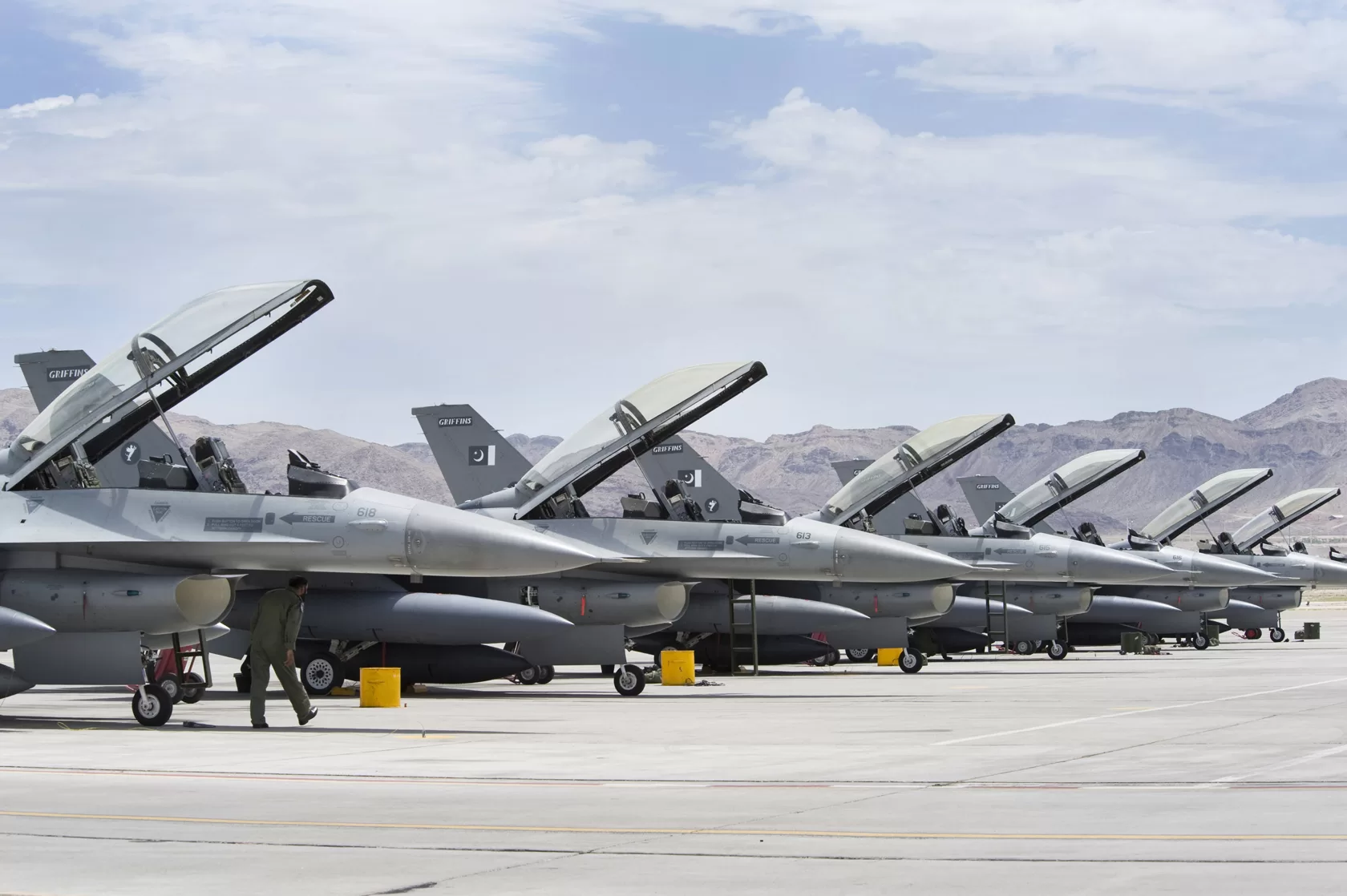
Strength is never seen in bluster but in steadfast resolve. The formidable commitment of the Pakistan Armed Forces lies in demonstrating their dedication to national security and readiness to respond wherever and whenever required. Disciplined and deliberate, they have struck with precision only where necessary, conveying restraint without weakness. Carrying forward the spirit of Marka-e-Haq, they displayed courage and professionalism by humbling a numerically superior adversary. Numbers may intimidate, but it is skill, doctrine, and morale that will turn the tide. This was best displayed on 6 Sep 1965, now known as the “Defence of Pakistan Day”. Almost 60 years later, from May 7 to May 10, 2025, the Pakistan-India Conflict reinforced the stature of the Pakistan Armed Forces. Nobody symbolised this better than the man on the DJ’s cover for September 2025, Maj Raja Aziz Bhatti Shaheed, Nishan-e-Haider.
Aziz Bhatti applied to join the Pakistan Army in 1948. Joining the Pakistan Military Academy in the first PMA Long Course in Kakul, he distinguished himself in both studies and athletics among his classmates. Awarded the Sword of Honour and the Norman Gold Medal, he was commissioned to the 4th battalion of the 16 Punjab Regiment (4/16 Punjab Regiment). In 1956, Aziz Bhatti attended the Staff Course at the Canadian Army Command and Staff College. Promoted to major in the Army in 1962, Maj. Aziz was taken into the faculty of the School of Infantry and Tactics in Quetta. From January to May 1965, Maj. Bhatti served in 17 Punjab. Commanding two companies of 17 Punjab, Maj. Bhatti was deployed on the forward positions of the BRB Canal near the Burki area of Lahore District. During the Indian Army’s efforts to capture the Burki sector by crossing the BRB Canal, during the night of 7/8 September 1965, the outnumbered rifle companies under Major Bhatti forced the Indian Army to engage in hand-to-hand combat. The fighting continued for the next three days. Despite the Indian Army having a numerical advantage, the Indian Army had to halt its plans of capturing Lahore and focus on capturing the Burki sector. Standing up despite warnings to take cover to observe enemy positions and direct artillery fire, Bhatti was killed by shellfire on 12 September 1965. He was 37 years old at the time of his Shahadat. The Federal Government posthumously awarded the Nishan-e-Haider for his gallantry and actions of valor during the defense of Lahore during the Indo-Pakistani War of 1965.
A Memorial to Maj Aziz Bhatti was built in 2019 at the site where he was killed. This is located approximately 500 metres north of the Burki Road/BRB Canal checkpoint on the west side of the BRB Canal. The Citation on the Memorial reads, “Major Raja Aziz Bhatti known as ‘Muhafiz-e-Lahore (Defender of Lahore), ‘ received Pakistan’s highest award for his valor. Born in Hong Kong in a Muslim Rajput family (belonging to Lahore) in 1928, he got commissioned in the Pakistan Army in 1950 (17 Punjab Regiment). Major Aziz Bhatti was posted to Burki sector in Lahore during the Indo-Pak War of 1965. Being a Company Commander, he moved his platoon forward to this bank of BRBLC [BRB Link Canal] under constant fire of enemy tanks and artillery. He resisted for five days and nights in defending this Pakistani outpost on the strategic BRBLC without rest. On 6 September 1965, he left his company Headquarters and moved to his forward Platoon and stayed with them under incessant artillery & tank attacks. He positioned himself in this elevated place to watch every move of the enemy. This point was vulnerable to enemy tank & artillery fire. After five days of continuous fighting on the front, he was offered to be relieved for rest, but he refused and said, “I do not want to go back, I will shed the last drop of my blood in the defense of my dear homeland.” On 10 September 1965, Maj Aziz Bhatti was hit by an enemy tank shell in the chest while observing the enemy move from this elevated place. He was awarded the highest gallantry award of Nishan-e-Haider on his supreme act of bravery,” unquote.
Maj Aziz Bhatti was buried in the courtyard of his ancestral home at Ladian, a small village near Gujrat, Punjab, Pakistan. In 1966. The Presidential Nishan-e-Haider citation on his grave is written in Urdu and is actually a poem; and it reads with translation as: “Rouge on the face of shahadat, pride of the country and the nation are these fearless warriors, a strike of their sword wipes out the mightiest of foes this one who came out victorious in the struggle for the cause of ALLAH is lying here in the delight of the afterlife dream. Major Bhatti fought valiantly on the Lahore Front, and is posthumously presented with the Nishan-e-Haider”.
Courage beyond compare is the hallmark of this family. Maj Raja Aziz Bhatti Shaheed was maternal uncle to Maj Shabbir Sharif Shaheed (Sitara-e-Jurat in 1965 and Nishan-e-Haider in 1971) and Gen (Retd) Raheel Sharif former COAS Pakistan Army and currently serving as Commander Islamic Military Counter Terrorism Coalition (IMCTC) in KSA.
The defense of a nation does not end at borders; it starts from classrooms, libraries, laboratories, and interfaith spaces where future generations are shaped. As a proud grandfather, it is with pride that I have seen two of my granddaughters, Amaani and Elena, come up with remarkable ideas. Providentia Books Foundation (PBF) was founded by Amaani Sehgal, a Freshman now entered in the IVY League Cornell University. Beginning as Amaani’s school project, PBF has already distributed over 61,000 books, sowing seeds of empowerment where neglect once prevailed. Pathfinder Inter-Faith Harmony Initiative (PIHI) is the brainchild of Elena Sehgal, younger to Amaani by 3 years, and also a student of Brearley School for Girls in New York. As a Muslim, she has partnered with a Jewish girl and a Christian girl for an interfaith initiative in Manhattan.
At the start of August, the PBF brought together Gen Z and thought leaders in a dialogue on skill development and the future of Pakistan. Simultaneously, the inauguration ceremonies of Center for Innovation, Technological Advancement, Digital Entrepreneurs, and Leadership (CITADEL) and the Pathfinder Inter-Faith Harmony Initiative (PIHI) were held at Amaanibagh, Home of the Sehgal Family, in Angoori, Islamabad. Students from top universities of Pakistan discussed their opinions freely; they are truly a fearless generation ready to take Pakistan to a positive trajectory of development. The message was clear: our youth are not just tomorrow’s leaders, but they are already shaping Pakistan’s destiny. There was consensus that the future of Pakistan is in AI and technological advancement, with investment in human capital.
My vision for Pakistan is to create a digitally and financially inclusive nation. I am truly blessed that the remarkable initiative of CITADEL, undertaken by the Pathfinder Group is the brainchild of my tech-savvy friends: Air Commodore Khalid Banuri, Air Vice Marshal Asad Ikram, Air Commodore Farhan Ahmed, and Imran Jattala. A significant achievement that demonstrates our unwavering commitment to Pakistan, this type of initiatives are essential to address the challenges of unemployment and increasing polarization in our society. Pakistan today stands at a critical juncture with a population of 241.5 million, of which 65% is under the age of 30. This youth bulge presents both a challenge and an opportunity: according to UNDP estimates, Pakistan needs to create 2.5 million jobs annually till 2035 to absorb this growing workforce. Yet, the reality is stark: 31% of graduates remain unemployed, reflecting a deep disconnect between education, employability, and industry demand. With 139 million mobile broadband users and 53% internet penetration, Pakistan has a massive digital-ready population. The existence of 449 co-working spaces, 90+ accelerators & incubators, 41 Business Incubation Centers (BICs), and 89 Research & Innovation Offices (ORICs) demonstrates a vibrant ecosystem. However, without aligning this ecosystem with future skills and IT product development, the youth bulge risks turning into an economic burden rather than an asset.
Look at what CITADEL has to offer, with its Career JumpStart Institute, Escape Velocity Accelerator, and Strategic Innovation Consulting. These interventions focus on graduate employability, skills of the future, and scaling IT product companies that have the potential to create jobs 10x faster than traditional industries. By fostering productivity, competitiveness, and innovation, Pakistan can unlock its 2040 demographic window and turn its youth bulge into a powerhouse for job creation, economic growth, and national development. I want to pay gratitude to my friends in tech for their efforts in materializing the idea of CITADEL.
Similarly, PIHI, born from the vision of young Elena Sehgal, reminds us that true progress rests on harmony, empathy, and unity among faiths. Together, these initiatives reflect a holistic approach: securing the state through deterrence, and sustaining the nation through education, innovation, and tolerance.
While our armed forces have shown that no external force can undermine our sovereignty; our youth are demonstrating that no internal deficit of imagination can hold us back. From the depths of the Arabian Sea to the bookshelves of a village school, from AI-driven entrepreneurship to interfaith solidarity, resilience is being built at every level. Pakistan today stands at a critical junction. This momentum must not falter – whatever the danger and from whomsoever it emanates a proud nation must not only refuse to blink but be ready to respond with greater force.
Ikram Sehgal