

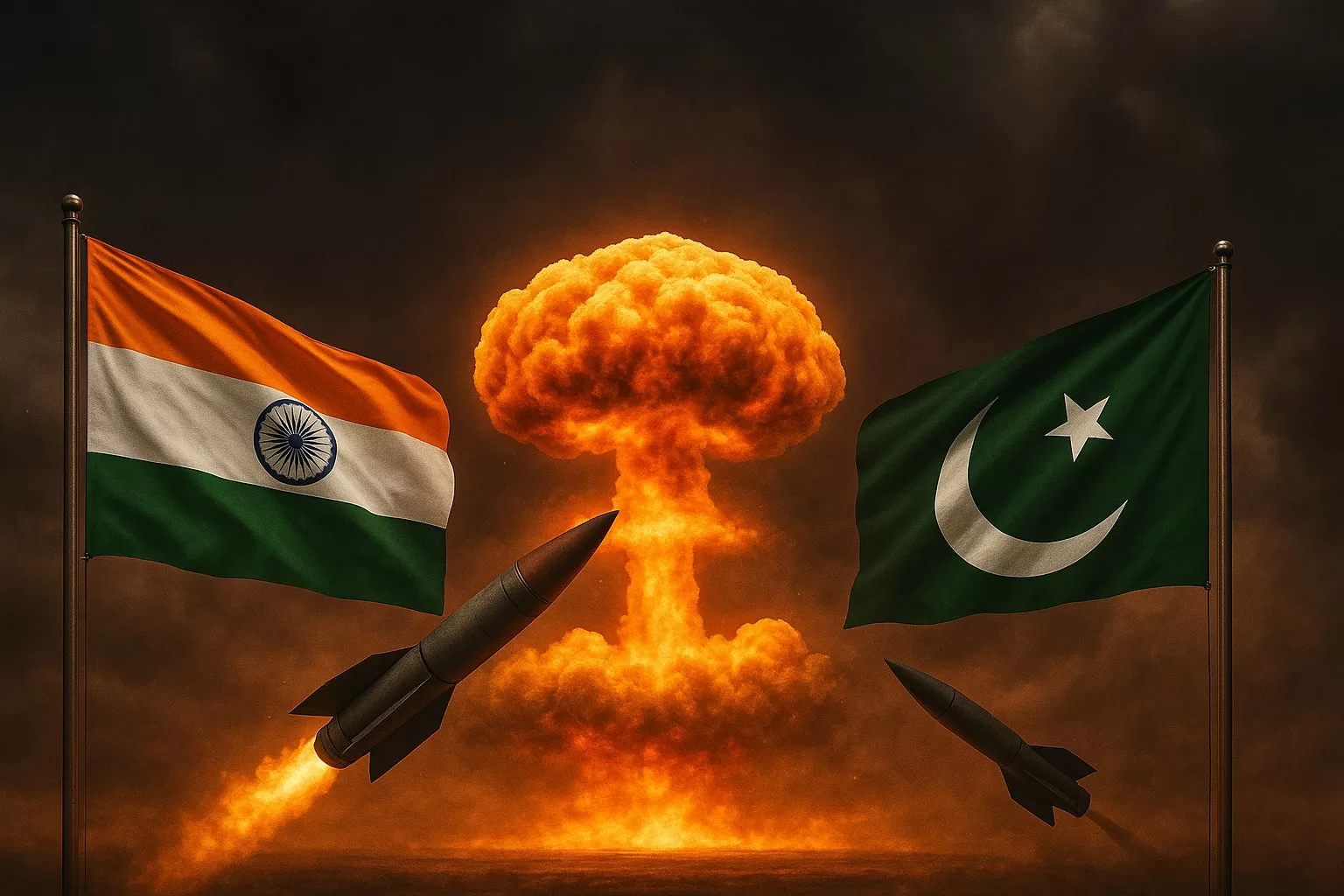
The Pakistan Air Force (PAF) decisively neutralized the Indian Air Force’s kill chain during the May 2025 conflict in a display of unprecedented multi-domain warfare capabilities. Earning global recognition for its precision, synergy, and technological prowess, Pakistan decisively repelled India’s Operation Sindoor, an aggressive airstrike campaign launched under the pretext of a “false flag” operation. This unprecedented “war without declaring one” was made to emulate Israel’s dominance of the Arabs since June 5, 1967, it was “new normal” for the region. In the minds of our Arab friends, impressed with the propaganda chained out by multiple Indian movies having Shahrukh Khan, Akshay Kumar, etc destroying the Pakistan Armed Forces and ISI, it was made to “cement” India in their minds as the dominant power “East of Suez”. Contrary to India’s propaganda of technological and numerical superiority, the PAF responded with precision, speed, and full-spectrum capabilities. Key to this success was Pakistan’s integrated air defence system (IADS), superior beyond visual range (BVR) missiles such as the PL-15, and effective use of electronic warfare, satellite jamming, and cyber-attacks that blinded and disoriented the Indian Air Force (IAF). The IAF’s weaknesses in overreliance on imported platforms and its gross underestimation of Pakistan’s defensive readiness became public property. India’s counter-narrative was shown to be a blatant lie.
The crucial lessons derived was that the future of aerial conflict lies in Multi-Domain Operations (MDO), decision-cycle superiority, and integrated electronic and cyber warfare. PAF is already adapting to counter India’s likely future shift toward standoff weapons, unmanned systems, and electronic suppression. To maintain dominance, Pakistan is focusing on proactive pre-emption, advanced training, indigenous Research & Development (R&D), dynamic air defence, and the use of AI in operational planning.
From modest beginnings in 1947 with a small number of outdated aircraft, the PAF has developed into a strong, self-sufficient institution, motivated by necessity, strategy, and an unyielding quest for technological sovereignty. What started as a matter of survival has become a symbol of national pride. Confronted with sanctions and embargoes in the 1960s and 1990s, the PAF turned inward, nurturing local talent, establishing R&D institutions, and investing in indigenous design capabilities across avionics, weapons systems, and electronic warfare.
The development of key institutions such as the Pakistan Aeronautical Complex (PAC) and NESCOM led the charge, developing everything from radar systems and digital avionics to air-launched cruise missiles and UAVs. Programs like ROSE, the JF-17 Thunder, and the creation of a national data link (Link-17) reflect the PAF’s growing competence in platform and system integration. The establishment of the National Aerospace Science and Technology Park (NASTP) marks a new era, where academia, private sector innovators, and military technologists converge to shape the future of airpower through AI, cybersecurity, and advanced avionics.
While hardware, jets, drones, and missiles do make a difference, it is the strategic foresight, institutional ethos, and battle-tested leadership of the PAF that truly defined its success. Cultivating a warrior ethos through rigorous training and situational adaptability, based on its core values of integrity, excellence, and teamwork, it was fully realized under the leadership of Air Chief Marshal Zaheer Ahmed Baber Sidhu. He must take singular pride in orchestrating the largest aerial battle since WWII with seamless coordination across air, space, cyber, and electronic domains. What made this performance extraordinary was not just technical mastery but the years of doctrinal evolution, investment in human capital, and war-gaming driven by a clear strategic vision.
Air Chief Marshal Sidhu’s strategic foresight, unwavering resolve, and technological vision have elevated the Pakistan Air Force (PAF) to new heights, literally and symbolically. As the architect of Pakistan’s aerial response, the ACM’s calm determination and unmatched tactical precision transformed Pakistan’s skies into a fortress. In just minutes, 42 Pakistani jets were airborne, intercepting 72 Indian aircraft with surgical efficiency. On May 7 the PAF repelled a massive Indian air incursion delivered a stinging blow, downing six Indian fighters, including Rafales and Su-30s worth over a billion dollars. The strategic counterstrike on May 10 under Operation “Bunyanum Marsos” was master class in modern air warfare, much more than a military success. The SIX HOURS delivered a message to the world: Pakistan had punctured the perception in political and military minds about India’s “military dominance” in the region.
The legacy of ACM Zaheer goes far beyond the battlefield. Since assuming command in 2021, he has been a tireless reformer, quietly laying the foundation for the modernisation of the PAF. From strengthening diplomatic defence ties with the U.S., China, South Africa, and Oman, to spearheading indigenous innovation through the National Aerospace Science and Technology Park (NASTP), he has ensured that Pakistan’s aerial guardians are not only combat-ready but future-ready. Under his leadership, the PAF has embraced fifth-generation technologies, pioneered cyber-defence capabilities, and redefined aerospace innovation for the region. ACM Zaheer Ahmed Baber Sidhu is more than a warrior; he is a visionary. His humility in victory will inspire a generation. Under the guidance of leaders like him, indigenization is no longer just a policy; it is a living, evolving national doctrine.
The changing nature of global conflict shows that air dominance is now defined not just by fighter jets but also by algorithms, cyber networks, and technological superiority. A hard truth is: steel alone does not secure sovereignty in today’s warfare. The recent developments in the Pakistan Air Force demonstrate how strategic indigenization, innovation, and institutional vision can strengthen national power well beyond the battlefield.
In this war, the importance of technology was firmly established. Hybrid warfare, the weaponization of information, and digital disruption demand not just upgraded arsenals, but upgraded minds. Recognizing this urgent need, Pathfinder is launching CITADEL (Center for Innovation, Technological Advancement, Digital Entrepreneurs & Leadership), a national mission to empower Pakistan’s youth with the tools of tomorrow. In a world driven by artificial intelligence, cybersecurity, digital policy, and entrepreneurial agility, CITADEL stands as Pakistan’s boldest civilian counteroffensive – a center where skills, startups, and solutions converge. Because in the battles ahead, the true airpower will come not just from the skies, but from smart, skilled, and sovereign minds on the ground.
Similarly, unity and citizens’ equal rights are also important in combating external threats. For social cohesion and peacemaking, we are launching the Pathfinder Inter-Faith Harmony Initiative (PIFHI), which will bring together leaders from Pakistan’s Christian, Hindu, Sikh, Parsi, and Muslim communities to form a unified front for peace, coexistence, and resilience. PIFHI will implement a comprehensive approach through five strategic actions: facilitating meaningful interfaith dialogues via an Annual Peace Forum; engaging youth through diversity-focused leadership programs; organizing collaborative community service projects across faiths; countering extremist ideologies through scholarly interventions; and training religious leaders in conflict resolution. PIFHI seeks to transform Pakistan’s religious diversity into a national strength.
Pakistan’s future, like its security, will be shaped by those who build, engineers, innovators, educators, and ethical leaders. And thanks to visionaries who understood that jets win wars, but technology wins futures, the country now has both wings and will. It was rightly said by a warrior, “Wars are fought with weapons, but they are won by men.”
Ikram Sehgal