
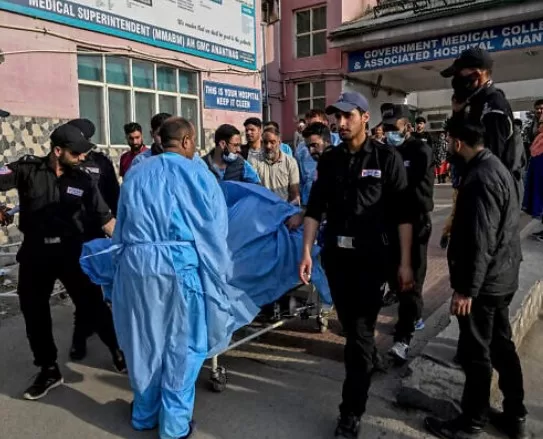
Within minutes of the incident of killing of tourists in Kashmir on 22 April 25, India acting as judge, jury and executioner, put the blame on Pakistan. The next day they announced multiple punitive measures against Pakistan, most serious being suspension of the Indus Water Treaty (IWT). Pakistan very rightly first asked for any evidence linking it to the incident and later even offered to accept an investigation by any neutral country, a very responsible offer. Later, in response to the Indian punitive measures Pakistan announced its tit for tat counter steps. A big difference in the two actions was that India initiated and Pakistan only responded.
The Indian Hindutva controlled media, as if on a cue, went on hyper mode, asking for an immediate attack and destruction of Pakistan. Pakistan acting responsibly, kept asking for independent investigations and the cooling of tempers. This pre-war high-pressure phase only resulted in double humiliation for India.
First was the debunking of BJP Hindutva narrative that after annulment of Article 370 and declaring Kashmir as state territory, normalcy had returned to the area.
The second embarrassment was its failure to capture the four alleged perpetrators who killed the tourists despite having almost seven hundred thousand troops in Kashmir, one of the highest civilians versus troop ratio in the world. They failed dismally to find any credible evidence of involvement of Pakistan. But instead of learning from their failures, the twin embarrassments forced them to embark on the next level of miscalculated escalation.
Despite the dangers of escalation of a nuclear exchange, probably in self-delusion and believing in its own propaganda, India embarked on an avoidable and an unnecessary misadventure on the night of 6/7 May.
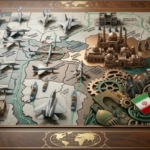
They used more than 300 aircraft to launch air to ground missiles on nine targets but hit only six, mostly mosques. This act was against all norms of civilized nations and international laws and resulted in the death of 31 civilians, many children, women and elderly. During this aggression, Pakistan Air Force (PAF) shot down five of the most modern Indian aircrafts (Three Rafales, one SU 30 and one MiG 29) while they were busy shooting at the innocent civilians. Loss of so many modern aircrafts was another humiliation for India and more so for Modi.
After the debacle of the 2021 misadventure when Pakistan had downed their aircraft and captured the pilot, Modi had bemoaned that if they only had Rafales, the situation would have been different. In Modi’s calculus, Rafales would have given them disproportionate advantage over Pakistan.
Despite being attacked and aggrieved at the loss of 31 civilians, Pakistan exercised restraint. Being a responsible nuclear power, Pakistani leadership did not want to escalate and endanger the lives of millions of people of both the countries and Pakistan felt that the loss of five modern aircrafts was enough punishment and probably India could also claim victory in their media of having attacked so called “terrorist” camps. Common sense demanded that the hostilities should cease at this stage with both the countries claiming victory.
However, in a country which believes that lemons and cow urine can protect their aircrafts, common sense had long been banished and replaced with religious hocus pocus and superstitions. Pakistani restraint was misread as weakness or maybe they thought that the loss of five aircrafts was too big an embarrassment and they needed some face saving.
There was lull on 7 May but on 8 May, India upped the ante by launching sophisticated Israeli drones against multiple places in Pakistan. There was minimal damage, with a few injured and loss of a civilian life. Pakistan on the other hand shot down 29 drones and despite the new provocation, still decided to exercise restraint. By now, the Pakistani people had started agitating demanding a response.
Rashly emboldened, the Indian government sent another horde of kamikaze drones on 9 May. By the evening Pakistan had downed a total of 77 drones. Probably this was another record of downing so many sophisticated drones in 36 hours.
At this moment the biggest question agitating Pakistan leadership was as to why India was opting to escalate. Probably Indian leadership was provoking Pakistan to respond by attacking their military installations as obvious targets. This would have given India propaganda machine points that while they attacked ‘Non escalatory, non-military targets which were terrorist camps’ Pakistan had escalated by attacking military targets. They thought that they could absorb any Pakistani response and also give them an opportunity to down a few Pakistani aircrafts and then respond massively against Pakistani military targets causing degradation of Pakistani military capabilities.
But Pakistan’s political and military leadership was not ready to play according to the Indian game plan. Despite mounting public pressure, the leadership exercised strategic restraint. They had their own game plan.
Frustrated and getting foolishly emboldened by Pakistan’s show of restraint, the Indians erred into launching attacks by cruise missiles against three Pakistani airbases at around 3:30 am on 10 May. Simultaneously, multiple other Pakistani airbases were attacked by Indian drones. The bulk of such missiles and drones were neutralized by soft and hard methods.
However, as proven in Ukraine and the recent Middle East war, no defense is foolproof, some of the missiles did manage to hit the targets but did not cause any serious damage. Once again India had escalated the war by targeting Pakistani airbases.
Pakistani leadership and armed forces were fully prepared for this eventuality. Within one hour, around 4:30 am, Pakistani response was unleashed.
This was the finest hour of Pakistani Armed Forces at all levels. The strategic restraint, level and quantum of response, selection of targets and weapons employed coupled with massive cyber-attack was unmatched. Pakistan struck 26 targets against 6 by India. It was not just a notch up but multiple notches up response. Multiple airbases, S-400 air defense system and BrahMos missiles depot were the main targets and unlike India, Pakistan struck only military targets.
Early in the morning, Modi saw Pakistani drones above Delhi. The shock of military losses suffered, the sophistication of weapons employed and their reach deep into India, unnerved the Indian leadership. Indian air defense had utterly failure to stop the onslaught. One believes the Indian military leadership must have apprised their political leadership about the dangers of continuing the conflict.
Their Rafales had failed, S-400 had become vulnerable to Pakistani hypersonic missiles and Fateh 1 SSM had struck precisely at deep targets. This had been achieved with negligible loss to Pakistan. Therefore, in the morning brief by their Armed Forces on 10 May, they offered an olive branch of ending the hostilities. Pakistan had neither initiated the hostilities nor escalated it but only responded to Indian aggression. Therefore, Pakistan agreed to end the war which it neither started nor wanted.
Major Conclusions:
1. India miserably failed to achieve its political aim of punishing Pakistan to a degree that it was deterred in future from supporting falsely ‘claimed cross border terrorism’ in India. Instead, it was India which got the maximum punishment in military, diplomatic and credibility domains. It lost prestige in the comity of nations.
2. India miscalculated and kept escalating multiple times to achieve some kind of face saving. Every time it ended in embarrassment. First by falsely accusing Pakistan of complicity in the April 22 incident because nobody in the world believed them, on the contrary every country supported Pakistan’s claims for independent investigations. Second embarrassment was by announcing punitive measures against Pakistan. Pakistan retaliated by a notch up measures by closing airspace to Indian airlines resulting in heavy losses to their airlines. Third embarrassment was during the night of 6/7 May when they lost five fighter aircrafts while firing missiles at civilians in Pakistan. The fourth embarrassment was on 10 May when massive Pakistani retaliation (after India attacked our airbases) forced India to sue for peace. The fifth embarrassment was that while agreeing to the ceasefire, India had to come down from her self-created delusional stance that they would not engage bilaterally with Pakistan.
3. From the outset, Pakistani political and military leadership retained the initiative and shaped the international environment, the battle, media and the narrative. India had very early lost control of the events it initiated and thereafter, kept groping in the dark. Pakistan’s strategic restraint, timing and scale of response was the master stroke which shook India and the world to their senses and forced them to sue for ceasefire.
4. At the start of the crises President Trump said ‘they can sort it out among themselves’, thereby giving a green light to India. Then US VP Vance said that USA will not intervene in the conflict. This was another green light. On the face of it, it seemed India would sort out Pakistan. The US was not being anti-Pakistan but showing themselves to being neutral and gave India somewhat of a free hand in bringing Pakistan to heel, then they were also looking at the bigger picture of humiliating China. When Indian misadventure begin looking like a disaster the USA became ‘concerned’ and got fully involved in diplomacy to end the hostilities. China on the other hand remained steadfast throughout in its total support to uphold Pakistan’s territorial integrity and sovereignty. China proved to be the proverbial friend in need. The US interest in negotiations for ceasefire appears to be transitional and interest based.
5. This war was fought primarily at the strategic level. Tactical battles along the LOC had secondary effects. EW and firepower, either in the air or the land created the main effects. Future investments should be in EW and firepower, in all the three services. Future military leadership should also emerge from these fields so that they have full grasp of the emerging technologies and their capabilities. Maneuver will only be possible in future when enemy’s EW and fire power resources have been seriously degraded, which will be a difficult proposition.
6. The war has generated multi domain effects. At the global level the US efforts to prop up India as a counter balance to China have suffered a setback, rather have backfired. India turned out to be a paper tiger which specializes in perception management through falsehood and outright deceit. India had previously managed to sell itself as an alternative and equal to China; this false perception helped India to receive billions of dollars’ worth of investments, military equipment and clout from the West. Even Middle Eastern countries had started getting over awed from this perception of an emerging power. This perception had got a big jolt. These efforts backfired as instead of India, it is China which has emerged as a reliable ally having superior military hardware. The third world in future will/should rely on the more efficient and less costly Chinese military equipment as com pared to expensive and less effective western weapons. This will reduce Western clout and influence in these countries. It’s an inflection point in history, where after centuries, eastern military equipment has proved superior to the western equipment. At the regional level China’s support for Pakistan made us into a dominant force. Pakistan Armed Forces have emerged as a competent, well trained and motivated force, enhancing Pakistan’s stature in the region. The conflict is likely to affect the Pakistani internal political scene positively.
7. It will be interesting to watch how India reacts to this humiliation. There are two possibilities, first they come out of jingoistic posturing against Pakistan and China, adopt realistic policies of peaceful coexistence so the extreme poverty in the two countries can be tackled. This will be a big victory for more than 1.5 billion people of the Subcontinent. However, looking at the track record of BJP and their Hindutva narrative, there is a low probability that India will adopt this course. Second possibility is that India treats the ceasefire as a pause to regroup and re-arm to reestablish its hegemony in the region. This will bring more misery and maybe disaster to the region. At present the people of the Subcontinent are hostage to the unrealistic but disastrous doctrines of RSS and its political arm the BJP .It is for the people of India to decide what kind of future they want. As far as Pakistan is concerned, it should not sleep on its laurels but start preparing for the worst-case scenario.
8. In information operations, Pakistan outclassed India by leaps and bounds. No false claims were made. Questions were invited from the journalists. On the Indian side, borrowing words of Pravin Sawhney, Indian media was just buffoonery. The Indian government briefings were short, lacking details and devoid of evidence. They never took any questions. The world obviously believed and reported the Pakistani narrative. Pakistani truth prevailed against Indian false hood.
9. Wars are not fought with gung-ho attitude and superstitions and political and military strategy has to be based on raw facts. Weapons/equipment and its capabilities are important but the ultimate outcome of the conflict is decided by the timings and method of application of the available force. Those criticizing why Pakistan waited for four days to respond are ignorant of military strategy. Timings of launching the main punch is the most critical factor of strategy and a too early or late application of the punch can result in failure. In Waterloo in 1815, the premature charge of the French cavalry before their artillery could shape the battle field proved disastrous for the French. Military history is full of examples where too soon or late employment of the main punch resulted in failures. The finesse of military strategy lies in sensing the right timings to employ the available force against the right and critical targets. It is the job of the specialists and should be left to them.