





Introduction
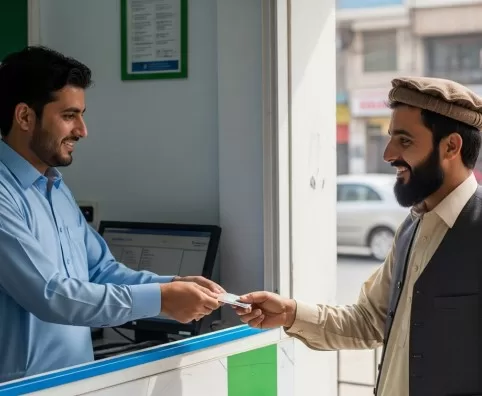
Access to financial services is a cornerstone of economic development, yet rural areas in Pakistan have historically remained underserved by traditional banks due to infrastructure challenges, low population density, and high operational costs. The rise of Agent Banking, which leverages local businesses and individuals to act as financial service points, has dramatically shifted this landscape.
Today, agent networks are playing a transformative role in revitalizing rural economies not only by providing access to financial services but also by stimulating liquidity, entrepreneurship, and inclusion within the national economy. Over the last decade, Pakistan has made significant strides in expanding access to financial services through agent banking—a model that enables banks and financial service providers to reach customers, particularly in underserved and remote areas. However, the lack of interoperability among agent banking networks has been a persistent challenge, limiting the true potential of financial inclusion.
Today, Pakistan stands at a critical juncture with the rise of interoperable agent banking platforms, which promise to transform the fragmented financial services landscape into a more integrated and inclusive ecosystem.
Current Landscape of Agent Banking
Since the introduction of regulatory frameworks by the State Bank of Pakistan (SBP) in 2008, agent banking has transformed the financial services landscape in Pakistan.
As of the latest reports, there are over 360,000 registered agent tills, making it a vital channel for providing banking services to the unbanked and underbanked populations.
However, approximately 30% of these agents are inactive, highlighting challenges in maintaining operational efficiency and outreach.
Understanding Interoperability in Agent Banking
Interoperability refers to the seamless interaction between different banks, financial institutions, and mobile money service providers across shared agent networks. In a fully interoperable environment:
• A customer of one bank can deposit, withdraw, or transfer funds using an agent of another bank.
• Agents can serve multiple financial institutions through a unified platform.
• Transactions become frictionless across institutional boundaries, increasing efficiency and reducing costs.
The Status Quo: Fragmentation and Its Limitations
Historically, agent banking in Pakistan has operated in silos. Each bank or mobile money operator maintained exclusive networks of agents, meaning, a HBL Konnect customer could not transact through an Easypaisa agent.
The agents could only offer services from a single financial institution, reducing their earning potential and making customers face reduced accessibility, higher transaction costs, and fewer choices.
This fragmentation has limited the outreach, scalability, and efficiency of digital financial services in Pakistan, especially for rural and low-income populations.
Key Impacts on Rural Economies
Increased Financial Access for the Underserved: Agent banking has empowered individuals in rural areas, especially women, farmers, and daily wage earners, to open digital accounts without traveling to cities and can receive government subsidies, pensions, and remittances directly in a secure manner, thereby reducing dependency on informal channels.
Liquidity Flow into Local Economies: Agents act as local liquidity hubs, enabling real-time cash-in and cashout, which will increase the velocity of money in rural markets, reducing denial of service issues. Additionally, better cash management will support small retailers and vendors with their daily business and financial needs.
Job Creation and Micro-Entrepreneurship: Agent banking turns individuals into micro-entrepreneurs. A rural agent can earn commissions on each transaction and Offer value-added services like utility bill payments, mobile top-ups, and micro-insurance using third-party service providers, creating trust and recognition in the community.
Formalization of Informal Financial Practices: Prior to agent banking, the informal savings groups and moneylenders dominated rural finance; these channels were risky, undocumented, and exploitative. With agent banking, Transactions are recorded digitally, and People build transaction histories that can lead to access to credit and micro-loans. The Data from agent banking transactions can feed into AI-powered credit scoring, opening the door for responsible rural lending.
Improved Efficiency in Government Transfers (G2P): Programs like Benazir Income Support Program (BISP) and Ehsaas now use agent networks for disbursements. This will reduce leakage and corruption, and save time and transport costs for beneficiaries, resulting in the promotion of women’s financial inclusion through direct access to funds.
Long-Term Impact of Interoperable Agent Banking
The implementation of interoperable agent networks is already setting the stage for transformative change in Pakistan’s financial system. The long-term impacts include:
Wider Financial Inclusion: With customers able to use any agent regardless of their bank or wallet, access points increase dramatically, especially in rural, low-income, and geographically isolated areas.
Cost Efficiency and Scalability: Banks and FinTechs can scale services faster without bearing the cost of building exclusive agent networks. Shared infrastructure lowers operational and transactional cost for all players.
Greater Competition and Innovation: Interoperability levels the playing field, driving financial institutions to innovate on product quality, pricing, and customer service to retain users rather than rely on exclusive access.
Empowered Agents and Entrepreneurs: Agents can now serve multiple providers, increasing their transaction volumes, earning potential, and business sustainability. This model supports local economic development and job creation.
Enhanced Transparency and Compliance: A unified system promotes digital record-keeping, reducing reliance on informal cash-based channels and supporting government goals for AML/CFT compliance, digital taxation, and social welfare distribution.
Challenges to Overcome
Despite the promise, a few challenges must be addressed to ensure sustainability:
Agent Liquidity: A major challenge in agent banking is insufficient agent liquidity, which limits agents’ ability to fulfill cash-in and cash-out transactions. This often leads to service disruptions, customer dissatisfaction, and loss of trust in the system, particularly in rural and low-income areas where alternatives are scarce. Poor liquidity management also discourages agent retention and expansion, ultimately hindering the scalability and reliability of agent banking networks. Addressing this requires better float management tools, real-time monitoring, and access to working capital for agents.
Technological Standardization: Lack of technological standardization across banks, telecoms, and fintechs hampers the seamless functioning of agent banking networks. Incompatible systems, varied APIs, and non-uniform transaction protocols create interoperability barriers, increase operational complexity, and slow down service delivery. This fragmentation discourages collaboration, limits innovation, and makes it difficult for agents to serve multiple institutions efficiently. Without standardization, the agent banking ecosystem remains disconnected and inefficient, undermining efforts toward inclusive and integrated financial services.
Trust and Collaboration: A lack of trust and collaboration among key stakeholders—banks, mobile operators, fintechs, and regulators—poses a significant barrier to the growth of agent banking. Competitive silos, data hoarding, and limited transparency hinder the development of interoperable networks and shared infrastructure. This mistrust leads to duplication of efforts, reduced agent efficiency, and fragmented customer experiences. Without strong collaboration and a spirit of partnership, the agent banking ecosystem struggles to scale sustainably, delaying progress toward universal financial inclusion.
Capacity Building & Digital Literacy: Limited capacity building and digital literacy among agents and end-users significantly undermines the effectiveness of agent banking. Many agents lack proper training in handling digital transactions, customer service, and fraud prevention, leading to errors, service delays, and security risks. At the same time, low digital literacy among customers—especially in rural and underserved areas—results in mistrust and underutilization of services. Without targeted training and awareness programs, the full potential of agent banking remains unrealized, hindering financial inclusion and customer confidence.
Policy Recommendations
Agent Support Frameworks:
Regulators should establish a unified framework that enables shared infrastructure, standardized protocols, and seamless transactions across banks and mobile network operators. This can be achieved by strengthening coordination among stakeholders through industry-led working groups, ensuring data security and KYC compliance, and promoting open APIs.
Gender-Inclusive Agent Programs: To bridge the gender gap in financial services, policymakers should promote gender-inclusive agent programs by setting targets for female agent onboarding, providing gender-sensitive training, and ensuring safe working environments for women agents. Regulatory frameworks must also encourage gender-disaggregated data collection to monitor impact and guide policy refinement. These efforts will enhance women’s economic participation and drive more equitable financial inclusion nationwide.
Public Awareness Campaigns: To maximize the impact of gender-inclusive and interoperable agent networks, targeted public awareness campaigns are essential.
Policymakers should support nationwide initiatives that educate communities especially women on the availability, safety, and benefits of using interoperable agent services.
These campaigns must use culturally relevant messaging through mass media, digital platforms, and grassroots channels to build trust and acceptance. Engaging local influencers, women’s groups, and community leaders can further amplify outreach.
Raising awareness will drive higher usage, empower female customers and agents, and deepen inclusive financial access.
Conclusion
The interoperability of agent banking networks is a game-changer for Pakistan’s National Financial Inclusion Strategy (NFIS). By dismantling institutional silos and enabling seamless collaboration, it transforms agent banking into a national utility, accessible to all segments of society.
Agent banking is not just a service model; it is a vehicle for transformation as it has the power to bring millions into the financial mainstream, one transaction, one village, and one agent at a time.
With continued regulatory support, investment in digital infrastructure, and public-private collaboration, Pakistan is poised to build a unified, inclusive, and resilient financial ecosystem that serves as a model for emerging economies worldwide.