



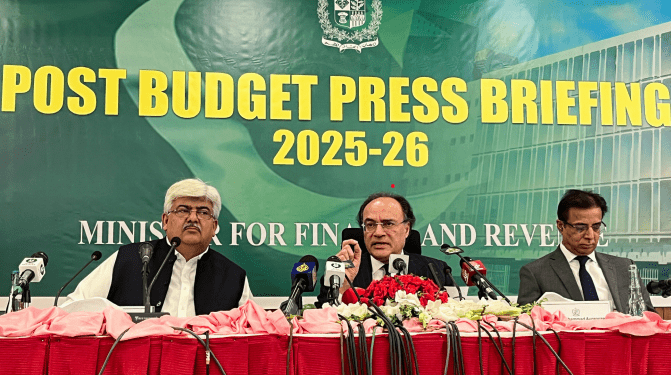
Pakistan’s Federal Budget for fiscal year 2025-26, coupled with the Finance Act 2025, marks a critical juncture in the nation’s economic and strategic trajectory. This article provides a comprehensive commentary on the budget’s fiscal policy stance, its projected multifaceted impact across key economic sectors, and the substantial allocation towards defense. A particular focus is placed on the ambitious revenue targets and their achievability, given Pakistan’s historical fiscal performance and the complexities of formalizing a large informal economy.
1. Introduction: A Balancing Act Amidst Constraints
Pakistan’s Finance Budget for FY2025-26, unveiled amidst persistent macroeconomic vulnerabilities and heightened regional geopolitical tensions, signals a determined effort by the government to steer the economy towards stability. With a total outlay of PKR 17.57 trillion (approximately $62 billion), a 7% reduction from the previous year, the budget underscores a commitment to fiscal consolidation, largely driven by ongoing discussions and compliance with the International Monetary Fund (IMF) program. The budget projects a GDP growth rate of 4.2% and aims to ease inflation to 7.5%, alongside a targeted primary surplus of 2.4% of GDP and a fiscal deficit reduction to 3.9% of GDP.
This commentary delves into the core fiscal policies, their implications for various economic sectors, the significant defense allocation, and critically assesses the achievability of the revenue targets, providing a consolidated perspective on Pakistan’s challenging fiscal roadmap.
2. Fiscal Policy and the Finance Act 2025:
An Aggressive Formalization Push The dominant theme of the FY26 budget and the underlying Finance Act 2025 is an aggressive revenue mobilization strategy paired with expenditure rationalization. The Federal Board of Revenue (FBR) is tasked with a challenging revenue projection of PKR 14.13 trillion, an 18.7% increase from the outgoing fiscal year’s revised estimates. This ambitious target is underpinned by several key policy shifts:
• Broadening the Tax Net: A concerted effort to bring the informal economy into the tax fold is evident. The Finance Act introduces unprecedented restrictions on “non-filers” (those not on the Active Taxpayer List). These measures include a direct prohibition on their purchase of motor vehicles and immovable property, sale of securities, and even the opening or operation of bank accounts. Such stringent actions aim to compel formalization and expand the taxpayer base.
• Enhanced Withholding Taxes (WHT): Across various categories, WHT rates have been significantly increased. Notable hikes include services (from 11% to 15% for general services, with specific sectors facing even higher revisions), cash withdrawals by non-filers (0.6% to 0.8%), and profit on debt (15% to 20%). A new 15% WHT is also imposed on capital gains from premature disposal of debt instruments.
• Digitization and Enforcement: The FBR is pushing for greater reliance on technology, including AI-based audit selections, e-billing, and the integration of Pointof-Sale (POS) systems across provinces. Taxation of digital transactions, both from local and foreign vendors, is formalized, with payment intermediaries and couriers assigned collection responsibilities.
• New Levies and Adjustments: New environmental taxes such as a carbon levy (PKR 2.5/liter on petrol, diesel, and furnace oil, increasing to PKR 5/liter in FY27) are introduced. A controversial 18% sales tax on imported solar panels (though subsequently reportedly reduced to 10% on some components) and a Green Tax (1- 3% of vehicle value) on internal combustion engine (ICE) vehicles signal a nascent shift towards green economy incentives, albeit with potential cost implications.
• Expenditure Control: While the Public Sector Development Programme (PSDP) receives a notable allocation of PKR 1 trillion (with plans to double it in the medium term), debt servicing continues to consume the largest portion of the budget (approximately 56%). Defense spending follows closely, while general subsidies are generally curtailed, reflecting a broader austerity drive.
• Targeted Relief: Limited income tax relief is extended to lower-income salaried individuals (up to PKR 3.2 million), and a slight reduction in surcharge for high-income earners (from 10% to 9%) is intended to mitigate “brain drain.” The tax credit for profit on debt for house loans has also been reintroduced.
3. Economic Impact:
Formalization’s Promise and Perils
The budget’s impact on Pakistan’s economic forefront is a complex interplay of stabilization objectives and potential sector-specific disruptions.
• Macroeconomic Stabilization: The primary objective of fiscal consolidation, reduction in the fiscal deficit, and achieving a primary surplus is to restore macroeconomic stability, crucial for attracting external financing and bolstering investor confidence. However, the aggressive tax measures, if not carefully managed, could constrain aggregate demand and potentially challenge the projected 4.2% GDP growth.
• Formalization Drive: Disruption and Transformation: The stringent measures against non-filers are poised to be highly disruptive. While necessary for long-term revenue growth and economic transparency, the immediate effects could be a slowdown in sectors heavily reliant on informal, cash-based transactions, such as small retail, parts of construction, and unorganized services. Businesses will face increased compliance costs and operational complexities during this transition.
• Inflationary Pressures: Despite a projected easing of headline inflation to 7.5%, new taxes like the carbon levy, adjustments to WHT, and potential increases in utility tariffs (often linked to fiscal measures) are likely to contribute to costpush inflation, disproportionately affecting lower and middle-income segments.
• Sectoral Implications:
1. Manufacturing: Faces increased operational costs due to higher WHT on services and the carbon levy. The disallowance of cashbased expenditures will particularly impact small and medium-sized manufacturers. While tariff rationalization may offer some relief on imported raw materials, overall cost structures could erode competitiveness.
2. Automotive: The new Green Tax on ICE vehicles and the removal of reduced sales tax rates on smaller cars (below 850cc) will directly increase vehicle prices, potentially dampening sales. However, the emphasis on New Energy Vehicles (NEVs) could open new avenues for local assembly and investment.
3. Services: Increased WHT on services will directly affect service providers. The formalization of e-commerce taxation is a significant step, but requires robust infrastructure and clear guidelines. The banking sector is expected to play a central role in the formalization drive due to new responsibilities related to non-filers and digital payments.
4. Construction and Real Estate: This sector is expected to face a significant downturn due to the ban on non-filers purchasing property. This could depress demand and slow construction activity, despite the reintroduction of tax credits for house loans.
5. Agriculture: While some subsidies on wheat and fertilizers are maintained, the discontinuation of mark-up subsidies on agricultural loans and significant cuts in agricultural research funding are concerning. Increased irrigation costs will add to farmers’ burdens. The new National Subsistence Farmers Support Initiative, however, offers potential for digitized rural financing.
6. Energy: The sector continues to grapple with persistent circular debt. The carbon levy will increase fuel costs, potentially translating into higher electricity tariffs. The sales tax on solar panels, despite some reTax on Construction and Real estate vision, could impede the pace of renewable energy adoption, although broader PSDP allocations for hydropower and refinery upgrades aim to improve energy security.
• Investment Climate: While the budget aims to foster a more stable investment environment through fiscal discipline, the aggressive tax measures and regulatory uncertainties, especially for the informal economy, might initially deter some investors. However, a more formalized and transparent economy could attract long-term, legitimate investment.
4. Defense Forefront:
A Strategic Imperative at Economic Cost The defense budget for FY26 stands at PKR 2.55 trillion ($9.04 billion), representing a substantial 20% increase from the previous fiscal year. This is the largest single-year hike in decades and holds the second-largest share of total expenditures after debt servicing.
• Geopolitical Realities: This significant increase is explicitly linked to heightened tensions with India, including recent border skirmishes and a perceived need to bolster military capabilities against existential threats. The government views this as a “non-negotiable” priority for national security.
• Modernization and Readiness: The allocation is intended to support ongoing modernization efforts, equipment upgrades, personnel costs, and the replenishment of arsenals, signaling a continued focus on acquiring new weapon platforms and technologies.
• Fiscal Trade-offs: The substantial increase in defense spending inevitably necessitates stark fiscal trade-offs. It has contributed to the overall reduction in non-debt, non-defense government expenditures. Concerns persist that this prioritization of security comes at the expense of critical social sectors like education and healthcare, which have seen disproportionately lower allocations. This could have long-term implications for human capital development and sustainable economic growth.
• IMF Scrutiny and Regional Dynamics: The large defense allocation will be closely scrutinized by the IMF, which emphasizes fiscal consolidation. Pakistan will need to demonstrate that this increased spending aligns with its commitments under the ongoing loan program. Furthermore, this significant increase, coupled with India’s rising defense budget, signals a potential regional arms race, diverting crucial resources from much-needed economic development.
5. Achievability of the PKR 14.13 Trillion Revenue Target:
An Uphill Battle: A critical question surrounding Budget 2026 is the achievability of the FBR’s ambitious revenue target of PKR 14.13 trillion. In our opinion, this target appears extremely challenging, bordering on highly ambitious, and will require near-perfect execution alongside remarkably favorable economic conditions.
Reasons for this skepticism include:
Persistent Historical Shortfalls:
The FBR has a consistent track record of missing ambitious targets. In FY25, the FBR already registered significant shortfalls against its initial and even revised targets, underscoring systemic challenges in translating policy intentions into actual collections.
• Low Tax-to-GDP Ratio: Pakistan’s stubbornly low tax-toGDP ratio (around 10-11%) reflects a narrow tax base and a deeply entrenched informal economy. While the new measures aim to address this, the scale of the challenge in a single year is immense.
• Economic Sensitivity: The revenue target relies on the projected 4.2% GDP growth. Should the economy grow slower than anticipated (as external forecasts tend to be more conservative), or if inflationary pressures dampen consumption, revenue generation will be directly impacted.
• Implementation Challenges and Resistance: The success of stringent measures like bringing non-filers into the tax net demands immense administrative capacity, robust IT infrastructure, and sustained political will. The FBR’s historical struggles in these areas, coupled with anticipated resistance from segments benefiting from informality, pose significant hurdles.
• Behavioral Adjustments: While the goal is formalization, aggressive enforcement might inadvertently lead to businesses adopting new methods of tax avoidance or simply reducing their formal economic footprint, making collection more difficult.
It is more probable that the FBR will face considerable challenges in meeting this target, potentially leading to revenue shortfalls.
This could necessitate either mid-year fiscal adjustments (e.g. new taxes, further expenditure cuts) or an increased reliance on borrowing to bridge the resulting fiscal gap. The effectiveness of the non-filer drive and the efficiency of digital enforcement initiatives will be critical, but the sheer magnitude of the task suggests an uphill battle.
Conclusion:
A Fragile Equilibrium
Pakistan’s Finance Budget 2026 represents a pivotal, high-stakes attempt to reset the nation’s fiscal trajectory. It is a bold statement of intent to formalize the economy, bolster revenue collection, and strengthen national defense. While these goals are undeniably critical for Pakistan’s long-term stability and sovereignty, the immediate socio-economic impacts will be substantial.
The success of this budget hinges on a multitude of critical factors:
the FBR’s ability to achieve its highly ambitious revenue targets, the government’s capacity to manage potential inflationary pressures and their socio-economic fallout, and the effective navigation of the disruptions inherent in a broad-based formalization drive. Furthermore, the long-term sustainability of significant defense spending amidst ongoing economic fragility will remain a persistent challenge, necessitating difficult choices between strategic imperatives and urgent development needs. The budget sets a challenging course, and its true impact will unfold in the coming year as Pakistan grapples with its implementation. The nation stands at a fragile equilibrium, where policy execution and unforeseen economic or geopolitical developments will ultimately determine its success.