



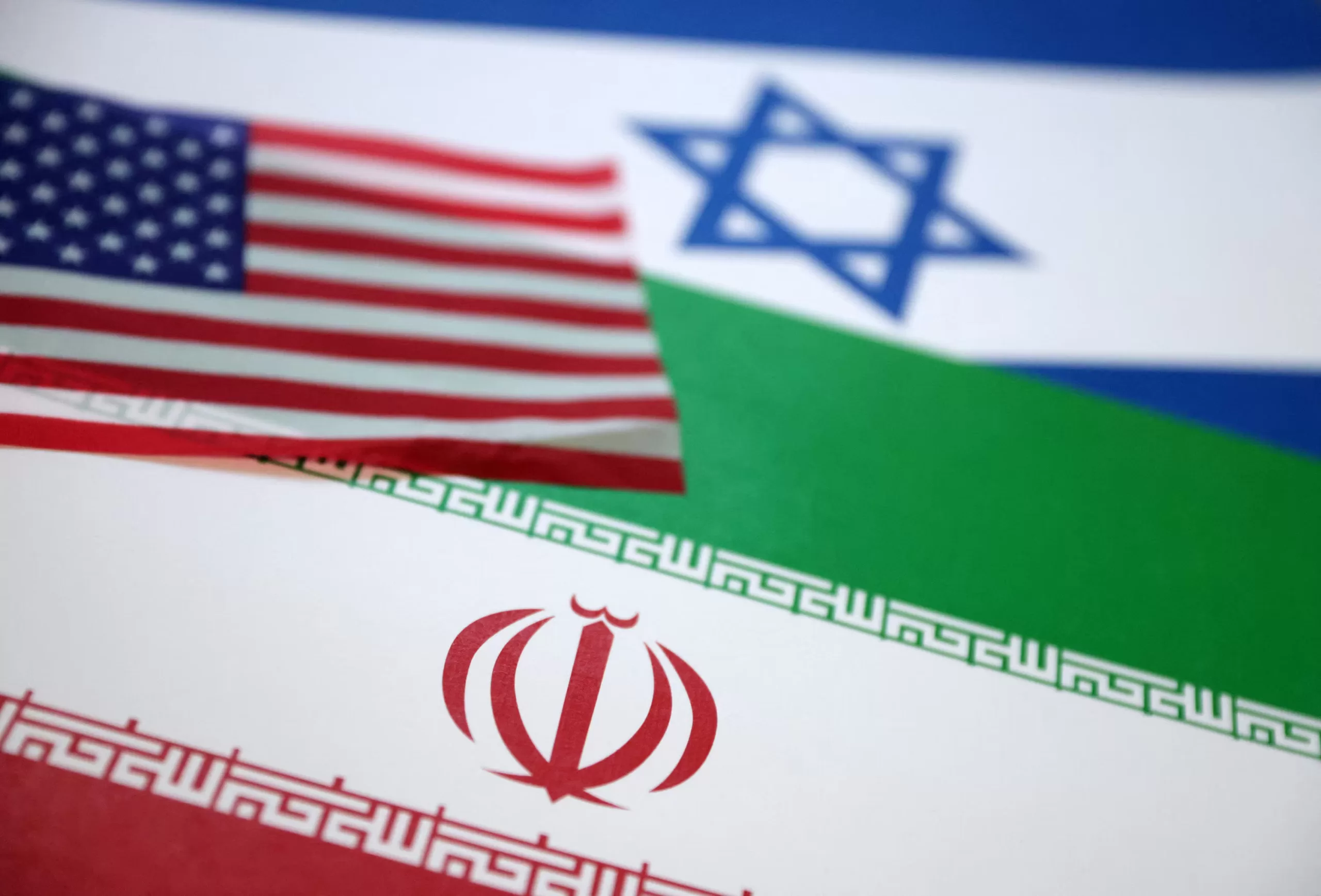
It seems that when it comes to armed conflict, 2025 is a gift (pun intended) that keeps on giving! Now how about this for an unfortunate twist of events? No sooner the fast paced India – Pakistan conflict ended on May 10, three weeks later Israel attacked Iran – a technological Goliath taking aim at a less sophisticated David.
This is then the disproportionate nature of this engagement! One doesn’t have to be a rocket scientist to realise that two wars in a month collocated in South Asia and Middle East is something that the region and the world can’t afford!
But let’s take a step back from the current Israel – Iran war for a moment and see the credibility of Israeli claims whether Iran is anywhere near a nuclear bomb. It is true that none other than Netanyahu has warned the world on multiple occasions that Iran will get a bomb in a “weeks or months”.
At the UN, Netanyahu dramatically pulled out a cartoon diagram of a bomb during his speech and explained that Iran had completed Stage 1 (70% of the way), was well into Stage 2, and could move to Stage 3 within “a few months, possibly a few weeks” to complete a bomb.
”With a fragile economy, deepening social inequity and a difficult internal security situation, Pakistan cannot afford hostility all around
He physically drew a red line on the fuse to illustrate the point. Then while speaking to CBS’s Face the Nation, Netanyahu warned that Iran was advancing its uranium enrichment program and could cross his red line and be nuclear ready in “a few weeks” if unimpeded. Lastly, at the UN again, Netanyahu presented visual aids – including an aerial photograph – to accuse Iran of hiding nuclear weapon materials at a secret facility. While this time the focus was on covert facilities, he repeatedly emphasized that Iran’s nuclear weapons capability remained just “weeks to months away”. Seems straight forward, right? Not really! The first example is from September 27, 2012. The second claim came in July 14, 2013. The third and last allegation happened in September 27, 2018.
Each time, Iran was supposed to be “weeks or months away” from going nuclear! Time has unravelled and exposed at least this narrative relatively quickly, won’t you think? For the wise, this should be enough but alas we are awashed in a global sea of mediocrity!
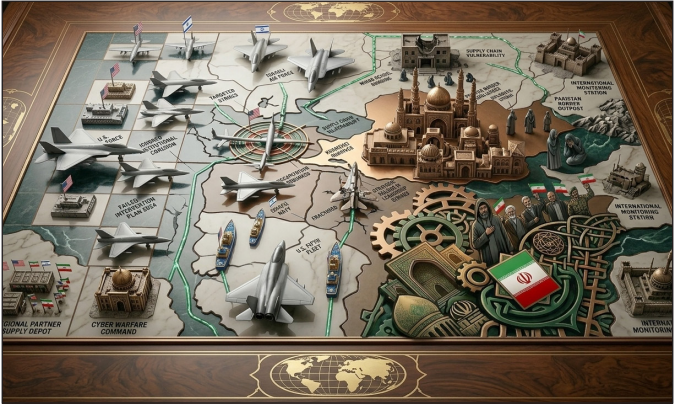
Even in the absence of any credible threat, this time the ploy was simple: US providing the green light to Israel for a limited decisive strike, to degrade Iran’s nuclear enrichment capability sufficiently to force it onto the negotiating table from a position of weakness. Unfortunately, both aggressors miscalculated badly. Iran proved to be more resilient. Though Israeli air force quickly established air dominance and attacked Iranian military and nuclear targets with abandon, it couldn’t sufficiently degrade, leave alone destroy Iran’s nuclear enrichment facilities. Israelis also managed to take out five generals and under a dozen scientists, but Iranian second tier leaders were as effective. Instead the Iranians came up with a barrage of surface to surface missile onto Israel in general but Tel Aviv in particular. While the Iron Dome air defence umbrella intercepted most, around 10 percent or more got through and attacked their military and political targets.
This rattled the Israeli leadership: it couldn’t degrade Iranian nuclear facilities sufficiently
All this happened in parallel to casualties and fatalities on the ground. This rattled the Israeli leadership: it couldn’t degrade Iranian nuclear facilities sufficiently; it couldn’t force them into negotiations and instead were hit by a barrage of deadly missiles. To make matters worse, and to achieve their end goal, now the US and Israel have a bigger problem to solve. How to take out the crucial Iranian Fordow fuel enrichment facility? It is rumoured to be around 400 feet deep and the highly debated American GBU-57 Massive Ordnance Penetrator (MOP), also known as “Bunker Buster”, can only penetrate down to around 200 feet. How will this neutralisation take place? And will it work?
Considering this armament has never seen active conflict, the Trump administration must be wary of hedging their bets on this one. That is why at this critical juncture the US would be thinking of actively joining the fight against Iran – especially on the pretext of stopping Iran achieving a nuclear deterrent. But another pretext, in another war, in another time also became a cause for global embarrassment for the US. No points for guessing what it was! Yes, the WMDs in Iraq. Will the US heed its past? Only time will tell. But the problem runs deeper and one that is perhaps of Trump’s own making. During his last presidency, and against saner suggestions, he unilaterally pulled out of the treaty with Iran. Thus, allowing – some say forcing – Iran to get to 70% enrichment, which is around only 20% short of what is needed for a nuclear armament. Fast forward a presidential term later and Trump, Netanyahu and the Arab world face a difficult and complex situation.
It is not easy to defeat Iran militarily. They are extremely steadfast and sturdy. In the Iran – Iraq war, conservative estimates suggest that the Iranians sacrificed around more than 500,000 of their people and couldn’t be defeated and that too against an opponent staunchly supported by the West! This time around they will be even more resolute especially as long as their missile force remains intact. The IDF may lay claim to Iranian skies but the Iranians will argue missile dominance over Tel Aviv. In this tit-for-tat reaction, the region has become a tinder box!
”A technological Goliath taking aim at a less sophisticated David. This is then the disproportionate nature of this engagement!
For Pakistan, these are tough times. All right, tougher than usual. The US – Israeli nexus is talking of regime change in Iran. While this idea may not reach fruition, it may serve as a harbinger for Pakistan. It is already contending with two belligerent neighbours in the East and North West and cannot afford to have a pro-Israeli government in Tehran. If that were to happen, it would be pincered from three sides. With a fragile economy, deepening social inequity and a difficult internal security situation, Pakistan cannot afford hostility all around. The answer is to work towards pacification of the region through political and diplomatic parleys rather than military conflict and spearheading negotiations as the only constructive way forward.
The dogs of war may run amuck but there is always room for the lions of peace to stand tall.