



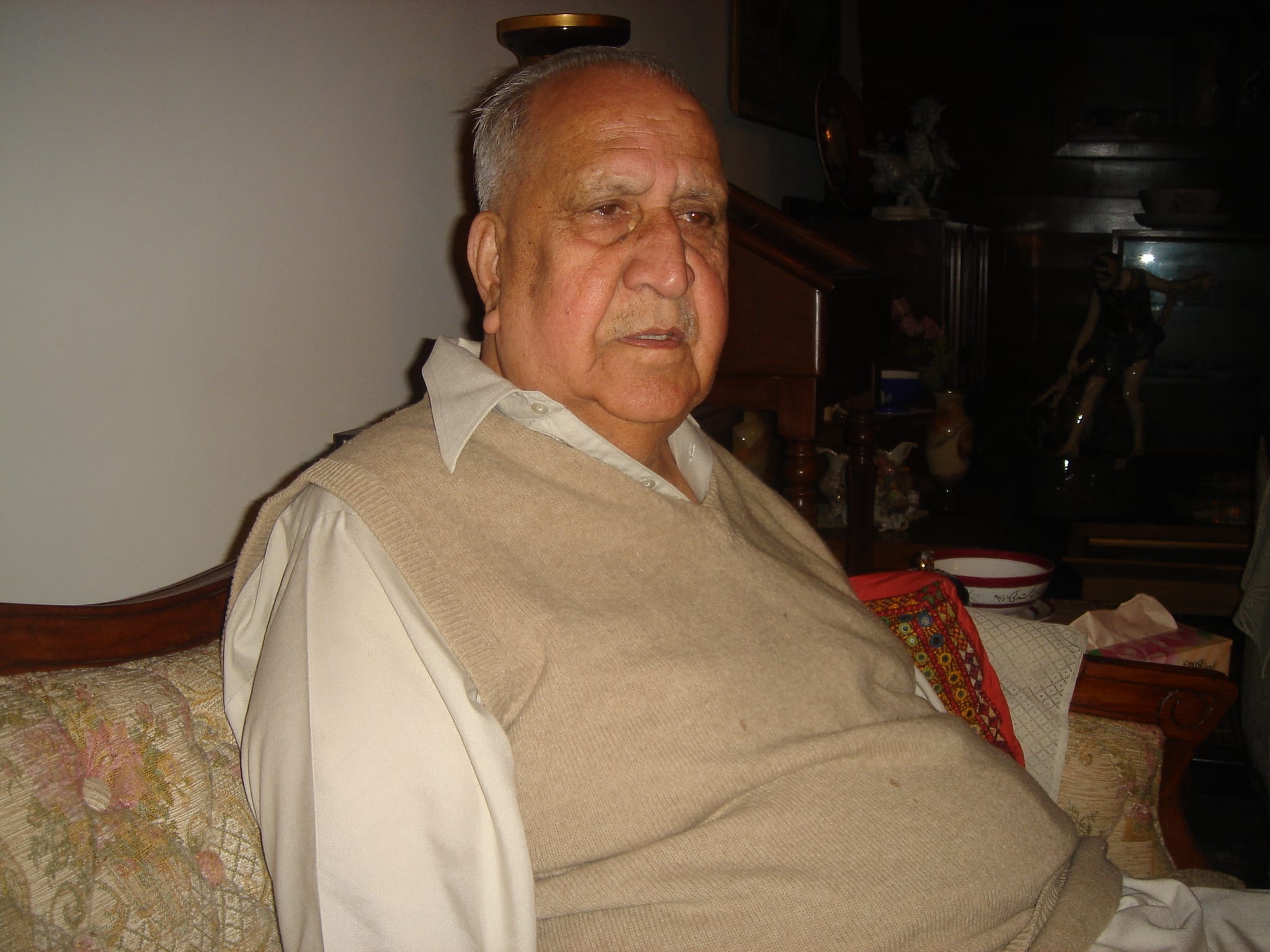
Dear Readers,
One of the most outstanding officers of the Pakistan, and certainly one of the bravest, Maj Gen (Retd) Naseerullah Khan Babar, SJ & Bar died in January 2011 after a prolonged illness. Some personalities are non-conformist but they always seem to make a positive difference, both in peace and war, to the Army and to the Nation. In stray cases they do reach high rank, escaping attention of those to whom merit is a disqualification. Gen Babar was one such person, one of Pakistan’s real-time heroes during both 1965 and 1971 wars and at the centre stage of the political process in the country during peace spanning of the three decades from 1970 to 2000. The entire Army always looked up to him as a man of outstanding courage and integrity. I was privileged to remain in close contact with Gen Babar during my service in Army Aviation and afterwards. He would always remind me that “your illustrious father was my instructor in the Tactical Wing of Command and Staff College, Quetta”. When I was jobless (and penniless) in 1975 he rang me up and said, “what am I and Mahmud (Brig Mahmud) there for?” I immediately got a job with International Aviation Services (Pvt) Ltd. When I went to attend his grandson’s wedding in Peshawar in January this year I could not meet him because he was admitted to hospital the same day. A few days later this man of action died peacefully.
During the period he served as Inspector General (IG) Frontier Corps (FC) in the early 1970s he came into contact with late PM Zulfikar Ali Bhutto who later made him Governor NWFP. As a result of this association he spent many years incarcerated by Zia’s Martial Law. His deep loyalty to Zulfikar Ali Bhutto translated into a firm and unshakeable commitment also to his daughter, Ms Benazir Bhutto, whom he served in both her tenures as PM. In fact it was he who as Federal Minister for Interior in the period 1973-1996 brought peace to Karachi. He remained as committed to Ms Benazir as ever till she died. During his military and civil career he was a witness to many historic events, his is a compellingly honest accounts of things as they happened.
Pakistan remained aloof from Afghan affairs pre-1973. Bhutto’s toppling of the ANP-led Provincial Govts in NWFP and Balochistan in early 1973 frustrated leaders like Ajmal Khattak who went off to Kabul. Sardar Daood who had overthrown his cousin, King Zahir Shah, was only too happy to foster the Afghan dream of a greater Pakhtunistan. Marri and Mengal tribesmen, trained by the KGB/KHAD combine in Afghanistan, carried out an armed insurrection for several years in Balochistan. Some Pakistani students (belonging to elite families, incidentally none of whom were Baloch) studying in UK were recruited under the cover of “consultants” to supply guns, ammunition and information. The ISI deliberately gave them rope to trace out their local contacts, this “magnanimity” ran out after the Sabtalang Feature (near Kohlu) incident, most were then hauled up and “re-educated” by ISI, and eventually forgiven their youthful “indiscretions”. Bhutto mandated Maj Gen N K Babar (then IG Frontier Corps and later Governor NWFP) to pay the Afghans back in the same coin. The first trainees were many young Afghan doctors and engineers rapidly against the monarchy and the Soviet influenced government of PM Sardar Daood Khan, among the “rebels” Gulbadin Hikmatyar, Burhanuddin Rabbani, late Ahmed Shah Masood, etc.
When 1 Army Aviation Squadron moved to Mangla from Dhamial in March/April 1969, Maj Gen (then Lt Col) Naseerullah Khan Babar, SJ & Bar was GSO-1 HQ Army Aviation Base, Dhamial. He would speak to the Squadron many times a day on the hot line which was on the Adjutant’s desk. I became Adjutant of the Squadron in September 1969 but my CO Lt Col Hashmi was soon posted out. Those who did not know their jobs were terrified of Gen Babar, whenever he called my new CO (famous for receiving Lt Gen Attiqur Rahman during the Corps Comd’s Admin Inspection without his belt) would give a vigorous shake of the head to indicate that he was not around. Till I was posted to 4 Army Aviation Squadron in July 1970, having done my Basic Rotary Wing (OH-13S) and then Advanced Rotary Wing (Alouette-3) Conversion Courses (far earlier then I should have done thanks to (then) Col Babar’s input), I had the privilege of speaking to him many times a day I did not receive one single harsh word from him then, or since then. The only time he was impatient to me was after 1971, he was annoyed I did not confide in him. When he led the Aviation Task Force to East Pakistan in November 1970 for the cyclone, I was one of the pilots attached to Log Flight Eastern Command, flying sometimes more than 10-12 hours a day. He would take great pains to explain anything difficult. That East Pakistan was lucky to have avoided a greater catastrophe in disease and malnutrition among the survivors in the aftermath of the Nov 1970 cyclone was mainly because of the presence of a few giants among men like Admiral Ahsan, then Governor East Pakistan and Lt Gen Sahibzada Yaqub Khan, Commander Eastern Command at the helm of affairs. The entire heli-bone effort led by Col (later Maj Gen) Naseerullah Khan Babar and Maj (later Brig) Tirmizi they were simply outstanding, the thread of that spirit of being saviours in emergencies is continuing in the Army Aviation of today. Kurmitola runway (Dhaka International Airport at that time) soon became choc-a-bloc with aircraft bringing in relief goods and helicopters, the aircraft turnaround had to be constant. The logistics effort required unloading, loading onto trucks, then into river transportation like boats, launches, barge etc, for forward dispatch areas, and so on till they reached the affected. The prime factors were simplicity of planning, cutting across red tape, effective implementation and plenty of flexibility. In crisis situations rigidity and dogmatic behaviour is asking for trouble. Col (later Maj Gen) Babar, the man-in-charge of the aviation effort, virtually took over relief controls. Those who know Gen Babar understood he operated on one basis only , he leads from the front and expects his colleagues and/or subordinates to keep up, or else! Blunt and outspoken, this man of action had no time for the inefficient, the indolent, the ignorant, and the dishonest. He would always stand by his subordinates if he believed in them. When a “particular friend of mine” manipulated to get the NOC of the private security company that my family owns majority shares in cancelled, once even sealing the offices of all the other businesses, it was Gen Babar, who as Minister for Interior, not only had the NOC restored, but contemptuously brushed aside as transparent fiction that “gentleman’s” petty fairy tales.
Karachi was well on its way to becoming Beirut when the PM Ms Benazir mandated Gen Babar in 1995 to restore the peace. Armed with a swagger stick, he cleaned up the mess Operation “Clean-Up” (launched in 1992) had left behind. How many have the moral courage to acknowledge this? In the elections of 1997, to prove a point, he fought for a NA seat from Karachi, which he would have won provided the counting had been fair. He would venture unarmed into the crowds till Maj Gen (Retd) Hedayetullah Khan Niazi and I combined to insist that he should get some protection, he reluctantly agreed to have an escort of one armed guard. For the life of me I cannot understand why Ms Benazir did not have Gen Babar as her candidate for President instead of Farooq Leghari. In similar manner Mian Nawaz Sharif discarded Mr Sartaj Aziz for Rafiq Tarar, his loyal man who remained happily the President till Musharraf bid him goodbye. The quality of this outstanding soldier and citizen comes out in the lines of the interview, conducted brilliantly by A H Amin nearly a decade ago for DJ in April 2001. How many men can claim to have captured an enemy rifle company (70 odd soldiers fully armed in this case) single-handed?
It is my proud privilege to have this outstanding human being and outstanding soldier on the cover of DJ for March 2011.