
As the US Strategy Review on Afghanistan is nearing completion, divergent perceptions are being aired by statesmen, resistance leaders, think tanks, military organisations, eminent persons, lobbyists, well-wishers, spoilers etc.
President Karzai spoke his heart out during an interview to the Washington Post. He has urged the United States to reduce the visibility and intensity of its military operations in Afghanistan, and end special operations forces’ raids.
He pointed out that the highly visible presence of US troops in Afghanistan is counterproductive and that Afghans have lost patience with the long-term presence of American soldiers. Karzai said, “The time has come to reduce military operations… to reduce the intrusiveness into the daily Afghan life… The Afghan people don’t like these raids”. He wanted “US troops off the roads and out of Afghan homes, so that Afghan countryside is not so overwhelmed with the military presence”. President Karzai’s views are indeed mirror reflection of the aspirations of Afghan people.
Afghan President also voiced his opposition to US done attacks in Pakistan, and said that he now realises that the Pakistanis are suffering more than Afghans due to terrorist violence afflicting the region.
President Karzia’s frank talk has not gone down well with the American field commander in Kabul. General David Petraeus expressed “astonishment and disappointment” at the remarks and said they undermined the war effort.
In contrast to President Karzai’s vision, some of the American officials are playing down the importance of July 2011, the day foreign forces are to begin withdrawing from Afghanistan; they are stressing for continuation of full combat mission till 2014.
On the other hand, to make their ‘final push’, insurgents have stepped up their attacks to record levels. In the past two weeks or so, bombs have exploded in Kabul and other areas; fighters attacked a NATO observation post at the Jalalabad airport. Airport assault sparked a lengthy gun battle. There is no let up in the determination of resistance forces; extent of their reach is expanding and audacity is on the rise.
Mullah Mohammad Omar has ruled out talks as long as foreign forces continue to occupy Afghan soil. Nevertheless leaving aside his declaratory position, there have been very high level negotiations between the Afghan government and all major factions of Taliban. Now as these parleys are entering a decisive phase, Americans want to assume the overall control.
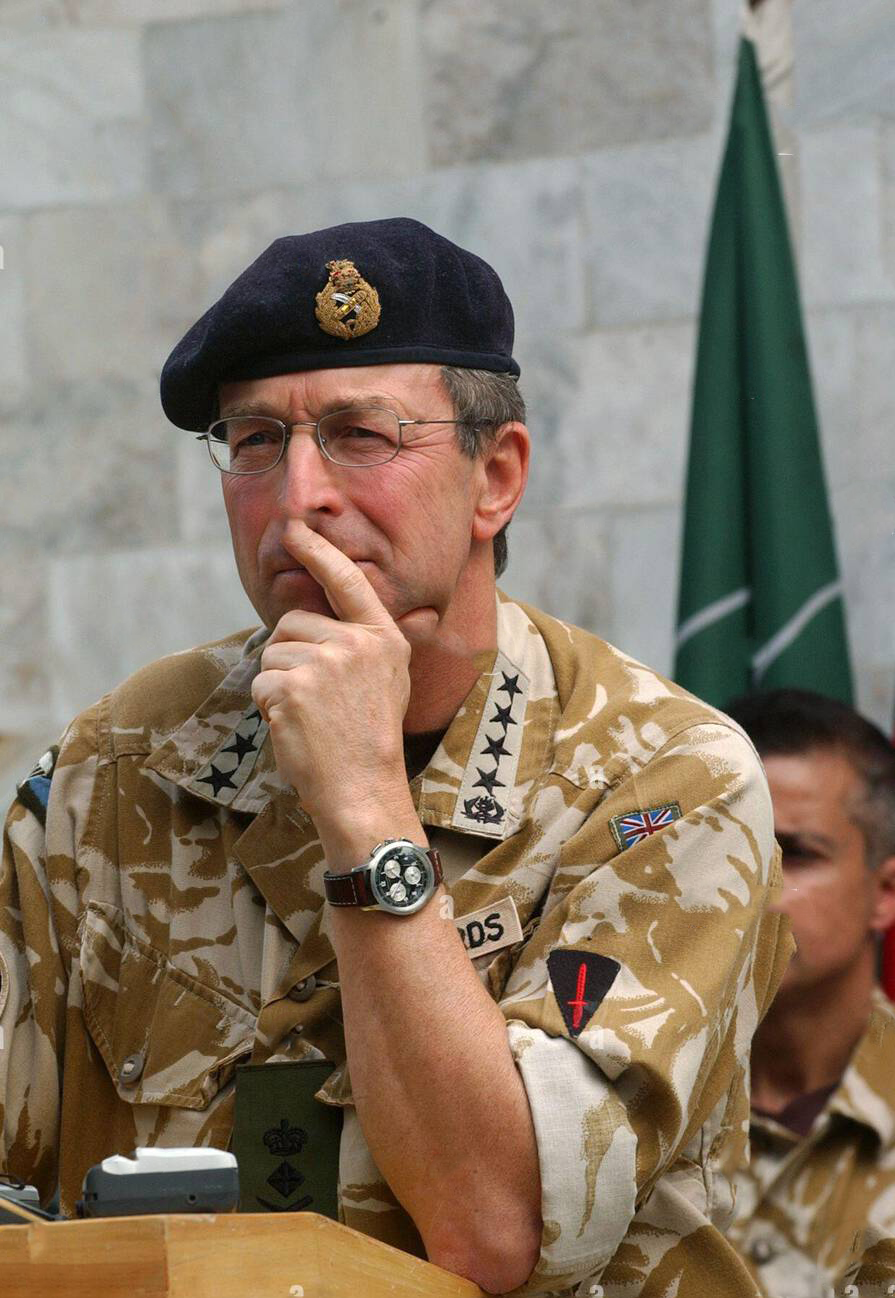
Head of British contingent in Afghanistan, General David Richards, has recently said that Al-Qaeda can never be completely beaten; he argued that outright victory is “unnecessary”. He also opined that the British military and the government had been ‘guilty of not fully understanding what was at stake’ in Afghanistan. He acknowledged that Afghans were tired of NATO’s inability to deliver on its promises.
After the mid term elections, Bush era hawks are jumping into action. Richard Armitage is advocating the expansion of combat zone deep into Pakistan. In a study ‘US Strategy for Pakistan and Afghanistan’, under the auspices of ‘Council on Foreign Affairs’, he has suggested that the United States should use drones to target Lashkar-e-Taiba hideouts if Pakistan does not destroy them. Mr Armitage, further said, “I would hope they would see the Haqqani network in the same way they see Pakistani Taliban, that this is ultimately a threat to them as well”.
First thing that the Republicans are vying is to disrupt the policy of a gradual withdrawal of troops from Afghanistan beginning July next year. Congressman Buck McKeon, prospective head of the House Armed Services Committee, has said that one of the first priorities for his committee will be to continue the war in Afghanistan and attack Obama’s plan to start drawdown by July 2011.
Obama administration’s plan unfolded during NATO summit in Lisbon reflects a concrete vision for transition in Afghanistan. It may be taken as a prototype version of the forthcoming ‘Strategy Review’. This phased four year programme aims at transferring security duties in select Afghan areas to native security forces over the next 18 to 24 months with an eye toward concluding the US combat mission by the end of 2014. Plan caters for a gradual reduction of foreign troops. ‘Transition will not happen overnight, it’s not a single event, and it will not be a rush for the exit’.
Transition process will unfold based on local conditions in Afghanistan, it will not be remotely controlled from faraway capitals, and criteria will include progress in proficiency level of Afghan forces. During the transition, there will also be security assessments by Afghan and international experts.
America’s two track approach of engaging Taliban into processes of negotiations, while at the same time fighting them out on the pretext of weakening them is not leading towards a viable framework for transition. It is akin to simultaneously applying accelerator and brakes to a fast moving automobile. There is almost a consensus amongst United States, Afghanistan and Pakistan for promoting a meaningful dialogue process. In the recent past there have been ever increasing supportive voices.
There have also been reports that Americans want to have direct negotiations with the Taliban elements. This is indeed a good omen, provided Afghanistan and Pakistan are part of the process; and a clear cut policy is announced to effect a seize fire. For any negotiation process to succeed, NATO/ISAF military operations have to recede to background; use of force by NATO/ISAF should be limited to self defence only.
Furthermore Iran has to be a part of the process. Beside adjoining borders, Iran has substantial influence in Afghanistan. Ultimately Americans will have to reach an understanding with Iran, as they had to, in case of recently formed government in Iraq.
Ironically, transition process hinges on efforts to build up Afghan forces so that they could contain a widening insurgency. Dependence on Afghan security forces is fraught with serious flaws. Due to compositional inadequacies, these forces are viewed as alien in Pushtun majority areas. Moreover, from professional capacity perspective, these units are far below satisfactory level.
There is a need to think about stationing a UN peacekeeping mission, comprising around 50,000 soldiers, for about 5-7 years, as a stabilizing agent. This mission should replace ISAF/NATO in a phased programme starting from July 2011. For popular acceptance, this mission should be composed of contingents from Muslim countries, excluding this region.
Hopefully, the strategy review to be unveiled next month by President Obama, would strive to bridge wide ranging conflicting perceptions into a concrete peace and stability plan for Afghanistan and, as a corollary, for Pak
NATO’s plan to handover control of security in Afghanistan to Afghan forces by 2014 is inline with the popular sentiment amongst several Western nations which contribute contingents towards ISAF. NATO has announced that it could also halt combat operations by 2014, if security conditions were good enough. However, Pentagon has declared that NATO’s timeline for ending combat operations was an “aspirational” deadline. Richard Holbrooke said that “2014 did not mark end of international presence in Afghanistan… “There will be continued economic assistance, there will be continued training of the Afghan army and police.”
A Pentagon Report to Congress on ‘Progress Toward Security and Stability in Afghanistan November 2010’ (covering period April’-September 2010), submitted in accordance with section 1230 of the ‘National Defense Authorization Act for Fiscal Year 2008 (Public Law 110-181), as amended’ indicates that despite the “surge” of 30,000 soldiers, progress has been modest and the insurgency continues to expand. Executive Summary of this report is reproduced below:-
“Progress across the country remains uneven, with modest gains in security, governance, and development in operational priority areas. The deliberate application of our strategy is beginning to have cumulative effects and security is slowly beginning to expand. Although significant challenges exist, some signs of progress are evident. Areas of security in Kabul and the surrounding districts have allowed for improvements in development and governance. Progress is also visible in areas where Coalition forces have been on the ground for more than six months, such as Central Helmand Province. Socio-economic development throughout the country is slowly improving, as the Afghan Government shows initial signs of improving essential services delivery, although it is limited still by the security environment in some areas. Agricultural development and productivity has also improved.
Overall governance and development progress continues to lag security gains. Governance capacity and economic development are long-term efforts that will require sustained support from the international community. Key strategic events during this period included the U.S.-Afghanistan Strategic Dialogue in May, the National Consultative Peace Jirga in June, the Kabul Conference in July, and the Afghan Parliamentary elections in September. This period also saw the arrival of U.S. uplift forces in theater, along with more than three-fourths of the pledged North Atlantic Treaty Organization (NATO) uplift forces and remarkable growth of Afghan National Security Forces (ANSF) by about one third since November 2009. This period included several important political developments including President Hamid Karzai’s approval of the Peace and Reintegration Program (APRP), a Presidential decree establishing the Afghan Local Police (ALP), the signing of the Afghanistan-Pakistan Transit Trade Agreement, and the establishment of the Joint Afghan-NATO Inteqal (“transition”) Board (JANIB).The increase in violence during this period was concurrent with the arrival of Coalition personnel, the dramatically accelerated pace of operations, and the spike of violence often seen on election day.
The International Security Assistance Force (ISAF) is seeing some early indications that comprehensive counterinsurgency operations are having localized positive effects and are producing initial signs of progress. Indications of local resistance to insurgents continue to emerge alongside positive indications, such as newly opened schools and police stations. ISAF and ANSF forces gradually are pushing insurgents to the edges of secured population areas, in a number of important locations.
The Afghan Government and ISAF continue to face a resilient enemy that exploits governance gaps and continues to fight to retain long-standing sanctuaries where the insurgency historically has had strong roots. Yet, the insurgent-generated violence remains largely localized and does not threaten all of Afghanistan: 45 percent of all violence and two-thirds of all improvised explosive device (IED) activity take place in the south. After taking command as Commander ISAF (COMISAF) and Commander U.S. Forces-Afghanistan (COMUSFOR-A) on July 4, 2010, General Petraeus issued a revised Tactical Directive. This directive provides guidance and intent for the employment of force. In addition, General Petraeus issued refined counterinsurgency (COIN) guidance to reinforce the principles of conducting COIN operations in Afghanistan, and new COIN contracting guidance to reinforce that contracting is “commanders’ business” and that commanders must understand the effects of contract spending.
The ISAF operational main effort is focused on protecting the most threatened population in the heart of the Taliban-led insurgency in Helmand and Kandahar Provinces. The split of Regional Command-South (RC-S) and Regional Command-Southwest (RC-SW) on June 14, 2010 has allowed for more effective and streamlined command and control and improved ANSF partnering in both provinces. Comprehensive civil-military efforts in RC-S and RC-SW are making slow but steady progress. Initial signs of this progress are evident especially in Central Helmand, where ISAF and ANSF have been conducting counterinsurgency operations for over a year.
Despite the enemy’s continued efforts to counter coalition and ANSF actions to expand security in the south, slow and incremental gains are being achieved. Six months ago, Marjah was an insurgent command-and-control center, a base for IED assembling, and a nexus for illegal narcotics industry activities. Now the city is controlled by the Afghan Government. Signs of progress in Marjah include voter registration, increased activity in local marketplaces, and the reopening of schools that were closed for several years. Combined ISAF and ANSF Forces in Regional Command-Capital (RC-C) continued to sustain a relatively secure environment for the people of Kabul and the surrounding districts, where approximately one-sixth of all Afghans live.
Combined Afghan security forces in Kabul performed notably well in the planning and the execution of security for the Peace Jirga and the Kabul Conference, as well as during Parliamentary elections. Indeed, the transition of key security functions and responsibilities already occurring in RC-C is similar to that which is envisioned to occur across the country in the coming years. In the coming months, ISAF will focus on expanding security from Kabul into surrounding provinces, particularly in Regional Command-East (RC-E).ISAF operations in RC-E have continued to apply pressure and disrupt the leadership of the Haqqani and Taliban Networks. Combined forces in RC-E are securing critical lines of communication and infrastructure that supports the commerce to and from Pakistan. Efforts in RC-E will further increase the pressure on some of Afghanistan’s most lethal enemy networks, expand population security from Kabul to key population centers in Wardak and Logar, neutralize the Haqqani Network’s footholds and disrupt its access to Kabul, and secure the main economic border crossing point at Torkham. Despite recent high-profile events, the insurgency has failed to gain significant footholds in Regional Command-North (RC-N) and Regional Command-West (RC-W). ISAF and ANSF efforts have benefited from expanded partnering and remain focused on improving security in key terrain districts and ensuring gradually improving freedom of movement along Highway. The ANSF has, at times, been considered one of the greatest risk areas of the ISAF strategy.
As of the end of this reporting period, ANSF growth and development are among Afghanistan’s most promising areas of progress, though numerous challenges persist. In July 2010, the Afghan National Army (ANA) and the Afghan National Police (ANP) both met their growth goal of 134,000 and 109,000 personnel, respectively, three months before the target date of October 31. The ANA end strength for July was 134,028 personnel, and the ANP end strength was 115,525 personnel. If the ANA and ANP continue to grow at a similar pace, which will be challenging, they will also meet their October 2011 goals of 171,600 and 134,000 personnel, respectively. Although the growth during this reporting period is significant, improving the quality of the force remains a serious challenge, in particular in the area of leadership development. Also, given the expanded requirements described in the Combined Joint Statement of Requirements version 10 (CJSOR v.10), released on September 1, NATO Training Mission-Afghanistan (NTM-A) will face a shortfall of ANSF trainers and mentors that will grow more acute through the fall and into next year, if troop contributions do not meet the growing need for training. If not adequately addressed, this shortfall poses significant strategic risk and threatens to delay the upcoming transition process.
Leader shortfalls in the officer and non-commissioned officer (NCO) Corps of the ANA will remain as the force grows, and low literacy rates and lack of technical expertise present challenges to force development. Mandatory literacy training and the establishment of branch specialty schools will begin to alleviate some of this challenge, and aggressive partnering is starting to address development deficits. Significant shortfalls in specialist instructor pledges, if persistent past this year’s force generation process, will delay transition of institutional capacity. The ANP reached its 2010 growth objective of 109,000 three months early, but the severe attrition rate in Afghan National Civil Order Policy (ANCOP) puts the 2011 growth goal of 134,000 at risk as 90 percent of programmed growth this coming year is in the ANCOP.
In August, President Karzai authorized the establishment of the Afghan Local Police (ALP) program. ALP is a temporary, village-focused program that complements counterinsurgency efforts by targeting select areas with limited or no ANSF presence to shape security conditions and allow for improved governance and development. In September, the Afghan Government approved ALP at 68 sites and established the first eight ALP sites. We anticipate the establishment of most of the remaining ALP sites by the end of 2010.
As President Karzai has forthrightly recognized, corruption continues to fuel the insurgency in various areas. ISAF, in coordination with the international community and the Afghan Government, established the Combined Joint Interagency Task Force (CJIATF)-Shafafiyat (“Transparency”) to develop a common understanding of corruption, to support Afghan-led anti-corruption efforts, and to integrate ISAF anti-corruption activities with those of key partners. CJIATF-Shafafiyat achieved initial operational capability in late August, with full operational capability expected in October 2010.
Embassy-Kabul, U.S. Agency for International Development (USAID), and ISAF, together with the United Nations Mission in Afghanistan (UNAMA) and non-governmental organizations (NGOs), continue to work with the Afghan Government to help improve governance and accelerate development. The Karzai Administration has improved its stance against corruption by prosecuting several high-profile senior officials. However, progress remains uneven and incremental. The Afghan Government also has improved inter-ministerial coordination, but faces several challenges and has yet to establish unified control over border control and customs – one of the primary sources of government revenue. The Kabul Bank episode continues to foster uncertainty in the financial sector and poses potential threats to investment and economic growth”.
President Karzai is of the view that military surge has been “unhelpful,” turning Afghan cities into garrisons and alienating the local population. He envisages the end of war through talks with Iran and Pakistan. He is also trying to end the war through “triangulation” by mediating between NATO and the Taliban.
To NATO’s withdrawal blueprint, Mullah Omar led Taliban have responded that “It is good news for Afghans and all freedom-loving people of the world, and it is a sign of failure for the American government… In the past nine years, the invaders could not establish any system of governance in Kabul and they will never be able to do so in future.”
While endorsing the NATO decision, Pakistan has cautioned against any pullout that doesn’t acknowledge “ground realities,” like the low quality soldiers that a hasty numerical built-up of the Afghan security forces is churning out. Besides professional competence, their motivation is rather questionable.
NATO plans a phased handing over of security tasks to the Afghan forces, maybe province-by-province. A part of the troops shall be withdrawn; rest would be re-designated as trainers or advisors. Afghan soldiers would be asked to do hard combat; NATO/ISAF troops would restrict themselves to garrisons.
For America it is indeed a failing war. Only achievement of a decade long fight has been a regime change, that too for the worse. Political dispensation empowered by America is ineffective in all domains of governance. Foreign forces have neither been able to decimate the military prowess of Taliban nor eliminate their leaders. America only has a fragile control over Kabul and some of Northern Alliance areas.
Reach of Taliban is countrywide; they appoint own governors, collect revenue, administer justice and provide security to public at large. People prefer to deal with Taliban appointed officials and police rather than Karzai government’s officials and police. Indeed Taliban govern rural Afghanistan. As they are an effective mobile guerrilla force, they do not need to hold the area for governing; aura of their ubiquitous presence is sufficient to enforce their writ.
Americans have failed to hold most of Afghanistan; they could hardly rebuild or raise infrastructure. They may have spent a lot of money, but that has been going to the coffers of Taliban via dubious security contractors. Reconstruction projects were out sourced to Indians who have done a poor job, their projects are overpriced, and workmanship is shoddy, akin to ‘Common Wealth Games Village’. India has been less interested in rebuilding and more in wielding greater influence in Afghanistan than Pakistan and China.
American warriors are now looking for a scapegoat and are planning some sideline fireworks for claiming a ‘victorious’ exit. It is in this context that America has asked Pakistan’s assent to expand its drone attacks in Quetta area where it thinks Taliban leadership is based. The US officials opine that Quetta is not only a sanctuary for Taliban leaders but is also as a base for sending money, recruits and explosives to Taliban inside Afghanistan. They have also sought to expand the boundaries for drone strikes in the tribal areas.
While rejecting the request, Pakistan has agreed to more modest measures, including an expanded intelligence sharing in Quetta. A Pakistani official said “They want to increase the size of the boxes (drone operations areas); they want to relocate the boxes… I don’t think we are going to go any further.” Pakistani officials have pointed out that ‘Quetta is a densely populated city where an errant strike is more likely to kill innocent civilians, potentially provoking a backlash’. United States has not controlled the Afghan side of the border, is preoccupied by arbitrary military deadlines and has little regard for Pakistan’s internal security problems.
A NATO military official was quoted as saying. “If they understand our side, they know the patience is running out.” A high-ranking Pakistani official responded, “You expect us to open the skies for anything that you can fly… In which country can you do that?”
The two sides also disagree sharply over the importance of the ‘Quetta Shura’, the leadership council led by Mullah Omar that presides over some factions of Afghan Taliban. The term itself is mythical, coined by the US to embarrass Pakistan.
No insurgency has ever been able to sustain itself without sanctuaries in adjoining states. Success of COIN commander depends on sealing off the borders with contiguous states before starting the campaign. Soviets did not block the Durand line; they failed to outsmart the Mujahideen. Americans committed the same cardinal sin; now they are in a catch 22 scenario against Taliban. This strategic blunder has cost them the war. However, they continue to insist that they are winning. As a cover up they resorted to a surge series. In the bargain, the war got ‘Americanised’, and now defeat or victory would be an American victory or defeat.
Commanders of COIN forces usually fall into the trap of hitting the jackpot by crossing over the border of adjacent states. However, such hot pursuit operations rarely bring success. Soviets frequently and intensively bombarded the Pakistani side of the border but failed to defeat the Mujahedin or impede the flow of logistics. The United States crossed into Laos and Cambodia, yet lost the war in Vietnam.
New strategy, which seeks to create an environment for a political solution to allow the US to initiate the withdrawal of its forces in July 2011, needs the nod of powerful Taliban leaders, whom Americans wish to bomb in Quetta area. Despite the trauma of nine years, the Americans continue to underestimate the Taliban’s skills.
Well orchestrated incremental approach of pressurizing Pakistan is open ended. With each military setback, there would be a desire to expand the operations deep into Pakistani territory. Pakistan needs to put its foot down and prevent the trigger happy runaway forces from any misadventure.
Withdrawal framework incorporates an escape clause through embedded ambiguity; NATO and Pentagon are not on the same page. Americans need to come clean on their intentions, cease military operations and engage in a meaningful political process; otherwise their ‘Grace’ may erode with each passing day.